

Modern life is known for moving at a relentless and hyper-competitive pace. This forces individuals to balance personal aspirations, professional demands, and systemic pressures just to achieve basic comfort.
While a certain amount of stress is a normal human response to these daily challenges, a persistent sense of overwhelmed exhaustion can eventually escalate into a deeper clinical issue.
When everyday pressures transform into constant and unmanageable worry, it is critical to truly understand what is anxiety. Also, one should learn how to identify the boundaries between situational stress and a formal mental health condition.
If you have found yourself constantly anticipating the worst-case scenario or have feelings of physical or emotional drainage from your daily routine, you may be experiencing the effects of an anxiety disorder.
This comprehensive guide provides an evidence-based definition of the condition while exploring its primary triggers. Also, it outlines actionable and modern strategies to help you regain control.
Read onward to build a stronger foundation of knowledge and discover practical pathways to long-term relief.
What Is Anxiety? A Clear Definition
Anxiety can be described as a natural response to stress. However, it becomes an anxiety disorder when feelings of fear, dread and uneasiness are persistent, overwhelming and interfere with daily life.
While everyone can feel anxious occasionally, having frequent or intense episodes can have a significant impact on your mental well-being.
Additionally, physical and emotional signs such as racing heartbeat, physical tension, muscle tightness and constant restlessness are common indicators that your stress responses are working overtime.
In a clinical setting, a medical professional can evaluate these persistent symptoms. This is to determine if they meet the criteria for a diagnosed anxiety disorder.
Treatment plans usually combine therapeutic techniques with prescription medications that help balance brain chemistry and neurotransmitters to ease distress.
Though managing anxiety requires time and consistent personal effort, when you combine medical guidance with proactive lifestyle strategies, the healthiest path to regaining control comes. Moreover, you can also improve your quality of life.
Common Types Of Anxiety Disorders
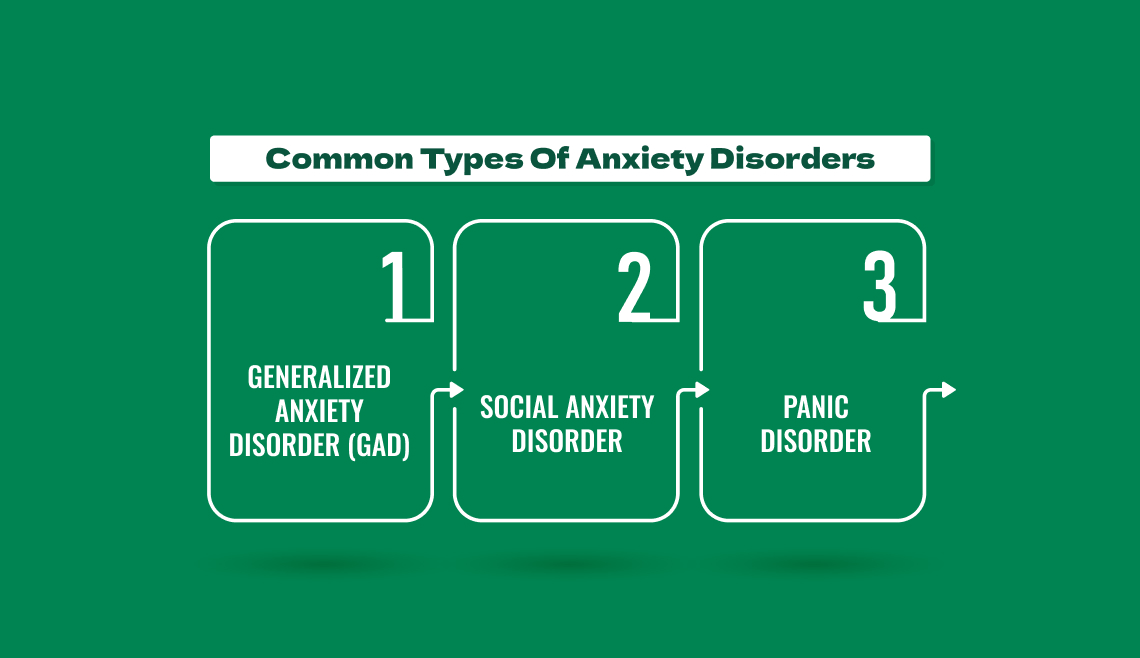
You now know what is anxiety, but in order to truly understand the whole aspect, you must know about the common types.
1. Generalized Anxiety Disorder (GAD)
Generalized anxiety disorder (GAD) involves having chronic, persistent, and excessive worry about daily occurrences. Even when there is no apparent reason for concern, individuals suffering from GAD frequently anticipate disaster.
They are consumed by thoughts that surround health, finances, family issues, or workplace performance. Moreover, this constant state of high alert is usually accompanied by physical symptoms such as chronic fatigue, muscle tension, headaches, and difficulty concentrating.
2. Social Anxiety Disorder
When it comes to social anxiety disorder, it goes far beyond basic shyness or awkwardness. Additionally, you face an intense, overwhelming sense of dread or fear of social situations and public performance.
People with this condition experience deep anxiety about being judged, scrutinized, rejected, or humiliated by others. Furthermore, this fear can be so extreme and intense that it can cause a variety of situations.
That includes avoidance of work meetings, social gatherings,s or simple everyday interactions. As a result, your overall personal relationships as well as career growth can get severely impacted.
3. Panic Disorder
Panic disorder can be characterized by sudden and recurring panic attacks that are unexpected. These occur without any clear trigger.
Moreover, panic attacks bring on sudden waves of intense fear and physical distress, including heart palpitations, shortness of breath, and abdominal discomfort.
Since these episodes are so severe and unpredictable, individuals with the disorder usually develop intense worry about when the next attack will happen. As a result, significant changes in daily habits and behavior start to arise.
Recognizing Anxiety Symptoms
Generally, the following are certain symptoms of anxiety.
1. Rapid Heartbeat
2. Fatigue
3. Emotional Changes
4. Cognitive Behavior
What Causes Anxiety Disorder
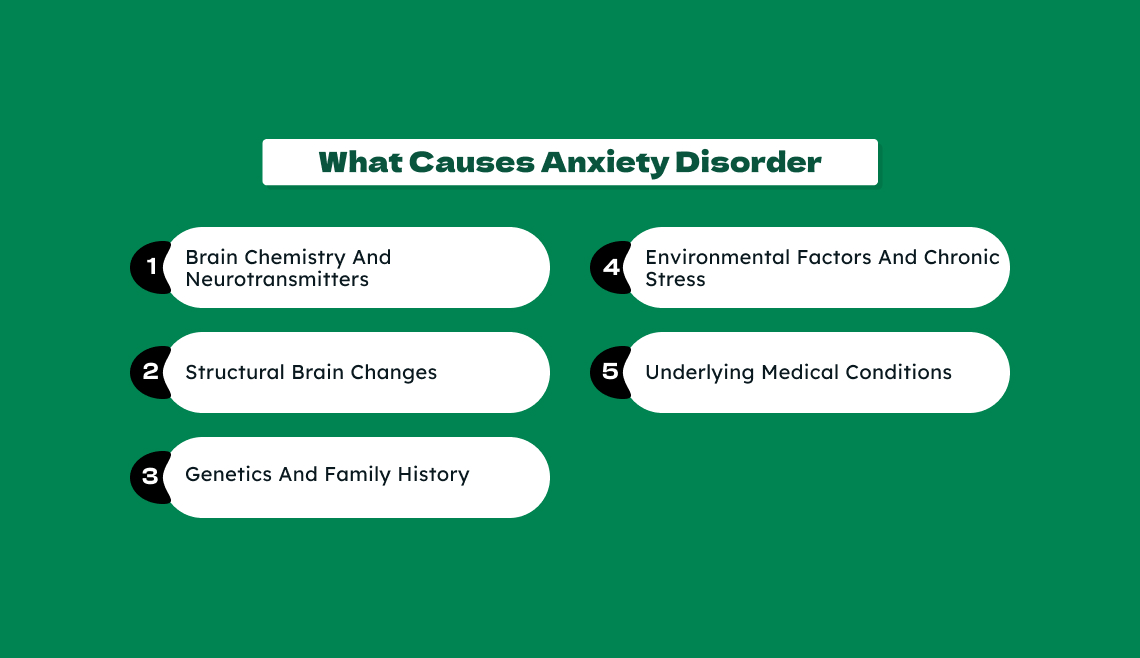
To understand what is anxiety, it is essential to understand the underlying factors that trigger it. Researchers and medical professionals agree that anxiety disorders do not stem from a single flaw or a simple lack of willpower.
The primary factors contributing to the development of an anxiety disorder include a complex combination of biological, psychological, and environmental elements that work together. Furthermore, these influence how your mind and body manage stress.
1. Brain Chemistry And Neurotransmitters
There are certain brain chemicals that include serotonin, dopamine, norepinephrine, and gamma-aminobutyric acid (GABA). Additionally, these chemicals are responsible for regulating your mood and fear responses.
Any imbalance in these specific neurotransmitters can cause the alarm system of your brain’s alarm system to misfire. So, this generates intense feelings of dread even without the presence of any threats.
2. Structural Brain Changes
Neuroimaging studies show that an area of the brain, the amygdala, acts as the control center for processing fear and emotional responses.
Individuals who have anxiety disorders frequently exhibit overactive amygdala responses. As a result, this causes them to perceive ordinary situational stressors as severe dangers.
3. Genetics And Family History
Anxiety disorders tend to cluster in biological families. Moreover, when you have a first-degree relative, such as a biological parent or a sibling, living with chronic anxiety significantly increases your statistical livelihood in developing the condition.
4. Environmental Factors And Chronic Stress
When you endure high-stress environments over an extended period, your brain’s chemical balance gets physically altered.
Furthermore, experiencing childhood trauma, major life changes, workplace burnout, or sudden stressful events can easily disrupt your nervous system and trigger long-term anxiety.
5. Underlying Medical Conditions
At times, your physical health issues can mimic or worsen anxiety symptoms.
With conditions such as hyperthyroidism (overactive thyroid), heart problems,s or hormonal fluctuations, your physical symptoms are directly induced. Moreover, these include heart palpitations and panic-like states.
Procedures For Coping With Anxiety And Living Well

In this section, you can study coping with anxiety and living well. Go through the entries given below and take the necessary steps to change your life.
1. Understand The Thought Pattern
It is a fact that no one except you can understand your thought pattern. So, it is vital to track your thoughts emphasizing your brain’s call. You should fight and get rid of any negative thoughts that come to your mind. To change your thought process, you can challenge your fears with a firm belief that you can cope with them.
2. Practice Focusing On One Thing At A Time
If you are concerned about how to deal with anxiety, make a habit of not focusing on multiple things at a time. You should focus on one thing and that needs to be the root. Initially, this can be problematic but this is the best way to get rid of anxiety. However, this is the best way to get rid of anxiety.
3. Try Aromatherapy
If you reach out to a doctor with much stress and anxiousness, he might suggest you go for aromatherapy. This can calm your mind and lead you to escape from stress and anxiety. However, this process can be a bit expensive. Moreover, you would need to find the right place to get the process done. Remember that you might not get a proper result with the wrong therapeutic processes.
However, remember that you might not get a proper result with the wrong therapeutic processes.
4. Study And Incorporate CBT
If you are looking for an answer to what causes anxiety, the best you can do is incorporate CBT into your life. However, you need to study Cognitive Behavioral Therapy in detail. As a result, you can apply your brain and easily augment your thoughts. However, for a proper outcome to CBT, you need to make sure no negative thoughts get spiral in your mind.
5. Consult A Doctor And Ask For Medicines
Neuro medicines have a lot of side effects, but they can be effective when it comes to how to calm anxiety. You can ask your psychologist for some medicines. Well, there are fair chances for him to refer you to a psychiatrist for the necessary medication.
6. Change Your Diet For Good
If you are a victim of anxiety disorder, try changing your daily diet. Cut on the consumption of crude fat and carbohydrate. You can eat some healthy protein food and a lot of green veggies. The best you can do is consult with a nutritionist and make a proper diet plan.
Always give importance to the fact that extra fat and meat consumption can lead to a boost in Blood pressure. Additionally, you can get frequent panic attacks.
7. Talk More About Triggers And Try Minimizing Them
You should always be clear about the triggers and try talking about them to avoid hazards related to anxiety. If you are stressed about the job or driving and traveling, speak it up clearly with your colleagues and friends. Moreover, you should not hide your personal trauma from the doctor. Remember, that only a victim knows what does anxiety feel like. So, you should always look for a way to improve your life.
8. Do Regular Exercises
Working out regularly can help you get rid of anxiety in the best way. Sweating all negativities out you can get a glow in your body. This glow is nothing but positivity. Working out can always improve positive thought processes in your mind and you can cope with anxiety well.
9 Avoid Negative People And The Environment
This is a little fact that you need to keep in mind while you fight yourself out of anxiety. The best you can do is cut all connections with negative people and change a negative environment.
10. Develop A Hobby
Finally, you can develop a hobby to stay busy in it while you are not working. This can be one of the best things to do to avoid negative vibes affecting your mind. So, ask yourself about a hobby and start spending time with it.
11. Follow The 3-3-3 Rule For Grounding
An individual with anxiety can follow the 3-3-3 rule. It is a simple and effective grounding technique that is used to calm anxiety and interrupt racing thoughts.
It works by shifting your attention away from internal stress or worries, while anchoring you directly in your immediate physical surroundings.
First, identify the three things you can see, like specific objects in your environment. In addition, try observing their color, shape, and texture.
Next, close your eyes and listen for three distinct sounds around you.
Lastly, notice physical sensations or make a deliberate physical movement. Moreover, you can touch three distinct sounds around you.
Know That You Are Never Alone
As anxiety is a disorder, most people can gradually get rid of it. Only, you should remember not to get into the wrong approach when it comes to healing. Always count on the doctors and your close friends as they can help you gain positivity towards life and stop getting anxious.
Frequently Asked Questions
Ans: There are many ways how you can get rid of anxiety. However, the best you can do is seek help from a doctor and make all necessary positive lifestyle changes.
Ans: The 3 3 3 rule of anxiety is one of the processes to get rid of anxiety. Here you can move three parts of the body, hear three sounds and memorize three things.
Ans: You can calm your mind by working out and meditating regularly and incorporating positive thoughts.
Ans: Water, warm milk, and lemon balm tea can calm your mind in a proper way.
Keep Reading:







Premenstrual Exacerbation 101: What Is It, How Is It Different?
September 26, 2026[…] fibromyalgia, irritable bowel syndrome, or chronic fatigue syndrome. Psychiatric illnesses such as anxiety disorders or depression can worsen during the premenstrual period, which is akin to PMDD […]