

When a doctor tells a family that their child or teenager has a rare kidney condition, the immediate reaction is usually a mixture of panic and deep confusion.
The names of these conditions often sound like a foreign language. Among the rarest and most misunderstood of these conditions is dense deposit disease (often called DDD).
Most people assume that kidney issues only happen to older adults. They also think it can be caused by basic lifestyle factors such as dehydration or diabetes.
However, DDD breaks all of these standard assumptions. The condition is actually an ultra-rare, aggressive condition that primarily strikes children, teenagers, and young adults.
It acts like an unguided missile inside the bloodstream. As a result, it causes the body’s natural defense systems to accidentally turn inward and attack the kidneys’ delicate filtering system.
If you are trying to understand this diagnosis for yourself or a loved one, you do need to wade through a dry medical textbook to get answers.
We will explore exactly what it is, why it happens, the symptoms to look out for, how doctors spot it, and the real-world treatment options available today to protect your long-term health.
What Is Dense Deposit Disease?
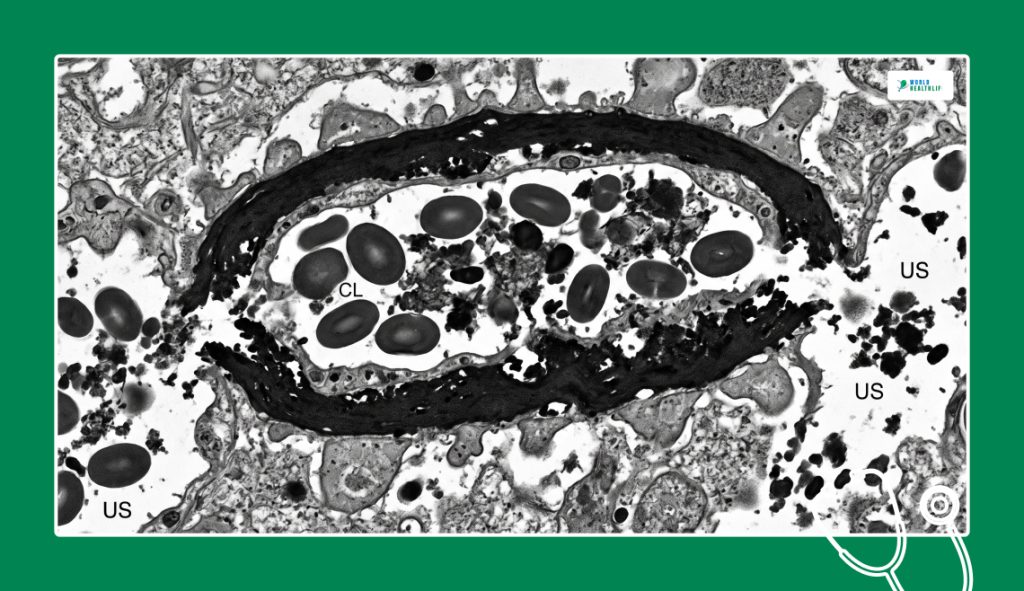
In order to understand this condition, it helps to imagine the kidneys as your body’s internal recycling and filtration plant.
Inside each kidney sit millions of tiny microscopic filtering units known as glomeruli. These filters are lined with an ultra-thin, delicate mesh sheet called the basement membrane.
The job of this membrane is simple. It allows liquid waste and excess water to pass cleanly out of your blood into your urine.
Meanwhile, it securely keeps vital red blood cells and healthy proteins inside your body.
However, a person suffering from DDD will have a glitch in the body’s innate immune system. This transforms this smooth filtration process into a traffic jam.
The body creates an absolute storm of inflammatory proteins that begin clumping together directly inside that delicate mesh sheet.
These protein deposits look incredibly dark and dense under a specialized microscope. Thus, scientists named the condition dense deposit disease.
As these jagged patches thicken over time, they tear holes in the filter. As a result, this causes vital blood cells and essential proteins to leak out into the urine. It also destroys the overall ability of the kidney to clean your blood.
What Causes DDD
This disease is not caused by anything you ate, your daily habits, or environmental exposures.
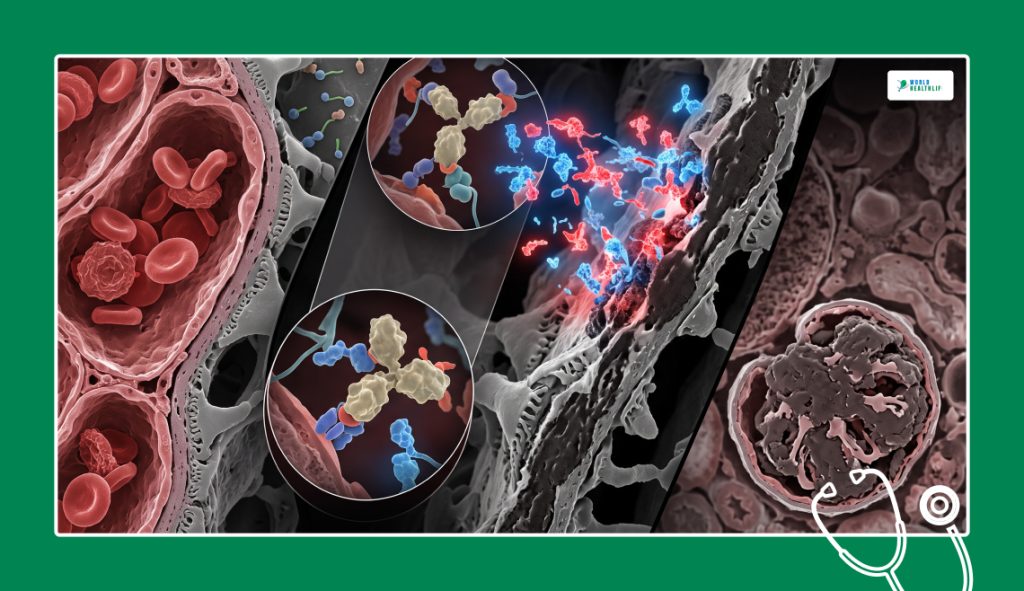
It is a highly specific autoimmune flaw centered around a primitive part of your immune system, which is known as the alternative complement pathway.
A Security System With No Brakes
Your complement system is a continuous background security patrol. Additionally, its main job is to instantly find invading bacteria or viruses, coat them in sticky proteins, and pop them open before they can make you sick.
This system is incredibly powerful. Therefore, your body uses specialized “brake” proteins to keep it under tight control.
In this way, it does not attack your own organs.
The Rogue Antibody Glitch
In a patient with DDD, the body mistakenly creates a rogue autoantibody called C3 nephritic factor (C3Nef).
This specific antibody acts like a wedge that physically blocks the immune system’s braking mechanism.
With the brakes completely disabled, the complement system gets permanently stuck in the “on position.
It creates an ongoing, uncontrolled storm of activated complement proteins.
Since these proteins have nowhere else to go, they float through the bloodstream and slam straight into the kidneys’ filtering membranes.
Accordingly, this buries the healthy tissue under a thick layer of microscopic debris.
Recognizing The Warnings Signs: Core Symptoms
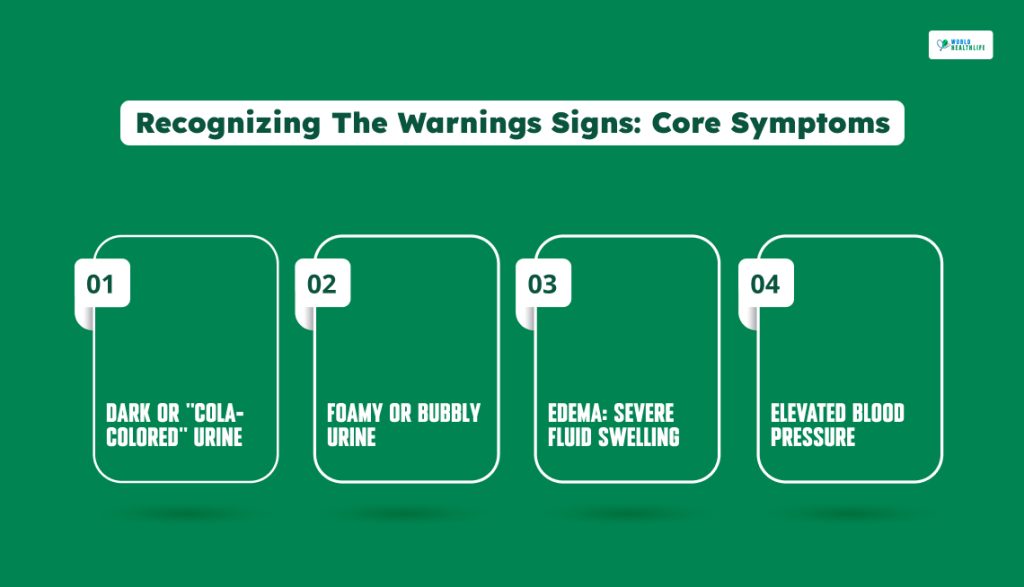
The condition moves quickly. So, catching the early physical warnings signs can prevent a minor filtration leak from turning into a severe and unmanaged medical crisis.
The most common symptoms include the following.
Dark Or “Cola-Colored” Urine
When the filtering membranes sustain structural tears, microscopic red blood cells spill into the urinary tract.
This causes the urine to turn a dark, rusty, tea-like, or cola-colored hue, which is often the very first sign a family notices.
Foamy Or Bubbly Urine
Healthy proteins are large molecules that should never escape into your waste.
When the filters fail, massive amounts of protein spill out, causing the urine to look intensely foamy or bubbly.
This can be considered similar to whipped soap suds.
Edema: Severe Fluid Swelling
As your body loses its vital blood proteins, it loses the ability to hold fluid inside your blood vessels.
Furthermore, fluid leaks out into the surrounding tissues. As a result, this causes noticeable, doughy swelling in the legs, ankles, feet, and puffiness around the eyes.
Elevated Blood Pressure
When the kidneys are damaged and compressed by inflammation, they cannot regulate fluid volume cleanly.
Thus, your baseline blood pressure is forced to spike dangerously high.
Diagnostic Pitfalls: Conditions People Confuse With DDD
DDD is an exceptionally rare disease, where it strikes about only two to three people per million.
Doctors who do not specialize in rare kidney issues can easily confuse it with more common conditions.
Post-Infectious Glomerulonephritis (PIGN)
This common condition happens when a child recovers from a regular bout of strep throat or a skin infection. Moreover, their immune system temporarily overreacts, causing brief kidney inflammation.
Because both PIGN and DDD cause dark urine and swelling in young kids, doctors often assume a child just has PIGN and tell the family it will clear up on its own in a few weeks.
While PIGN disappears completely, DDD continues to aggressively destroy tissue behind the scenes.
IgA Nephropathy
This is another highly prevalent kidney issue where a different type of antibody (IgA) clumps inside the filters.
While it can cause similar bouts of blood in the urine, IgA nephropathy usually moves at a much slower, decades-long pace. It also responds to completely different therapeutic options than DDD.
Identifying The True Culprit Through Testing
To separate DDD from these lookalikes, a pediatric nephrologist must perform a precise sequence of structural diagnostic tests.
| Testing Modality | What the Doctor Looks For | The Ultimate Diagnostic Meaning |
| Blood Serum Panel | Severely depleted levels of a specific immune protein called C3. | Proves that the alternative complement pathway is hyper-activated and burning through resources. |
| Tissue Biopsy Immunofluorescence | The kidney sample glows intensely green under a specialized light, showing isolated C3 tracking. | Confirms that complement proteins are the sole cause of the damage, completely ruling out standard antibody diseases. |
| Electron Microscopy Scan | Highly distinct, dark, continuous ribbon-like shapes embedded inside the membrane. | The absolute gold standard; provides an absolute, 100% definitive diagnosis of DDD. |
What Are The Treatment Options?

There is currently no single magic pill that can rewrite a patient’s immune system to permanently cure DDD.
However, modern medicine utilizes an aggressive multi-layered toolkit to slow down the tissue damage, lower internal pressures, and preserve kidney function for as long as possible.
Managing Blood Pressure And Protein Leaks
The absolute baseline of care involves using common blood pressure medications called ACE inhibitors or ARBs.
These drugs lower the physical fluid pressure inside the kidneys’ filtering units.
The reduction of this mechanical stress helps the medications minimize the amount of protein leaking through the torn membranes.
This acts as a vital daily shield for the tissue.
Target Complement Blockers
Nephrologists are moving away from heavy, full-body steroid regimens and turning toward smart, targeted biologic therapies. Specialized monoclonal antibodies, such as Eculizumab, work by blocking the final, destructive stages of the complement cascade. By freezing these specific inflammatory proteins, the drug can stabilize filtration rates and protect the remaining healthy kidney architecture from immediate destruction in specific patient profiles.
The Realistic Outlook: Progress And Prognosis
Navigating a diagnosis of DDD requires absolute honesty about what the future looks like.
The condition is undeniably aggressive, and spontaneous remissions are very rare. Statistical data show that roughly 50% of all diagnosed children and young adults progress to total end-stage renal disease (ESRD) within ten years of their first abnormal lab test.
When total kidney failure occurs, a patient must transition to long-term dialysis or receive a kidney transplant.
Fortunately, patients with DDD generally make excellent candidates for transplant surgery.
However, you must be aware of a specific structural challenge.
Since the autoantibody glitch lives in your liquid bloodstream rather than the kidney tissue itself, the condition has a near 100% recurrence rate in the new donor organ.
Despite this recurrence, the newly transplanted kidneys can still function effectively for years with proper management.
As a result, this allows young people to go to school, build careers, and live full, vibrant lives.
Moving Forward With Confidence
Receiving a diagnosis of dense deposit disease can feel like stepping into an overwhelming medical storm.
But understanding the exact mechanics of how your complement system is misfiring transforms the condition from a scary, invisible threat into a manageable, structured timeline.
You can successfully take control of this journey.
First, focus on tracking your daily blood pressure limits and monitoring fluid swelling. From there, partner with a specialized university research hospital or a dedicated pediatric nephrologist who has direct experience with complement disorders.
It takes consistent monitoring and a structured care team. However, it allows you to step out of the panic.
Therefore, it permanently protects your vision, maximizes your kidney health, and reclaims your daily peace of mind.
Disclaimer: The information provided in this article is for general informational purposes only. It does not, and is not intended to, constitute medical or health advice. Please consult a qualified healthcare professional for medical guidance or expert health assistance.


