My neighbor Priya is a working mother in Kolkata. Last monsoon, her 14-year-old son came home from school complaining of a headache and low appetite.
Two days later, the child had a fever of 103°F. The doctor confirmed that it was typhoid. Priya is a fantastic cook! Her biryani is legendary in our lane.
But one day she comes to my mother asking: what to eat in typhoid for fast recovery. Certainly, her son did not want to have khichri. During fever, his go-to food was Maggi.
But this time it was not a flu-induced fever. So Priya had to maintain caution. But even she did not know what to eat during typhoid to speed recovery.
Food: The Real Challenge During Typhoid
Food is the real challenge of typhoid in Indian homes. Already the fever pins you down. To make matters worse, the doctor has suggested multiple antibiotics.
The family has to follow your dietary practices when you are on typhoid. However, it is not about taste or appetite.
Above all, you need something that you can digest at this stage. Remember, wrong diet choices can delay the recovery or make the typhoid more intense. The same goes for fatty liver grade 1, grade 2 and grade 3.
I am not a doctor, but a cooking enthusiast for sure. I will try to suggest Indian recipes to help you feel better.
Why Food Matters So Much In Typhoid
A bacterial infection of the intestine causes typhoid. The tracking bacteria are Salmonella Typhi. Usually, people get typhoid from a bacterial infection caused by contaminated food or drink.
Salmonella first affects the small intestine. As a result, you will have a hard time digesting complex foods.
What Happens When You Have Typhoid? At first, the bacteria swell the walls of your intestine. It is the result of the infection. A weak intestine now has difficulty digesting food like Maggi or pasta. The same applies to paratha and saag. Or mutton keema and naan.
Whenever you have complex food, the healing slows down. Therefore, it is better to have food that is easy to digest at this stage. The process gets tougher when someone of Priya’s son’s age gets affected.
Is Typhoid Infection Common In India?
Around 11 to 20 million people are affected by typhoid every year. Again, a vast share of that cunt belongs to India. But do you know which is the ideal time to catch typhoid?
It’s the time of the monsoon when bacteria breed faster than at any other time. Therefore, the cases of water contamination also increase spontaneously.
Here, we are accustomed to treating the typhoid patients at home after basic diagnosis. Again, that is why you need to manage your diet smartly.
The Three Phases You Need To Know About
This is something Priya did not know. Again, I found that most sources don’t disclose it either.
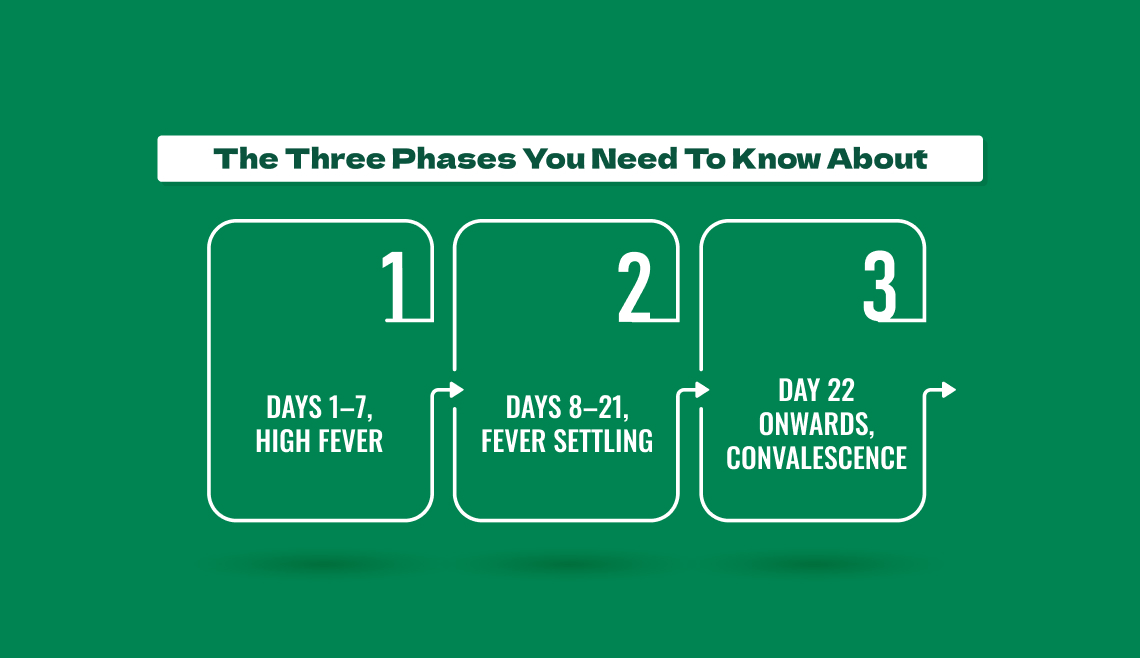
Remember that recovery from typhoid happens in stages. What you eat in week one vastly varies from what you eat in week three.
But a lot of people also query that I work 9 to 9, living on snacks and coffee with zero steps. How do I stay fit and eat healthy? When people like them have a typhoid, they need to drastically change their dietary habits.
Phase 1 (Days 1–7, High Fever)
You must take only liquid food, as your intestines are still swollen and infected.
So, what diet choices do you have in this situation? You can start with lentil soup, then rice water, and finally coconut water. But don’t use additional spices like roasted cumin or red flakes to make your food appetizing.
Often, Indians also add mustard oil (uncooked) to such food for an additional punch. But avoid such flavoring steps, as they can make the situation worse.
Phase 2 (Days 8–21, Fever Settling)
In this stage, the disease has matured. In other words, there is a lower chance it will spread further.
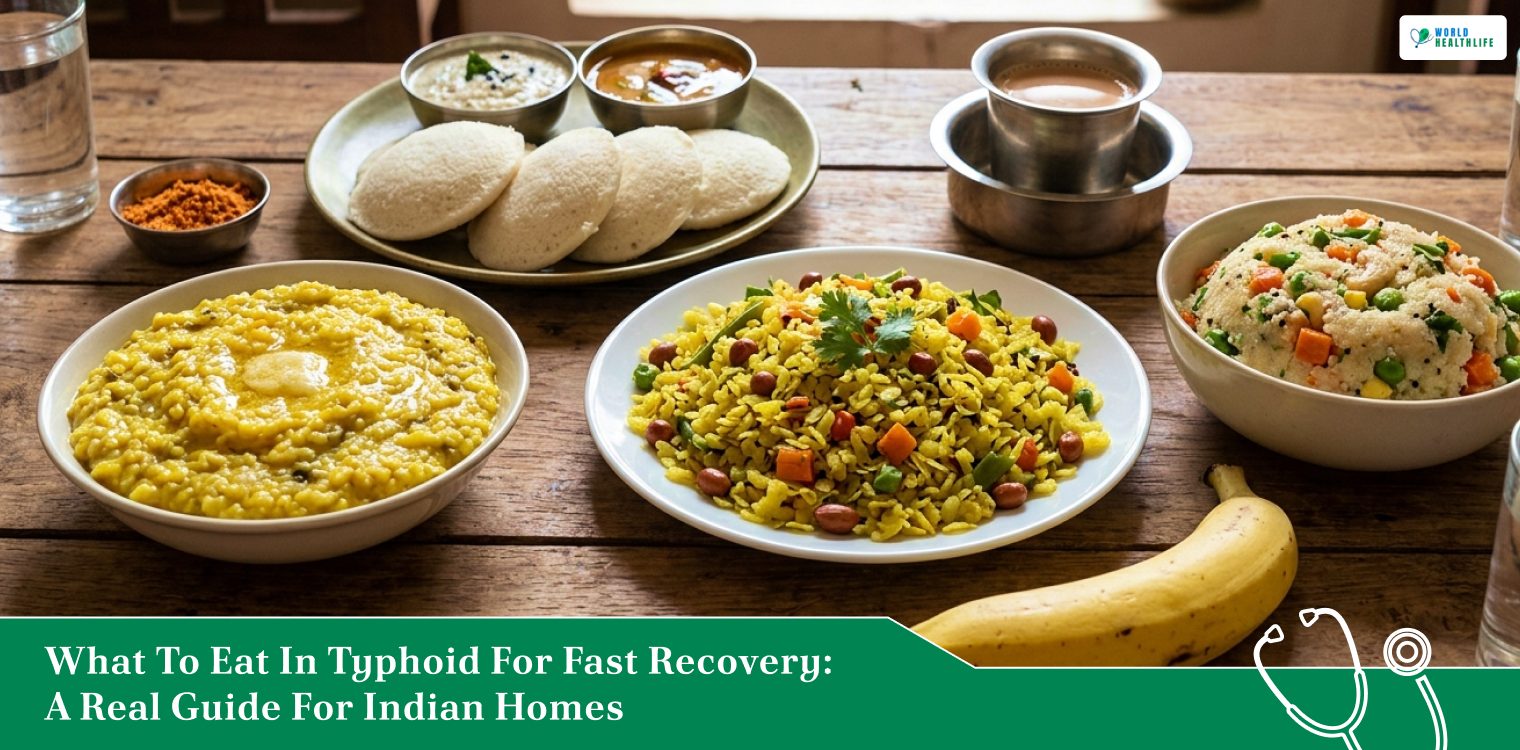
Therefore, it is the right time to introduce a soft diet. For example, a khchri with no to very little tempering is just fine.
However, moong dal is the best option for khichri at this stage. But why? Masoor, Urad, and other dals are harder to digest than moong.
At the same time, you can also include curd rice and idlis (fermented rice and lentil cakes).
Some people suggest introducing boiled eggs at this stage as well. However, during my typhoid, I suffered badly from introducing eggs at this stage. So I won’t suggest anything to do.
Phase 3 (Day 22 Onwards, Convalescence)
Most people regain the ability to digest normal home food at this stage. However, you still need to stick to lighter foods. Shifting to normal does not mean having a mutation chap with biryani or parathas.
Instead, I would suggest you introduce normal food gradually. First, introduce a slight tempering of cumin and coriander. Use less garlic, chillies and garam masala.
However, you can introduce non-veg protein options now. Or paneer, soya, and other veg proteins if you don’t have non-veg. This stage’s caution is similar to a pcod diet schedule.
Bonus Tip: Introduce colored vegetables and leafy greens at this stage to ensure you get all the vital micronutrients, such as calcium, folate, iron, vitamin A, K, and C.
What To Eat In Typhoid For Fast Recovery
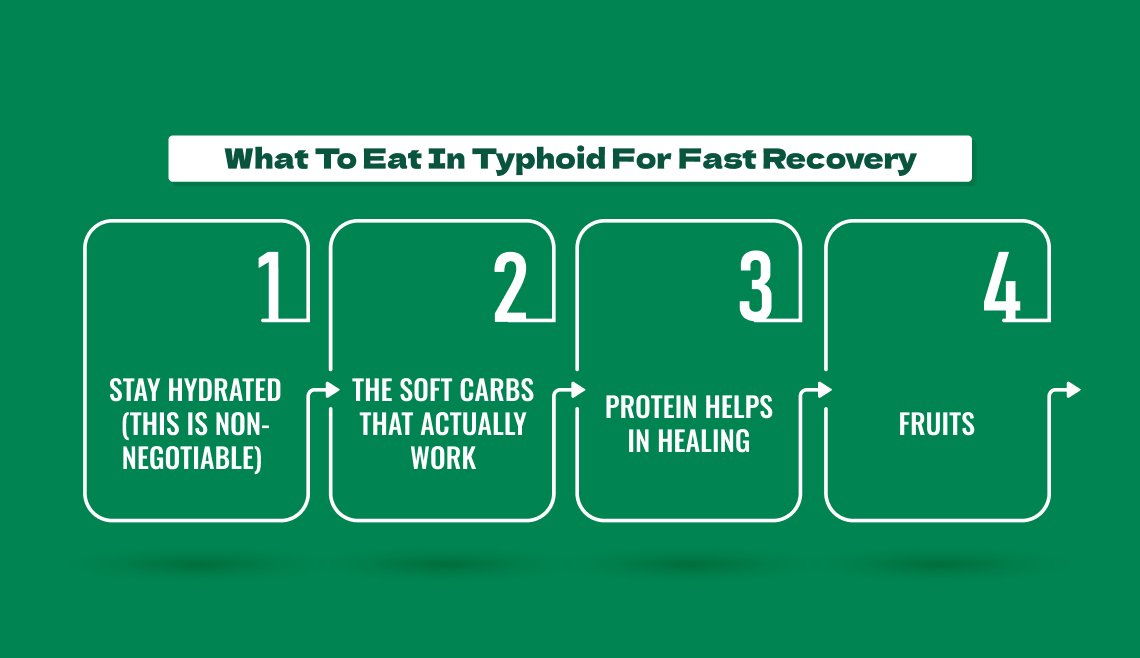
If you want to recover from typhoid quickly, you must follow strict diet rules that you must continue for a long time.
Stay Hydrated (This Is Non-Negotiable)
During typhoid, you lose body fluids quickly through your stools. As a result, you can be easily affected by dehydration. Therefore, you must keep refilling your liquids as often as possible.
But what kind of fluids can you have and what to avoid? Firstly, plain water has no parallel. At the same time, you can still have ORS solutions and occasionally coconut water (not on an empty stomach).
However, it is known that people lose their appetite when they have typhoid. The case of Priya’s son is a major proof here. The boy liked coconut water better when a very light sprinkle of black salt was added.
The Soft Carbs That Actually Work
White rice is your best friend here. Yes, it is low in fiber, which is exactly the point. The gut needs rest. Rice porridge or kanji (just rice cooked with extra water until it is almost dissolved) is ideal in Phase 1.
As the patient improves, soft khichdi made with moong dal and a tiny bit of ghee is genuinely one of the best typhoid meals in the Indian kitchen.
Daliya (broken wheat porridge) works well too. Suji upma, which is lightly made, with no peanuts and no mustard seeds, is a good Phase 2 breakfast. You can also have soft idlis or plain poha without any sour additions.
Mashed potatoes with a pinch of salt are something most typhoid patients will actually eat. That kind of food is really helpful when your appetite is nearly gone.
Protein Helps In Healing
The body needs protein to repair damaged intestinal tissue. But how you get that protein during typhoid matters enormously.
Moong dal is the classic choice. But why? It is easy to digest, familiar, and something most people can stomach even on a low appetite day. Still, people ask what to eat to recover from typhoid quickly.
I understand they are asking about the protein source.
Soft-boiled or poached eggs are good sources. They are easy to digest and provide real nutrition. Curd is also a quiet hero here.
It is both a protein source and a probiotic, which helps restore gut bacteria disrupted by the infection.
For non-vegetarians, light chicken soup or steamed fish is a good choice from Phase 2 onwards. But do not go for fried chicken or keema. Just stick to simply cooked, mildly seasoned, and soft preparations.
Paneer is fine for Phase 2. But keep portions small and avoid anything with heavy masalas.
Fruits That Help
Ripe bananas are probably the easiest type of fruit. It is soft, filling, binding (helpful if there is loose stool), and something most patients gulp down without complaint.
A Simple 7-Day Indian Diet Plan For Typhoid
| Day | Breakfast | Lunch | Dinner | Phase |
| Day 1 | Rice kanji with a pinch of salt | Thin moong dal with rice gruel | Vegetable broth + kanji | P1 |
| Day 2 | Soft idlis with coconut chutney | Curd rice | Light dal soup with mashed rice | P1–P2 |
| Day 3 | Suji upma (mild, no peanuts) | Soft khichdi with curd | Chicken soup + mashed rice (veg: mild tomato-paneer) | P2 |
| Day 4 | Plain poha (mild) | Soft chapati + moong dal + lauki sabzi | Dal soup with soft roti | P2 |
| Day 5 | Oatmeal with a little honey | Curd rice + cooked carrot | Pumpkin soup + soft roti or boiled egg with toast | P2 |
| Day 6 | Banana with plain toast | Soft chapati + dal tadka + cooked beans | Light chicken stew + soft roti (veg: lauki kofta, mild) | P2–P3 |
| Day 7 | Scrambled egg + soft toast (veg: paneer bhurji + toast) | Soft chapati + palak paneer (mild) + dal | Rice + light fish curry (veg: mushroom soup + toast) | P3 |
Make Your Recovery Smoother
Now you know what to eat in typhoid for fast recovery. In the same vein, do you know what Priya told me after her son recovered:
“Nobody gave me a practical plan. The doctor said eat soft food. What is soft food in an Indian kitchen? I didn’t know.”
That is the gap this article tries to fill. Medical information about typhoid is widely available. What is harder to find is how it actually works in an Indian home. Try the moong dal khichdi, the lauki sabzi, coconut water, and the phase wise foods discussed here.
Remember you will always face unexplained nuances like a grandmother who wants to fry something. However, what’s most important is that you need to stick to your diet plan.
Eat light, stay hydrated, and respect the limitations of each of the phases.
Disclaimer:
This article is based on caregiving experience and is written for general awareness. It does not substitute for your doctor’s advice. Always follow the treatment plan prescribed by your physician.