Patients research a cosmetic procedure long before they even book a consultation.
Furthermore, they watch before-and-after clips, scroll through provider Instagram pages and expect clear visual explanations of what a treat will actually involve.
When looking for the best image editing software in 2026, healthcare providers need tools that will balance speed with professional and realistic results.
Utilizing an advanced option like the Magic Hour image editor allows clinics to quickly refine educational visuals and patient marketing materials.
For clinics, med spas, dermatology practices, and aesthetic healthcare brands, this translates to the fact that visual content is not a mere option anymore.
Instead, it is now a core part of patient education and patient acquisition.
The problem lies in capacity. Most clinics lack an in-house video team. Moreover, hiring one for routine content usually is not practical.
This includes routine media like procedure explainers, before-and-after transformations, staff intros, and consultation follow-ups. That is where AI video and image tools come in.
As of mid-2026, a new generation of platforms lets non-technical staff generate compliant, professional-looking visual content in minutes rather than days.
I will now be presenting a practical comparison of the tools that are worth knowing.
Furthermore, it will feature clear pros, cons, and pricing for a healthcare-adjacent use case instead of just general content creation.
The Role Of AI Editing Tools In Cosmetic And Aesthetic Healthcare Marketing
AI editing tools are transforming cosmetic and aesthetic healthcare marketing by enabling clinics to create high-quality and professional visual content efficiently while maintaining patient trust.
These platforms streamline the production of before-and-after photos, educational videos, and social media assets. Furthermore, they remove background distractions while ensuring consistent and compliant imagery.
By translating complex procedures into clear and engaging visuals, the best image editing software in 2026 helps reduce patient anxiety, set realistic expectations, and enhance clinic credibility.
Ultimately, these tools empower staff to scale content production, driving higher engagement and consultation bookings in a competitive market.
In my experience analyzing digital healthcare trends, the adoption of these automated systems is no longer just about saving time.
I have found that clinics using various tools consistently maintain a more active, polished online presence. This directly converts casual scrollers into actual patients.
The Best AI Video And Image Tools
After detailed research and testing on like 35-plus AI editing tools, I have narrowed it down to ten of the most efficient and best image editing software in 2026.
Let me give a quick note on how this list was put together. It weighs ease of use for non-editors and output quality. That is whether a free tier exists and how well each tool fits healthcare-adjacent use cases.
These include before-after visuals, patient education, and compliant marketing content instead of just general creative video production.
At A Glance
| Tool | Best For | Key Modalities | Free Plan | Good Fit for Clinics |
| Magic Hour | All-in-one photo/video editing for patient marketing | Image editing, image-to-video, face swap, lip sync | Yes, no sign-up required | Strong, fast before-and-after and social content |
| Synthesia | Multilingual patient education videos | AI avatars, text-to-video | Limited trial | Good for consultation-style content |
| HeyGen | Provider-facing talking avatars | AI avatars, voice cloning | Limited trial | Good for consultation-style content |
| D-ID | Short avatar clips for websites | Talking-head avatars | Limited free credits | Moderate |
| Runway | Cinematic marketing video | Text-to-video editing | Limited free credits | Moderate, steeper learning curve |
| Pika | Short-form social clips | Text/image-to-video | Limited free tier | Moderate |
| Descript | Editing and repurposing consult recordings | Video/audio editing, transcription | Yes, limited | Good for repurposing content |
| InVideo AI | Templated marketing videos | Text-to-video with templates | Limited free tier | Moderate |
| Colossyan | Staff training and compliance videos | AI avatars, training modules | Limited trial | Good for internal training |
| Elai.io | Explainer videos from scripts | AI avatars, text-to-video | Limited trial | Moderate |
Magic Hour: Best Overall For Clinic And Med Spa Content
Magic Hour is a browser-based AI content platform that is built around a simple idea.
That is to give creators, including non-designers a full toolkit for editing photos, generating video from images, and producing polished marketing assets. That also without needing separate software for each task.
For a cosmetic clinic that manages its own social presence, this consolidation matters more than it sounds.
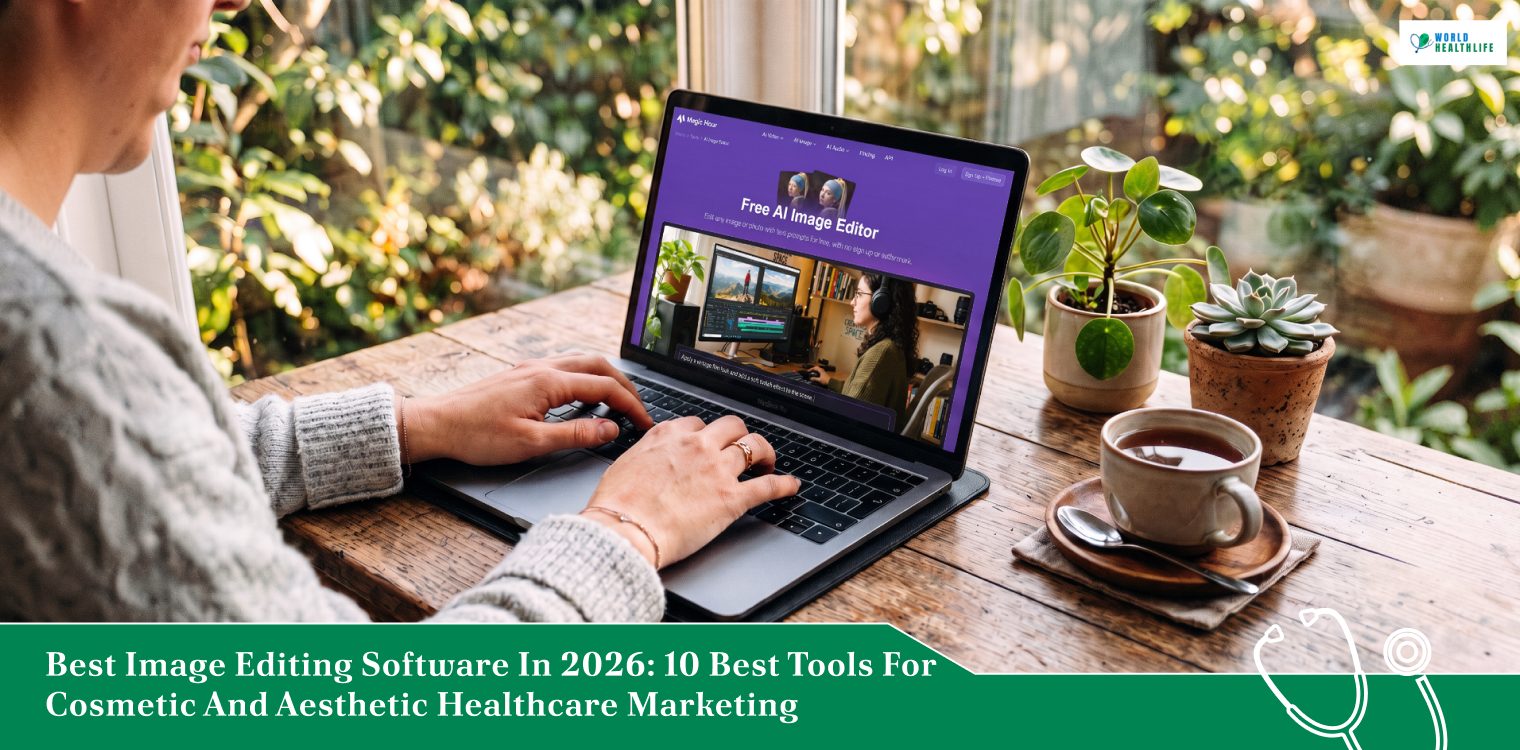
The most relevant tool in the suite for aesthetic healthcare marketing is Magic Hour’s ai image editor. This lets staff make prompt-based edits to patient-consented photos. It includes:
- Cleaning up lighting
- Adjusting backgrounds
- Refining a before/after pair without touching Photoshop
For turning a static before/after photo into short-form social content. Magic Hour’s image to video tool converts a still image into a brief animated clip.
That is useful for Instagram Reels or TikTok recaps of a procedure result (with proper patient consent, of course.)
If your clinic’s biggest content bottleneck is quickly turning routine patient photos into clean, postable visuals, this is hard to beat in terms of speed and simplicity.
Pros
- No download, browser-based workflow, which is easy for non-technical clinic staff
- Free tier with no sign-up required for basic edits
- Combines image editing, image-to-video, face swap, and lip sync in one platform
- Fast turnaround. Moreover, this matters for high-volume social posting schedules
Cons
- Free tier outputs are limited to personal and non-commercial use. That means clinics will need a paid plan for marketing use
- Not purpose-built for healthcare compliance (HIPAA-adjacent consent workflows, medical disclaimers). In addition, this still has to be handled separately
- Less suitable for long-form patient education compared to avatar-based tools
Pricing
There is a free tier available with daily limits. One great thing about this is that no sign-up is required.
Their paid plan is divided into three tiers: creator, pro, and business. When you avail their paid plan, it unlocks commercial usage rights and higher resolution.
Moreover, it is roughly in the $10- $60 per month range, depending on the tier.
Synthesia: Best For Patient Education Libraries
Synthesia specializes in AI avatar videos generated from a script. I have found that this makes it well suited for building a library of consistent patient education content.
Furthermore, it explains what a procedure involves, recovery expectations, or aftercare instructions. That is without needing a presenter on camera each time.
Pros
- Wide language support. That is useful for clinics that serve diverse patient populations
- Consistent professional avatar presenters across every video
- Script-to-video workflow that requires zero filming
Cons
- Avatars can still be read as slightly synthetic. This may not suit every brand tone
- Pricing scales quickly for teams that produce high volumes of content
- Less flexible for quick and informal social content
Pricing
Paid plans usually start in the monthly range of $20 to $30 or for individual use. For teams, there are higher tiers.
HeyGen: Best For Provider-Facing Video
The next tool on this list is HeyGen. It is a realistic AI avatar and voice cloning. In some practices, it is used to create a “virtual consultation” style video from a provider.
This is useful for FAQ content or procedure walk-throughs featuring a recognizable staff member’s likeness, with their consent.
Pros
- High-quality avatar realism
- Voice cloning options for a more personal touch
- Multiple export formats for web and social
Cons
- Cloning a real provider’s likeness raises consent and disclosure questions clinics need to handle carefully
- Steeper learning curve than simpler editors
Pricing
Free trial available. Moreover, paid plans generally start around $24 per month.
D-ID: Best For Short Website Avatar Clips
D-ID is a lighter-weight option that I found is good for generating short talking-head clips. Furthermore, it is often used for website welcome messages or brief FAQ answers embedded on a clinic’s landing pages.
Pros
- Quick to generate short clips
- Simple interface
Cons
- Limited free credits
- Output quality is serviceable. However, it is not as polished as some competitors on this list.
Pricing
There is a free trial option with limited credits. On the other hand, paid plans start around $18 per month.
Runway: Best For High-Production Marketing Video
Runway is a more advanced and cinematic video generation and editing platform.
Moreover, it is less about quick-clinic content and better suited to brands that produce polished ad campaigns or brand films.
Pros
- Strong creative control and editing depth
- Good for high-production marketing pieces
Cons
- Steeper learning curve, less friendly for non-editors
- Overkill for routine patient content needs
Pricing
Free tier with limited credits. Additionally, paid plans start at around $15 per month and scale significantly with higher usage.
Pika: Best For Quick Social Experiments
Pika is a fast, prompt-driven video generator well suited for short, experimental social clips rather than polished patient-facing content.
Pros
- Fast generation for short clips
- Good for testing creative concepts
Cons
- Limited free tier
- Less suited to consistent and brand-safe healthcare content
Pricing
Free tier with limited generations. Paid plans are available for higher volume.
Descript: Best For Repurposing Existing Recordings
If a practice already records webinars, consultation Q&As, or staff training sessions, Descript is useful for editing that raw footage into shorter clips and cleaning up audio.
I also found out that it is essentially working as a text-based video editor.
Pros
- Powerful for editing and repurposing long recordings
- Transcription and clip creation built in
Cons
- Not a generative tool in the same sense as the others on this list. It edits existing footage instead of creating new videos
- Some features need the paid plan
Pricing
Free tier is available but with limits. On the contrary, paid plans start around $12 to $24 per month.
InVideo AI: Best For Templated Marketing Videos
The next tool on this list is InVideo AI.
This tool relies on templates to help non-editors quickly assemble marketing videos. Furthermore, it does so to work for general practice promotional content.
Pros
- Large template library
- Beginner-friendly
Cons
- Templated feel can look generic without customization
- Limited free tier
Pricing
The free tier is available. However, it comes with a watermark. In addition, paid plans start at around $20 to $30 per month.
Colossyan: Best For Staff Training And Compliance Content
Colossyan is geared toward internal training video creation.
Moreover, this is useful for onboarding new clinic staff or for standardizing compliance training, rather than for patient-facing marketing.
Pros
- Purpose-built for training content
- Good for standardizing internal messaging across locations
Cons
- Not designed for patient-facing marketing content
- Pricing geared toward business or team use
Pricing
Free trial is available. The team plans usually start around $70+ per month.
Elai.io: Best For Simple Explainer Videos
Elai.io converts scripts into avatar-led explainer videos, a reasonable option for straightforward procedure explainer content on a budget.
Pros
- Simple script-to-video workflow
- Reasonably priced entry tier
Cons
- Avatar quality trails behind Synthesia and HeyGen
- Limited customization
Pricing
Paid plans typically start around $23 per month.
How I Chose These Tools
I have conducted this comparison while focusing on tools that a cosmetic clinic, med spa, or healthcare marketing team could realistically adopt without a dedicated video production department.
The core evaluation criteria are as follows:
- Ease of use for non-technical staff, despite a suitable free tier existing
- Output quality for patient-facing or educational content
- How well each platform fits healthcare-adjacent needs. This includes before-and-after visuals, procedure explainers and patient education instead of pure entertainment content.
Pricing was weighed against the volume of content most single-location practices actually need to produce.
The Market Landscape And Emerging Trends
AI-generated visual content in healthcare marketing is moving in a specific direction. That is away from generic stock-photo aesthetics and toward personalized conesented brand-speicific visuals rgar a patient can trust.
In addition to that, here are a few trends that are worth watching:
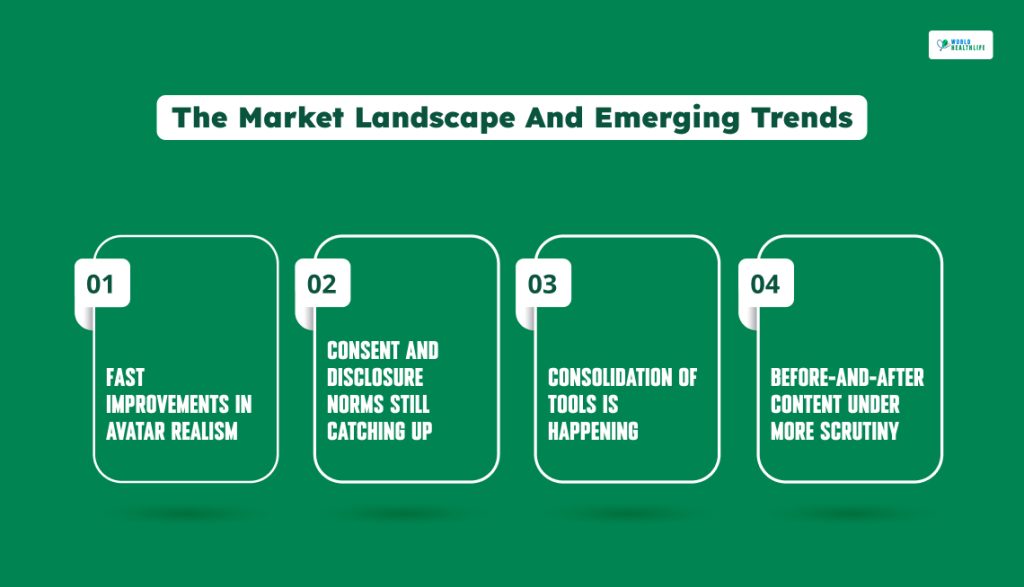
- Fast improvements in avatar realism: Tools such as Synthesia and HeyGen are closing the gap between synthetic and filmed presenters. As a result, this will likely expand their use in patient education.
- Consent and disclosure norms still catching up: Regulatory guidance on AI-generated or AI-edited patient imagery in healthcare marketing is evolving. Furthermore, clinics should treat this as an active compliance area instead of an afterthought.
- Consolidation of tools is happening: Platforms such as Magic Hour that bundle editing, video generation and face/lip-sync tools into one workspace are reducing the need to juggle multiple subscriptions for a single content pipeline.
- Before-and-after content under more scrutiny: As AI editing tools make it easier to enhance images, you can expect increased attention from regulators and platforms such as Meta and TikTok. In addition, this is regarding the disclosure of edited before-and-after content in medical marketing.
How To Know Which Software To Use
For most cosmetic and aesthetic healthcare practices, the right tool depends on the content type.
That suggests it should be fast daily before-and-after and social content.
Moreover, as per my research on the best image editing software in 2026 for cosmetic and healthcare marketing, Magic Hour is the most practical starting point. That is based on its free tier and combined editing/video toolkit.
On the basis of structured patient education libraries, Synthesia is worth the investment if you’re building out a full library of procedure explainers.
On the contrary, when we talk about provider-facing FAQ or consultation-style content, HeyGen or D-ID offer avatar options depending on budget.
It should be noted single tool covers every need perfectly. Furthermore, it’s worth testing two or three options against your actual content calendar.
That is a before-and-after post, a short educational clip, a staff intro, before committing to a paid plan, since output quality and workflow fit vary by use case more than the marketing pages suggest.
Frequently Asked Questions
Here are some frequently asked questions, debunked!
Is It Safe To Use AI Tools To Edit Patient Before-And-After Photos?
Only with explicit patient consent for both the photo’s use and any AI editing applied to it.
Clinics should have a written consent process specifically covering AI-edited or AI-generated marketing content, separate from general photo release forms.
Do AI Avatar Videos Count As A Real Provider Endorsement
No, an AI avatar, even one modelled on a real provider’s likeness or voice, should be clearly disclosed as AI-generated content to avoid misleading patients.
Can Free Plans On These Tools Be Used For Clinic Marketing
Usually not for commercial use. Most free tiers, including Magic Hour’s, restrict outputs to personal or non-commercial use. Additionally, a paid plan is typically required for anything published as clinic marketing.
Which Tool Is Best For A Solo Practitioner With A Limited Budget?
Magic Hour’s free tier is the easiest starting point for basic image editing and short video content before committing to a paid subscription.
How Often Should This Kind Of AI Content Strategy Be Revisited?
Given how quickly these tools update their models and pricing, it’s worth reassessing your toolset roughly every quarter.