
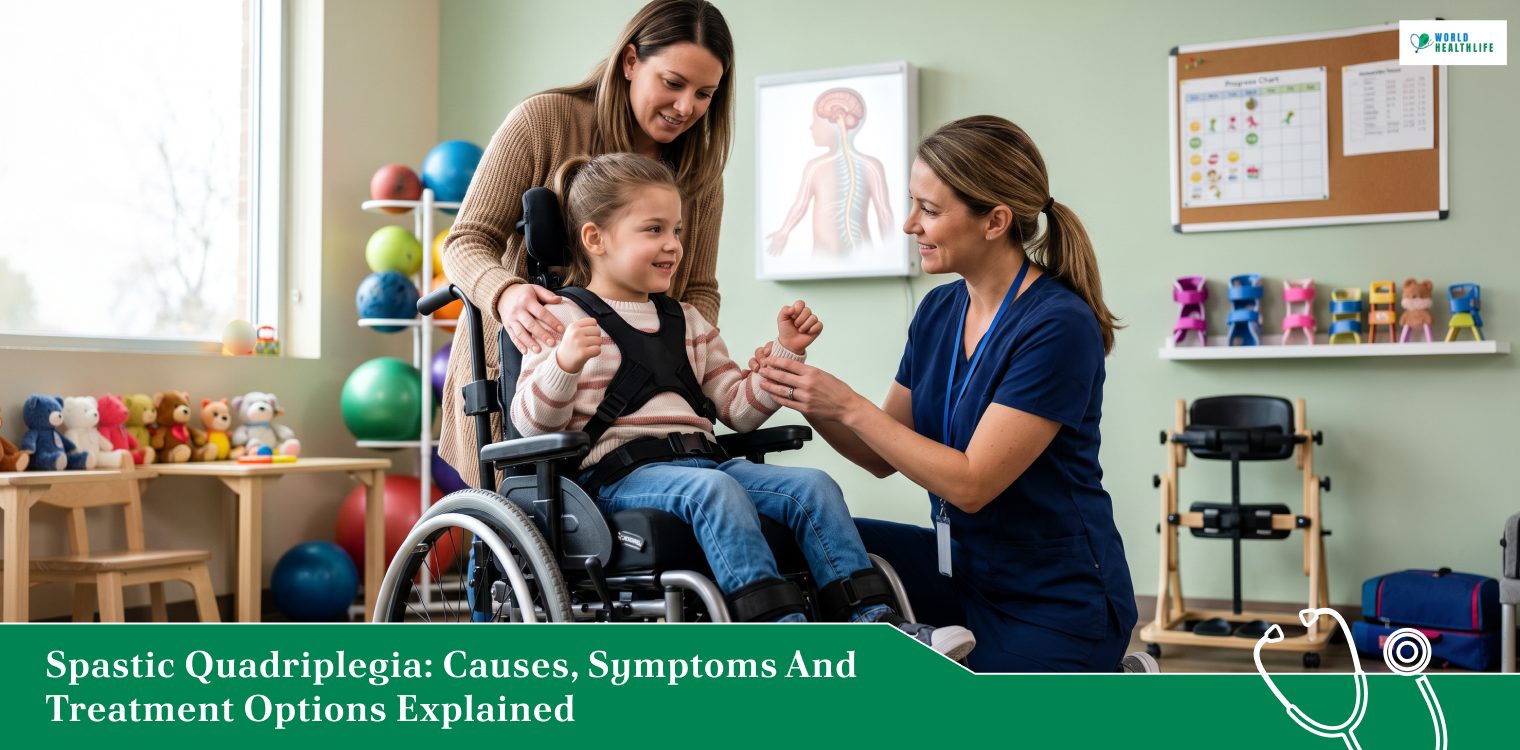
Today’s topic: Spastic Quadriplegia
People expect a newborn’s very first movements to bring immense joy. It charts a course of predictable milestones from a tiny stretch to a first independent step.
However, when the complex communication highway between a developing brain and a child’s muscles is disrupted, those fluid movements can turn into persistent, involuntary resistance.
For thousands of families that navigate early developmental delays, this unexpected path can lead to a diagnosis of spastic quadriplegia.
Standing as the most severe variant among the distinct types of cerebral palsy, the condition is responsible for permanently reshaping one’s interaction with the physical world.
While the diagnosis carries profound lifelong implications, modern therapeutic approaches continually expand what is possible for affected individuals.
What Is Spastic Quadriplegia?
To truly grasp this condition, it helps to break down the medical terminology into its core mechanical meanings.
Understand The Medical Terminology First
The word “spastic” originates from the Greek word spasmos, meaning drawing or pulling. Medically, the term denotes hypertonia, a state where muscles remain persistently contracted, tight, and resistant to stretching.
On the other hand, the word “quadriplegia” combines the word quad and plegia, meaning four and paralysis or striking down, respectively.
Together, the terms spastic quadriplegia describe a permanent neuromuscular condition.
Extreme muscle stiffness and involuntary tightness affect all four limbs, including both arms and legs. Along with them, the muscles of the torso, neck, and face are also affected.
Diving Deep Into The Condition
Crucially, it is not a direct disease of the muscles or peripheral nerves themselves. Instead, it is a neurological disorder rooted in a static, non-progressive injury to the brain’s upper motor neurons.
These specialized brain cells are responsible for sending smooth, inhibitory signals down the spinal cord to tell muscles when to relax.
When something damages these pathways before, during, or shortly after birth, the brain loses its ability to turn off muscle tension.
The muscles receive an uninterrupted flood of “contract” signals. As a result, this leaves them locked in a state of high tension that impairs voluntary control and disrupts structural development.
Spastic Quadriplegia Vs. Diplegia And Hemiplegia
Doctors categorize cerebral palsy by how it impacts the body physically.
While all spastic forms involve hypertonia, the sheer extent of the motor pathways involved differs drastically across the primary types of cerebral palsy.
| Cerebral Palsy Subtype | Primary Areas of the Body Affected | Relative Motor Severity | Typical Mobility Outlook |
| Spastic Quadriplegia | All four limbs, torso, neck, and facial muscles equally | Severe | Most individuals require wheelchairs and full daily assistance. |
| Spastic Diplegia | Primarily both legs; arms are minimally affected or completely typical | Mild to Moderate | Many walk independently or with the assistance of walkers/crutches. |
| Spastic Hemiplegia | One side of the body exclusively (e.g., left arm and left leg) | Mild to Moderate | Most walk independently, though one side remains stiff. |
While diplegia usually allows individuals to maintain functional use of their hands and upper body, spastic quadriplegia impacts the entire musculoskeletal system.
This total-body involvement heavily compromises fine motor skills, independent trunk balance, sitting posture, and basic mobility. This leads to requiring more comprehensive clinical and environmental support systems.
Early Signs And Symptoms In Infants
Detecting motor abnormalities early provides an essential window for neuroplasticity. Consequently, this allows targeted interventions to shape a child’s development.
Because the initial brain injury is static, early signs emerge gradually. This happens as the infant’s nervous system matures throughout their first year of life.
Delayed Milestones
The most common early indicator is a pronounced delay in fundamental gross motor milestones.
Typically, a developing infant starts to hold their head up by four months, roll over by six months and sit independently by nine months. However, an infant with this condition will miss these windows.
Parents often notice that their baby cannot hold their head upright without full support. Furthermore, they struggle to roll over in either direction due to an inability to coordinate their trunk muscles.
Floppy Or Stiff Tone
An infant’s muscle tone may fluctuate wildly during the first few months of life. In many cases, infants initially exhibit central hypotonia or appear unusually floppy or weak. They also have their head lagging significantly behind when pulled up to sit.
As the motor tracts mature between six and twelve months, this floppiness transitions into severe hypotonia.
Also, the limbs become remarkably stiff, resisting passive movement during simple everyday tasks such as dressing, bathing, or changing diapers.
Feeding Difficulty
The brain injury responsible for limb stiffness frequently disrupts the delicate cranial nerves that control the lips, tongue, and throat. Infants usually present with severe feeding difficulties from birth.
Some symptoms include:
- Struggle to latch onto a breast or bottle
- Exhibit an uncoordinated suck-and-swallow reflex
- Frequently cough, gag, or choke during feedings
- Persistent arching of the back during or immediately after eating
A combination of hypertonia and gastroesophageal reflux usually drives these common symptoms.
Spastic Quadriplegia Symptoms In Children And Adults
As an individual grows into childhood and adulthood, the effects of widespread muscle stiffness present structural challenges across the body.
The condition impacts both the visible musculoskeletal system and internal autonomic functions.
| Physical & Motor Symptoms | Associated Clinical Conditions |
| Persistent, painful muscle spasms | Recurrent epileptic seizures |
| Fixed joint contractures and deformities | Intellectual and learning adjustments |
| Scissoring gait and clenched fists | Dysphagia (swallowing) & dysarthria (speech) |
Physical And Motor Symptoms
The motor symptoms of spastic quadriplegia are widespread, constant, and visually distinct. Moreover, it impacts every conscious physical movement.
Muscle Stiffness
The defining characteristic of this condition includes severe and unchanging muscle hypertonia. Moreover, the muscles remain tight even during rest or sleep. As a result, this makes passive movements painful as well as difficult.
Over time, this constant muscular pull on growing bones can cause structural changes. This includes a progressive curving of the spine or a gradual displacement of the hip joints.
Clenched Fists
Due to the dominance of the spastic flexor muscles in the upper extremities, the fingers and wrists are often pulled tightly inward.
The thumbs are frequently tucked deep into the palms, forming tightly clenched fists. Without daily stretching and targeted splinting, this persistent positioning causes severe structural skin issues. Hand tendons also face permanent shortening.
Scissoring Gaits
When an individual is supported in a standing position, the intense spasticity in the hip adductor muscles pulls the thighs tightly together.
This forces the legs to cross over one another inward like a pair of scissors, while the ankles turn inward and point down.
Consequently, this structural positioning makes independent walking exceptionally difficult. Also, it often requires specialized surgical corrections or advanced adaptive equipment.
Associated Conditions
Because the underlying neurological injury is rarely confined to a single focal point in the brain, individuals frequently experience several co-occurring clinical conditions.
Seizures
Epilepsy affects a significant percentage of individuals with this specific subtype of cerebral palsy. These seizures stem from uncoordinated electrical activity within the damaged regions of the cerebral cortex.
They can range from subtle absence seizures to generalized tonic-clonic episodes. This requires continuous neurological monitoring and daily anticonvulsant medications.
Intellectual Disability
The extensive nature of the early brain injury means that cognitive pathways may be impacted alongside motor pathways. Intellectual disabilities can range from mild learning adjustments to profound cognitive delays.
However, clinicians are required to evaluate cognitive potential carefully. The reason behind this is that severe speech and physical limitations can easily lead to an underestimation of a person’s true intellectual capabilities.
Speech Or Swallowing Difficulty
In medical terms, these challenges are dysarthria, which is impaired speech motor control, and dysphagia, which is impaired swallowing.
The involuntary tightening of the facial, tongue, and throat muscles makes articulating clear speech incredibly difficult. Dysphagia presents as a direct safety risk due to an uncoordinated swallow leading to aspiration pneumonia.
It also causes chronic drooling and nutritional deficiencies that require direct dietary interventions.
What Causes Spastic Quadriplegia?
The root cause of this condition is an injury to the motor control centers of the developing brain. This injury disrupts the vital pathways connecting the motor cortex to the spinal cord, preventing normal physical development.
Risk Factors: Before And During Birth
The underlying neurological damage typically occurs during pregnancy or birth, driven by a few well-documented medical risk factors.
| Risk Factor | How It Impacts the Brain |
| Prematurity | Damages fragile brain white matter before 32 weeks. |
| Infections | Inflammatory proteins destroy developing brain cells. |
| Fetal Stroke | Disrupts blood flow, destroying motor pathways in utero. |
| Oxygen Deprivation | Causes widespread cellular damage during difficult births. |
Prematurity
Infants born before 32 weeks of gestation face a high risk of periventricular leukomalacia (PVL), a condition where the white matter near the brain’s fluid spaces is easily damaged due to fragile blood vessels.
Maternal and Fetal Infections
Severe maternal infections during pregnancy, such as chorioamnionitis, TORCH infections, or untreated urinary tract infections, release inflammatory proteins that can damage a developing fetus’ brain cells.
Fetal Stroke
Disruptions in fetal blood flow can cause localized ischemic or hemorrhagic strokes in utero, permanently destroying critical motor pathways before birth.
Oxygen Deprivation
Known clinically as Hypoxic-Ischemic Encephalopathy (HIE), a severe lack of oxygen to the brain during prolonged, complicated deliveries can lead to widespread cellular damage across the motor cortex.
Is Spastic Quadriplegia Preventable: Risk Reduction Vs Prevention
When facing this diagnosis, parents frequently ask if the condition could have been prevented. It is important to distinguish between complete prevention and medical risk reduction.
Since many causes stem from unpreventable genetic mutations, unexpected placental abruptions, or early developmental anomalies, the condition cannot always be prevented.
However, modern maternal-fetal medicine focuses heavily on reducing these risks. Administering antenatal magnesium sulfate to mothers in preterm labor helps protect the fetal brain.
Therapeutic hypothermia, or brain cooling, for newborns experiencing oxygen deprivation at birth can also significantly reduce the severity of subsequent cerebral palsy.
Spastic Quadriplegia Diagnosis
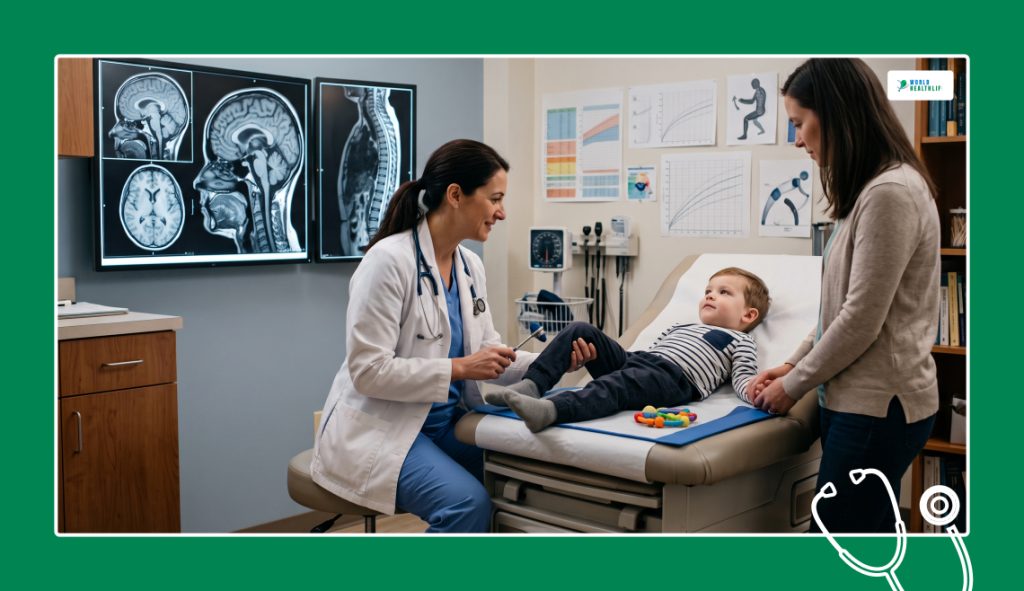
Reaching a formal diagnosis requires a careful and multi-step clinical approach. Moreover, it combines long-term developmental observations with advanced neurological imaging techniques.
Clinical Evaluation And Imaging
The diagnostic journey of spastic quadriplegia requires a comprehensive approach to tracking the early developmental trajectory of a child. Clinicians never rely on a single test.
Instead, they integrate real-time physical observations with advanced neuroimaging to confirm a diagnosis. This multi-layered process ensures accurate tracking of motor development while pinpointing the exact structural changes within the brain.
| Diagnostic Tool | Clinical Purpose | What It Identifies / Tracks |
| Developmental Screening | Monitors early milestone timelines. | Tracks delays in head control, rolling, sitting, and intentional tracking. |
| Movement Assessment | Evaluates physical tone and reflexes. | Identifies hypertonia, abnormal deep tendon reflexes, and persistent primitive reflexes. |
| Brain MRI | Provides high-resolution neuroimaging. | Confirms structural damage, white matter loss (PVL), or past fetal strokes. |
Developmental Screening & Movement Assessment
Pediatric neurologists evaluate structural motor patterns and check if primitive neonatal reflexes (like the Moro reflex) have failed to fade. These formal observations highlight early motor delays before permanent stiffness sets in.
Magnetic Resonance Imaging (MRI)
This imaging tool serves as the gold standard for mapping the brain. An MRI scan confirms the diagnosis by clearly showing areas of injured tissue in the motor cortex, providing families with clear visual answers.
Classifying Severity With GMFCS
In order to offer standard language for medical providers and families, clinicians use the Gross Motor Function Classifying System (GMFCS).
This five-level system evaluates the overall functional abilities and reliance on assistive technology of an individual.
| GMFCS Level | Functional Mobility Characteristics | Primary Method of Movement |
| Level I | Walks independently without limitations; climbs stairs easily. | Independent walking |
| Level II | Walks independently with minimal limitations in outdoor environments. | Independent walking / minimal support |
| Level III | Walks using hand-held mobility devices indoors; uses wheelchairs for distances. | Walkers / manual wheelchairs |
| Level IV | Self-mobility is limited; transported in a manual or power wheelchair. | Adaptive power mobility |
| Level V | Severe limitations in head and trunk control; fully reliant on assistive technology. | Transported in a manual wheelchair |
The majority of individuals who are diagnosed with this condition fall into GMFCS levels IV or V. Moreover, this highlights their need for comprehensive physical support, specialized seating systems, and long-term assistance.
Treatment And Management Approaches
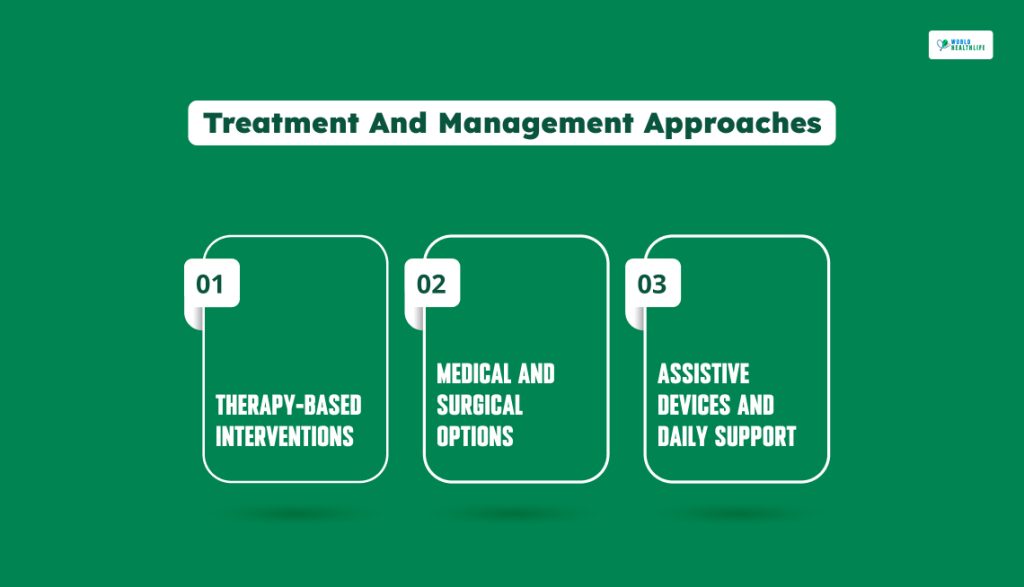
While the underlying brain injury cannot be repaired, you can significantly manage symptoms, minimize pain, prevent complications, and boost communication. With the help of a comprehensive and multi-specialty treatment plan, it is possible.
Therapy-Based Interventions
Daily therapeutic exercise forms the foundation of any care plan. Daily therapeutic exercise forms the strong foundation of any effective care plan.
For instance, physical therapy focuses on regular stretching to maintain joint flexibility and delay contractures. Additionally, it optimizes alignment and teaches safe transfer techniques.
Similarly, occupational therapy adapts everyday environments to improve independence. Specifically, it uses specialized tools to help individuals participate in daily routines like feeding, grooming, and utilizing communication systems.
Finally, speech-language pathology addresses swallowing difficulties to ensure safe feeding. At the same time, it introduces alternative and augmentative communication devices, such as eye-gaze systems, to give non-verbal individuals a clear voice.
Medical And Surgical Options
When therapies alone cannot manage severe hypertonia, medical and surgical options can offer additional relief. Additionally, oral muscle relaxants, such as baclofen or diazepam, help in the reduction of widespread muscle tension.
For targeted relief, clinicians often inject Botulinum Toxin (Botox) directly into spastic muscle groups to temporarily relax them and improve range of motion.
In more severe cases, an intrathecal baclofen pump may be surgically implanted in the abdomen to deliver medication directly to the spinal fluid. This minimizes systemic side effects.
Orthopedic surgeries, including tendon lengthenings or hip reconstructions, are also frequently performed to correct painful skeletal issues. This can also improve overall sitting or standing alignment.
Assistive Devices And Daily Support
Maximizing comfort and independence relies heavily on assistive technology. Customized wheelchairs include specialized trunk supports, headrests, and pressure-relieving cushions to help prevent spinal issues and skin breakdown.
Additionally, orthotic devices such as ankle-foot orthoses (AFOs) keep limbs properly aligned. On the other hand, environmental control units allow individuals to operate lights, computers, and home appliances independently.
Life Expectancy And Long-Term Outlook
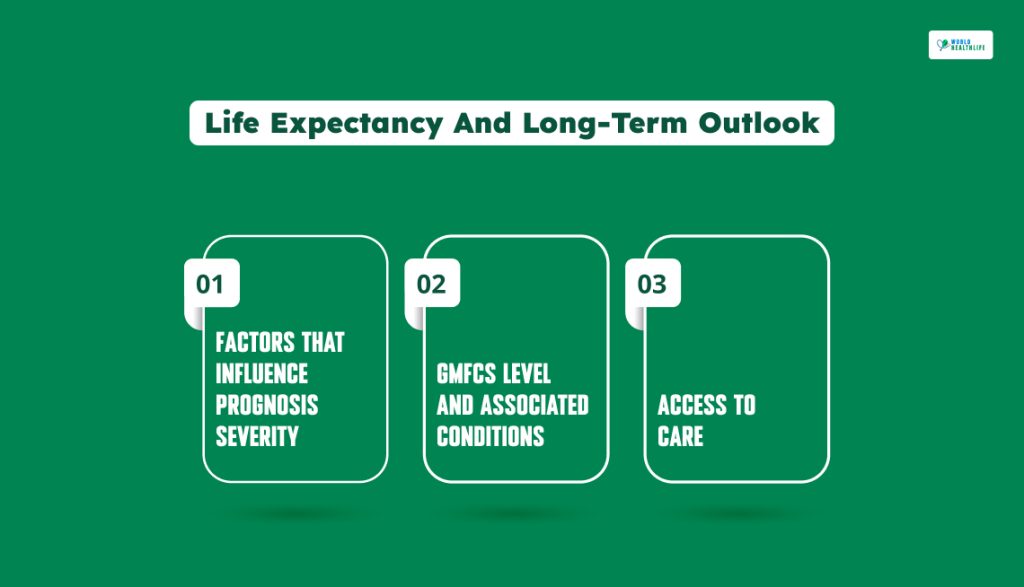
A diagnosis of spastic quadriplegia naturally brings questions about what the future holds. It is vital to understand that the underlying brain injury itself is non-progressive and will not worsen over time.
Factors That Influence Prognosis Severity
When it comes to life expectancy, it is rarely dictated by the brain injury itself. Instead, it is dictated by how effectively secondary medical complications are managed.
With the help of proactive and high-quality medical care, many individuals live well into adulthood.
However, the primary challenge to long-term health typically stems from respiratory vulnerabilities. These include recurrent aspiration pneumonia caused by swallowing difficulties, along with severe untreated spinal deformities.
These can eventually compromise heart and lung function.
GMFCS Level And Associated Conditions
An individual’s long-term outlook is closely linked to their specific GMFCS level. Additionally, the presence of co-occurring conditions plays a massive role.
For example, individuals at Level IV who can assist with their transfers and have well-controlled seizures often face fewer medical complications.
In contrast, those at Level V who experience severe, treatment-resistant epilepsy or profound swallowing challenges face much higher risks. Therefore, early and proactive management of these conditions is key to reducing long-term health risks.
Access To Care
The availability of consistent, specialized care is a major factor in long-term outcomes. Specifically, regular access to pediatric and adult clinics keeps health tracking on schedule.
Furthermore, routine orthopedic evaluations, proactive respiratory therapies, and nutritional support can dramatically alter an individual’s health path.
Ultimately, this continuous monitoring prevents minor issues from turning into severe, life-threatening complications.
Beyond The Condition: Living With Spastic Quadriplegia
Living with this condition requires an ongoing commitment from families, caregivers, and medical teams. While the physical challenges are real, they do not define an individual’s worth, potential, or capacity for joy.
Instead, by combining advanced assistive technology, targeted therapies, and a supportive community, individuals can experience rich, deeply fulfilling lives.
Currently, the focus is shifting toward creating inclusive educational settings and accessible living spaces.
At the same time, developers are building reliable support networks that empower individuals to communicate, express their choices, and connect with the world around them. Undoubtedly, navigating this journey demands patience and resilience.
However, with early intervention and a dedicated care team, families can confidently build a supportive, meaningful path forward.
| Disclaimer: This article is for informational and educational purposes only and does not substitute for professional medical advice. Reading this content does not create a doctor-patient relationship. Always consult a qualified healthcare provider for medical concerns and never delay seeking professional advice based on what you read here. |
References:
1. Cerebral Palsy Guide. (2025). Periventricular leukomalacia | What it means for your baby.
2. Cerebral Palsy Guide. (2024). Speech therapy for Cerebral Palsy – Improving communication.


