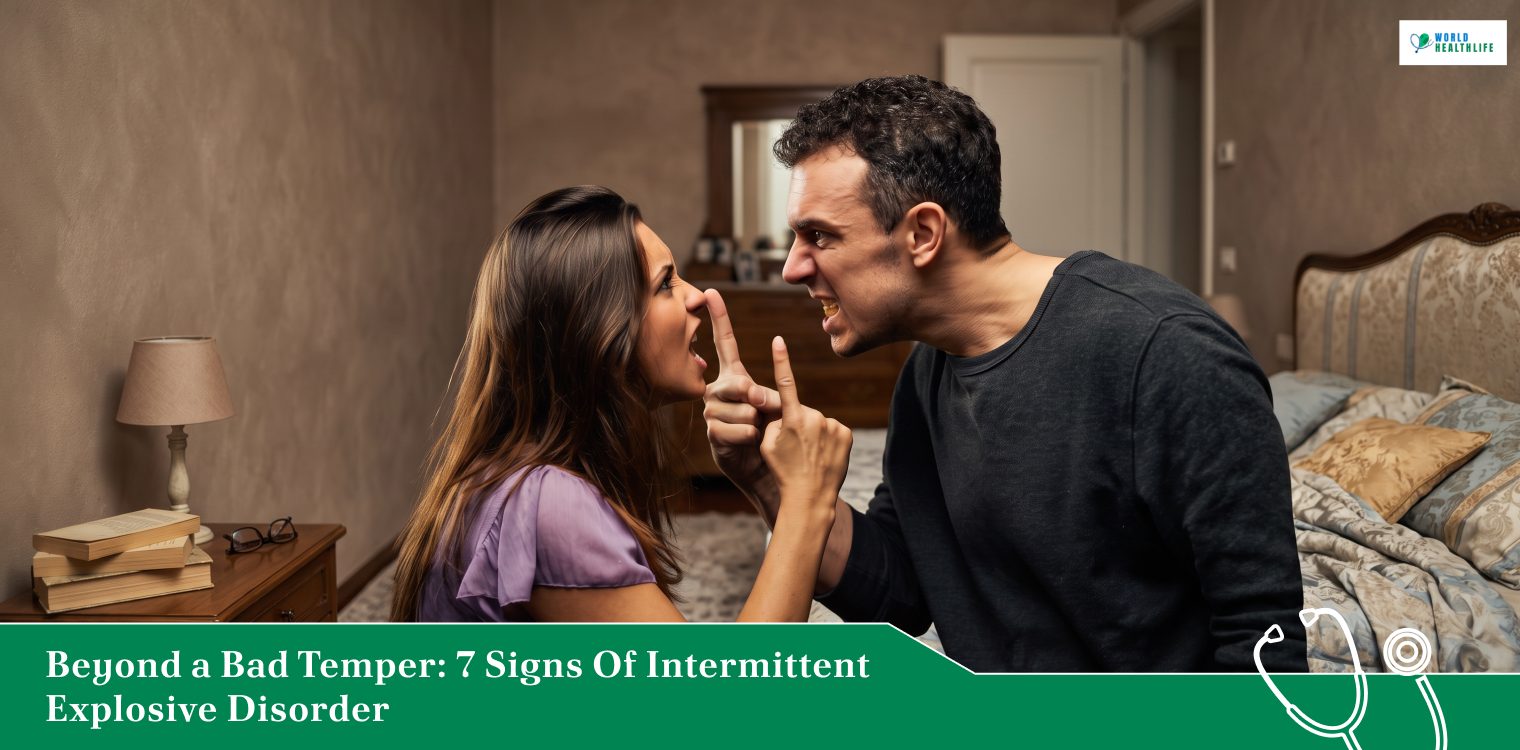
Anger is a universal human emotion. However, modern daily pressures have pushed many people to their absolute limits.
From gridlocked traffic and toxic workplace dynamics to underlying domestic stress, intense irritation has become a visible part of daily life.
In most scenarios, ordinary anger is entirely situational. That can be a temporary spike in frustration that naturally cools down once the provoking incident passes.
However, when anger feels instantaneous, completely uncontrollable and wildly disproportionate to the situation, it may point to a deeper clinical condition known as Intermittent Explosive Disorder (IED).
Understanding the dividing line between a hot temper and a psychiatric condition is vital. This is especially significant for anyone trying to navigate volatile relationships without judgment or labels.
If you are watching someone you care about exhibit extreme emotional outbursts, gaining objective clarity is the first step toward finding a solution.
Recognizing the 7 signs of intermittent explosive disorder is very important here. It allows you to accurately differentiate a typical stress response from a mental health condition that requires specialized clinical support.
What Is Intermittent Explosive Disorder?

Intermittent Explosive Disorder (IED) is a distinct neurodevelopmental and behavioral mental health condition. It is characterized by recurrent, sudden and extreme outbursts of rage.
These explosive episodes are completely unprovoked or wildly disproportionate to any actual psychosocial stressor.
Unlike typical frustration, an IED episode bypasses the brain’s normal emotional regulation filters. Consequently, this creates a state of temporary behavioral dysregulation.
Common Behavioral Symptoms Of IED
During an active explosive episode an individual completely loses behavioral control.
The outburst usually manifests through specific destructive channels.
- High-Decibel Verbal Assaults: Screaming, shouting and deploying intense verbal tirades designed to intimidate.
- Physical Aggression: Punching walls, kicking doors, smashing electronics or throwing nearby objects.
- Interpersonal Violence: Threatening physical harm, shoving, or engaging in direct physical altercations.
The Underlying Neurobiological Causes
According to research, it has been indicated that IED is not a choice or a simple personality flaw. Instead, it is a complex condition that is rooted in neurobiology.
Additionally, it often involves a deficiency in serotonin regulation within the prefrontal cortex. This is the area of the brain that is responsible for impulse control.
Individuals with IED frequently have overactive amygdala responses. This means their brains perceive minor inconveniences as direct physical threats. As a result, this triggers an immediate explosion of fight-or-flight.
The 7 Signs Of Intermittent Explosive Disorder To Watch Out For
To help individuals, families, and partners identify when emotional volatility has crossed a clinical line, psychologists tend to look for a consistent behavioral pattern.
Receiving the 7 signs of intermittent explosive disorder offers an objective framework. This allows for a comprehensive understanding of whether an individual’s anger requires professional mental health intervention.
1. The Reaction Is Disproportionate To The Trigger
What does this mean?
Well, think about it! When you are on the road, and someone cuts you off roughly. What will you do? Maximum you will get annoyed and mutter something under your breath. Yes, your heart starts beating faster, but it then settles in minutes, and you know how to control it.
Well, this is normal anger!
Now imagine the same situation leading to screaming, chasing the other car, or trying to block it. If you are doing that, you have IED. This is much more extreme and does not happen as often.
However, with IED, this mismatch is common and results in small inconveniences that lead to extreme triggers and explosions.
With IED, the trigger may be minor, but the reaction is not. That imbalance is one of the clearest warning signs. So, consider the level of reaction as a proper sign.
2. The Anger Feels Instant And Unstoppable

Normal anger often builds you is you are present in the moment; somehow, you can sense it.
- Tight shoulders.
- Clenched jaw.
- Quick thoughts.
If it is happening to you, you have the option to simply pause it. This window does not exist with IED.
IED outbursts feel different. They hit fast, so fast it’s almost like a switch flipping.
- One moment calm
- The next moment, shouting.
Many people describe it as “blacking out” emotionally. Not literally, but it feels automatic. Like the body reacts before the mind catches up.
Later, the person with IED might say, “I don’t know what came over me.”
That sense of lost control is a major difference.
3. The Pattern Keeps Repeating Over Time
Everyone loses their temper now and then. It happens with people who have experienced –
- A bad week.
- Lack of sleep.
- High stress.
But these moments are not constant.
On the other hand, Intermittent Explosive Disorder involves repeated episodes over time: weeks, months, and sometimes years.
This becomes so regular that the family members may start expecting it, and coworkers may walk on eggshells.
Therefore, it becomes a pattern, not an accident, and even after promises to change, the cycle continues.
This repetition matters, and you can understand the difference with this repeated pattern.
4. Outbursts Escalate Into Physical Or Verbal Aggression
Among the 7 signs of intermittent explosive disorder, this one is most prominent and important as well. It involves the intensity of anger.
Normal anger can involve raised voices, firm words, and even heated discussions. However, it does not usually lead further and stops short of harm.
However, IED often crosses that line!
From throwing objects, punching walls, to breaking phones and pushing someone, anything can happen. Intense verbal attacks that feel deeply hurtful are also common with IED. Even if injuries are minor, the aggression is real.
In many cases, the person does not plan the behavior. It bursts out and then fades. But the damage may remain, and that is a serious distinction to understand and identify.
5. Deep Shame and Regret Follow the Crash

After a normal argument, people might feel mild regret. They mostly apologize for the relationship, and it becomes normal.
With IED, the emotional crash afterward can feel heavy.
- Embarrassment.
- Shame.
- Guilt.
Some individuals feel shocked by their own behavior. They may avoid the people involved. Also, they may replay the event repeatedly in their minds.
What makes it harder is this: despite the regret, another episode may happen later. So, the shame builds over time, and this emotional pattern differs from ordinary frustration.
6. Core Relationships And Employment Suffer
Normal anger does not usually destroy stability. Of course, arguments happen, but then life continues.
However, with an IED, consequences can be larger.
Frequent conflicts at home, strained marriages, and children feeling afraid are common situations with IED. You will also see them facing problems with coworkers and even job losses.
Sometimes legal trouble enters the picture. The anger stops being just an emotion. It starts shaping daily life.
When anger regularly damages relationships or career paths, it signals something beyond typical irritation.
7. A Brief Sense Of Relief Precedes The Emotional Crash

Among the 7 signs of intermittent explosive disorder, this part surprises many people. During an explosive episode, there may be a sudden release of tension or a feeling of pressure escaping.
For a moment, it feels powerful and almost relieving. Then comes the crash. Then come regrets and calm things down. But the damage is already done.
In contrast, normal anger does not depend on explosive release for relief. Rather, resolution comes from communication or from stepping away and cooling down. That temporary relief cycle is another clue that will help you understand the difference.
What Normal Anger Actually Looks Like?
To see the difference clearly, it helps to define healthy anger.
Normal anger:
- Has a clear reason
- Matches the situation
- Can be expressed in words
- Fades with time
- Does not repeatedly cause harm
Anger itself is not the enemy. It serves a purpose by helping us protect our boundaries. It also highlights moments of unfairness and can push us to make necessary changes.
However, difficulties arise when anger becomes frequent, explosive, or harmful. When that happens, it shifts from being a helpful signal to a source of strain in daily life.
Why People Confuse the Two
There are several reasons this happens.
First, anger is widely accepted in many social settings. Terms such as “short temper” or “hot‑headed” often make intense reactions appear like fixed personality traits, rather than warning signs.
Second, people tend to minimize patterns. They focus on isolated incidents rather than the overall trend, making it harder to recognize a deeper issue. Third, shame prevents many individuals from speaking openly. They worry about being judged, so they avoid reaching out for support.
Because of all these factors, Intermittent Explosive Disorder can remain unnoticed for years. Looking at consistent patterns rather than single moments helps reduce confusion and bring clarity.
When Is It Time to Seek Support?

Not every angry moment requires professional help. However, support may be useful if:
- Outbursts feel uncontrollable
- There is a fear of hurting someone
- Relationships are repeatedly strained
- Guilt feels overwhelming
- Attempts to self-manage keep failing
A mental health professional can carefully assess the situation. They will look at how often the anger appears, how strong it is, and how much it affects daily life. In some cases, the issue may be Intermittent Explosive Disorder.
However, at other times, the symptoms may stem from stress, trauma, depression, or another underlying concern. Through this process, the goal is understanding, not labeling. A clear picture helps guide the right kind of support.
Treatment and Change
The idea of starting treatment can feel overwhelming. Many people worry about what it involves, or whether it will actually help. But with the right kind of support, improvement is common. Therapy usually works on emotional regulation.
It teaches you to notice early signs of rising anger and to slow things down before the reaction takes over. Small pause techniques often make a real difference and, over time, help build healthier responses. In some cases, medication is added, but only when it fits the person’s needs.
A Note for Families and Partners
Living with someone who has explosive anger can drain you. Some days it may even feel frightening. Especially when the reactions come out of nowhere.
If you start noticing a pattern that feels stronger than ordinary anger, do not drag yourself into it. Choose a quiet moment when things are calm. Speak simply, without blame. But, most importantly, keep the focus on concern rather than criticism.
You might say something like,
“I see these episodes take a toll on you, and I’m worried about how they affect you.”
Words like these open space for a real conversation. At the same time, blaming usually shuts it down.
At the same time, your own safety has to come first. Most importantly, you have to set boundaries for yourself. It is a necessary step to protect your well‑being. It will also help you to keep some stability in the relationship. In conclusion, that boundary is what makes the next step possible.
Understand The Difference Before It’s Too Late: Recognizing the Patterns of IED
Distinguishing a passionate personality from a psychiatric condition requires evaluating long-term behavioral trends rather than isolated arguments.
A standard stress response scales appropriately to a problem and fades without causing permanent harm.
On the other hand, Intermittent Explosive Disorder creates a repetitive pattern of disproportionate, instant, and destructive rage.
Recognizing the 7 signs of intermittent explosive disorder is the ultimate key to replacing confusion with objective medical clarity.
Unprovoked explosions can regularly damage your peace, your career, or the safety of your loved ones. Thus, breaking the silence and reaching out to a mental health professional is the most courageous step you can take.
Disclaimer: The information provided in this article is for general informational purposes only. It does not, and is not intended to, constitute medical or health advice. Please consult a qualified healthcare professional for medical guidance or expert health assistance.