Imagine an infant suddenly losing all muscle control on one side of their body, while appearing completely paralyzed. Then, the moment they drift off to sleep, the paralysis completely vanishes as if it never happened.
This bizarre and terrifying cycle forms the baseline reality of alternating hemiplegia of childhood (AHC). The condition is an ultra-rare neurological condition affecting roughly one in a million people.
Since the disorder mimics far more common neurological issues, securing an accurate diagnosis becomes a brutal, high-stakes medical detective story.
On average, families must endure up to six long years of misdiagnoses, false alarms, and failed treatments before doctors pinpoint the true culprit.
This extended diagnostic journey is more than just a clinical delay. Instead, it is a profound psychological and financial ordeal for parents.
Unravelling this complex timeline requires a deep and realistic look at why the condition is so easily misread.
Therefore, to understand this condition, we also need to understand its rigid clinical criteria used to isolate it and the way modern genetics is finally shortening the map for families.
The Master Mimic: Why Alternating Hemiplegia Of Childhood Confounds Early Medicine
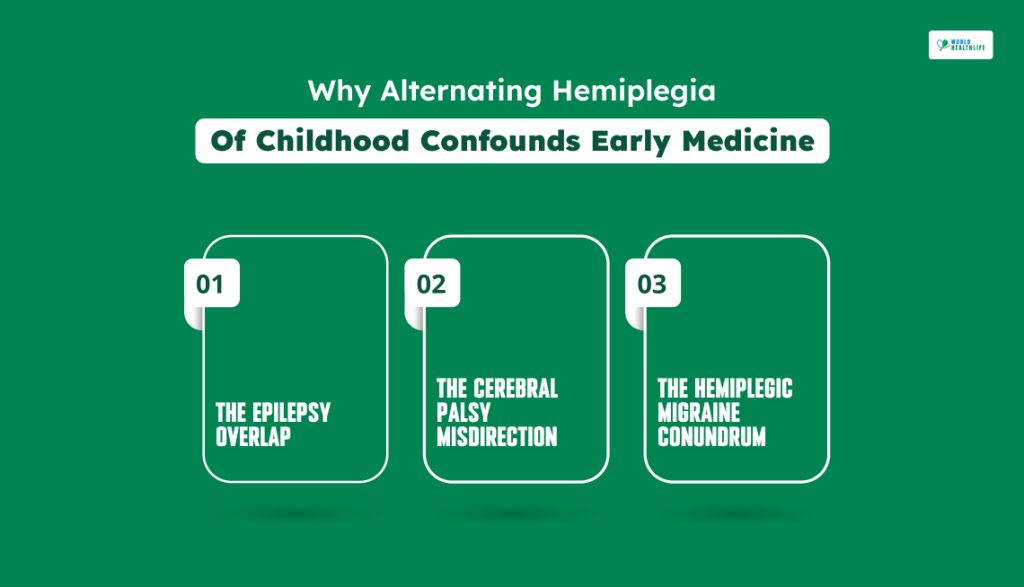
The primary reason alternating hemiplegia of childhood takes years to diagnose is its talent for mimicking other common pediatric conditions.
When a baby experiences sudden and rhythmic eye twitching or limb stiffness, physicians rarely look for a one-in-a-million genetic anomaly first.
Instead, they understandably suspect classic pediatric emergencies or developmental disorders.
The Epilepsy Overlap
In the vast majority of cases, early alternating hemiplegia of childhood attacks are completely misdiagnosed as complex focal epilepsy.
The involuntary eye jerking or nystagmus, along with sudden muscle locking, closely mirrors active seizure activity.
Consequently, infants are routinely placed on aggressive anti-epileptic drug regimens.
However, because AHC is a structural pump failure rather than an electrical brain storm, these standard seizure medications provide absolutely zero relief.
Accordingly, parents are left to watch their children suffer through ongoing attacks while dealing with heavy drug sedatives.
The Cerebral Palsy Misdirection
As the paralytic attacks continue over several months, the physical toll can cause low muscle tone, global clumsiness and developmental delays.
At this stage, clinicians frequently default to a diagnosis of atypical cerebral palsy. While both conditions cause profound motor limitations, cerebral palsy stems from a static and non-progressive brain injury.
Conversely, AHC is a dynamic and unpredictable condition.
Here, a child can be fully paralyzed on Monday, completely functional on Wednesday, and paralyzed on both sides of the body by Friday.
The Hemiplegic Migraine Conundrum
For older toddlers or adolescents on the atypical spectrum, the condition is usually mistaken for severe hemiplegic migraines.
Both disorders trigger temporary and one-sided paralysis accompanied by intense headaches.
However, classic migraines do not feature the widespread paroxysmal movement disorders defining a standard AHC flare-up. These include continuous writing limbs, choreoathetosis, or sudden severe dystonic muscle locking.
The Clinical Blueprint: Navigating the Criteria of Exclusion
Routine laboratory blood tests and standard brain MRIs show completely normal results in the early stages. As a result, alternating hemiplegia of childhood cannot be identified through traditional medical imaging.
Instead, neurologists must rely on a strict “diagnosis of exclusion.”
Doctors must methodically test for and rule out strokes, brain tumors, metabolic defects, and vascular malformations. That is done before they can safely consider an AHC diagnosis.
To standardize this process, the medical community relies on specific validation markers known as the Aicardi clinical diagnostic criteria. A patient must fulfill every single one of these benchmarks to verify the condition.
Baseline Aicardi Diagnostic Standards
| Clinical Indicator | Strict Validation Parameter | Diagnostic Reality |
| Age of Onset | Symptoms must appear explicitly before 18 months of age. | Early signs usually emerge within the first six months of life, often starting as unusual eye movements. |
| Paralytic Pattern | Repeated episodes of hemiplegia affecting either side of the body. | The weakness can shift from the left side to the right side seamlessly, or consume both sides at once. |
| Movement Anomalies | Presence of dystonia, choreoathetosis, or sudden ataxia during attacks. | Active episodes trigger severe muscle twisting or uncontrollable writhing alongside the baseline paralysis. |
| The Sleep Reset | Total temporary disappearance of all symptoms upon falling asleep. | This is the absolute signature of the disease. Symptoms vanish in sleep but can return shortly after waking. |
The Family Toll: The Human Cost Of The Odyssey
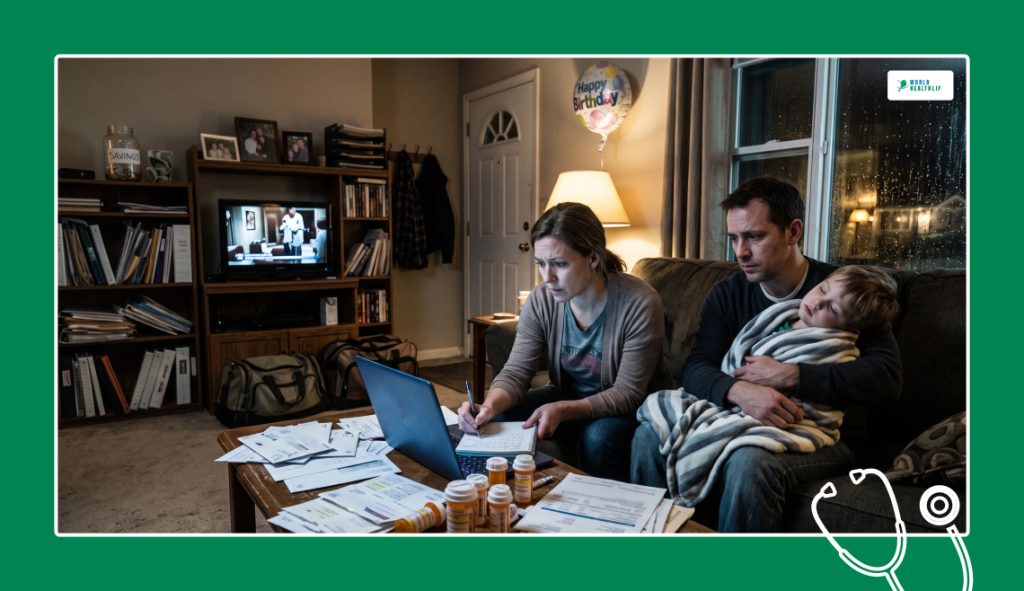
Waiting six years for a correct medical label places an unimaginable burden on a household.
Parents are forced to live in a state of perpetual hyper-vigilance, never knowing what simple everyday trigger will send their child into a multi-day paralytic state. These can be any basic activity such as:
- A warm bath
- A sudden loud noise
- Minor excitement
The financial drain is equally devastating. Furthermore, families routinely exhaust their savings on endless hospital admissions, repeated unnecessary lumbar punctures and specialized consultations across multiple states.
Worse still is the deep emotional isolation. The condition is so rare that local pediatricians often have never heard of it. Consequently, parents are forced to become the primary medical experts for their own children.
Living without a diagnosis means living without a community, leaving families entirely adrift in a sea of medical uncertainty.
Shifting The Horizon: The Genetic Revolution
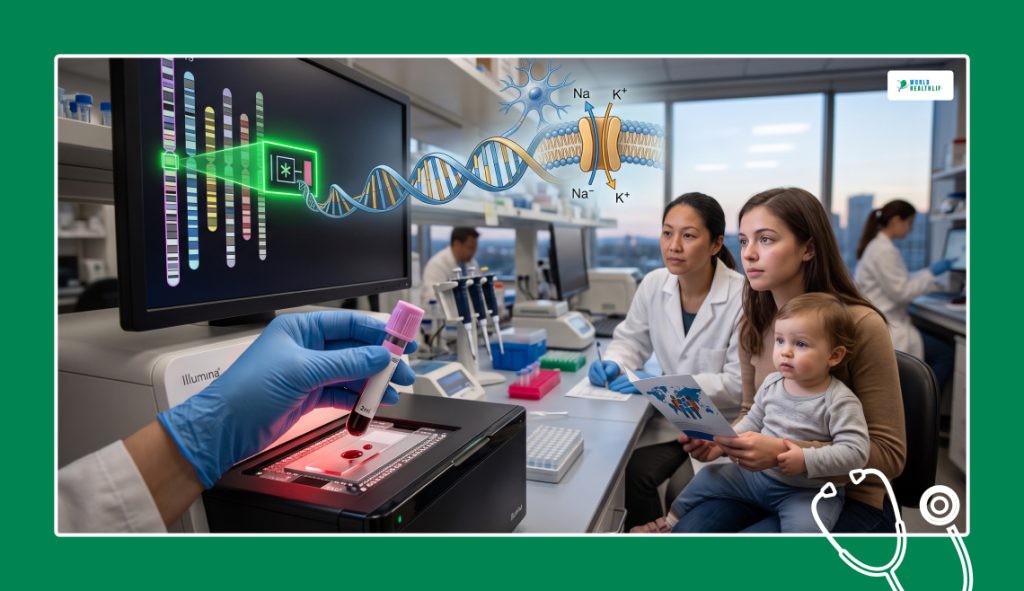
Fortunately, the long and frustrating era of diagnosing solely by exclusion is coming to a close.
The turning point arrived when international research networks traced the root cause of alternating hemiplegia of childhood. These were traced straight to spontaneous mutations within the ATP1A3 gene on chromosome 19.
Shorter Timelines Through DNA Screens
This specific gene is responsible for building a vital sodium-potassium pump that regulates electrical stability across the central nervous system.
When this pump is broken, the brain’s internal currents experience sudden, massive short-circuits.
Implementing early, comprehensive neurogenetic blood panels the moment an infant presents with a combination of early eye twitching and temporary weakness helps modern clinical teams.
In this way, they can completely bypass years of diagnostic guesswork.
A single blood draw can now confirm the specific ATP1A3 mutation in weeks rather than half a decade.
Emerging Pipelines And Advocacy
Securing a fast, accurate genetic diagnosis changes everything.
Accordingly, it immediately opens the door to targeted prophylactic therapies like flunarizine. This helps dampen the severity and frequency of the paralytic drops.
Furthermore, global advocacy organizations like the AHC Foundation utilize this genetic data. They connect families worldwide, pooling resources to fund advanced clinical trials into targeted gene therapies.
Preserving Capital And Quality Of Life
The diagnostic odyssey of alternating hemiplegia of childhood highlights a critical truth in modern medicine. That is, a delayed diagnosis is its own unique form of trauma.
Moreover, we cannot afford to let these families spend a significant portion of their child’s early developmental years chasing medical shadows. Nor can we endure incorrect treatments.
By training pediatricians to spot early warning signs, we can completely eliminate the six-year waiting gap. Typical warning signs include the unique “sleep reset” phenomenon and pushing for immediate genetic screening.
Raising public awareness and securing dedicated research funding is not just about labeling a rare condition. Rather, it is about giving these resilient families their time, their peace of mind, and their lives back.
Disclaimer: The information provided in this article is for general informational purposes only. It does not, and is not intended to, constitute medical or health advice. Please consult a qualified healthcare professional for medical guidance or expert health assistance.