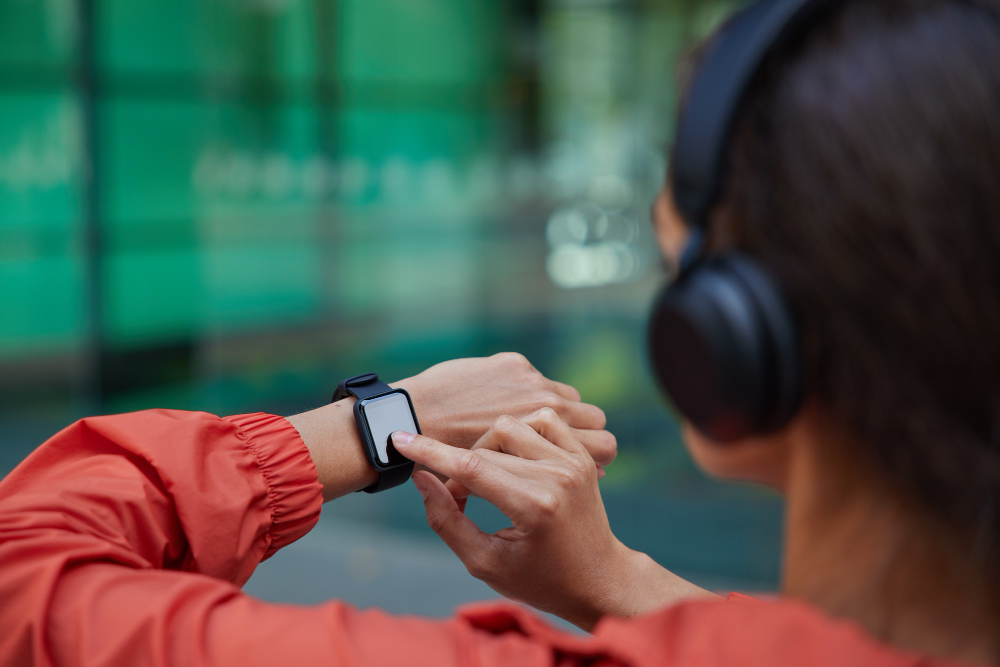
You were sitting quietly on the couch, reading your book, when out of nowhere your smartwatch health alerts went off. Your heart rate is unusually high. And suddenly, as if on cue, you start noticing palpitations and breathlessness.
Did the smartwatch signal cause you to feel so worried that you started displaying psychosomatic signs? Or is there something actually wrong with your heart that warrants further evaluation?
Smartwatches and fitness trackers have become popular among today’s health-conscious people. Many use them to track steps on walks and runs; others wear them at night to assess sleep patterns.
This consumer technology becomes a source of anxiety when it flags something not quite right, whether it is your oxygen saturation or sleep cycle.
Smartwatch Health Alerts: What To Do?
What should you do next after receiving concerning smartwatch healoth alerts? Let’s break it down.
Assess The Context Of The Warning
First, check the situation in which your smartwatch warned you. For example, suppose your watch signaled a high heart rate beyond your usual metrics. This doesn’t immediately indicate cause for concern.
Were you exercising or feeling stressed emotionally? Did you consume too much caffeine? All these factors can elevate your heart rate.
According to the American Heart Association, caffeinated coffee may lead to cardiovascular benefits when consumed in moderation.
It can decrease the risk of atrial fibrillation and stroke. However, caffeine in energy drinks may lead to cardiovascular problems, even though current research is limited.
The bottom line? If your body was subject to any of these factors, from excessive caffeine consumption to dehydration, an elevated heart rate may not be an emergency.
Likewise, anomalies in oxygen saturation or sleep may also be temporary phenomena caused by stress and lifestyle choices. Realizing this is essential to avoid letting fitness trackers make you paranoid.
Check For Associated Symptoms
Although a smartwatch trigger may be completely benign, it may indicate the need for further assessment if you have accompanying symptoms. If you experience any concerning signs, such as chest pain or unexplained weakness, it demands a checkup to rule out underlying problems.
It is also worth getting a medical opinion if your smartwatch signals continue to be worrying. For instance, some watches can track heart pulse patterns. If the readings are unusual, it may suggest a risk of atrial fibrillation. This needs a prompt examination.
In some cases, people may be asymptomatic and feel completely well. Only a thorough examination, such as an ECG, can identify the problem.
So, your next step should be to gauge whether:
- You have any symptoms that need medical attention.
- Your fitness tracker continues to signal worrying trends over the next few days.
Smartwatch Health Alerts: What If You’re A Senior Adult Or Have Preexisting Health Issues?
It is safest to take proactive action if you have preexisting medical concerns or are a senior adult. Your doctor may have recommended a fitness tracker to monitor key metrics, including heart rate and rhythm. Report sudden changes in these metrics to your medical team for prompt assessment.
Interpreting wearable health data needs close consideration of a patient’s symptoms, medical history, and risk factors. Such consideration is even more crucial when caring for older populations.
Some older adults prefer maintaining an ongoing health-monitoring relationship with community nurses. This ensures they work with professionals who understand their situation and saves them the stress of going to a hospital.
Professionals passionate about working with a high-care-needs population often pursue accredited nurse practitioner programs online to gain expertise in adult gerontology.
These courses, such as those offered by Rockhurst University, let nursing practitioners specialize in areas of gerontology, acute care, and psychiatric care. This equips them to deliver precise, thoughtful treatment that doesn’t treat readings at face value.
Acknowledge That Smartwatches Can Be Wrong
Finally, after you’ve handled the situation responsibly and nothing came of it, accept that it must have been a false alarm. Although smartwatch technology is highly advanced now, trackers can still show wrong readings from time to time.
Sometimes, this happens because you weren’t wearing the watch properly. Poor contact between the device and the skin can skew the watch readings. Sweat and skin tone can also change the numbers since most of these devices estimate blood flow near the skin.
At other times, movement during measurement can affect the result. Did you know that most smartwatches rely on arm movement to count steps? This means walking without moving your arms may affect the final numbers.
Calming Your Anxiety
Undoubtedly, relying too much on smartwatch numbers can be anxiety-inducing. The US FDA notes that timely notifications can lead to appropriate intervention. In contrast, false ones may lead to extra medical tests or drugs.
A BBC feature points out that a group of researchers even named this problem in the context of sleep metrics. It’s called orthosomnia.
“Sleep should be enjoyable. And not trying to just think about sleep as one more thing you have to do and have to get in to have your optimal performance. And you know, that can be a really negative thing.” – Dr. Kelly Glazer Baron, Orthosomnia Researcher.
Applying this sentiment to everything else your smartwatch tells you can be calming and possibly healthy. Each alarm doesn’t indicate a medical problem, and recognizing this while staying attuned to your body is key to that elusive wellness we aspire to.
Smartwatch Health Alerts: What Should You Do Next?
| Smartwatch alert | What you should do |
| High heart rate at rest | Recheck the reading and seek medical advice if it persists or recurs. |
| Irregular heartbeat | Save the alert and contact a healthcare professional. |
| Low blood oxygen reading | Recheck according to device instructions; seek care if symptoms occur. |
| Unusual sleep metrics | Look for ongoing patterns rather than relying on one night’s score. |
| Unexpected reading after exercise | Rest and recheck if you feel well. |
| Repeated false-looking alerts | Check device fit and discuss recurring alerts with a clinician. |
| Chest pain, severe breathlessness, or fainting | Seek emergency medical care immediately, regardless of smartwatch readings. |
Work With A Medical Team, Not A Device
For long-term health, you should build a trust-based relationship with your medical team. A device can be a daily monitoring partner, but it cannot replace the considered guidance of human experts.
This is why your doctor or nurse will likely run the necessary tests if you report suspicious readings on your smartwatch.
Balancing the urge to track everything with knowing how to tune out (when necessary) is also crucial for mental health. False alarms can be taxing. Building greater trust in the body’s natural signals is vital for living well.
If your body tells you something is off, prompt medical attention at your nearest health facility can put your mind at ease. It can also prevent a health scare from blowing up into an emergency, which is the whole point of wearables.
Read Also: