

If you or someone you love has recently received a Parkinson’s diagnosis, you might have this question flash first right in your mind. “How much time do we have before things change?”
Or more specifically, how fast does Parkinson’s progress?
For most people, Parkinson’s disease progresses slowly over 10 to 20 years or more, though no two timelines follow the exact same script. But what many people fail to realize is that the condition begins quietly long before a diagnosis is ever made.
Actually, deep inside the brain, dopamine-producing neurons start to break down years before the first subtle tremor or stiff shoulder appears.
By the time noticeable movement symptoms bring someone to a neurologist, the brain has already been adapting behind the scenes for quite a while.
Thus, understanding how fast Parkinson’s moves requires looking beyond a single average number. In this guide, we will break down the standard clinical stages while doing the following:
- explore why different subtypes move at dramatically different speeds
- examine the biological factors shaping your outlook
- share the proven steps you can take right now to protect your mobility
Understanding The Parkinson’s Progression Timeline
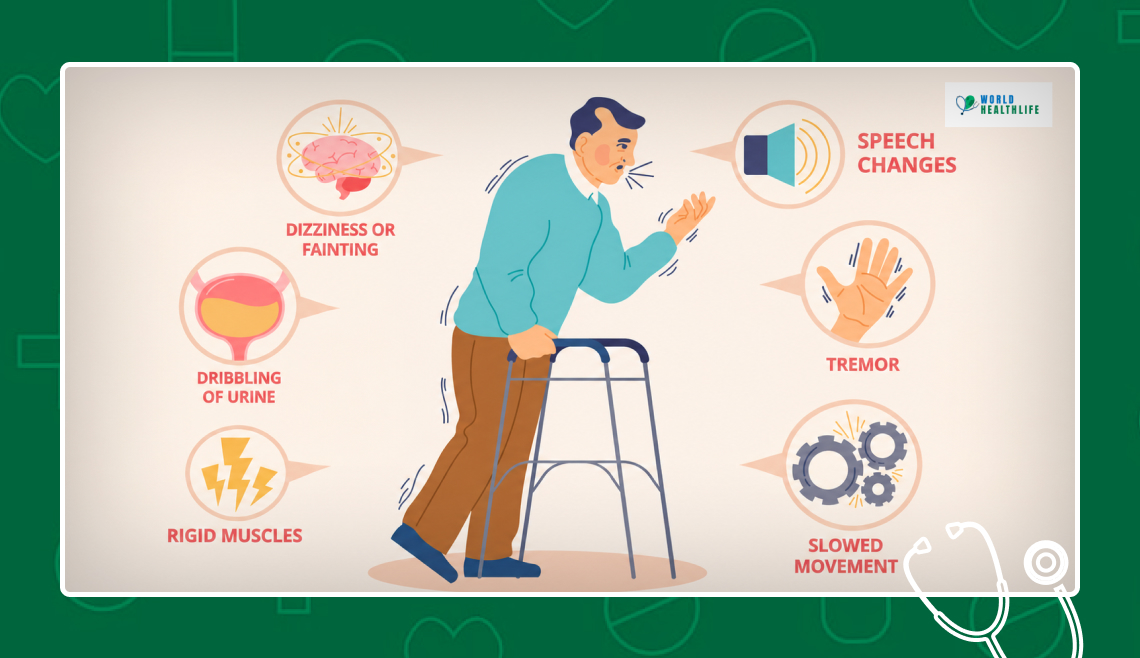
Neurologists tend to rely on standardized clinical tools in order to measure how Parkinson’s changes over time.
The most common framework for tracking physical movement is the Hoehn and Yahr Scale, which divides motor progression into five distinct stages. Along with that, doctors also use the MDS-UPDRS (Movement Disorder Society-Sponsored Revision of the Unified Parkinson’s Disease Rating Scale) frequently.
This helps them to evaluate daily living activities, mood, sleep, and non-motor symptoms.
While everyone moves through stages at their own rhythm, clinical data offers a helpful roadmap of what typical progression looks like across decades.
| Clinical Phase | Hoehn & Yahr Stage | Core Motor & Functional Signs | Typical Timeline Post-Diagnosis |
| Early Stage | Stages 1 & 2 | Mild tremor or stiffness on one side (Stage 1), eventually affecting both sides without balance loss (Stage 2). | Years 1 to 10 |
| Mid-Stage | Stage 3 | Slower movements, noticeable balance changes, and higher fall risk, though daily independence remains intact. | Around Year 10 |
| Advanced Stage | Stages 4 & 5 | Need for a walker or daily caregiver support (Stage 4), progressing to wheelchair or bed care and potential cognitive shifts (Stage 5). | Years 15 to 20+ |
Early Stage: Stages 1 And 2
In Stage 1, symptoms are rather mild and show up only on one side of the body. Also, you might notice a certain things. For instance, these can be slight resting tremor in one hand, subtle stiffness in a leg, or changes in facial expression that friends can barely catch.
In fact, daily habits rarely miss a beat
As the condition moves into Stage 2, symptoms cross over to both sides of the body. Walking may feel a little slower, and posture can start too stoop slightly. However, balance remains steady.
Actually, many individuals stay in these early stages for 5 to 10 years, often experiencing dramatic symptom relief from standard medications.
Mid-Stage: Stage 3
Stage 3 marks a clear turning point in physical stability. In terms of movements, they become noticeably slower, which is a symptom doctors tend to call bradykinesia.
According to Parkinson’s Foundation, bradykinesia or slowness of movement, is actually a key symptom of the condition, where it tends to affect daily tasks such as buttoning your shirt or brushing your teeth.
In fact, here, the body’s automatic balance reflexes weaken. Also, falls become a genuine concern during quick turn or on uneven ground.
Even so, people in Stage 3 can still dress, eat, and live independently with thoughtful adjustments at home. Moreover, for many patients with classic Parkinson’s, this middle chapter arrives roughly 10 years after their initial diagnosis.
Advanced Stage: Stages 4 And 5
By Stage 4, symptoms tend to become severe enough that living alone becomes something that is no longer safe. Moreover, while walking is still possible with a cane or walker, standing unassisted feels unsteady and exhausting.
Daily tasks such as bathing and meal preparation require hands-on help.
Lastly, Stage 5 represents the most advanced phase of the condition. Moreover, stiffness and rigidity in the legs make standing or walking impossible without full physical assistance. As a result, this leads to either the use of a wheelchair or bed confinement.
At this point, non-motor challenges such as hallucinations, confusion, or Parkinson’s disease dementia also become very common.
In fact, as stated by Parkinson’s.org, the Sydney Multicenter Study found that 83% of patients surviving to 20 years after diagnosis go on to develop dementia.
Additionally, in this stage, cognitive impairment ranging from severe memory loss to near-complete loss of recognition and understanding is common. In classic presentations, these later stages typically emerge 15 to 20-plus years after diagnosis.
Why Everyone’s Pace Is Different: Parkinson’s Subtypes

Have you ever wondered why one person with Parkinson’s continues to hike ten years after diagnosis while another might need a walker within four years.
According to modern neurology, there is a major reason uncovered. Parkinson’s disease is not a single uniform condition.
Researchers now group patients into distinct clinical subtypes on the basis of their dominant early symptoms. In addition, these groupings strongly predict progression speed.
| Parkinson’s Subtype | Share of Patients | Defining Early Features | Average Time to Major Mobility Milestones |
| Mild Motor-Predominant | 49% to 53% | Mild motor symptoms, strong response to levodopa, minimal non-motor issues | 14+ years |
| Intermediate Form | 35% | Balanced mix of moderate motor symptoms and non-motor complaints | 8 years |
| Diffuse Malignant | 9% to 16% | Early balance trouble, prominent non-motor symptoms, faster cognitive shifts | 3.5 years |
Mild Motor-Predominant: Approx. 49 To 53% Of Cases
Roughly half of all people who are diagnosed with Parkinson’s fall into this encouraging category. In fact, symptoms tend to stay mild and respond remarkably well to dopaminergic medications such as levodopa.
They also cause very few early cognitive or autonomic disruptions. On average, individuals in this group go 14 years or longer before reaching major mobility milestones.
Intermediate Form: Approx. 35% Of Cases
Now in this form, about one in three patients tend to experience a middle-ground trajectory. These individuals show a blend of moderate movement difficulties alongside manageable non-motor symptoms such as the following:
- Constipation
- Fatigue
- Mild sleep disturbance
Progression unfolds at a steady, predictable pace, averaging around 8 years before major mobility limitations appear.
Diffuse Malignant Subtype: Approx. 9 To 16% Of Cases
In this subtype, a smaller subset of patients face a steeper and faster climb from the start. The diffuse malignant subtype is characterized by early postural instability, walking difficulties, and prominent non-motor symptoms.
This includes early memory changes or blood pressure drops upon standing. Because multiple brain pathways are affected early on, this form reaches major mobility milestones in an average of 3.5 years.
What Influences The Rate Of Progression?
Beyond the clinical subtypes, there are several personal health and biological variables that act like a dimmer switch on how quickly Parkinson’s advances.
Understanding these factors helps in explaining why doctors hesitate to give exact timelines during your first appointment.
| Key Factor | Slower Progression Pattern | Faster Progression Pattern | Why It Matters |
| Age at Diagnosis | Young-onset (diagnosed under age 50), typically spreading gently across several decades | Late-onset (diagnosed after age 70) | Natural brain aging overlaps with the disease process in older adults |
| Initial Symptom Profile | Starts primarily with a classic resting tremor | Starts with postural instability and gait difficulty (PIGD), such as shuffling, freezing, or balance trouble | Early walking and balance issues point to wider pathway involvement from the start |
| Early Non-Motor Burden | Few or mild invisible symptoms at the time of diagnosis | Early presence of REM sleep behavior disorder, mild cognitive impairment, or severe autonomic issues | Shows the condition is affecting multiple brain and nerve systems early on |
| Comorbidities and Genetics | Well-managed heart and metabolic health, or specific slower-moving genetic profiles | Poorly controlled diabetes, high blood pressure, vascular disease, or certain GBA / LRRK2 gene mutations | Underlying vascular strain and specific genetic variants accelerate or alter neural wear and tear |
Evidence-Based Ways To Influence Your Trajectory
While modern medicine has not yet found a cure that stops Parkinson’s fully, you are far from a passive bystander.
Based on research over the past decade, it has been proven that what you do every week genuinely shapes the way your brain can adapt over time.
Symptom Management Vs. Neuroprotection
It helps to separate daily symptom relief from long-term brain protection. In fact, with medications such as carbidopa-levodopa, a remarkable job is performed. Here, missing dopamine is replaced, so you can move smoothly and stay active.
However, they do not stop underlying nerve cells from aging.
True neuroprotection comes largely from targeted lifestyle and rehabilitative habits. Also, they are responsible for helping surviving neurons build stronger, more resilient connections.
High-Intensity Aerobic Exercise
If someone packaged exercise into a pill, every neurologist in the world would prescribe it on day one.
Regular, vigorous aerobic exercise currently shows consistent clinical trial evidence as the strongest way to slow motor progression.
For example, you may try activities such as brisk cycling, treadmill walking, boxing workouts, or swimming at 70% to 85% of your maximum heart rate.
Vigorous movement stimulates natural brain-derived neurotrophic factor (BDNF), which acts like fertilizer for neural pathways.
Multidisciplinary Care
Building a specialized team early changes outcomes.
Try partnering with a movement disorder specialist. Say, for instance, a neurologist with extra training in Parkinson’s, a neuro-specialized physical therapist, or a speech-language pathologist can help preserve neuroplasticity.
Next, starting physical and voice therapy before major falls or swallowing issues begin keeps your body stronger. Besides this, it also prevents secondary injuries that could otherwise sideline your independence.
Tracking Your Personal Timeline
Since Parkinson’s unfolds gradually across years, subtle shifts are easy to miss during a brief 20-minute clinic checkup. So, keep a simple weekly symptom and medication log.
Try to jot down when your medication kicks in, when they tend to wear off, how well you slept, and any new balance or mood changes. This will assist your neurologist in having crystal-clear data.
With the help of this simple habit, your care team can separate natural progression from easily fixable medication wear-off. As a result, it will ensure that your treatment plan stays one step ahead.
But above all, remember that a diagnosis for PD is not a sprint. Instead, it is like a marathon.
With proactive care, consistent movement, and the right support network, most people can continue living rich, independent, and deeply meaningful lives for decades.
Disclaimer:
The information provided in this article is for general informational purposes only. It does not, and is not intended to, constitute medical or health advice. Please consult a qualified healthcare professional for medical guidance or expert health assistance.
References
- Parkinson’s Foundation. Bradykinesia (Slowness of Movement). Parkinson’s Foundation.
- Stage 5 Parkinson’s Disease: End-Stage Symptoms, Life Expectancy, and Care. (2026, March 20). Parkinsons.Org.
- Deng, X., Mehta, A., Xiao, B., Ray Chaudhuri, K., Tan, E.-K., & Tan, L. C. (2025). Parkinson’s disease subtypes: Approaches and clinical implications. Parkinsonism & Related Disorders, 130, 107208. PubMed.
- Cohen, F. (2024, July 23). Parkinson’s disease could have 3 subtypes, researchers find. Medicalnewstoday.Com; Medical News Today.


