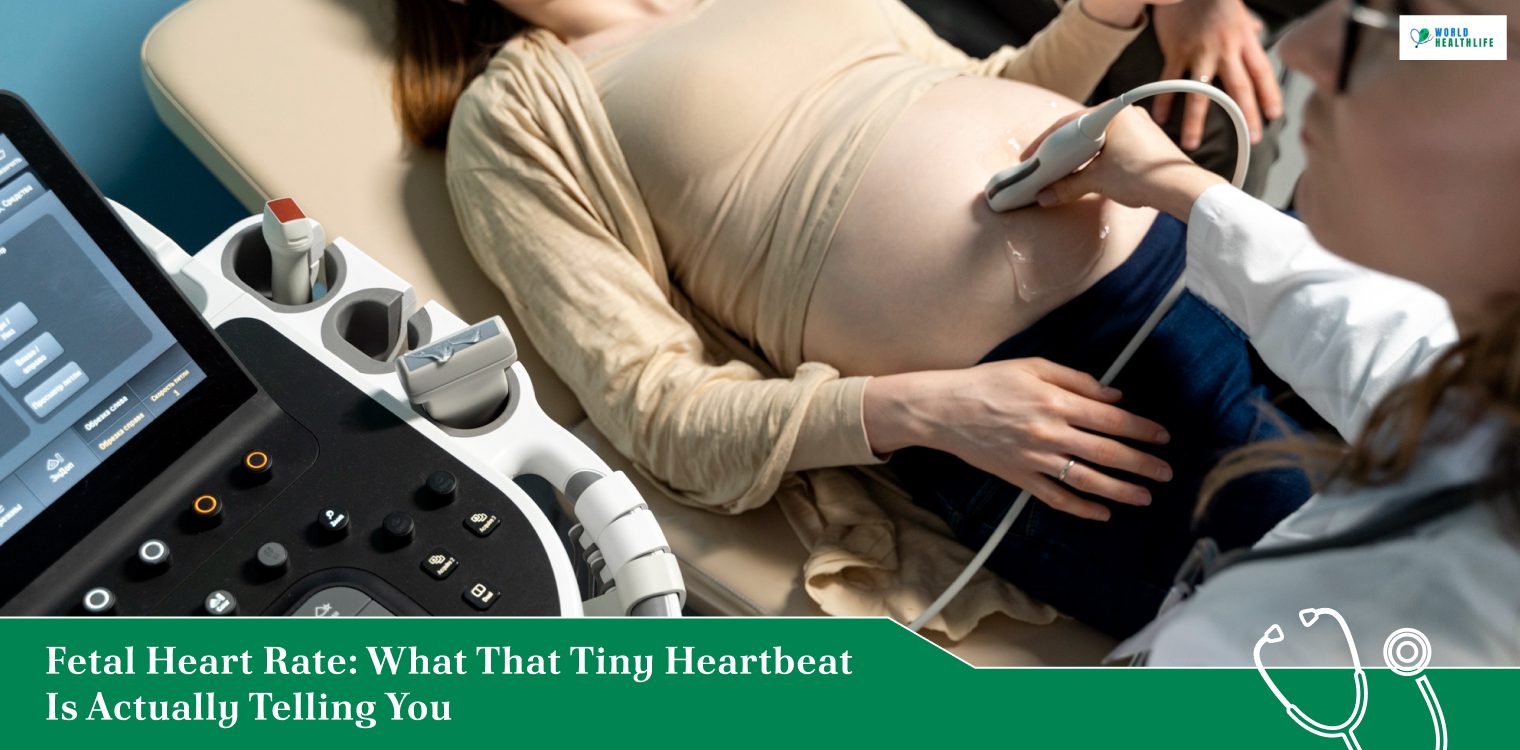
Remember the cutest moments you had during your pregnancy. I bet all mothers would agree on one point. That is nothing but their first fetal heart rate. So, let’s rewind and live the moment again.
The Doppler probe presses against her belly. After that, the room becomes quiet. Just then, she hears a sound. Fast and urgent.
After that, the first question that almost always appears on her mind: “Is that normal? It’s so fast.”
But the fetal heart rate is not just a reassuring sound at a prenatal visit. It’s one of the most informative clinical indicators in all pregnancy care. However, most parents never really told why. So let me try to explain the significance of fetal heart rate in simple terms.
What Is Fetal Heart Rate?
The fetal heart rate is how many times per minute your baby’s heart beats in the womb. Usually measured in bpm. Faster than an adult, and it varies based on what’s happening inside the uterus.
The heart muscle begins contracting rhythmically 3 weeks after conception. But it becomes visible on sonography for only around 6 weeks. That is three weeks of beating before it even shows a scan.
Providers check it using ultrasound or electronic monitoring. In simple words, they are always looking for a pattern over time, not just a single number.
Normal Fetal Heart Rate Changes Every Trimester
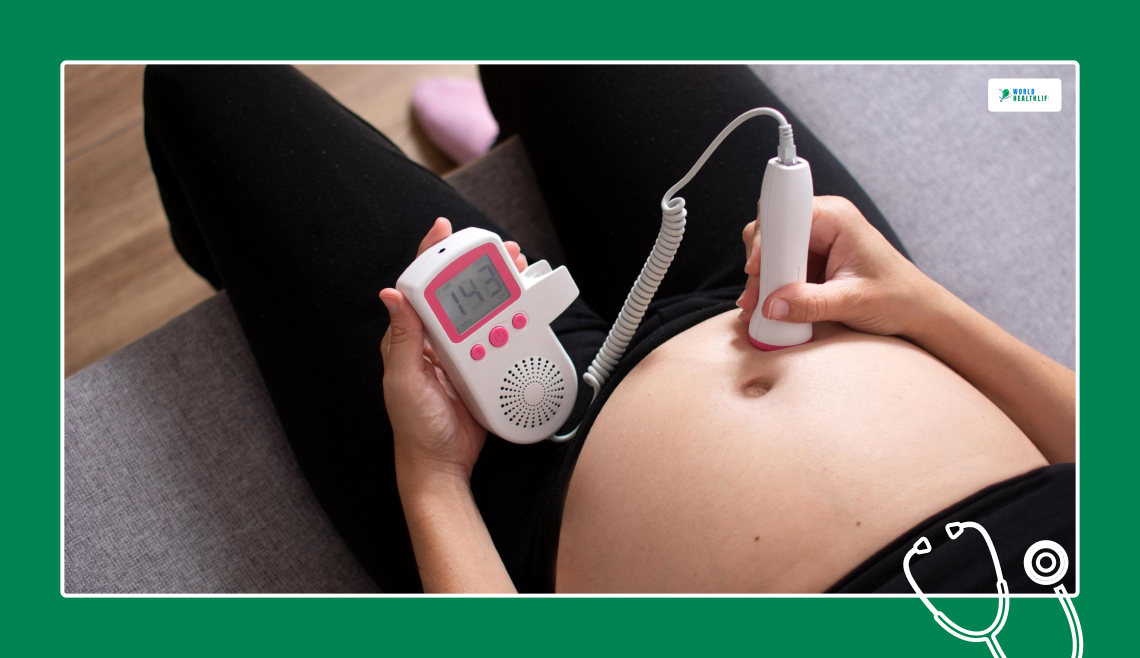
Most parents are told a single flat number and treat it as fixed. The fetal heart rate actually shifts considerably throughout pregnancy, and that’s entirely by design.
A normal fetal heart rate usually ranges from 120 to 160 bpm in the in-utero period. But the full clinical picture looks like this:
- ~110 bpm at 5–6 weeks
- ~170 bpm by 9–10 weeks, i.e the highest point of the entire pregnancy
- ~150 bpm by 14 weeks
- ~140 bpm by 20 weeks
- ~130 bpm at term
That arc reflects the developmental story of your baby’s cardiovascular system.
First Trimester
The embryonic heart rate ranges from 90–110 bpm at 5–6 weeks, then peaks at 140–170 bpm by 9–10 weeks. But you may ask here why so fast? A rapidly developing fetus demands constant oxygen delivery.
Pro Tip. During the first trimester, do not take medications like Tylenol PM or other OTCs we usually take without medical guidance.
The heart compensates by pumping hard. But that’s efficiency, not distress. In the same vein, the doctors prefer going for a transvaginal ultrasound in the first trimester. As a result, you will get a clearer and more detailed image of early pregnancy. At the same time, counting the fetal heartbeat is clearer.
Second Trimester
This is a vital period. In this stage, your baby’s fetal heart rate should stay between 120 and 160 bpm. But don’t think that it can never go up or down. I mean, if it scales slightly upward, don’t worry.
The mom’s movements or daily routine also affect the baby’s fetal heart rate. So, check that parity. When the mother walks a bit at a stretch, the fetal heart rate will increase slightly.
But here is the catch. If it increases exceptionally, then there is a problem. At the same time, if it stays still low, there is a problem as well.
Third Trimester
By now, you need to check for a decent change in your baby’s fetal heart rate. First, check whether the heart rate is gradually dropping. Don’t worry. That’s the natural thing that must happen at this stage. Again, it should not drop below a certain point.
Considering it’s the 3rd trimester; it must stay around 130 bpm. But why does it drop? Here is a simple explanation. As a mother or a parent, you must remember all the points I mention here.
Firstly, it reflects a maturing nervous system, which is now regulating the heart more effectively. Doctors begin using the Non-Stress Test (NST) at this stage. Especially if there are any risk factors present.
Quick Reference Table
| Stage | Gestational Age | Typical FHR |
|---|---|---|
| Early First Trimester | 5–6 weeks | 90–110 bpm |
| Peak First Trimester | 9–10 weeks | 140–170 bpm |
| Late First Trimester | 14 weeks | ~150 bpm |
| Mid Pregnancy | 20 weeks | ~140 bpm |
| Third Trimester | 27–36 weeks | 120–160 bpm |
| At Term | ~40 weeks | ~130 bpm |
What Happens When The Number Goes Outside The Range?
“Outside the range” does not automatically mean danger. To clarify, context is everything.
Fetal tachycardia is a heart rate above 160–180 bpm. A rate around 170 bpm may be classified as borderline. Common causes include maternal fever, dehydration, infection, or fetal movement during recording.
Abnormal fetal heart rate patterns, such as tachycardia, can indicate problems like fetal distress, cord compression, or placental insufficiency. But persistent patterns are the concern, not a single elevated reading.
Fetal bradycardia is the more urgent of the two, defined as below 100 bpm before 6.3 weeks, or below 120 bpm between 6.3 and 7.0 weeks of gestation.
Doctors say that the fetal heart rate must increase when the mother is in the later pregnancy stages. At least it should reach 110 bpm.
Anything below that is alarming. Again, I don’t mean occasionally hitting the 110 bpm mark. It should always and stably remain at or above 110 bpm.
Research has consistently linked early first-trimester bradycardia with poor outcomes. As a result, that 6-week scan is more clinically significant than most people realize.
A Quick Case Study
A woman at 30 weeks develops a mild infection and a low-grade fever. Her baby’s heart rate reads 168 bpm. In other words, it means borderline tachycardia. After that, the infection is treated.
Two days later, the rate is back to 144 bpm. Same number, but different cause, and different management. That is to say that context always matters more than the threshold.
Variable decelerations can be transient and harmless, or persistent and concerning. To clarify, we are talking about rapid drops, usually due to umbilical cord compression.
At the same time, late decelerations can signal placental insufficiency. Most importantly, take it seriously when it shows up during labor. But why? During late decelerations, the heart rate dips after a contraction rather than during it.
How Is Fetal Heart Rate Monitored?
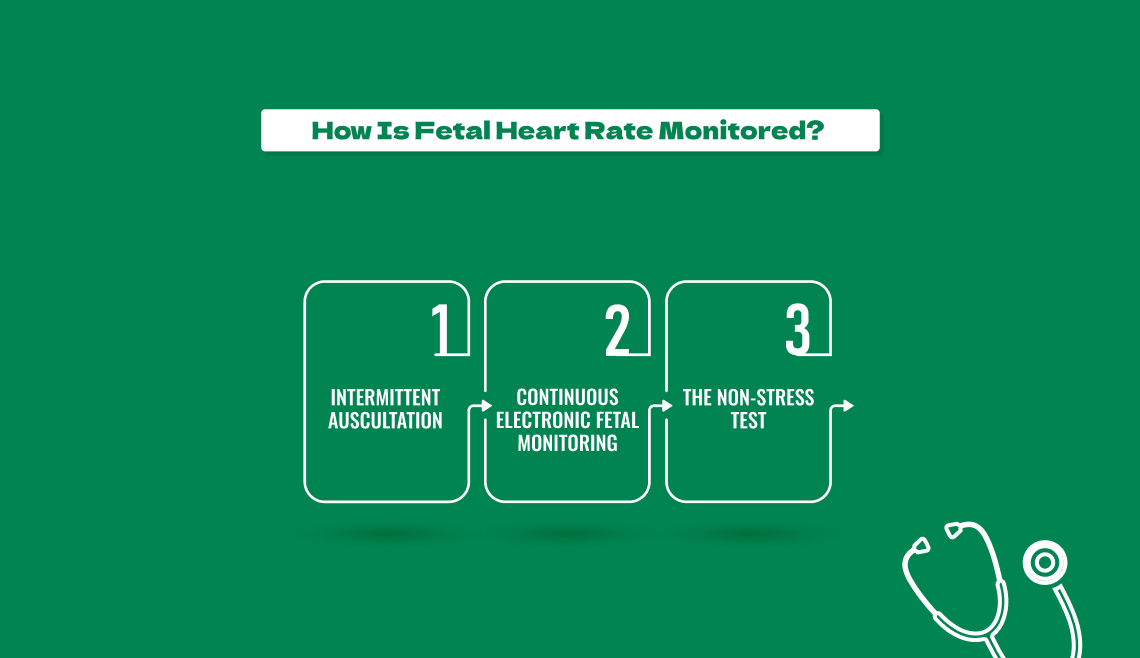
You can use either of the two primary methods. The one your provider uses depends on your stage of pregnancy and any existing concerns.
Intermittent Auscultation
This process involves gently placing a handheld Doppler device on the abdomen for a few minutes. Above all, it is painless and takes about 30 seconds. At the same time, it is appropriate and sufficient for low-risk pregnancies at routine visits.
Continuous Electronic Fetal Monitoring (EFM / CTG)
This is the next process. It involves two sensors strapped to the abdomen. The first one tracks fetal heart rate, and the second monitors contractions. Therefore, recording both over time.
When is it useful? Simply put, EFM is used during labor in high-risk pregnancies. Or when you need a more detailed picture. In addition, you must constantly monitor the fetal heart rate when you see risks like high blood pressure, diabetes, or delayed labor.
The Non-Stress Test
This test is crucial, and all parents should closely observe it. But why does it hold so much value? Firstly, the baby starts reacting to many things voluntarily, after a stage. So, the fetal heart rate also records the same. Now, the fetal heart rate no longer depends only on the mother’s activities.
But still, the mom’s movements remain the key. Even small gestures can trigger some movement for the baby. For example, a cold drink slurp, a position change, or simply waiting 20 more minutes can shift a flat-looking trace entirely. The bottom line is that one non-reactive NST is not a verdict.
The Gender Prediction Myth
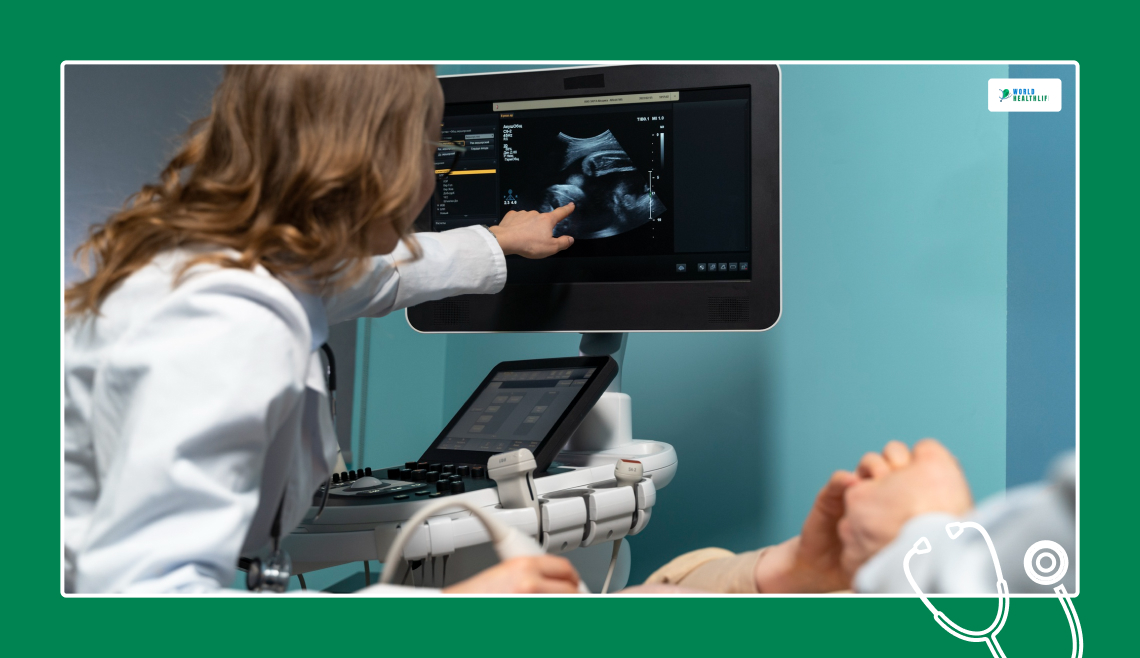
You’ve must have heard it: above 140 bpm means girl, below means boy. But we usually say that for fun. In other words, there is no scientific basis.
There is no clear scientific evidence in any public source that verifies you can use fetal heart rate to predict the gender. That is simply out of the equation.
When To Act Immediately
You should not delay any longer, if you see some obvious signs:
- Sustained fetal heart rate below 100–110 bpm or above 160–180 bpm
- Reduced or absent fetal movement, which is definitely the most important symptom to report
- Heart rate dips during labor that don’t recover after contractions end
If you ever feel your baby’s movements have slowed or stopped, don’t wait. Above all, reach out to your doctor or visit the hospital right away. In the end, it is important to mention that you must treat that as a rule, not a suggestion.
Things You Should Not Miss About Fetal Heart Rate
The fetal heart rate is probably the most heard but least understood number in pregnancy. You go through a fetal heart rate check at every visit. But the doctor rarely explains what’s the status of the rate check or what it means for the baby or the mother.
However, I can help you with a pattern that doctors should discuss but often fail to mention. It starts low at 6 weeks. After that, it races to 170 bpm by 10 weeks.
After that, it slowly drops to 130 bpm at term. But you must remember that every point on that arc means something. So you may ask here what the things they indicate are? I have explained all the factors in the blog.
Here is a summary of that, again. about oxygen supply, nervous system development, and cardiovascular health. It’s not just a sound. It’s your baby’s most consistent way of communicating before they have any other means. After all, you need to be sure about your baby’s health.
Most importantly, know the basics. At the same time, you must ask questions at your appointments. This particular number (fetal heart rate) is worth understanding.
Disclaimer: This article is for informational purposes only. Always consult your obstetrician or midwife for guidance specific to your pregnancy.
Sources: Apollo Hospitals; Nanavati Max Super Specialty Hospital; Dr. Suruchi Desai, Radiopaedia Fetal Heart Rate Reference.