
We will discuss a very common OTC medicine that almost all women have used at least once in their lives. Certainly, it’s a vaginal itching cream. After all, it is something common. Yet none of us feel comfortable talking about it candidly.
However, most women deal with a problem of chronic vaginal itching. Above all, it is very unsettling to be outside or in a formal environment. At the same time, most women feel embarrassed to talk about it to others, even their female colleagues.
I can’t change the mindset. However, I can now discuss the problem explicitly. As a result, the next time you face the problem or have to choose a really helpful vaginal itching cream, you can make a better choice. Let’s start!
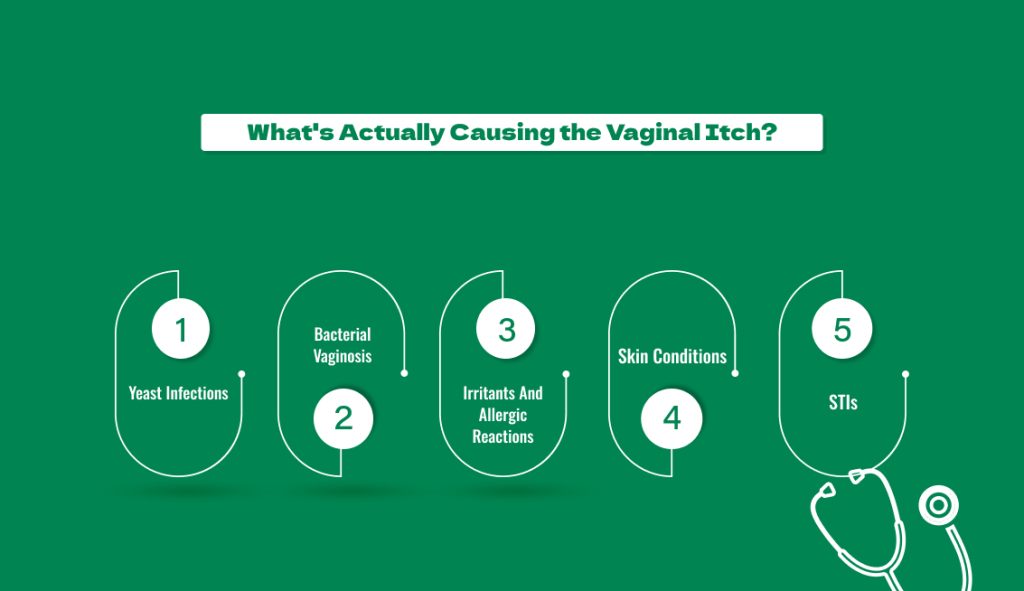
What’s Actually Causing the Vaginal Itch?
Before you grab any cream off a shelf, you need a rough idea of what’s going on. The cause matters. A lot.
Yeast Infections
This is the big one. Yeast, or Candida, overgrows when the natural bacterial balance in the vagina shifts. You get itching, burning, and sometimes a thick white discharge.
It’s incredibly common. That is to say, most people with vaginas get at least one in their lifetime. The good news? It usually responds well to antifungal creams.
Bacterial Vaginosis
Many women get confused about the difference between yeast infections and BV. I see that happening always. But let me tell you, they are poles apart. Let’s see what happens in the BV case. Firstly, the bacteria in the vagina become unbalanced.
As a result, you experience itching and a thin, grayish discharge with a fishy smell. A cream alone won’t fix this. BV often needs prescription treatment from an experienced gynecologist.
Irritants And Allergic Reactions
Scented soaps, bubble baths, certain laundry detergents, and scented toilet paper can trigger itching without any infection. If you recently switched a product and the itch started shortly after, this could be your culprit.
Skin Conditions
Eczema, dermatitis, and lichen sclerosus can all affect the vaginal area. These aren’t infections. So antifungal creams won’t do anything useful here. They usually need a different approach entirely. Meanwhile, the best thing you can do is to go and see a dermatologist.
STIs
Some sexually transmitted infections, like trichomoniasis or genital herpes, can include itching as a symptom. These require medical diagnosis and prescription treatment. No OTC cream will address them.
When Is The Right Time To Use The Itching Cream?
Any doctor will tell you that a vaginal infection cream is not the solution for treating the infection. However, the cream label claims that it can heal infections. However, what it most likely does is remove the symptoms temporarily.
So, it is always better to use these creams if there is a mild problem, such as a basic allergy or a pH imbalance, that triggers it. But see if you have other issues. Do you see sores around the walls? See a doctor immediately. That is a big indicator of STIs.
Wait, there are many other cases where the doctor will recommend a vaginal infection cream. Often, mild scratches occur during intimate shaving. That may cause itching and slight inflammation. At best, the creams can heal moderate yeast infections.
So, don’t go on using the creams every day without a break. Above all, the creams might only tame the symptoms without healing the root cause.
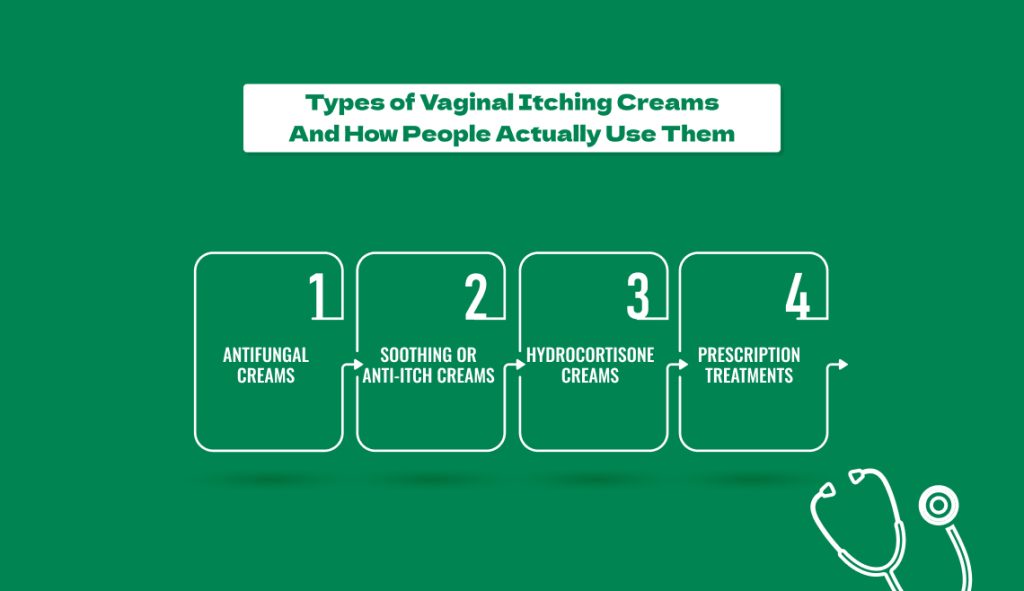
Types of Vaginal Itching Creams (And How People Actually Use Them)
The label may say a cream has multiple problems. However, that is mostly untrue. Ultimately, it comes down to what your deep-rooted problem is. Without knowing that, it is really hard to heal the itching or its actual cause.
Antifungal Creams
These are meant for yeast infections. If the itching comes with thick discharge or a burning feeling, this is usually where doctors start.
You’ll see names like clotrimazole or miconazole on the label. Common products include Candid Gel, Monistat, and Gyne‑Lotrimin. Some are used for just one night, while others are used for a full week.
They work by damaging the yeast itself so it can’t survive. The exact duration depends on the strength of the cream. Shorter courses are usually higher doses.
Soothing Or Anti‑itch Creams
A classic example is Vagisil. It is not for a refined treatment. At best, it calms the skin and offers a temporary relief. Again, it can help if you have an itch from friction or tightness. But nothing else.
Hydrocortisone Creams
These are mild steroid creams. They reduce redness and inflammation.
They can help if the skin is irritated from an allergic reaction, shaving, or certain fabrics. But they should be used carefully. Not internally. Not for long periods. And ideally, after checking with a doctor.
Overuse can actually thin the skin and worsen it over time.
Prescription Treatments
If nothing improves after a few days, guessing becomes unhelpful.
At that point, a doctor may prescribe a stronger antifungal treatment for bacterial vaginosis or another medication entirely. Some yeast strains don’t respond well to common over‑the‑counter creams.
Cycling through multiple OTC products without knowing the cause often delays proper treatment. A quick exam or test can save a lot of discomfort.
Choosing The Right Cream
This doesn’t have to be complicated. Ask yourself a few questions:
- Is the discharge thick and white, with no smell? Probably yeast. Go for an antifungal like clotrimazole.
- Is there a fishy smell? Don’t self-treat. See a doctor — it may be BV.
- Is it itch-only, with no discharge, and did you recently switch to a hygiene product? A soothing cream and removing the irritant might be enough.
- Are you pregnant? Always check with your provider before using any vaginal cream.
- Do you have a history of allergies to antifungal ingredients? Check labels carefully.
When in doubt, just talk to a healthcare provider. One appointment can save you weeks of guessing.
Using Vaginal Itching Cream Safely
If you overuse a cream or apply it for external use internally, it can intensify the problem. So you need to be careful while applying it. Again, there are some hygiene factors to keep in mind when applying.
Above all, wash your hands with a paraben-free and sulfur-free hand wash. Not a regular soap that others also use. However, strict hygiene is required when using an internal cream.
Apply it before you go to bed. As a result, you will keep lying down. And there would be no leakage. But there is another problem with the application.
Many women think that applying more is equivalent to quicker healing. However, that’s not true. Again, do not use daily.
Let’s say you have an itching issue; apply a good itch cream for 5 days in total. After that, if there are no signs of improvement, you should see a doctor immediately.
Home Remedies That Can Support Relief
These won’t cure an infection, but they can take the edge off while treatment works.
A warm sitz bath (sitting in a few inches of warm water) can soothe irritated skin. A cool compress on the outside can reduce inflammation quickly.
Cutting out scented soaps and wipes during flare-ups removes common triggers. And probiotics, with your provider’s approval, may help support a healthy bacterial balance long term.
These are supportive tools. They don’t replace treatment.
When You Need To See A Doctor
I’ll be direct here: some situations are beyond what a cream can handle.
See a doctor if:
- The itching is severe or getting worse
- There’s a thick, heavy, or foul-smelling discharge
- You have sores, bumps, or any bleeding
- You develop a fever
- Symptoms haven’t improved after 3 to 5 days of using a cream
- You keep getting the same infection repeatedly
These aren’t signs to push through. There are signs that something else is going on and needs proper attention.
Frequently Asked Questions (FAQs)
If you are using vaginal infection creams for the first time, you need to take a look at the questions that most people like you ask:
Is The Vaginal Itching Cream For Daily Use?
Certainly, vaginal itching is a chronic problem. So, you will need it daily. But most vaginal itching creams can be harmful if used long-term. If you are using it daily, consult your gynecologist first.
Can I Safely Use All Vaginal Itching Creams Internally?
Certainly NOT! Please check labels. The ones that are not for internal use clearly state this on the pack. For example, you cannot use Vagisil internally. Kindly coordinate this with others who need this piece of information.
Are Vaginal Infection Creams Best For Infections?
Most people think that the OTC vaginal infection creams actually solve the infection. However, it is only partially true. After all, these creams can only target the symptoms.
For example, the creams can address inflammation caused by an infection. That’s why you need to keep applying it every day, and yet the issue reappeared.
I’m having Vaginal Itching. Does That Mean I Have an STI?
Never! It can happen for a million reasons. In fact, mild to moderate irritation almost seems uncontrollable despite excellent hygiene and very controlled intimacy. So, in most cases, STIs and itching are unrelated.
But you must also understand when does itching indicates a tendency to be an STI? First, check if you are experiencing an unwanted, smelly discharge. Next, are you having sores around the vaginal walls? That may be a cautionary thing. See a doctor immediately to rule out STIs.
If not STIs, what else can cause Vaginal Itching?
If your doctor suggested a vaginal infection cream, that means it is the outcome of any one of these basic issues:
- Yeast influx
- Skin allergy
- BV


