Hundreds of women around you are suffering from this problem. Their biggest concern is irregular periods. Plus, they find it really hard to manage weight despite trying everything they can.
But they don’t know that the right PCOD diet can work wonders for you. Now, you have probably scanned the internet and watched hundreds of reels on the perfect PCOD diet. But still, your diet does not seem to fit in!
Don’t worry. What you probably don’t have is niche knowledge. In other words, you don’t know what to eat and why! Again, you must have a genuine knowledge of what not to eat. That’s more important than anything.
You have a busy life, I get it. But still, a timely diet is non-negotiable. Without that, this whole PCOD diet plan makes no sense. So what possible changes can you immediately make to your diet?
Key Facts About PCOD
- Nearly 1 in 3 women worldwide are affected by PCOD
- Up to 70% of PCOD cases go undiagnosed globally
- Losing even 5% of body weight can significantly restore menstrual cycles
- Insulin resistance is present in 50–70% of PCOD cases
What Is PCOD, And Why Should You Take It Seriously?

PCOD, or Polycystic Ovarian Disease (PCOD), is simply a state of hormonal imbalance that triggers unusual activity in the female body.
It starts when large numbers of half-mature or immature eggs are released by the ovaries. The eggs accumulate and form cysts in your body. Again, the cysts break the hormonal balance.
What’s worse is a spike in male hormone androgen and strong insulin resistance. Once these things hit you, a series of other symptoms will trigger.
Common Symptoms You May Recognize
- Irregular periods every month
- Sudden weight add-on, in lower belly region
- Androgen causing unusual hair growth on body
- Heavy sebum and oil in the skin
- Uncontrolled hair loss
- Difficulty while conceiving
- Peculiar mood swings and feeling of weakness.
Real-Life Example
Priya is an IT professional in a leading software company. She works irregular shifts and even works late at night from home. Lately her periods have become irregular and, worse, unpredictable.
That made her notice she had put on an additional 4 kilos in the last 3 months. Despite work pressure, Priya is diet-conscious. She drinks plenty of fluids, too.
The first thing her doctor told her was to fix her diet. Her healthy diet was much inspired by Insta reels. Now that the doc suggested a healthy PCOD diet plan, she knows where she was going wrong!
The Three Pillars Of A Pcod-Friendly Diet
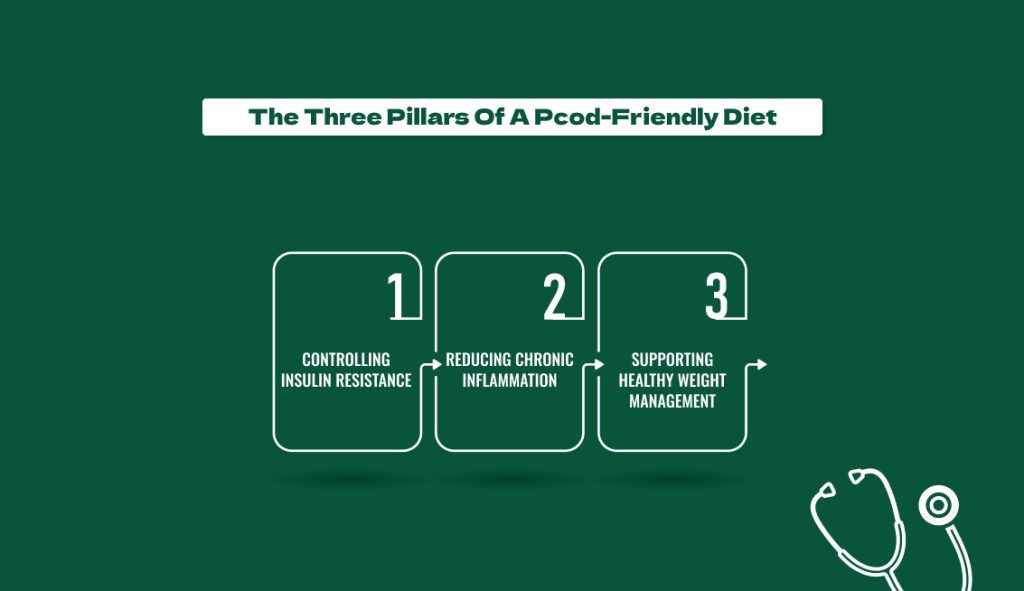
When planning your PCOD diet, there are three areas that should not slip your mind.
1. Controlling Insulin Resistance
You have to include foods that reduce insulin resistance. For example, start having fiber-rich food. In particular, you must think of foods with a low glycemic index. But that’s not the only solution. Just the starter.
2. Reducing Chronic Inflammation
PCOD triggers chronic inflammation inside the body. That’s a reason to eat more antioxidant-rich foods. For example, berries with flavonoids, turmeric, and olive oil.
3. Supporting Healthy Weight Management
Stress on losing weight. Even if you lose 5% weight, you start healing. Many of your PCOD symptoms will improve. For example, the menstrual cycle will be more regular.
In fact, fertility will also improve. Again, that’s why you must avoid fatty foods. Especially oils that trigger the growth of trans fat.
In addition to managing healthy fats, you must also keep an eye on your sodium intake. This can help reduce water retention and bloating.
You can incorporate a high-quality salt free seasoning into your daily meal prep.
This can allow you to pack your vegetables as well as protein with bold flavors, without spiking your blood pressure.
“Let food be thy medicine and medicine be thy food. For women with PCOD, this ancient wisdom has never been more scientifically validated.”
— Hippocrates (adapted in clinical nutrition practice)
The Pcod Diet: Foods You Should Be Eating Every Day
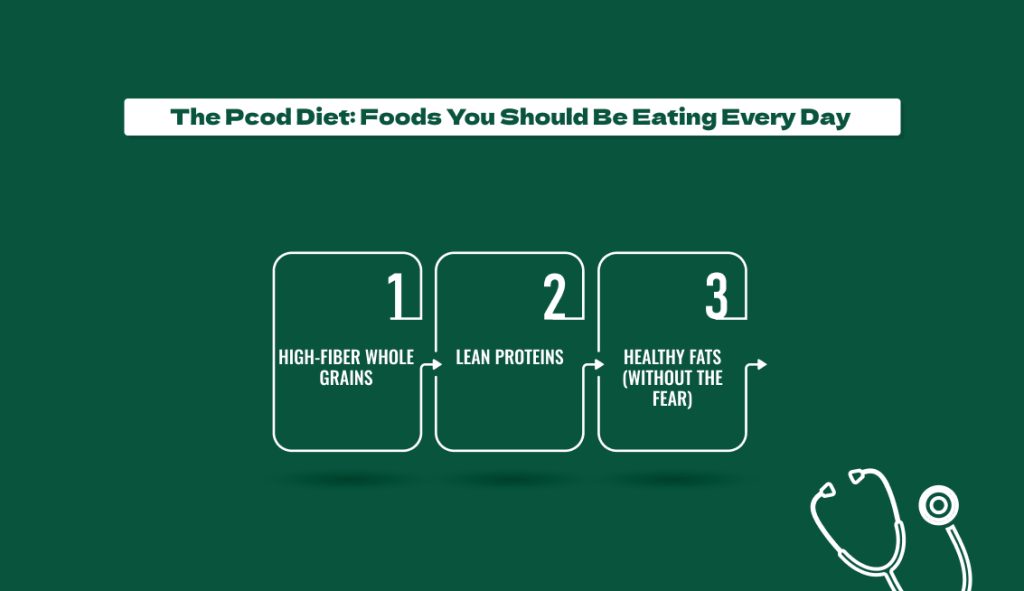
You don’t need to sit with a serious face. To clarify, I always prefer a PCOD diet where you can enjoy a savory meal, while still taking care of your body. So, what kinds of food can you not absolutely miss:
High-Fiber Whole Grains
Always have a portion of whole grains. For example, oats, quinoa, and whole wheat. All of them have very high fiber content. As a result, they slow down the pace of digestion. At the same time, they don’t increase your blood sugar level.
Lean Proteins
You cannot ignore proteins, whatever diet plan you are following. Firstly, protein is a must for muscle building. At the same time, it resolves the problem of insulin resistance.
In the same vein, you will get the best lean protein from sources like fish, chicken, lentils, and eggs. Vegans can have tofu and chickpeas.
Healthy Fats (Without the Fear)
One of the most common mistakes I see with a PCOD diet is confusion around fats. Some women cut them out entirely. Others add them randomly without knowing how much is too much. Neither approach really helps.
Here’s the simple truth: the right fats are not your enemy. In fact, your hormones rely on them.
Foods like avocado, flaxseeds, almonds, and walnuts support hormone production and help keep inflammation in check. They’re not “extras”. Rather, they’re part of the foundation. Even small additions matter.
Anti-Inflammatory Foods Your Body Responds To
PCOD doesn’t exist in isolation. It often comes with ongoing, low‑grade inflammation. That’s why managing inflammation isn’t optional. It’s essential.
Some of the most effective foods here are also the most misunderstood. Take fish, for example. Not all fish help. But oily sea fish like salmon, mackerel, and sardines are best to have when you have PCOD. Firstly, they’re rich in omega‑3 fatty acids. These fats actively reduce inflammatory markers in the body.
Leafy greens don’t win popularity contests, but they work. Spinach, fenugreek, and kale. In act, all of them support the liver and help calm inflammation at a cellular level. You don’t need massive portions. Just consistency.
And then there are the ingredients already sitting in your kitchen. Turmeric and ginger aren’t wellness trends. They’ve been doing the heavy lifting for centuries. Tomatoes, too, deserve more credit. Rich in antioxidants, they quietly support hormonal health when used regularly.
Nothing here is exotic. Nothing is expensive. The impact comes from repetition, not novelty.
PCOD Diet at a Glance: What to Limit, and Avoid
If you think adding healthy food to the diet is everything, you are wrong. There are again a lot of things that you need to do away with. Either reduce the portions or stop them completely. In the same vein, there are some things that you have to totally stop, starting now.
What To Limit?
Do you have white and refined rice everyday? You can cut down on it now. Don’t have rice more than 100gms per day. Preferably broken down into short meals. At the same time, it is better to avoid paneer and skimmed milk.
The simple fat in these foods can make pcod worse. However, they look like healthy options on the exterior. That’s where you need to stay cautious. Even potatoes and mangoes are better to limit.
Often, I hear people suggesting jaggery and dark chocolate as a part of the PCOD diet. However, it is better to limit them during PCOD. As PubMed Central notes, PCOD patients may benefit from dark chocolate.
Especially the ones that are refined, have additional acidity regulators, and preservatives. In fact, some add over 36 gm of magnesium, which harms the PCOD diet plan.
What To Stop Right Now?
You have to stop having refined wheat, instant noodles, and biscuits from day 1. I mean, that’s non-negotiable. In addition, processed meat is equally dangerous. So is deep-fried chicken. Some people have junks that is mostly fried in hydrogenated oils.
If you are one of them, you are doing the least to control your PCOD. The same goes for anyone who has canned juices every day. Basically, packaged foods. Choose the health options and follow a balanced PCOD diet. That’s the basis to stay healthy!