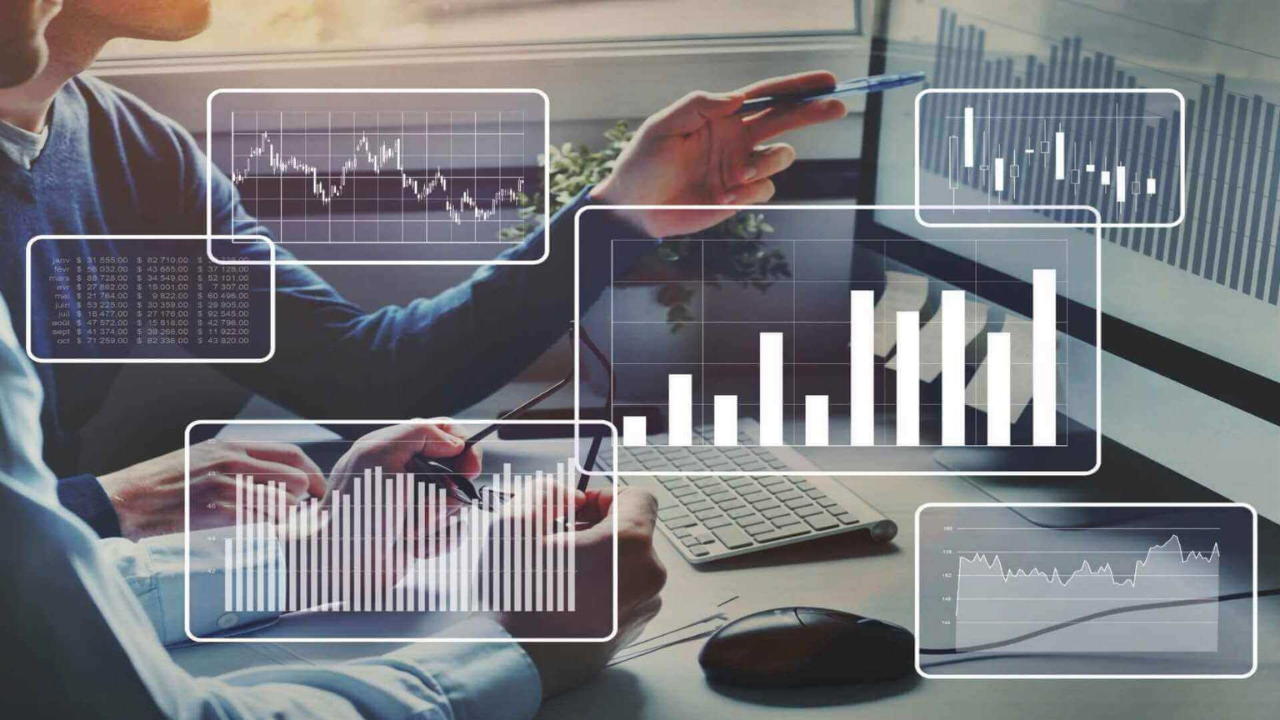
The healthcare business market has become very volatile with the evolving technologies and the changing demands of different industries and sectors.
Moreover, the changes in the purchasing habits of consumers are the major driving force behind all the volatilities within the market.
Moreover, the sectors can not do much to prevent the market from changing. Hence, adapting to evolution is the best solution.
As a result, a proper understanding of the needs and requirements of customers in the future serves as a very crucial capability for any business in the healthcare sector.
Moreover, proper data and health business demand forecasting can help in some of the most problematic situations, like a pandemic.
Accurate forecasting has become crucial with the volatility in the market and supply chains.
Also, modern technology offers a variety of ways to anticipate demand and plan operations accordingly.
Hi, in this article, I will talk about the importance of business demand forecasting in the healthcare sector.
What Are The Major Factors Of Business Demand Forecasting In Healthcare?
Here are some of the major factors of business demand forecasting in the healthcare sector. All these aspects play a major role in accurate forecasting.
1. Data Collection And Integration
The process of forecasting starts with collecting comprehensive data. Hence, the businesses collect information from various places.
Moreover, this includes the collection of data from sales transactions, inventory levels, and interactions with customers.
The advanced systems easily integrate all these factors within a single platform. Hence, the decision makers get to operate them and make decisions through a single integrated interface.
Moreover, this allows the decision makers to get a real-time picture of the behavioral aspects of the market and the performance of their product in the market.
Hence, the organizations detect the emerging trends early with the help of real-time integration.
The forecasts generally become more precise when systems pair sales data with economic conditions or seasonal factors.
This pairing also makes forecasting more responsive to market volatility.
2. Predictive Analytics And Machine Learning
The predictive models consider the statistical models and various algorithmic factors. Moreover, identifying these factors helps recognize patterns in historical data.
These models easily enable companies to prepare for future fluctuations by estimating future sales volumes and timing.
Moreover, machine learning enhances this process by continually updating models as the data evolves.
Hence, this provides accurate business demand forecasting. Thus, the forecast becomes more responsive and accurate.
3. Cloud-Based Forecasting Platforms
The healthcare businesses in the contemporary world have operations spread across diverse geographic locations.
Hence, several businesses now have to rely on the cloud-based business demand forecasting solutions.
Also, the teams in different locations collaborate properly and then share insights more securely.
Cloud-based demand planning software can streamline the forecasting process and ensure all departments are aligned with the same projections.
These tools often include dashboards that visualize data trends. Moreover, this makes it easier for managers to quickly interpret complex information.
They can also automate routine calculations, freeing staff to focus on strategic analysis.
4. Integration With Supply Chain Management In Healthcare Businesses
Accurate demand forecasting affects more than just sales predictions. It supports procurement, production scheduling, and logistics.
The suppliers and distributors mostly adjust their plans to match the expected demands when they get the forecasts across the supply chains.
Moreover, this improves efficiency and reduces waste all over. Additionally, technology plays a crucial role in linking demand planning with supply chain management.
Hence, it helps to keep inventory levels balanced. Thus. This integration helps avoid both overproduction and missed sales opportunities, leading to better resource utilization.
5. Role Of Artificial Intelligence In Forecasting
The use of Artificial Intelligence allows businesses to process data in bulk more accurately and also more efficiently.
Hence, they allow businesses to process data while avoiding errors that are mostly conducted manually.
Moreover, humans often overlook certain correlations between data and business. However, artificial intelligence does not overlook them.
These correlations often include the links between product interests and emerging trends in the market.
Thus, businesses can make decisions in advance, rather than reacting to changes later. Moreover, artificial intelligence helps to detect the seasonal health care crisis surges.
6. Practical Benefits For Healthcare Businesses
Implementing modern forecasting technology delivers tangible benefits. Improved accuracy leads to better financial planning and customer satisfaction in the healthcare sector.
Inventory turnover rates increase as stock aligns more closely with actual demand.
- Reduced holding costs through optimized inventory
- Faster response to market changes
- Improved collaboration between departments
- More confident strategic decisions
Building A Culture Of Forecasting Excellence For Healthcare Businesses
The availability of technology shall not ensure success in the long run. Thus, several other factors should also be considered.
Moreover, collaboration between different members and teams of the organization ensures proper business demand forecasting.
Additionally, the models should also be rationally updated according to the evolving landscape of incoming data.
Several other factors, such as geopolitical tensions, also disrupt the market. Hence, businesses should also take into account human aspects that may not always be predictable from data.
For instance, the recent tensions in the Gulf of Hormuz have spiked prices for various goods across different nations.
This price increase is mostly due to shortages in the supply of products such as fuel and gas.
The increasing prices will also affect the health sector in diverse ways.
Frequently Asked Questions
Here are the answers to some of the most commonly asked questions about business demand forecasting.
1. What Are The 5 Types Of Demand Forecasting Methods?
There are five types of Business Demand Forecasting Methods. Moreover, these methods are the Historical Data Method, Market Research Method, and Demand Sensing Method.
Additionally, you should consider other methods, including the Delphi method, the External Macro Forecasting Method, and the Predictive Sales Methods.
2. How Do Businesses Forecast Demand?
The businesses generally forecast demand while using Data Collection and Integration, Predictive Analytics, machine learning, and cloud-based forecasting platforms.
Furthermore, they also integrate data with Supply Chain Management.
3. Can ChatGPT Do Forecasting?
Yes, ChatGPT can easily predict outcomes if you provide it with accurate, detailed data. However, businesses should not rely entirely on predictions from an AI model.
4. How To Increase Demand In Business?
Social media marketing works as one of the most reliable ways to increase demand for businesses. A correct strategy allows you to create a huge followers base for your brand.
Additionally, you can also rely on hyperlocal SEO if your brand offers services to the local populace.