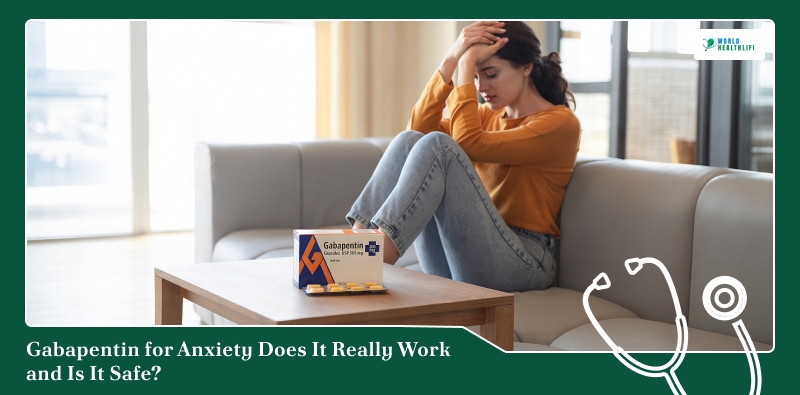
Today’s topic: Gabapentin for anxiety.
Have any of your friends been feeling overly anxious or always worried? You may hear them refer to the name Gabapentin. What is that?
It is a medication that helps the brain calm down right away. In addition, Gabapentin can stop sudden seizures and relax tight chests. If you are feeling chest pain or having outbursts from tension, take gabapentin for anxiety!
But what makes people stressed in the Philippines? Common stressors like traffic jams, high pressure at work, and family requirements can increase your anxiety.
This article breaks it all down clearly. Firstly, learn what gabapentin is, how it might help with anxiety, and what studies say about its effectiveness.
At the same time, you need to identify the risks to watch for and when to talk to your doctor for proper guidance. No hype, just the straight facts so you can weigh it wisely.
What Is Gabapentin?

Gabapentin started life as a medication to control seizures and ease nerve pain, like the burning or stabbing aches from shingles or diabetic neuropathy.
You might know it by its brand name, Neurontin, made by Pfizer, though generics keep costs down for many here in Pinas clinics. Doctors first approved it in 1993 for epilepsy. Then later for post-herpetic neuralgia. It is a disease in which lingering nerve pain after chickenpox flares up.
So why the buzz around anxiety? Off-label, meaning not FDA-approved but used based on a doctor’s judgment, some psychiatrists prescribe it when standard anxiety meds don’t sit well.
The idea sounds logical: If it calms overactive nerves in epilepsy, maybe it can quiet the overly sensitive wiring behind constant anxiety, too. That explains having gabapentin for anxiety. But it’s not the top choice for anxiety, and you’ll see why in a bit.
How Gabapentin Works In The Brain?
Here’s the simple science: gabapentin zeroes in on GABA pathways, your brain’s main calming chemical, gamma-aminobutyric acid. It doesn’t mimic GABA directly as benzos do. Instead, it boosts GABA release and inhibits glutamate, the excitatory neurotransmitter that amplifies stress signals.
Think of it as a volume knob turning down nerve chatter, so overexcited neurons firing non-stop from anxiety get a chance to hush.
This modulation hits calcium channels too, slowing those rapid-fire signals that keep your mind racing or body tense. Theoretically, less neural overdrive means fewer panic spirals, easier sleep, and that elusive calm.
But brains vary wildly, so while it helps some, it’s no universal fix. In other words, patience and doctor tweaks make the difference.
Gabapentin and Anxiety: What Research Says

Research on gabapentin for anxiety shows promise but remains limited. In the same vein, small studies hint at benefits, especially for generalized anxiety disorder, where worry loops endlessly.
A 2017 review in Frontiers in Psychiatry found it cut Hamilton Anxiety scores in GAD patients by 30-40% over eight weeks, outperforming placebo. Social anxiety trials, like one from 2004 in the Journal of Clinical Psychopharmacology, noted less self-consciousness in group settings after 300-900mg doses.
Here, check out the PTSD research results. Some veterans reported fewer hypervigilance episodes. But larger meta-analyses call for more data.
Here’s the thing: gabapentin isn’t a first-choice treatment. Meds like SSRIs (sertraline) or SNRIs (venlafaxine) are still the main options in guidelines, and they have decades of solid research behind them.
Therapy, especially CBT, also works great at the start. Gabapentin is usually added only when these don’t help enough or cause tough side effects.
Who Might Benefit from Gabapentin for Anxiety
Gabapentin isn’t for everyone, but some people really benefit from it. If first‑line meds like Zoloft cause nausea or sexual side effects you can’t deal with, gabapentin can be a gentler alternative.
It also helps people who have both anxiety and nerve pain, like someone with a back injury plus GAD. The reason is that it eases the physical pain and the anxiety signals at the same time.
If you’re dealing with withdrawal‑related anxiety from alcohol or opioids, gabapentin can help ease that discomfort without the risks that come with benzos. Some people also find it useful for short, intense situations, like public‑speaking nerves before a big presentation.
The reason is that it can calm those faster than it helps with long‑term, everyday anxiety. Women going through perimenopause sometimes report better sleep and fewer anxiety spikes as well. Overall, it’s helpful for specific cases and works best when a doctor is closely guiding the plan.
Gabapentin For Anxiety: Typical Dosage And How It’s Used

Doctors keep the dosage low for anxiety. It is usually 100 mg – 300 mg once daily, often at bedtime to dodge daytime fog. If you can tolerate that dosage after a week, they titrate up slowly: 300mg twice daily.
Then they rise to 900mg spread out, capping around 1800 mg – 3600 mg max, split three ways. However, remember that everyone’s sweet spot differs. Your liver enzymes, weight, and symptom load tweak it.
Here in Pinas, private psychs adjust for the humid heat, which amplifies drowsiness, or offer a combo with local stressors. Medical supervision stays non-negotiable, though. But what do the doctors check for?
The most important ones are bloodwork checks and kidney function (gabapentin clears there). They also log/track responses. But if you are self-dosing, you may risk overload. Therefore, always loop in your doc for that custom fit.
How Long Does Gabapentin For Anxiety Take to Work?
Gabapentin doesn’t work as fast as benzos. Instead of calming you in half an hour, it builds up slowly. Some people start noticing small changes within a few days, like less muscle tension or breathing that feels easier during anxious moments.
By the first or second week on a steady dose, many report better sleep and fewer racing thoughts. The fuller calming effect usually needs 4–6 weeks, since the nerves take time to adjust.
One person in a study shared that by week three, the constant “what if” thoughts finally quieted enough for them to focus at work. Just remember: don’t increase the dose on your own.
Taking more doesn’t make it work faster and can bring stronger side effects. Keep a simple daily mood log and share it with your doctor so adjustments stay safe and smart.
Potential Benefits Of Gabapentin For Anxiety
Gabapentin helps calm the nervous system, which cuts down that nonstop worrying and the “worst‑case‑scenario” loop in your head. As the tension drops, you feel it in your body too. As a result, your shoulders relax, and your jaw loosens. But the best part is that the same happens, without the emotional numbness that stronger meds sometimes bring.
It also has a lower risk of dependence than benzos. So some people can use it longer, though you still need to be careful and follow your doctor’s plan.
For anxiety‑related sleep problems, it works well. Many people get a deeper rest without waking up groggy. It also shines in certain situations: calming performance jitters before small talks or presentations, or easing alcohol cravings when stress hits.
Meanwhile, when SSRIs stop working or never kick in fully, adding gabapentin can restart progress and bring real relief where other treatments have stalled.
Risks, Side Effects And Safety Concerns Of Gabapentin For Anxiety
Common side effects hit early:
1. Drowsiness turns sharp mornings fuzzy
2. Fatigue weighs legs during commutes
3. Dizziness sways you on stairs
4. Coordination slips, grabbing keys.
Most fade after two weeks as your body adjusts. Start low to help your body adapt.
However, serious red flags demand action. Are you facing mood swings toward agitation, confusion fogging memory, or rare suicidal whispers (black box warning)? In this situation, it is better to maintain safety first. Skip alcohol, as it amplifies sedation to dangerous lows.
Remember: no abrupt quits, taper prevents withdrawal jitters or seizures. The last advice that doctors give is to titrate slowly, hydrate plenty in our tropical heat, and report odd changes fast.
Gabapentin vs. Traditional Anxiety Medications
| Feature | Gabapentin | SSRIs/SNRIs | Benzodiazepines |
|---|---|---|---|
| Common use | Off-label for anxiety | First-line | Short-term relief |
| Onset time | Days to weeks | Weeks | Minutes |
| Dependence risk | Lower than benzos | Low | High |
| Side effect profile | Drowsiness, dizziness | GI, sexual side effects | Sedation, dependence |
| Best for | Specific cases | Most anxiety disorders | Acute episodes |
When Not To Use Gabapentin For Anxiety?

Steer clear of Gabapentin if substance history haunts you. Are you facing misuse potential rises, despite lower addiction odds? Severe psych symptoms like full psychosis?
Then Gabapentin is not for you. Pregnant or breastfeeding moms need a specialist’s advice before having this medication. For them, there is always a fetal risk.
Elderly people or those with kidney issues are more prone to buildup. For people having such issues, dose cuts are essential. Always disclose the full history to the doctor.
Frequently Asked Questions (FAQs)
It has a lower risk than benzos, but high doses or abrupt stops can spark withdrawal.
Yes, under a doctor’s watch with slow buildup. Remember that steady levels calm chronic cases.
Rarely. The initial jitters pass quickly for most. However, if it happens, report spikes immediately.
Situationally, it may. However, not instant like Xanax.
| Disclaimer: This article is for informational and educational purposes only and does not substitute for professional medical advice. Reading this content does not create a doctor-patient relationship. Always consult a qualified healthcare provider for medical concerns and never delay seeking professional advice based on what you read here. |