

Receiving a new medical diagnosis can feel completely overwhelming. Furthermore, it naturally brings up many frightening questions about the future.
If you or a loved one are facing this condition, you might be urgently wondering: is multiple sclerosis fatal?
Complex statistics usually greet people first when they search online to find out if the disease is life-threatening. As a result, unnecessary panic is created.
The primary goal of this comprehensive article is to break down how the disease functions, look at how it impacts the body, and examine the actual long-term survival rates.
By understanding the true medical reality, you can better navigate the journey ahead with confidence and peace of mind.
Multiple sclerosis is an unpredictable disease. However, modern medicine has completely changed the outlook for individuals diagnosed with it today.
While it is a lifelong condition, requiring careful long-term management, the general consensus among neurologists provides immense reassurance.
Let us dive deep into the specific mechanisms of the disease to understand exactly what is happening inside the central nervous system.
What Exactly Is Multiple Sclerosis

Multiple sclerosis is a chronic neurological condition that affects the central nervous system. However, it is highly manageable.
While a diagnosis can certainly cause initial anxiety, it is incredibly important to remember that it is not a rapid or terminal illness.
Most individuals diagnosed with this condition go on to lead a full and vibrant life, fully independent for many decades.
An unpredictable course means that no two people will experience the disease in exactly the same way over time.
Moreover, empathy and specialized support networks are widely available to help patients process their feelings and navigate their unique symptoms safely.
Knowing that you are alone on this journey can significantly reduce the emotional burden of managing a chronic health issue.
An Autoimmune Attack On The Central Nervous System
In an individual with this condition, the body’s immune system mistakenly attacks its own healthy tissues. Moreover, it specifically targets the brain and the spinal cord.
Specialized white blood cells erroneously identify native neural structures as foreign threats. As a result, this triggers localized inflammation and progressive tissue damage across the central nervous system.
The Role Of Myelin Damage
In multiple sclerosis, the immune system targets myelin first. It is the protective sheath around nerve fibers that ensures rapid communication between cells.
When myelin is damaged or stripped away, it leads to disruption in communication signals between the brain and the body. As a result, neurological messages are completely blocked, delayed and distorted.
Potential Causes Of Multiple Sclerosis
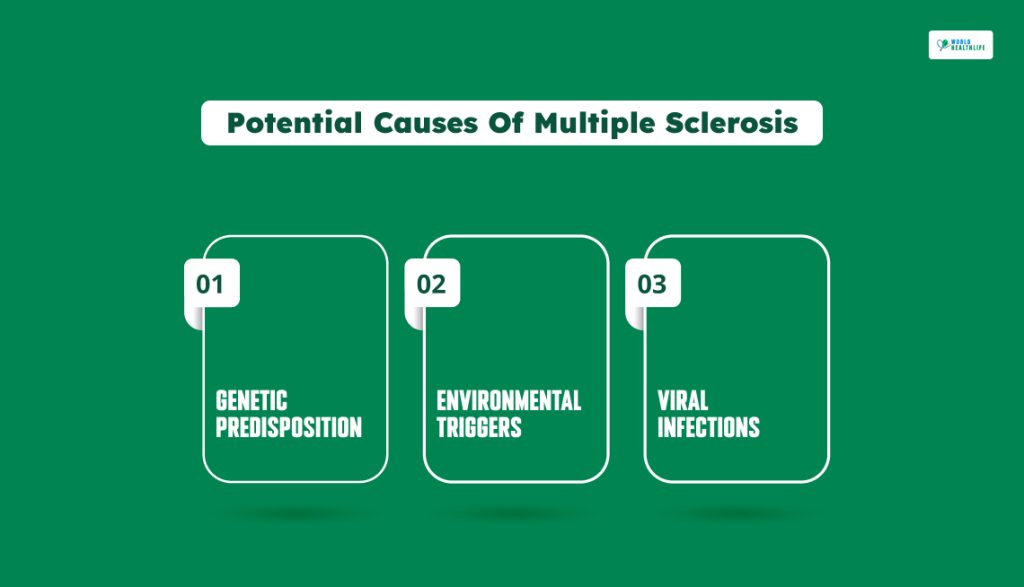
While the exact cause of MS remains unknown, scientists believe a complex mix of variables rather than just a single source triggers it.
Researchers are constantly investigating how diverse internal elements interact with external environments to spark the initial autoimmune response.
Additionally, there is no evidence that a single isolated choice or event leads to someone developing this neurological condition.
Understanding these underlying mechanisms helps medical professionals design more effective and targeted treatment plans for individual patient profiles.
By analyzing how genetic tendencies interact with daily environmental exposures, science moves closer to finding a definitive cure.
Let us look at the primary variables that researchers have identified as major contributors to disease onset.
Genetic Predisposition
While MS has no direct inheritance, having a first-degree relative with the disease leads to an increase in susceptibility.
Specific human leukocyte antigen gene variations frequently link to a higher risk of developing the condition. Despite that, additional environmental triggers are still required to activate the disease.
Environmental Triggers
External factors such as low Vitamin D levels, lack of sunlight exposure and geographical location away from the equator significantly influence overall risk rates.
Populations living in northern latitudes with minimal annual sunlight consistently show higher diagnostic rates. Furthermore, it highlights the protective importance of natural vitamin D production.
Viral Infections
Medical researchers have long explored the link between certain common viruses. That is particularly the Epstein-Barr virus (EBV) along with the subsequent activation of MS symptoms.
Studies indicate that a prior EBV infection may act as a necessary environmental catalyst that destabilizes the immune system in genetically vulnerable individuals.
Common Symptoms Of MS
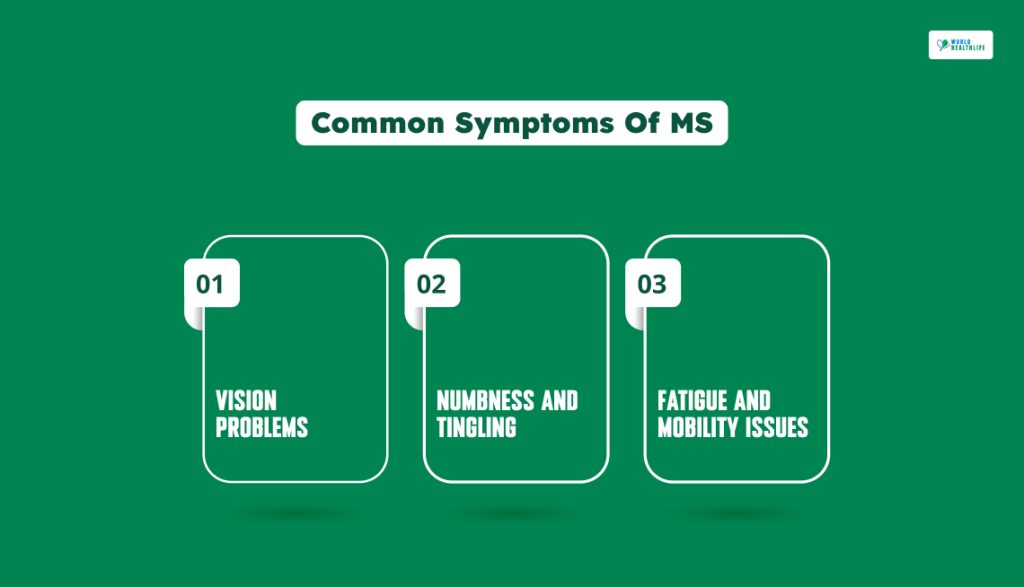
It is essential to recognize that MS symptoms vary widely from person to person. Moreover, they are dependent on the location as well as the severity of the nerve damage.
Since the central nervous system controls every function of the body, the resulting signs can range from mild sensory changes to more noticeable physical limitations.
These symptoms can also fluctuate significantly and appear during temporary flare-ups, receding during periods of remission.
Tracking these individual changes carefully helps your neurology team adjust your daily management strategy to preserve your comfort as well as independence.
Doctors cannot use any single symptoms to predict the long-term progress of the disease for an individual.
Here are the most frequent symptoms that individuals encounter throughout their lives.
Vision Problems
Optic neuritis, blurred vision, double vision or temporary loss of sight are usually the first noticeable signs of MS.
This happens when the optic nerve experiences acute inflammation. As a result, this impairs visual processing and requires prompt evaluation by an ophthalmologist.
Numbness And Tingling
Altered sensations usually affect the face, body, arms or legs. Moreover, they often present a persistent “pins and needles” feeling.
Also, patients may experience a sudden burning sensation, a feeling of tight constriction around the torso or a complete loss of tactile sensitivity.
Fatigue And Mobility Issues
A profound and debilitating exhaustion requires many individuals to contend with it. This occurs alongside muscle weakness, spasticity and difficulty walking or balancing.
This unique type of systemic fatigue is deeply disruptive to daily life. Besides that, it does not improve with standard sleep or rest.
Key Risk Factors For Developing MS
Although anyone can develop MS, certain demographic and lifestyle factors statistically elevate a person’s risk of receiving a diagnosis.
Identifying these statistical associations allows public health experts to isolate potential lifestyle changes that might help reduce overall disease severity. These risk profiles do not guarantee that a person will get sick. However, they do show who might be more vulnerable.
Evaluating your personal risk variables with a qualified healthcare professional can help you make healthier everyday lifestyle choices.
From understanding regional demographic statistics to evaluating specific personal habits, knowledge remains a powerful tool for proactive health management.
The primary risk factors recognized by modern medical science include the following parameters.
Age And Biological Sex
Doctors most commonly diagnose MS between the ages of 20 and 40, and it affects women roughly two to three times more often than men.
Experts believe that hormonal differences and unique sex-specific immune responses play a major role in this notable demographic disparity.
Smoking And Lifestyle
Not only does the use of tobacco increase the risk of developing MS, but it also accelerates the progression as well as the severity of the disease.
Moreover, regular exposure to nicotine and tobacco smoke triggers systemic inflammation. This speeds up brain atrophy while worsening existing neurological damage over time.
Is Multiple Sclerosis Fatal
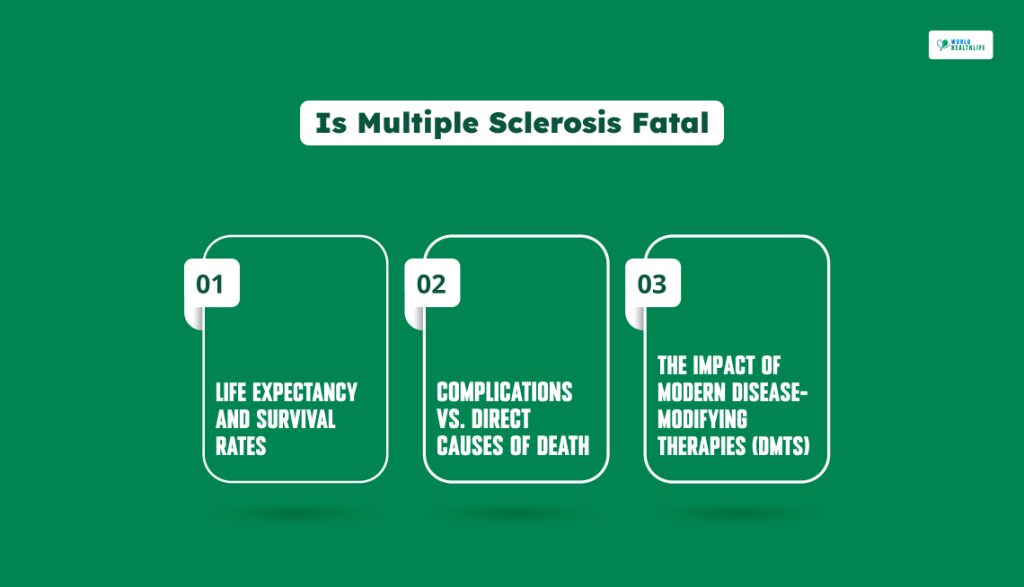
Now, we are required to give a direct answer to the core question that has brought you here: is multiple sclerosis fatal?
To give you immediate clarity, the direct answer is no. Multiple sclerosis is not considered a terminal illness or a fatal illness in the majority of cases.
However, there have been misconceptions from past decades. As a result, people started to believe that the disease is fatal. Contrarily, modern research has completely refuted this outdated myth.
When looking at data regarding whether the disease is deadly, it is vital to separate the direct effects of the condition from unrelated health events.
Generally, the condition itself does not shut down vital organs. Moreover, it also does not cause immediate life-threatening structural failures.
Instead, it can be classified as a lifelong chronic condition that requires consistent and high-quality medical management along with protective lifestyle adjustments.
Life Expectancy And Survival Rates
When addressing the question, is multiple sclerosis fatal, statistics show that most people with the condition have a life expectancy that is only 5 to 7 years shorter than the general population.
Additionally, many individuals who maintain an active treatment plan live to a completely normal age. Besides that, they also enjoy full lifespans alongside their peers.
Complications Vs. Direct Causes Of Death
Severe complications from advanced MS include severe chest infections, pneumonia or swallowing difficulties. In addition, they typically pose life-threatening risks.
In the final stages of the disease, immobility can make the body more vulnerable to secondary infections. As a result, preventative therapy is so crucial.
The Impact Of Modern Disease-Modifying Therapies (DMTs)
Highly effective DMTs have caused drastic changes in the prognosis. Consequently, individuals are allowed to live longer and healthier lives than ever before.
These cutting-edge medications slow down the rate of nerve damage, while reducing the frequency of relapses and preserving physical mobility for many decades.
The Bigger Picture: Navigating Life with MS
When evaluating the ultimate question, is multiple sclerosis fatal, the overwhelming scientific evidence shows that it is rarely a fatal condition.
Moreover, while living with a chronic neurological disease certainly requires emotional resilience, a positive and active approach to daily healthcare changes everything.
You can choose to take control of your health journey through early intervention, regular medical checkups and a strong personal support system.
Partnering closely with an experienced neurologist allows you to ensure that you can access the latest advancements in disease management as soon as they become available.
With the help of a proper, balanced diet, staying physically active, and prioritizing your mental well-being will help you protect your quality of life.
Moreover, an MS diagnosis is a significant life change. However, it does not define your ultimate potential or cut your future short.


