
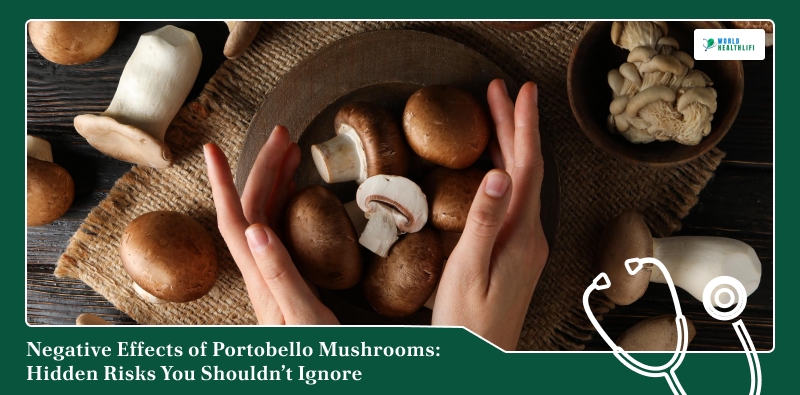
Portobello mushrooms have this clean, earthy reputation that makes them sound almost automatically safe. You see them in salads, burgers, grilled platters, healthy meal prep videos, all of that. So people assume they’re an easy yes. But food is rarely that simple.
The negative effects of portobello mushrooms don’t show up for everyone, and that’s exactly why the topic gets brushed off. In general, if a food works for most people, it’s often treated as if the rest are just being unnecessary. However, they are usually not.
What makes portobellos tricky is that they are not merely nutritious and useful for diets. Some people might get digestive issues. Meanwhile, some react poorly due to allergies or sensitivities.
Others need to think about gout, medications, or even how the mushrooms were grown and stored. Kung tutuusin, this is less about demonizing mushrooms and more about paying attention before something “healthy” starts feeling off.
Negative Effects of Portobello Mushrooms

In plain terms, the negative effects of portobello mushrooms range from mild discomfort to bigger concerns. It depends on the body and health history involved.
Actually, there is no one-size-fits-all food. In fact, a grilled mushroom cap might be fine for one person. However, it might leave another one bloated, itchy, or uncomfortable an hour later. Minsan ganun talaga with foods that look innocent on the plate.
Basically, it all boils down to the following aspects:
- Digestion
- Natural compounds inside the mushroom
- Possible contamination
- Individual response.
Some people might have IBS, a mushroom allergy, autoimmune issues, or a history of gout. In those cases, portobellos do not feel the same way they do for someone who eats everything without thinking twice.
Digestive Issues and Gastrointestinal Discomfort
Portobello mushrooms might be rough on digestion. This happens especially if the gut is already sensitive. It is because they contain chitin and other fibrous compounds. These are harder to break down.
So even though they look light, they don’t always feel light once eaten. For some people, the result is bloating, gas, stomach cramps, or that heavy feeling that just sits there for hours. Parang healthy choice siya, but the stomach doesn’t care about the label.
This is more common when the portion is huge. Also, it happens when mushrooms are part of a meal that’s already fiber-heavy.
Think of a grilled portobello burger with beans, salad, a whole-grain bun, maybe some onions on top. Although it sounds and feels smart, suddenly, the digestive system stages a small protest.
Major Types of Digestive Triggers
| Situation | What Might Happen | Why It Matters |
|---|---|---|
| Large serving of portobellos | Bloating or heaviness | Harder-to-digest fibers can pile up |
| Eating them raw or undercooked | More stomach discomfort | Raw texture is tougher on digestion |
| Sensitive gut or IBS | Gas, cramps, irregular digestion | Existing gut issues may amplify symptoms |
| Mixing with other high-fiber foods | Fullness that turns uncomfortable | Too much fiber at once can backfire |
Allergic Reactions and Sensitivities
Of course, not all bad reactions are digestive in nature. Some people are actually sensitive or allergic to mushrooms, and portobellos can trigger that response.
The signs can be subtle at first, which is why people miss them.
- Maybe it’s itching around the mouth
- Mild skin irritation
- Nasal symptoms
- A strange, tight feeling afterward.
Other times it might be more serious. Hindi naman super common, but it’s real enough not to be ignored.
People who already react to molds or fungi may need to be extra careful. That overlap is easy to underestimate. The mushroom gets eaten, things feel “not great,” and it gets assumed it was random. Then it happens again and again.
This is because repeated mild reactions are often the ones people tolerate for months. However, small and recurring signals from the body are still signals.
Why Raw Portobellos Get Side-Eyed

One of the more widely discussed concerns about portobellos is the presence of naturally occurring compounds like agaritine. Obviously, there is no need to panic over that. But that does not mean it is nothing.
In fact, cooking helps reduce that exposure. That is why raw portobellos are usually the least ideal option. Medyo important iyon because people mostly slice them raw for salads. They think that “natural” automatically means better.
Moreover, cooking also softens the mushroom and makes it easier to digest. So there’s a double benefit: better digestibility and less concern about raw intake. This is one of those practical health points that actually work because they don’t require a complicated routine.
Also, there’s no requirement for a new supplement. In fact, all you have to do is cook the mushroom properly, not treat it like a raw cucumber or lettuce.
Raw vs. Cooked Portobello Mushrooms
| Form | Main Concern | Better Choice? |
|---|---|---|
| Raw | Harder to digest and greater concern around natural compounds | Less ideal |
| Lightly cooked | Some improvement in digestibility | Better |
| Thoroughly cooked | Easier on the gut and generally safer approach | Best option |
Heavy Metals and Food Safety Concerns
Essentially, mushrooms can absorb substances from their growing environment. These include heavy metals when conditions are poor. That means sourcing matters more than people think.
If portobellos are being bought from reputable sellers, it is great. If not, there’s at least some reason to be selective. The same goes for storage.
In fact, mishandled mushrooms pose a food safety risk, especially if they sit too long. Also, there are safety risks with mushrooms that remain too damp or pick up contamination during prep. Also, spoiled produce and improperly handled fungi can still cause trouble.
Hence, it is important to wash them properly. Also, store them in breathable packaging and refrigerate. Moreover, do not keep them hanging around forever. Ingat lang, because some foods spoil quietly.
Medication Interactions, Gout Risk, and Other Personal Health Factors

If someone takes particular medications, especially blood thinners, or if they have gout or high uric acid, portobellos isn’t the right thing for them. This is because they contain bioactive compounds and purines.
Hence, the statement “mushrooms are always healthy” does not always hold. Health is personal. So, what nourishes one person can complicate something for another, lalo na when there’s already an existing condition in the background.
The same goes for autoimmune disorders or fungal sensitivities. Some people may tolerate mushrooms just fine. Others may notice symptoms flare or feel generally worse.
Also, sometimes it goes with a pattern. There is more fatigue, digestive stress, and inflammation-like discomfort. If that keeps happening after mushroom-heavy meals, it’s worth paying attention.
Lowering the Negative Effects of Portobello Mushrooms
The good news is that this isn’t one of those problems that always ends with total restriction. In fact, for many people, better habits are enough.
- Smaller portions
- Thorough cooking
- Buying from trusted sources.
- Paying attention to timing and symptoms.
If bloating always shows up after portobellos, there’s no point sounding “normal.” Okay lang to admit a food doesn’t suit you, even if everyone else online swears by it.
Steps to Lower the Negative Effects
The following approach usually works best:
- Start with a smaller portion. This helps especially if they haven’t been eaten in a while.
- Avoid raw preparations if digestion is sensitive.
- Store them properly and use them while they’re fresh.
- If there’s gout, allergies, autoimmune issues, or regular medication use, check whether they make sense on a personal level.
Portobello Mushrooms Might Not Be Automatically Fine for Everyone
Of course, portobello mushrooms can be nutritious, versatile, and completely manageable for lots of people. However, the negative effects of portobello mushrooms are not offset. Also, they are not rare enough to dismiss.
In fact, some people get stomach issues. Meanwhile, some deal with allergy-like symptoms. Others need to think about food safety, raw consumption, or how mushrooms fit into existing health conditions. So yeah, they can be good food, but they still shouldn’t get a free pass.
The most balanced takeaway is simple.
- Eat them if they work for the body.
- Cook them well and don’t overdo it.
- Pay attention to patterns instead of forcing a food just because it looks healthy on paper.
Essentially, sometimes the smartest health choice is less about trends and more about honesty. Ano ba, the body usually tells the truth long before a blog does.
Frequently Asked Questions (FAQs)
Yes, they do. The fibers and chitin in portobello mushrooms might be hard to digest. This happens especially with sensitive stomachs.
No. It is less ideal because raw intake is harder to digest. Also, it may raise concerns about natural compounds.
People having the following issues must avoid portobello mushrooms:
• Mushroom allergies
• Gout issues
• Sensitive digestion
• Fungal sensitivities
• Under particular medication.
You can reduce the negative effects of portobello mushrooms by taking the following steps:
• Cook them well
• Eat smaller portions
• Buy from trusted sources
• Watch how the body reacts.
Yes, they can. In some cases, they do have blood-thinning concerns. Hence, it is safer to ask a healthcare professional.


