We rarely give our kidneys a second thought, yet they are easily among the most overworked organs in the body.
They do way more than just produce urine.
Think of them as your body’s internal filtration system. This includes purifying blood, protecting your bones, and keeping your fluid levels perfectly balanced.
Now, picture finding out a rare genetic glitch is actively destroying them.
For any parent, that diagnosis is a complete gut punch. That is the reality of nephronophthisis (NPHP). Instead of cleanly filtering out waste, a child’s kidneys begin to scar, shrink, and steadily shut down due to cellular defects.
It is incredibly overwhelming to process.
But breaking down exactly what this disease does to the body.
So, deciphering the heavy genetic jargon doctors throw at you is the first step to taking back control during your clinic visits.
Nephronophthisis: A Basic Breakdown
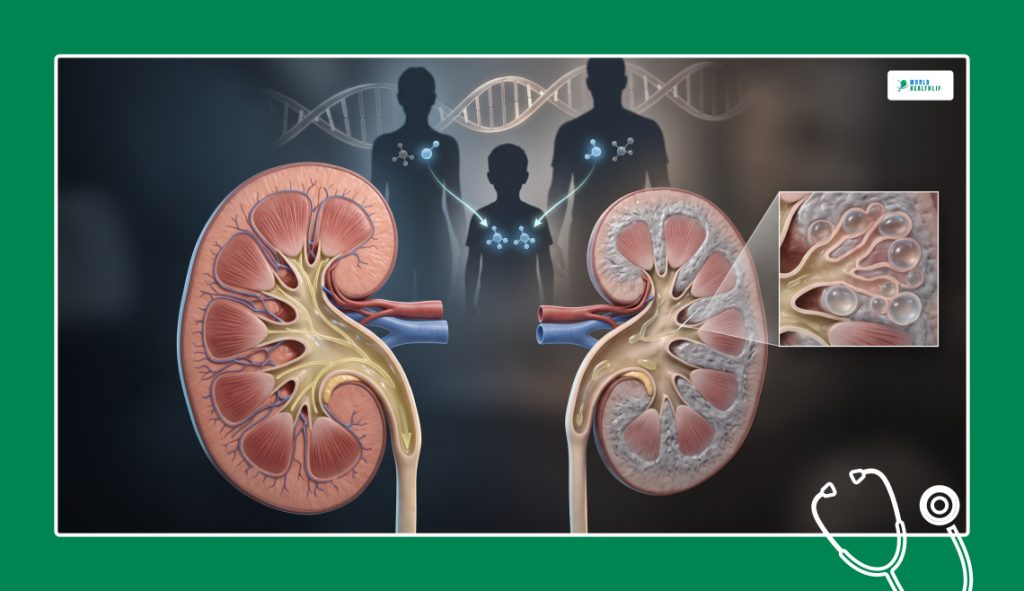
Let us first understand what the disease is. When you break it down, nephronophthisis (NPHP) is a combination of two words.
Nephron means the filtering units of the kidney, and phthisis means wasting away or disintegration.
What Is Nephronophthisis?
Medical textbooks define NPHP as a progressive genetic kidney disorder that primarily strikes children and teenagers.
To visualize what goes wrong, we have to look at the microscopic tubules inside the kidney.
These tiny tubes act like pipelines, where they reabsorb water and filter out the junk your body does not need.
When a child has NPHP, these pipelines begin to develop cysts slowly, fill with fluid, and become choked out by scar tissue.
Over time, the kidneys lose their ability to concentrate urine, leading to a slow and quiet decline towards kidney failure.
Role Of Genetics
In NPHP, this condition is entirely hereditary, following what doctors call an autosomal recessive pattern.
According to doctors, this can be described as a way a genetic trait or condition can be passed down from a parent to a child.
A genetic condition can occur when the child inherits one copy of a mutated or changed gene from each parent.
The parent of a child with an autosomal recessive condition usually does not have the condition.
So, for NPHP, a child must inherit two faulty copies of a specific gene. That is, one from the mother and the other from the father, to actually develop this disease.
However, the tricky part is that parents generally have absolutely no idea they carry this genetic trait. They have one working gene and one broken gene. Thus, as a result, their own kidneys function perfectly normally.
When two carriers have a child, there is a one-in-four chance with each pregnancy that the child will inherit both broken genes and develop the condition.
Statistics And Rarity
Here, you are dealing with an incredibly rare disease here. That is why finding clear information can feel like searching for a needle in a haystack.
Medical registries show its effects in roughly 1 in every 50,000 to 100,000 live births globally.
Despite being rare in the general population, it actually stands out as one of the most common genetic causes of kidney failure in children and young adults.
| Metric | Quick Fact Breakdown |
| Global Prevalence | Approximately 1 in 50,000 to 1 in 100,000 individuals |
| Inheritance Pattern | Autosomal Recessive (Both parents must pass on a mutated gene) |
| Primary Target Age | Typically manifests in toddlers, older children, or young teenagers |
| Classification | Classified as a ciliopathy (a disease affecting cellular structures called cilia) |
Symptoms Of The Condition

Early on, NPHP acts like a total ghost. The warning signs are so subtle that the majority of the parents tend to mistake them for normal childhood habits or just weird phases.
| Symptom | What It Actually Looks Like In Daily Life |
| Polyuria | Constant bathroom trips, bedwetting after being fully toilet trained, high urine volume |
| Polydipsia | An unquenchable thirst, carrying water bottles everywhere, waking up thirsty |
| Growth Retardation | Falling behind on pediatric growth charts, short stature, delayed puberty |
| Anemia Symptoms | Pale skin, unexplained lethargy, shortness of breath during normal play |
| Uremic Signs | Nausea, low appetite, a metallic taste in the mouth as toxins build up |
Polyuria: Constant Trips To The Bathroom
The major red flag is polyuria, which is just a fancy clinical word for peeing a massive amount.
Since those scarred tubules cannot hold onto water anymore, the body just dumps fluid around the clock.
This often looks like the unexpected bedwetting after a child has been fully toilet trained for years.
Polydipsia: An Unquenchable Thirst
Naturally, that heavy fluid loss causes polydipsia, which can be described as an intense, non-stop thirst.
You will notice your kid chugging water bottles constantly, leaving empty cups all over the house, or waking up multiple times a night just to run for a glass of water.
Growth Retardation
Children dealing with this chronic strain usually get hit with a noticeable lag in their physical growth milestones. Moreover, they might fall way behind on the pediatric growth charts at their annual checkups.
During these checkups, they might show a much shorter stature or experience delayed puberty compared to their peers.
Severe Anemia: Pale Skin And Extreme Fatigue
Another weird side effect comes down to hormones.
The thing is that kidneys make something known as erythropoietin, which signals your bone marrow to crank out red blood cells.
When the kidneys fail, that signal dies. As a result, this causes severe anemia, making your child look totally pale and completely drained of energy.
Uremic Signs: The Buildup Of Toxins
As the filtration system breaks down further, waste products begin to accumulate in the bloodstream.
This toxicity triggers uremic signs, which include frequent nausea, a sudden loss of appetite, and a strange metallic taste in the mouth, making regular food unappealing.
Clinical Subtypes Of Nephronophthisis
Medical teams break this disease down into three different versions completely on the basis of specific age when a kid’s kidneys finally hit a wall.
| Subtype | Onset of Organ Failure | Key Features |
| Infantile NPHP | Before age 5 | Frequently linked to severe cortical cysts and prenatal issues |
| Juvenile NPHP | Around age 13 | The most common variant, characterized by rapid fibrosis during school years |
| Adolescent NPHP | Between ages 15 and 20 | Slower progression, often harder to spot early on due to late-stage changes |
Infantile NPHP
Despite being incredibly aggressive, infantile NPHP is actually rare.
In this case, kidney damage hits fast and hard, often forcing the organs into total failure before the child even hits their fifth birthday.
In certain cases, it may even start to cause issues before they are born.
NPHP is known as a primary cause of end-stage kidney disease (ESKD) in children and young adults. In infantile NPHP, it progresses to ESKD before age 3 or 4, with a median age of around 1 year.
Generally, it can present in utero with oligohydramnios sequence (leading to lung, facial, and limb issues) or postnatally with severe renal dysfunction.
Characterized by pronounced renal cysts and a more severe clinical course compared to other forms, it may be associated with extrarenal features like situs inversus.
In infantile NPHP, it is most frequently associated with mutations in the NPHP2 (inversin) gene or specific mutations in NPHP3.
Moreover, it combines standard NPHP features such as tubular atrophy and fibrosis with traits resembling polycystic kidney disease.
These characteristically show enlarged kidneys with widespread cortical microcysts
Juvenile NPHP
Occurring at a median age of 13 years, this form of NPHP causes chronic tubulointerstitial nephritis, ultimately leading to ESRD.
This subtype differs from infantile NPHP primarily in its age of onset and progression to kidney failure.
This is actually the most common form, where symptoms such as excessive thirst and polyuria show up in the first decade of life.
It progresses to end-stage renal disease at a median age of 13 years.
Adolescent NPHP
Adolescent NPHP has an approximate median age of 19 years.
However, the late-onset adult cases can progress up to the fifth or sixth decade of life. This clinical subset is frequently linked to mutations in NPHP3, NPHP4, or NPHP5.
Having symptoms and signs that are virtually identical to the juvenile form, adolescent NPHP is present with a much slower rate of progression.
This also delays kidney failure until late adolescence or adulthood.
What Happens To The Kidneys?
To understand the physical damage, you have to look at the structural architecture of the organ under a microscope.
Healthy kidneys are supple, flexible, and filled with millions of microscopic filtering units working in perfect harmony.
In a child with NPHP, a profound breakdown occurs at the cellular level within structures called primary cilia, which act like tiny cellular antennas.
When these antennas malfunction, the cells receive the wrong signals, causing the kidney tissues to become inflamed and form small fluid-filled pockets called medullary cysts.
As these cysts expand, the surrounding healthy tissue is replaced by thick, rigid sheets of collagen and scar tissue. This destructive process is called interstitial fibrosis.
As the scarring spreads, the entire kidney begins to lose its shape, physically shrinking in size until it resembles a small, hardened mass that can no longer process blood or sustain life.
Diagnosis And Prognosis
To navigate even further with nephronophthisis, let us now move forward with its diagnosis and prognosis.
How Do Doctors Diagnose This
Pinning down a definitive diagnosis for something this rare takes a lot of detective work.
This is because standard lab tests easily look like other and more common illnesses.
A pediatric kidney specialist will start with routine blood and urine samples to check things such as creatinine levels and see how well the kidneys are filtering out toxins.
Ultrasound scans are usually the next step, where they let the medical team physically see the changing shape of the organ.
On the screen, kidneys damaged by NPHP look way smaller than they should.
Besides that, they have an oddly bright appearance where the normal lines between different tissue layers.
The Clinical Outlook Of Nephronophthisis
Processing the long-term outlook is incredibly tough because there is currently no magic cure to stop this disease in its tracks.
The progression toward end-stage kidney failure is pretty much a guarantee eventually, though the exact timeline changes depending on which specific gene mutation a child has.
But even though this journey is incredibly heavy for a family, modern medicine has completely changed the game. What used to be a fatal diagnosis decades ago is now a highly manageable, long-term chronic condition.
With the right specialized care, kids with NPHP grow up, go to college, build careers, and live incredibly full, happy lives.
Treatment And Management
Since we can’t go in and rewrite a child’s DNA, every single medical treatment we have focuses on managing the fallout and keeping the body running smoothly for as long as possible.
In the early and middle stretches of the disease, treatment is all about aggressive hydration.
Because the kidneys are constantly dumping water and vital minerals, kids have to drink massive amounts of fluids every day and take specific supplements to keep their sodium and potassium levels balanced.
Doctors will also throw in specific blood pressure medications to protect the remaining kidney tissue, along with synthetic hormone shots to fix the anemia and protect their bones.
When the kidneys finally give out completely, renal replacement therapy has to step in to do the heavy lifting.
| Treatment Phase | Primary Medical Strategy | What the Treatment Involves |
| Conservative Stage | Fluid and electrolyte management | High daily fluid intake, salt supplements, and strict dietary monitoring |
| Symptomatic Stage | Medication intervention | Anemia shots (EPO), blood pressure meds, and growth hormones |
| Advanced Stage | Dialysis | Peritoneal dialysis or hemodialysis to mechanically clean the blood |
| Definitive Stage | Kidney Transplantation | Replacing the damaged organ with a healthy donor kidney |
Getting a kidney transplant is the ultimate finish line for kids dealing with advanced NPHP.
The massive silver lining here is that NPHP completely vanishes once a new kidney is put in.
Because the donor organ comes with its own healthy genetic blueprint, the disease cannot return to attack the new kidney.
Moving Forward: What Can You Watch Out For As A Parent
A rare diagnosis completely upends your life, and there is no denying that.
But you can’t let sheer panic run your household 24/7. It’s really about finding a way to slide into a groove of calm, everyday awareness without letting anxiety completely hijack your brain.
First off, just look for the little shifts in how your kid acts. Keep a quick mental note on the small stuff. Are you constantly refilling their water cups? Do they seem totally wiped out and lethargic after a basic day at school?
Next, do quick physical checks when they are just hanging around. Check for random puffiness around their eyes right when they wake up in the morning. Or check if their socks are leaving deep, tight indent lines around their ankles.
Those tedious little details are your early warning signs that their body is starting to hold onto fluid when it shouldn’t.
Most of all, remember you don’t have to carry this entire heavy weight on your own back. Lean on your pediatric kidney doctors.
On a final note, try to treat those routine blood draws and clinic check-ins like a massive safety net.
It is the best way to catch shifts in how their organs are doing before things escalate into an actual emergency room trip.
Disclaimer: The information provided in this article is for general informational purposes only. It does not, and is not intended to, constitute medical or health advice. Please consult a qualified healthcare professional for medical guidance or expert health assistance.
References
- Chen, F., Dai, L., Zhang, J., Li, F., Cheng, J., Zhao, J., & Zhang, B. (2020). A case report of NPHP1 deletion in Chinese twins with nephronophthisis. BMC Medical Genetics, 21, 84. National Library Of Medicine.
- National Cancer Institute. (2026). Autosomal Recessive Inheritance. NCI Dictionary of Genetics Terms. National Cancer Institute.
- Stokman, M., Lilien, M., & Knoers, N. (2023, March 2). Nephronophthisis-Related ciliopathies. GeneReviews® – NCBI Bookshelf.
- Medicover Hospitals. (2026). What is Nephronophthisis? Symptoms, Causes and Treatment. Medicover Hospitals.
- Kidney Research UK. (2026, April 9). Nephronophthisis – Kidney Research UK.