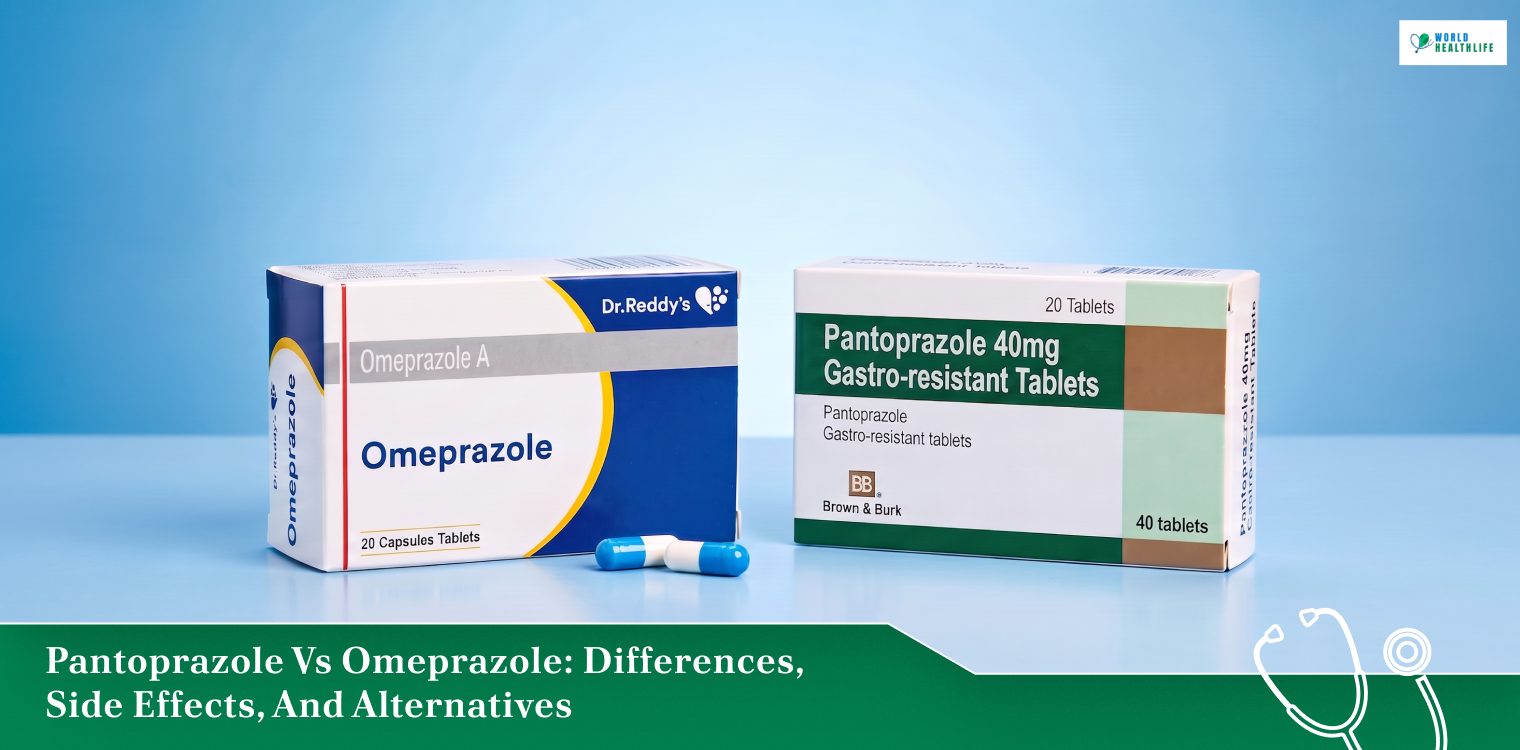
If you are dealing with chronic heartburn, sour burps, or chest discomfort, your doctor may suggest a proton pump inhibitor (PPI).
Two of the most commonly compared options in this drug class are pantoprazole and omeprazole.
If you want a clear breakdown of pantoprazole vs. omeprazole and which one is better for your situation, here is what you need to know.
Thus, the following guide will give a comprehensive breakdown of how they work, their side effects, and how they differ.
But First: What Are Proton Pump Inhibitors?
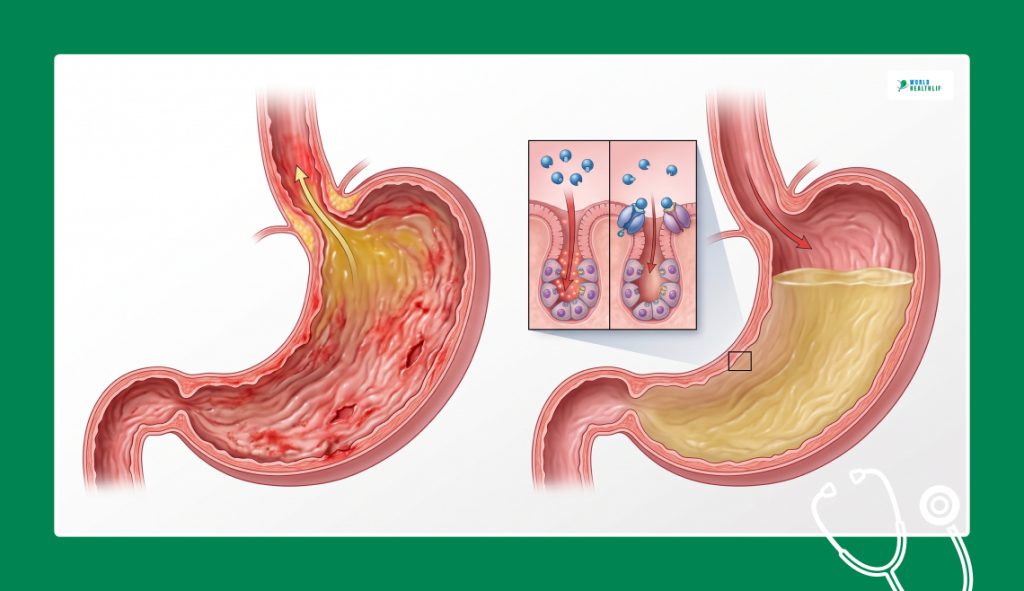
Some medicines reduce the amount of acid produced by glands in the inner lining of one of the body’s most important organs. That is the stomach.
We call these proton pump inhibitors.
Proton pump inhibitors, or PPIs, are medications that reduce how much acid the gastric glands in your stomach lining produce.
By blocking these acid-producing “pumps,” PPIs allow the esophagus and stomach lining time to heal.
Doctors routinely prescribe PPIs to treat the following conditions:
- Gastroesophageal Reflux Disease (GERD)
- Erosive esophagitis
- stomach ulcers
- Conditions involving excess stomach acid, like Zollinger-Ellison syndrome.
Pantoprazole: What Is This?
More commonly called Protonix, Pantoprazole is one of the most commonly prescribed proton pump inhibitors that doctors use to treat GERD. Doctors also prescribe this FDA-approved oral medicine in an intravenous (IV) form.
Manufacturers generally provide these medicines in the form of capsules. And they are strictly prescription-only medications in most regions, meaning they are not available over-the-counter.
Pantoprazole Side Effects
It is not possible for you to not have side effects after taking a medicine, is it? That is the reason why you need to know what you are signing up for. Here are some of the side effects of taking Pantoprazole:
- Kidney problems.
- Allergic reactions.
- Headaches.
- Joint pain.
- Gas.
- Fever.
Omeprazole: What Is This?

Omeprazole, similar to Pantoprazole, is another drug that treats PPI. The brand name Prilosec most commonly identifies it.
Like Pantoprazole, Prilosec is also used to treat erosive esophagitis and GERD.
This drug also treats diseases like bleeding in the gastrointestinal tract, dyspepsia, and heartburn.
Omeprazole Side Effects
There are several effects of taking Omeprazole. Some of them are as follows:
- Flatulence.
- Nausea.
- Headache.
- Diarrhea.
- Constipation.
Pantoprazole Vs Omeprazole: What Is The Difference?
If you think that there is a lot of difference between pantoprazole and omeprazole, you mistake them.
Both drugs fall under the same category: PPIs, and both help relieve symptoms by reducing stomach acidity.
In simpler terms, these drugs decrease acid production in the stomach.
The only difference between the two, however, is how quickly they start to work.
While both drugs effectively lower acid levels, they do not provide immediate relief.
Both medications begin working within 1 to 3 hours, but they take 3 to 4 days of consistent daily use to reach their full effect.
The standard dosage also differs; 40 mg of Pantoprazole provides the same clinical strength and acid relief as 20 mg of Omeprazole.
The most critical medical difference is that Omeprazole can interfere with certain medications like the blood thinner clopidogrel (Plavix).
On the other hand, Pantoprazole has a much lower risk of drug interactions.
Because both drugs are PPIs, they function almost identically to lower total stomach acid production.
However, there are a few distinct differences you must consider.
| Feature | Pantoprazole (Protonix) | Omeprazole (Prilosec) |
| Availability | Prescription Only | OTC and Prescription |
| Common Form | Delayed-release tablet | Delayed-release capsule |
| Standard Adult Dose | 40 mg once daily | 20 mg once daily |
| Drug Interactions | Low risk of interactions | High risk (interferes with CYP2C19 enzyme) |
| Time to Full Effect | 3 to 4 days | 3 to 4 days |
Pantoprazole Vs Omeprazole: Which One Should You Take?
Now that you know that there are not many differences when it comes to the working of the two medicines, it might be clear to you that both the PPIs work in a similar way. The only difference is that one of them (Pantoprazole) works much faster than the other (Omeprazole).
Therefore, it depends entirely on your medical history and what other medications you take.
If you are on blood thinners, your doctor will likely choose Pantoprazole to avoid dangerous drug interactions.
However, you must consult your doctor about the dosage and your other ongoing prescription drugs.
It is best to stay clear on whether either of the PPIs is going to react with the medicines.
The “Speed” Misconception
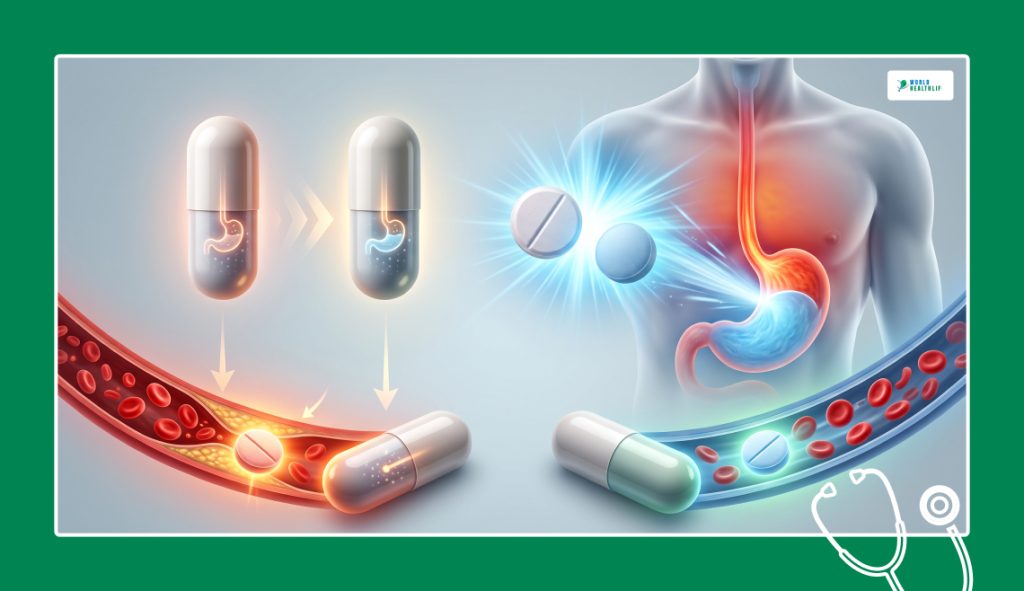
Neither oral pantoprazole nor oral omeprazole provides immediate relief.
While they both begin inhibiting acid production within 1 to 3 hours after your very first dose, they both take 3 to 4 days of continuous daily use to reach their full therapeutic strength.
An antacid or H2 blocker (like famotidine) provides instant relief from sudden heartburn.
Critical Drug Interactions
The most significant medical difference lies in how these drugs interact with other medicines. Omeprazole strongly inhibits a liver enzyme called CYP2C19.
Because of this, omeprazole can dangerously reduce the effectiveness of the blood thinner clopidogrel (Plavix), increasing the risk of blood clots or stroke in cardiac patients.
Pantoprazole does not utilize this metabolic pathway as aggressively, making it a much safer choice for individuals taking blood thinners.
Effective Alternatives To Pantoprazole
If pantoprazole is not the right fit for your body, several alternative medications can manage stomach acid.
Common alternatives within the same proton pump inhibitor (PPI) class include Dexilant, Aciphex, and Nexium.
If you require a different type of acid reducer, Famotidine (an H2 blocker) can also be used to treat symptoms.
Potency and Effectiveness: Pantoprazole Vs Omeprazole
Both pantoprazole and omeprazole work similarly to treat Gastroesophageal Reflux Disease (GERD). Both medications deliver equivalent clinical results in managing acid-related conditions.
Neither drug provides instant relief; they both require consistent daily use over a period of days to reach their maximum effectiveness in the body.
Can Pantoprazole Cause Anxiety?
There is no direct clinical evidence showing that pantoprazole causes anxiety as a side effect.
However, severe gastrointestinal distress and painful GERD flare-ups are known to trigger stress and anxious feelings in many patients.
By effectively controlling acid reflux symptoms, pantoprazole can help relieve physical discomfort and reduce associated situational anxiety.
So, Which One Is Better Between Pantoprazole Vs Omeprazole?
Pantoprazole and Omeprazole are both certain types of proton pump inhibitors.
Both of them are used to treat Gastroesophageal Reflux Disease or GERD.
As they have similar compositions, there is not much difference between the two in how they interact with other drugs.
If you were looking for the answer to which medicine is better between Pantoprazole vs Omeprazole, I hope you have found this article to be helpful.
If you have any other questions, feel free to leave them in the comments below.
Till then, take care!
Disclaimer: The information provided in this article is for general informational purposes only. It does not, and is not intended to, constitute medical or health advice. Please consult a qualified healthcare professional for medical guidance or expert health assistance.