
My uncle is 54. No wonder the doctors like him a lot. But do you know why? Well, firstly, he walks a standard 5 kms every morning without fail. Only exceptions are when he falls ill.
At the same time, he is a non smoker. Plus, a non drinker. What else do a doctor need? But I never thought that this would happen to him one day!
About a year back, he mentioned a strange feeling in his chest. Not pain, exactly. More like a mild tightness that showed up when he climbed stairs too quickly or rushed somewhere. Easy to dismiss. He did, at first.
When he finally mentioned it to his doctor, the appointment moved fast. He described the feeling, the doctor asked a few questions, then said, “We need a TMT Test.”
That was it.
The Challenge We Faced At The Clinic
Neither of us knew what a TMT was. We nodded anyway and left. Once we got home, we did what most people do. We Googled it. At first, we turned to one article, then five, and then a mess of forums. Two hours later, I was more anxious than informed.
So instead of letting you go through the same spiral, I’ll tell you what I eventually figured out. No jargon. No dramatic warnings. Just the explanation I wish someone had given us while we were sitting in that clinic, wondering what we’d just agreed to.
What Is TMT Test And Its Full Form
If you are wondering what is TMT test, the TMT test full form stands for Treadmill Test.
That’s the name you will hear most often. That is, though some doctors call it a stress test or an exercise stress test instead.
It took me a while to realize they were all pointing to the same thing. Just different words, but they indicate the same procedural test.
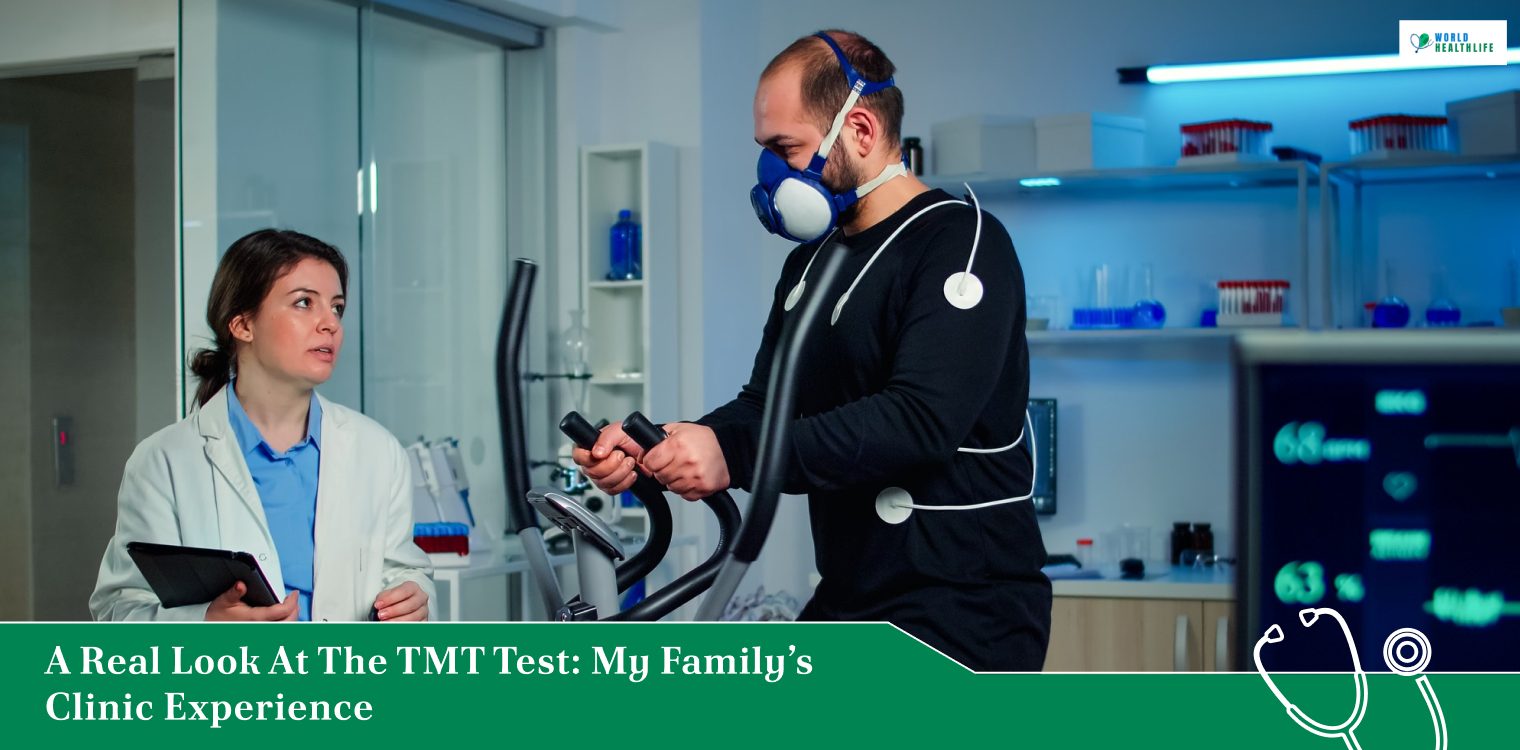
At its core, the TMT is about seeing how your heart behaves when it’s made to work a bit harder than usual. You walk on a treadmill. It starts easily.
Then, every few minutes, it gets slightly tougher. To clarify, the speed increases and the incline rises. But here is one thing I can tell you. The changes or shifts are not random.
In fact, you can easily see a clear pattern if you pay attention. The first thing you need to check is how much exertion you are going through in your daily life.
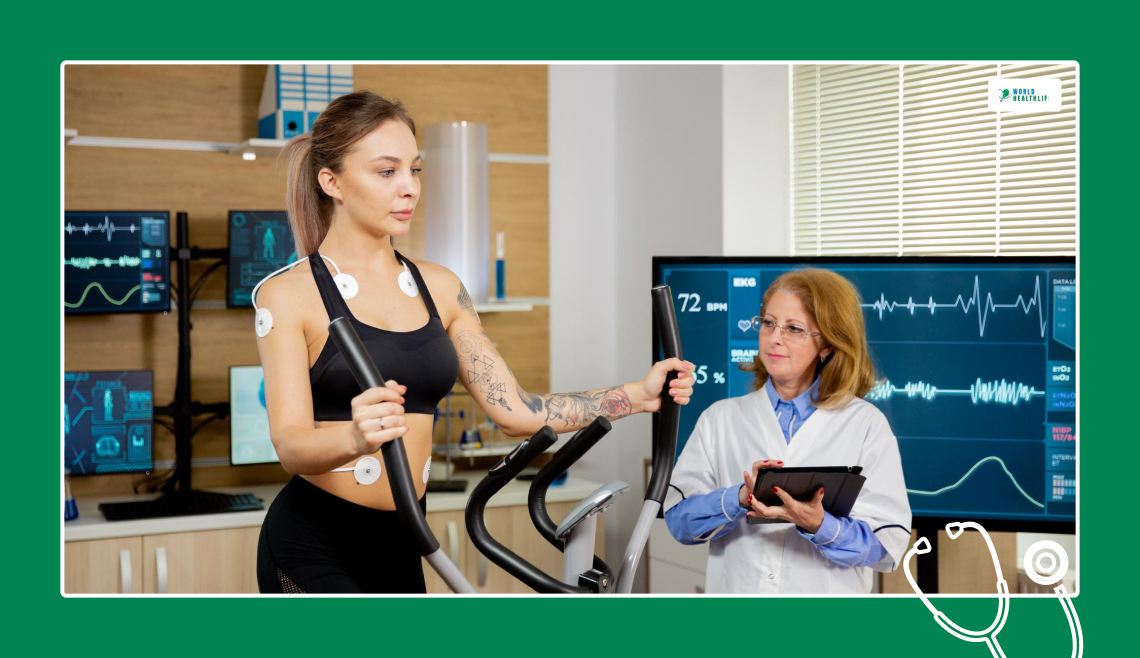
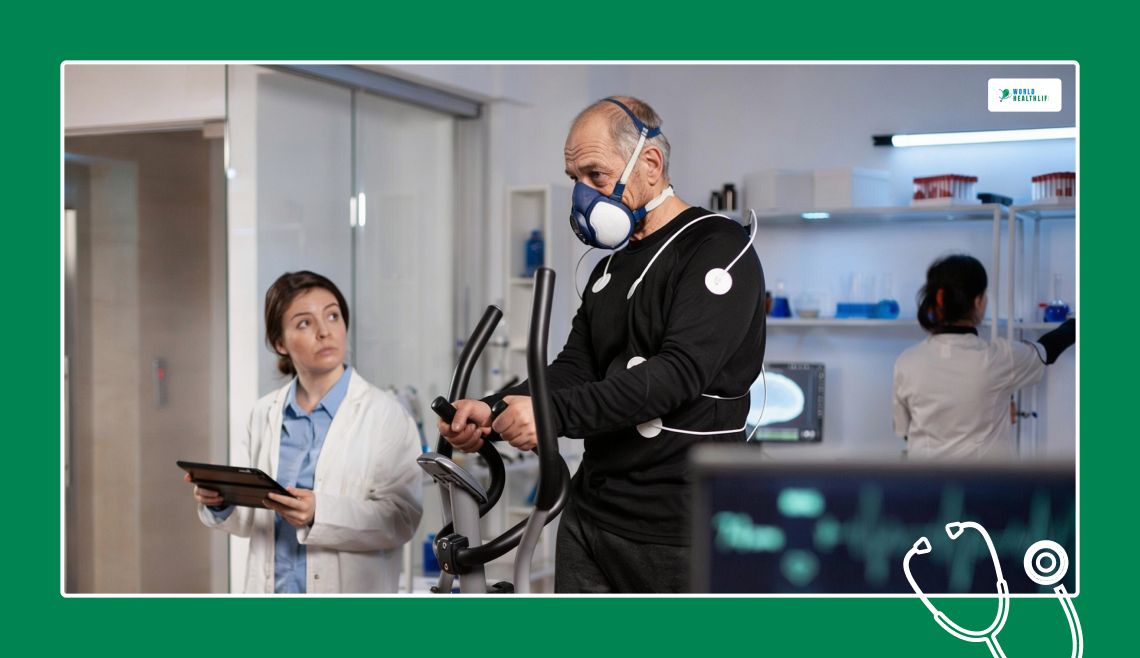
While you’re walking, small sticky pads are placed on your chest. They’re connected to a monitor that records your heart’s electrical activity the whole time. Simply put, your heart rate, rhythm, and ECG change. Again, the doctors continuously monitor everything.
The objective of the test is simple. To clarify, it applies a controlled amount of stress to the heart and sees how it responds.
TMT Test For Heart
What helped me understand why this test exists was something no one really explained up front.
A heart can look perfectly fine when you’re sitting quietly. In other words, a resting ECG can come back normal even if there is an issue brewing.
But the main problem arises when you ask the heart to do something it is not used to doing.
For example, one day you run a few yards to catch a transport. Or a dog chases you. I know that’s a weird example.
But you can clearly understand the shift in workload that I am talking about. I mean, a dog won’t surely chase you every day.
However, when that incident actually happens, you run fast and panic at the same time. That is when there is a real test for the heart.
When you exert yourself, your heart needs more oxygen. Again, to get that oxygen, blood has to flow freely through the coronary arteries.
If one of those arteries is narrowed or blocked, that extra blood can’t get through the way it should. The heart feels that shortage.
Sometimes it shows up as discomfort, whereas sometimes it shows up as changes on the ECG.
Realize these silent signs of heart damage. That’s really the point of a TMT. It recreates everyday physical stress.
But in a place where everything is monitored. Doctors are watching the readings the entire time, and the test can be stopped the moment something doesn’t look right.
How the TMT Test Actually Helped My Uncle?
What helped me understand why this test exists was something no one really explained up front. A heart can look perfectly fine when you’re sitting quietly. In other words, a resting ECG can come back normal even if there’s an issue brewing.
But the main problem arises when you ask the heart to do something it is not used to doing. For example, one day you run a few yards to catch a transport.
Or a dog chases you. I know that’s a weird example. But you can clearly understand the shift in workload that I am talking about. I mean, a dog won’t surely chase you every day.
But when that incident actually happens, you run fast and panic at the same time. That’s when there is a real test for the heart.
When you exert yourself, your heart needs more oxygen. Again, to get that oxygen, blood has to flow freely through the coronary arteries.
If one of those arteries is narrowed or blocked, that extra blood can’t get through the way it should. The heart feels that shortage. Sometimes it shows up as discomfort. Sometimes it shows up as changes on the ECG. Realize these silent signs of heart damage.
That’s really the point of a TMT. It recreates everyday physical stress. But in a place where everything is monitored. Doctors are watching the readings the entire time, and the test can be stopped the moment something doesn’t look right.
What Are The Doctors Actually Looking For?
During the test, there’s one number that matters most. A usual TMT test report suggests that your heart rate reaches at least 85% of the predicted maximum. But how do you know the figure? That’s easy. You just check it by subtracting your age from 220.
So if you’re 50 years old, your predicted maximum heart rate is 170 beats per minute. The test aims to push you to about 85% of that. It is roughly 145 bpm. Now, see what happens on the ECG while you get there.
The doctors are specifically watching for something called ST-segment changes. A positive test means the patient’s ECG is showing changes of angina. Now, what is angina?
It is the lack of adequate blood supply to the heart, especially after you handle a heavy workload. It means the patient may be suffering from ischemic heart disease.
At the same time, a negative result means that even at a moderate or high workload, the patient’s heart has sufficient blood supply. Meanwhile, there are no signs of ischemic heart disease.
What Happened To My Uncle?
When my uncle came out of that room after 40 minutes, the cardiologist had a printout in his hand. But he also had a calm expression on his face. I felt that was reassuring.
After that, we saw that his result was negative. To clarify, it is a good result, in medical language. In other words, his heart was capable of handling the stress put through during the test. But I was most reassured to hear this:
“This is no visible blockage, the TMT test result says”. The cramps he felt were the result of acid reflux.
The Part Nobody Tells You: False Positives Are Common
This is the thing I wish I had known before we went in. A positive TMT result does not mean your heart is definitely blocked. It means the test has flagged something that warrants a closer look. But here is something that most people miss.
Often, the flags are false positives. In simple words, the test shows something is wrong. However, everything is normal with your heart.
A peer-reviewed paper published in the Indian Heart Journal described exactly this scenario. A 35-year-old woman in good health got a routine health check at a private hospital. Most importantly, she exercised regularly, did not smoke, and was careful about her weight.
All tests she underwent, including blood and urine tests, USG, X-ray, ECG, and ECHO, were normal. But the doctors said the final check, i.e., the TMT test, returned positive. Again, the test showed possible coronary artery disease.
That’s a serious claim. To clarify, she had a high risk of a heart attack or even sudden death. She was advised to undergo coronary angiography.
Other Things I Found About the TMT Test That Others Won’t Tell You
The same paper noted that if the TMT is done routinely as part of a health check-up package in asymptomatic people with low risk, the false positive rate can be as high as 89 percent. What does that mean?
In simple terms, many people who test positive will not actually have coronary artery disease. But doctors often send you for expensive and sometimes invasive follow-up tests. Again, that results in psychological trauma and unnecessary expense.
I’m not saying the test is unreliable. I’m saying it works best when a doctor has already assessed you and believes there’s a reasonable chance something is wrong. In other words, it is a screening tool. Not a verdict.
The TMT has a sensitivity of around 70-80%. In other words, it can give clues about blockages in 75 to 80 percent of cases.
It can also be a false positive, with 10 to 20 percent of positive reports having no actual blockages. Results should always be reviewed and opined upon by a cardiologist.
TMT Test Price In India
If your doctor has recommended this screening, the TMT test price is relatively affordable compared to advanced imaging or invasive procedures.
On average, the standard cost in India ranges from ₹750 to ₹3,000, depending heavily on your city and the diagnostic laboratory.
| City | Average TMT Test Price |
| Hyderabad | ₹750 – ₹1,200 |
| Pune & Bengaluru | ₹1,200 – ₹1,900 |
| New Delhi & Gurgaon | ₹1,275 – ₹1,900 |
| Mumbai | ₹1,400 – ₹1,500 |
| Kolkata | ₹1,500 – ₹1,900 |
| Chennai | ₹1,568 – ₹1,900 |
What I Would Tell Anyone Going In For A TMT Test?
First: you don’t need to fear at all. The TMT Test is a routine process. Nothing else. It’s genuinely manageable. The team stops the test the moment anything concerning appears.
Second: context is everything. Your result needs to be read alongside your age, symptoms, history, and risk factors. A number on paper is not the whole story.
Third: if your result comes back positive, breathe. Ask your cardiologist what the next logical step is. In many cases, a follow-up test will clarify things.
Factors like chronic stress, technical bugs, or triggering medications like Allegra can lead to a positive TMT result even without significant blockages. A positive TMT is a question, not a diagnosis.
My uncle is fine. He still walks every morning. And he now knows that his heart under deliberate, monitored stress handles itself well. That knowledge alone has been worth more than any medicine.


