
One fine morning, I woke up like every other day. But I feel a prickly first and then a burning sensation in the feet and toes.
No, I did not twist my toe anyhow. In fact, my sleeping posture is very good. No way I could harm myself when asleep. It didn’t take me long to understand that these are uric acid symptoms.
What I felt was not pain. But a high frequency irritation. Even when I faintly touched the ground, I felt something like an electric shock running down my toes.
Now I know that was my body warning me about uric acid. I know a lot of you will relate to my story. A lot of my friends also discovered they have Uric acid in the same way.
What Is Uric Acid, And Why Should You Care?
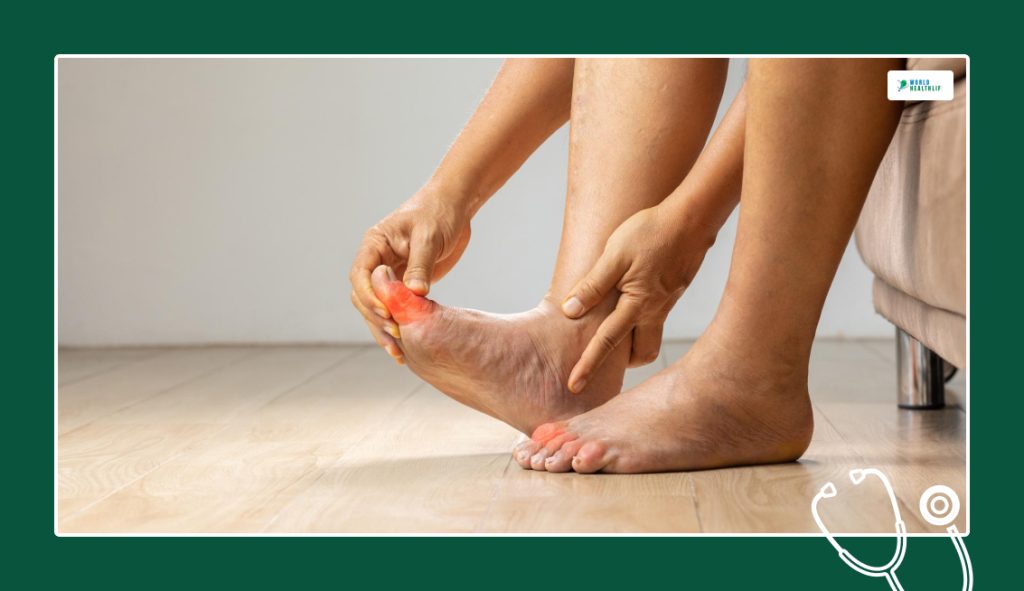
Your body has a hard time breaking down some complex nutrients in food. But which food? Certainly not all food.
I am mainly talking about red meat. Other than that, seafood and some vegetables, too. Usually, doctors ask you to avoid legumes, lentils, and spinach. It’s a big no for mushrooms too. Again, vegetables we consider otherwise good, like cauliflower and broccoli, can also trigger uric acid.
But why only these? These foods produce additional uric acid, which the kidneys often struggle to process. As a result, the remaining uric acid is deposited in the blood.
Uric acid is deposited as crystals. In other words, they are sharp, needle-like formations that deposit in your joints. They also end up in your kidneys. That’s where the scenario becomes painful.
Phase 1: The Quiet Before The Storm
Here’s the thing nobody tells you. Before the dramatic pain, there are weeks, sometimes months, of smaller, easier-to-ignore signs.
I was tired. Not the regular end-of-day tired. This was a heavy, dragging kind of fatigue that coffee couldn’t fix. My ankles felt stiff when I got out of bed every morning. I brushed it off as aging. I was wrong.
What was actually happening to me were uric acid symptoms. In simpler words, it is a waste product your body makes when it breaks down certain foods. And it was quietly building up in my blood.
Normally, your kidneys catch it and flush it out. Mine weren’t keeping up. The excess was slowly forming tiny, needle-like crystals in my joints.
I had no idea. I felt nothing alarming. Just… off.
Suppose this sounds like you: Don’t wait for the pain to arrive. Ask your doctor for a simple blood test the next time you go in. That’s it. Catching this early changes everything.
Phase 2: The Joint Pain That Came Out Of Nowhere

Back to that night. The pain in my toe was like nothing I’d felt before. Hot, throbbing, almost electric. Even the bedsheet touching it was too much. I pulled my foot out from under the covers and just lay there, wide awake, completely confused.
By morning, the joint was swollen and red. Shiny-looking, almost. I limped to the bathroom.
Over the next few weeks, the same thing happened in my ankle. Then my knee. Always suddenly. Always at night. I kept taking painkillers, kept telling myself it would pass. It didn’t.
What was happening, I only understood later. Simply put, I realized those uric acid crystals were causing my joints to swell. It is one of the peak uric acid symptoms.
My body was treating them like foreign invaders and attacking them. The swelling, the redness, the warmth, all of that was the fallout of that battle happening inside my joints.
The pain comes and goes. That’s what makes it tricky. You have a bad night, then three good weeks, and you think it’s over. But, it’s not.
If your joints are doing this: Please don’t keep swallowing painkillers and moving on. I did that for almost four months. It cost me. Get the blood test done. Find out what your uric acid level actually is.
Phase 3: When My Back Started Hurting Too
A few months into all of this, a new problem showed up. Lower back pain. Not the muscular kind from a long day of sitting. This was deeper, more internal. There were days when I also felt a dull ache on one side of my body, just below my ribs.
Then I noticed my urine looked darker than usual. Most importantly, it was almost orange some days.
I finally went to the doctor. Turns out, the same crystals that were hitting my joints were now forming in my kidneys, too. Small stones. My doctor told me I was lucky they were still small enough to pass. A little more delay, and it would have been a much harder conversation.
The back pain, the darker urine, and even some nausea I’d been ignoring. All of it was connected. All of it was uric acid.
If your back aches without reason or your urine looks off, please see a doctor. Don’t wait. Your kidneys are telling you something, and they’re worth listening to.
What I Actually Changed And What Finally Worked?
What worked was simpler. Boring, even. But they worked after all.
Water. I started drinking more water than I ever had in my life. Ten to twelve glasses a day, minimum. I kept a big bottle on my desk and finished it twice before dinner. Within two weeks, joint stiffness in the mornings had noticeably improved, just from water. That still surprises me.
I quietly dropped certain foods. Mutton. Organ meats. Prawns. Not all at once. But I just stopped buying them as often. I also stopped drinking packaged juices entirely. There’s a type of sugar in them that pushes uric acid levels up, and I had no idea I was doing that to myself every morning with my “healthy” fruit drink.
Cherries and lemon water became my thing. I enjoyed the fresh fruits. But I always had them at the same time.
The other truck was having warm water, empty stomach every morning. Again, I did that every day without stopping.
It is not a major change. In fact I also felt that I could not achieve something great through such small steps. But it seems I was wrong. These small actions reduce the inflammation level in your body. To clarify, you can easily flush off water. Guess what? My uric acid count reduced after I made this a daily practice.
Low-fat curd, every single day. My doctor mentioned that low-fat dairy genuinely helps. I started having plain curd for lunch. No sugar, no flavouring. Just plain curd. I got used to it.
I stopped drinking alcohol. Completely, for about ten weeks. Beer, especially, was a problem. I just didn’t know it until my doctor explained it. After those ten weeks, my test showed a real drop in my levels.
Phase 4: The Day My Numbers Came Back Normal
Three months after I started making these changes, I went back for a retest. My uric acid had come down from above 8 to just under 6. My doctor smiled. I nearly cried. I’m not going to lie. I no longer fekt those uric acid symptoms.
The joint pain was gone. The back ache had cleared. I was sleeping through the night again. I had energy in the mornings that I hadn’t felt in years, and I honestly hadn’t even realised how much the high levels had been dragging me down until they weren’t anymore.
My doctor was clear though, and so am I. These changes have to continue. The moment I go back to eating and drinking the way I used to, the levels will creep right back up. That’s just how it works.
Start small. More water today. Fewer sugary drinks this week. A short walk tomorrow. That’s genuinely enough to begin.