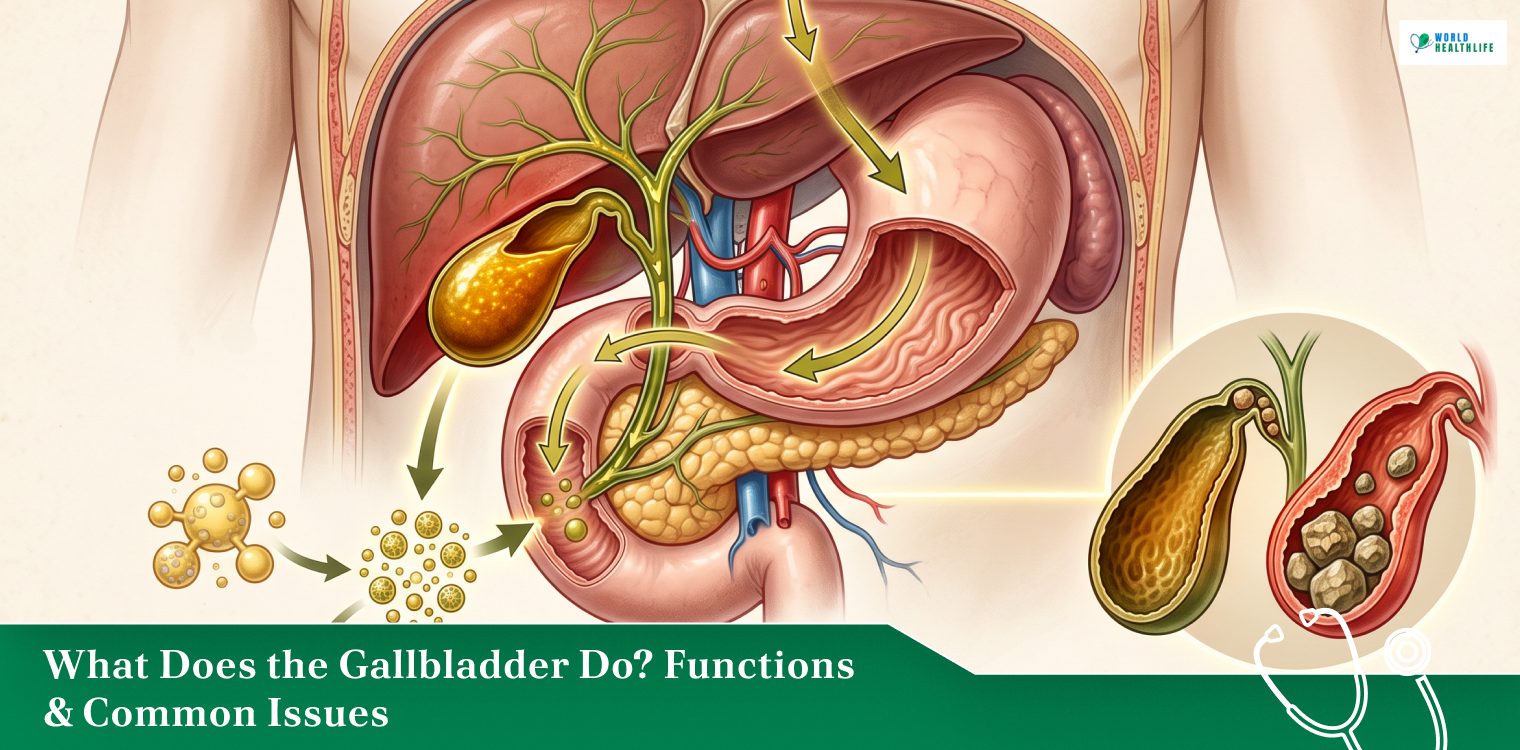
Ever wondered about your gallbladder? Or rather, more specifically, what does the gallbladder do? Well, now you might!
It may be a small organ located in the upper right side of your abdomen. However, do not make the mistake of underestimating it.
It is known for playing a crucial role in your digestive system. Located just below your liver, your gallbladder is responsible for storing bile that helps break down fats in your diet.
When you eat foods that are fatty, this organ stores bile produced by your liver. After that, it releases it into your small intestine when you eat.
However, your gallbladder can also have certain issues.
When there is any inflammation, development of stones, or other issues in the organ, your quality of life as well as overall health can get affected.
Therefore, an understanding is extremely important. When you do so, not only would you be able to seek timely and prompt medical attention, but also prevent serious medical complications.
So, the following breakdown will navigate you through what functions the gallbladder performs, common issues, and how you can effectively manage it.
Understanding The Gallbladder: A Medical Breakdown Of The Organ
Before we can dive deep into what does the gallbladder do, let us first understand the organ.
First, What Exactly Is The Gallbladder?
To define in medical terms, a gallbladder is a membranous muscular sac that is responsible for the collection, storage, and concentration of bile. Here, bile is a digestive fluid that is produced by your liver.
After that, it releases it into the small intestine.
Described as a pear-shaped, small, hollow organ, your gallbladder is present tucked in a shallow groove just beneath the liver.
Usually, medical professionals describe the gallbladder as a small pouch or a sac, where a healthy one is usually grayish-blue or green in color.
Generally, in an adult, the normal size of the organ is about 3 to 4 inches long, which is 7 to 10 centimeters.
Location Of The Gallbladder
In the human body, the gallbladder is located in the upper right side of the abdomen or belly. Sitting in a shallow groove just beneath your liver, your gallbladder connects to your bile ducts through a small tube.
This small tube is known as the cystic duct. In addition, your bile ducts are responsible for carrying bile from your liver and gallbladder to your small intestine.
Anatomy Of The Gallbladder
While your gallbladder has four main parts, its anatomy is more complex than you think.
| Category | Structure / Part | Description & Key Functions |
| Main Parts of the Gallbladder | Fundus | The rounded, distal (outer) bottom portion that projects past the lower edge of the liver |
| Body | The main, central section where bile is stored and concentrated | |
| Infundibulum | The tapering region lying between the body and the neck (sometimes grouped with the neck) | |
| Neck | The narrow, upper portion connecting the organ to the cystic duct. It frequently features a small mucosal fold known as Hartmann’s pouch, where gallstones often get lodged | |
| Connected Ducts & Biliary Structures | Cystic Duct | A small tube responsible for carrying bile both into and out of the gallbladder |
| Common Hepatic Duct | Formed by the junction of the right and left hepatic ducts; it carries bile directly from the liver. | |
| Common Bile Duct | Formed by the merger of the cystic duct and common hepatic duct; it transports bile down toward the small intestine. | |
| Sphincter of Oddi | A muscular valve that regulates the release of bile and pancreatic juices into the duodenum (the first part of the small intestine) | |
| Layers of the Gallbladder Wall | Mucosa | The inner epithelial and lamina propria lining that absorbs water and ions to concentrate stored bile |
| Muscularis | A layer of smooth muscle that contracts to squeeze bile out when stimulated by hormones like cholecystokinin | |
| Connective Tissue / Adventitia | A supportive structural layer providing overall strength to the organ wall | |
| Serosa | The smooth outer membrane covering that wraps the lower portions of the gallbladder. |
Can You Live Without One?
Despite playing such a critical function, you can still live a completely normal and healthy life without a gallbladder.
First of all, your liver will still continue to produce bile. However, instead of being stored and concentrated in the gallbladder, it will drip continuously directly into your small intestine.
Since bile is no longer released in a large burst when you eat, your body has to adjust to processing fats more steadily.
Note one thing, however. The removal of your gallbladder through a procedure known as cholecystectomy does not shorten your life expectancy.
You may face some temporary side effects after surgery, where about half of all patients experience short-term digestive changes as the body adapts.
Typically, these last from 3 to 6 months.
You may face the following side effects during that duration:
- Diarrhea or loose stools triggered by continuous bile entering the gut
- Flatulence and bloating
- Short-term constipation
What Does The Gallbladder Do: Functions Performed
Now that we know what the gallbladder is and where it is located, let us take a deep look into what does the gallbladder do.
First of all, this organ coordinates a series of vital digestive actions to process the food you eat.
What Your Gallbladder Does: At A Glance
| Function | Primary Mechanism | Key Digestive Benefit |
| Bile Storage | Holds bile generated by the liver during fasting periods. | Prevents bile from continuously draining into an empty stomach. |
| Bile Concentration | Absorbs water and minerals to concentrate bile up to 20-fold. | Maximizes the potency and space-efficiency of stored digestive fluid. |
| Timed Bile Release | Contracts in response to cholecystokinin (CCK) hormones after eating. | Delivers bile exactly when food enters the small intestine. |
| Fat Emulsification | Uses bile salts to break large fat droplets into tiny micelles. | Increases the surface area for digestive enzymes to digest fat. |
| Acid Neutralization | Releases alkaline fluids to neutralize acidic stomach chyme. | Protects the intestinal lining and creates an optimal enzyme environment. |
| Waste Elimination | Excretes bilirubin, excess cholesterol, and processed toxins. | Safely removes metabolic waste products from the body via stool. |
Bile Storage
One of the primary functions your gallbladder performs is to store the bile the liver produces.
So, the liver continuously manufactures bile every hour of the day. However, digestion only occurs intermittently after meals.
During periods of fasting, a muscular valve called the Sphincter of Oddi remains tightly closed.
As a result, this blocks entry to the small intestine. This closure creates a pressure gradient that diverts the continuous flow of hepatic bile into the gallbladder.
The gallbladder expands to safely house this fluid, acting as a reliable holding tank.
Thus, that bile is not wasted or allowed to pool improperly in the digestive tract when no food is present.
Bile Concentration
The gallbladder does not just sit passively holding fluid. Instead, it also actively ensures its transformation.
Raw bile coming from the liver is highly diluted and watery. The specialized mucosal lining of the gallbladder contains microscopic pumps that aggressively reabsorb water, sodium, and chloride ions out of the fluid and back into the bloodstream.
This highly efficient filtration process concentrates the remaining bile salts, cholesterol, and lecithin by 5 to 20 times their original strength.
Concentrating the bile ensures that a large, highly potent dose of digestive power can fit into a compact organ that only holds about 30 to 50 millilitres of fluid.
Timed Bile Release
When you eat a meal, the presence of food entering the duodenum (the first part of the small intestine) triggers specialized cells to release a hormone.
This hormone is known as cholecystokinin (CCK) into the bloodstream.
This is particularly applicable when you consume food that contains fats or proteins.
Once CCK reaches the biliary system, it simultaneously causes the smooth muscle walls of the gallbladder to powerfully contract. After that, it signals the Sphincter of Oddi to open.
This perfect hormonal synchronization squirts a concentrated, perfectly timed bolus of bile down the cystic and common bile ducts.
Then, it meets the oncoming food exactly when it is needed.
Fat Emulsification
Dietary fats are hydrophobic. This means they naturally clump together into large, oily globules that are incredibly difficult for water-soluble digestive enzymes like pancreatic lipase to break down.
The bile salts released by the gallbladder possess a unique dual nature. Here, one side binds to water and the other side binds to fat.
Acting much like a biological dish soap, these bile salts physically break the large fat globules apart into millions of microscopic droplets called micelles.
This process is known as emulsification. Moreover, it massively expands the total surface area of fat, which allows digestive enzymes to:
- Quickly latch on
- Break down the nutrients
- Facilitate healthy fat absorption
Acid Neutralization
Food leaving the stomach is known as chyme. Moreover, it is highly saturated with gastric secretions.
This makes it extremely acidic.
So, here is the thing. The delicate lining of the small intestine is not built to withstand this corrosive environment. On the other hand, pancreatic enzymes also cannot function properly in an acid bath.
Note another thing here.
Bile is naturally alkaline due to its high concentration of bicarbonate ions and other basic elements.
So, when the gallbladder discharges its contents into the duodenum, this alkaline fluid acts as a rapid chemical buffer.
In addition, it instantly neutralizes the burning stomach acid, protecting the intestinal walls from ulcers.
Not just that, but it also establishes the perfect, slightly alkaline pH environment required for intestinal digestion.
Waste Elimination
Beyond its vital roles in digestion, the gallbladder acts as a crucial exit route for metabolic waste products. These are the ones that the body cannot filter through the kidneys.
The most notable of these wastes is bilirubin, a yellowish byproduct that the spleen creates when it destroys old, worn-out red blood cells.
The liver collects this bilirubin, packages it into the bile, and sends it to the gallbladder for storage.
Furthermore, the gallbladder serves as the primary vehicle to remove excess cholesterol and the neutralized toxins that the liver processes.
When the gallbladder empties, it pushes these waste products through the intestines.
Additionally, the body safely excretes them, giving stool its characteristic brown color.
Common Issues Surrounding Your Gallbladder
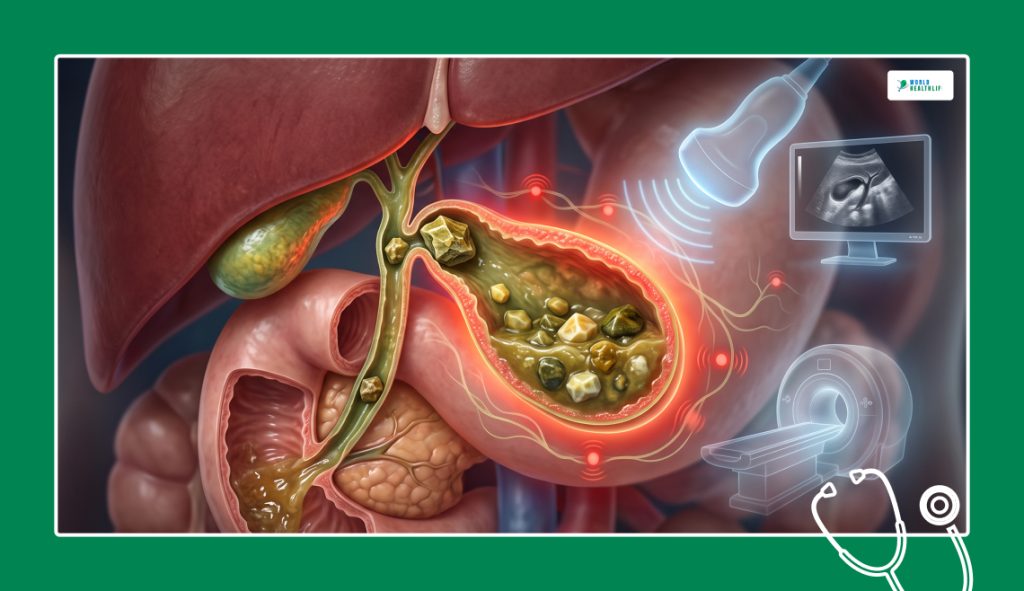
As we have learned so far, the gallbladder is a resilient organ. However, imbalances in bile composition or structural blockages can disrupt the entire digestive process.
Having an understanding of these common clinical conditions can help you recognize early warning signs while seeking prompt medical attention.
Gallstones: Cholelithiasis
Hardened deposits of digestive fluid form gallstones within the gallbladder.
Ranging from the size of a tiny grain of sand to a large golf ball, a person can develop either a single one or multiple at the same time.
Gallstones Vs. Kidney Stones
Do not mistake gallstones for kidney stones!
Though both are hard, pebble-like deposits that form in different parts of the body, they affect distinct organ systems and require different medical treatments.
| Feature | Gallstones | Kidney Stones |
| Organ System | Digestive system (gallbladder or bile ducts) | Excretory system (kidneys or urinary tract) |
| Composition | Hardened cholesterol or bilirubin | Crystallized minerals and salts (calcium, oxalate, phosphate, or uric acid) |
| Pain Location | Upper right or center abdomen; can radiate to the right shoulder or back | Lower back, side (flank), or lower abdomen; often radiates down toward the groin |
| Triggers & Symptoms | Flares up after fatty/greasy meals; includes nausea, vomiting, jaundice, or dark urine | Includes blood in the urine (hematuria), burning or frequent urination, nausea, and vomiting |
| Primary Causes & Risk Factors | High-fat/high-cholesterol diet, obesity, rapid weight loss, diabetes, female sex, or age over 40 | Chronic dehydration (low fluid intake), and diets high in sodium, animal protein, or oxalates |
| Standard Treatment | Monitoring or dissolving medications for minor cases; surgical removal of the gallbladder (cholecystectomy) for symptomatic stones | Passing naturally with increased water intake for small stones; lithotripsy (shock wave therapy) or ureteroscopy for larger stones |
Biliary Colic
Biliary colic refers to a sudden, intense episode of pain caused by a gallstone temporarily blocking the cystic duct.
This pain typically manifests in the upper right quadrant of the abdomen. Moreover, it frequently intensifies after consuming a heavy or greasy meal.
Then it tends to subside once the stone shifts away from the duct opening.
Cholecystitis
When a gallstone becomes permanently trapped in the cystic duct, it blocks the flow of bile entirely. Consequently, this leads to severe inflammation of the gallbladder wall.
Doctors call this condition cholecystitis.
In addition, it causes:
- Prolonged abdominal pain
- Fever
- Chills
- Localized tenderness
Oftentimes, it requires immediate medical intervention or surgical removal.
Gallstone Pancreatitis
If a displaced gallstone travels down the common bile duct and blocks the pancreatic duct opening, it can trigger dangerous inflammation of the pancreas.
Gallstone pancreatitis causes severe, sharp upper abdominal pain.
This radiates directly through to the back, presenting a medical emergency that requires prompt evaluation.
Biliary Dyskinesia
Biliary dyskinesia is a functional motility disorder where the gallbladder fails to contract and empty its bile properly.
That is, even in the complete absence of physical gallstones.
This inefficient emptying builds up pressure within the organ, causing symptoms such as the following:
- Nausea
- Bloating
- Chronic right-sided abdominal pain that mimics a typical gallbladder attack
Gallbladder Polyps
Gallbladder polyps are small, cellular growths that project outward from the internal mucosal lining of the gallbladder wall.
While the majority of these polyps are completely benign and cause no noticeable symptoms, larger polyps require regular medical monitoring.
This helps to rule out the potential risk of developing into gallbladder cancer.
How To Effectively Take Care Of Your Gallbladder
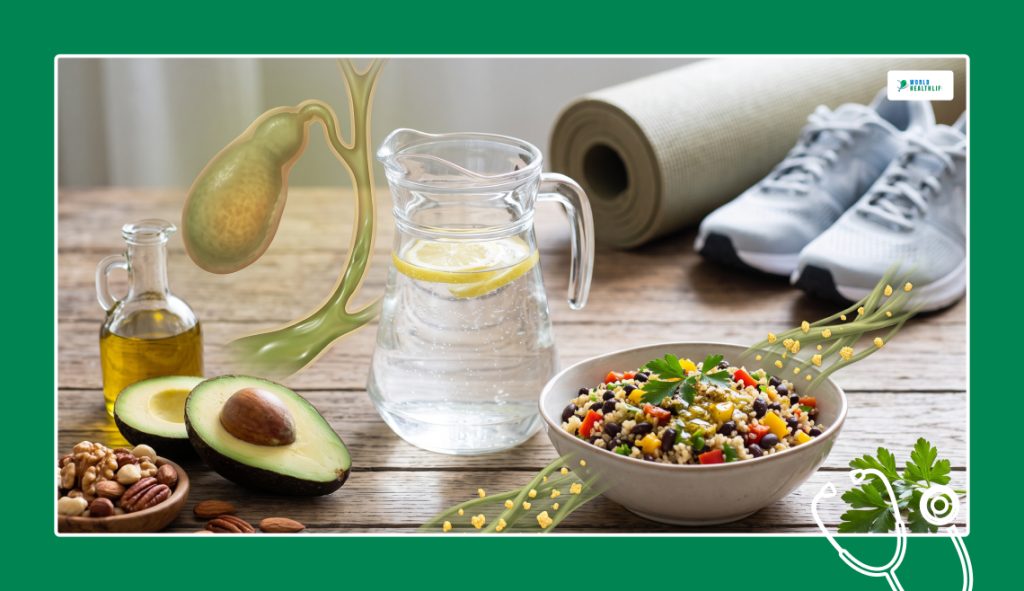
The maintenance of a healthy gallbladder is heavily dependent on having consistent lifestyle choices. These help support efficient digestion while preventing bile from hardening into stones.
First of all, ensure you adopt a balanced diet that is rich in soluble fiber. This helps in binding cholesterol while carrying it out of the body before it can crystallize in the biliary system.
Next, try incorporating healthy monounsaturated and polyunsaturated fats, such as the following:
- Olive oil
- Avocados
- Nuts
Additionally, these encourage regular gallbladder contractions to keep bile moving smoothly.
Staying properly hydrated throughout the day ensures that bile retains its watery consistency, which directly prevents the formation of thick biliary sludge.
Engaging in regular physical activity aids in weight management and lowers insulin levels. As a result, this reduces two of the primary metabolic risk factors linked to gallbladder disease.
Avoiding rapid weight loss methods or extreme crash diets protects the organ.
That is because sudden calorie deprivation causes the liver to release excess cholesterol into the bile.
Also try to limit the intake of highly processed foods, refined sugars, and saturated fats.
This helps to minimize the metabolic strain placed on both the liver and the gallbladder.
Finally, prioritizing these preventative habits safeguards your digestive health and significantly lowers the likelihood of requiring surgical intervention down the road.
Disclaimer: The information provided in this article is for general informational purposes only. It does not, and is not intended to, constitute medical or health advice. Please consult a qualified healthcare professional for medical guidance or expert health assistance.
References
- Cleveland Clinic. (2026). Gallbladder. Cleveland Clinic.
- Housset, C., Chrétien, Y., Debray, D., & Chignard, N. (2016). Functions of the Gallbladder. Comprehensive Physiology, 6(3), 1549-1577. Wiley Online Library.
- Institute for Quality and Efficiency in Health Care (IQWiG). (2021). In brief: How does the gallbladder work? InformedHealth.org – NCBI Bookshelf.
- University of Utah Health. (2026). Gallbladder pain. University of Utah Health | University of Utah Health.
- National Library of Medicine. (2026). Gallbladder diseases. National Library of Medicine.