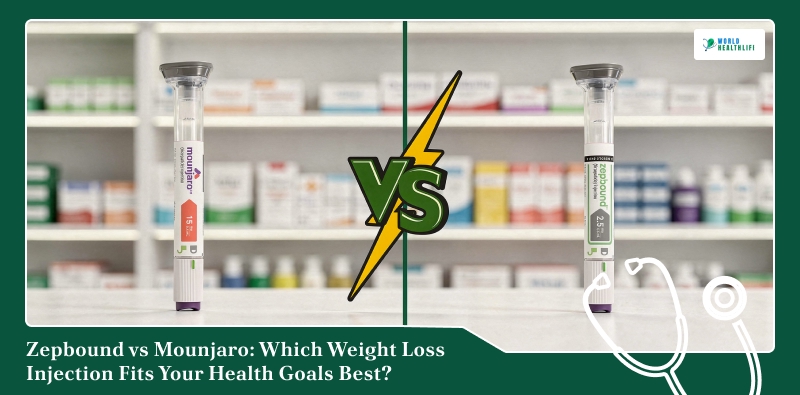
Today’s topic: Zepbound vs Mounjaro.
When it comes to Zepbound vs Mounjaro, the conversation is about weight loss. In fact, both have the same molecule and come from the same manufacturer. Also, both are used for the same once-weekly injection. However, the differences are about indication and coverage.
The reason a prescriber chooses one label over the other matters more than people think. This is where much of the online chatter goes off track.
The real question is not which injection sounds trendier. It is which one fits the diagnosis, sitting in front of the clinician, the metabolic profile, the risk burden, and the treatment goal that actually needs to be met.
What Is Tirzepatide?
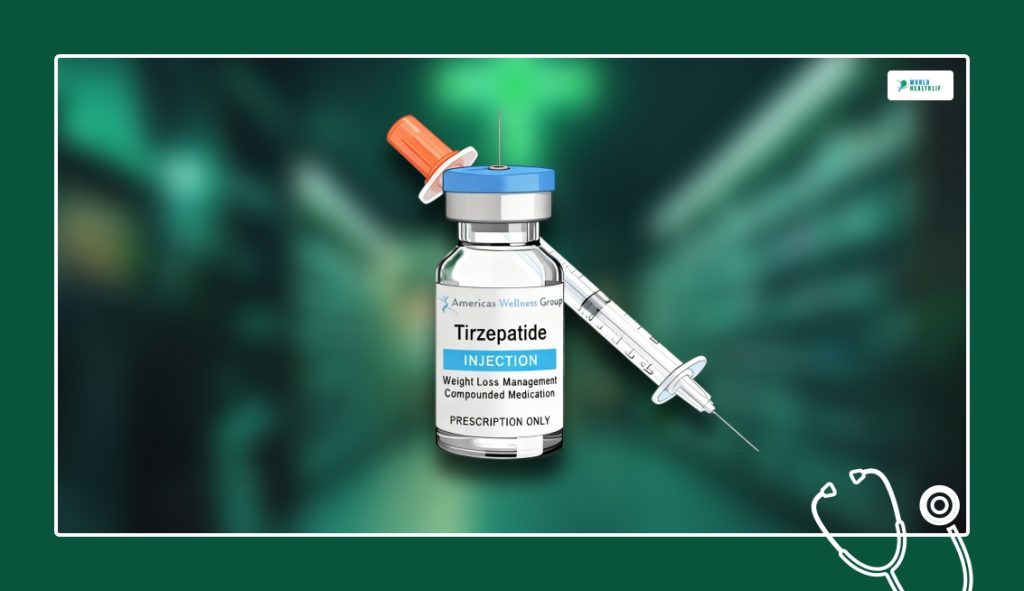
Primarily, Tirzepatide is the active drug inside both Zepbound and Mounjaro. Basically, it is a dual incretin agonist. It means that it acts on both the GLP-1 and GIP pathways.
That is important because obesity and type 2 diabetes are not merely appetite problems or glucose problems in isolation. Rather, they are system problems.
In fact, hormonal signaling, insulin resistance, gastric emptying, satiety, reward response, and energy regulation are all intertwined. Tirzepatide works in that situation, but with more breadth than older single-pathway agents.
What makes tirzepatide clinically interesting is that it can improve glycemic control while also pushing substantial weight reduction in the right patient. That overlap is why people get confused.
They see one medication producing two outcomes and assume the brand names are interchangeable in every practical sense. Actually, they are not. Although the chemistry may be identical, medicine is not just chemistry. Rather, it is indication, monitoring, access, and consequence.
Zepbound vs Mounjaro: What’s The Difference?
At the molecular level, very little separates them. However, at the regulatory and clinical level, the distinction is clearer.
Primarily, Mounjaro is prescribed for type 2 diabetes management. Meanwhile, Zepbound is labeled for chronic weight management. Also, the latter is used for obstructive sleep apnea associated with obesity (appropriate patients only).
So the drug is the same, but the treatment lane changes. That determines the medication’s framing, reimbursement, documentation, and application.
In practical terms, zepbound vs mounjaro is less a pharmacology fight and more a treatment-purpose decision. If the patient’s core problem is hyperglycemia in type 2 diabetes, Mounjaro generally fits the chart better.
However, if the dominant issue is obesity with or without related metabolic strain, Zepbound usually makes more sense. That sounds neat on paper. In actual practice, it gets complex fast because many patients have both conditions or are moving toward both.
Zepbound vs Mounjaro Comparison Chart
| Clinical Feature | Zepbound | Mounjaro |
| Active Ingredient | Tirzepatide | Tirzepatide |
| Primary Clinical Focus | Chronic weight management | Type 2 diabetes management |
| Typical Treatment Goal | Body weight reduction and obesity-related risk improvement | Glycemic control with weight loss as an added benefit |
| Dosing Pattern | Once weekly, dose escalation required | Once weekly, dose escalation required |
| Mechanism | Dual GIP and GLP-1 receptor activity | Dual GIP and GLP-1 receptor activity |
| Insurance Reality | Often more restrictive because weight loss coverage is inconsistent | Often more favorable when diabetes criteria are met |
| Best Fit | Adults whose main problem is obesity or overweight with complications | Adults whose main problem is type 2 diabetes |
How Do Zepbound And Mounjaro Work?

Tirzepatide acts through two incretin pathways. First, it improves insulin response in a glucose-dependent manner. This helps the body handle post-meal glucose better. Second, it suppresses glucagon when it is inappropriately elevated. That is the classic metabolic side.
However, it does not stop there. Also, it slows gastric emptying and tends to reduce appetite, cravings, and the constant mental pull toward food that many patients describe in very blunt language.
Food noise, snacking drift, and that endless low-grade hunger often quiet down to some extent.
Mechanism Of Action In Real Clinical Terms
The weight loss effect is not just about eating less. That explanation is too thin. In fact, these medications alter satiety signaling, meal-size tolerance, and reward responses to food.
Patients often report that the medication changes the volume of their appetite and also the urgency of it. Still, the response varies.
Some people experience dramatic appetite suppression early on. Others do not. Meanwhile, some experience improved glucose control before major weight loss occurs. Of course, the body is not a tidy machine. Also, tirzepatide does not produce a single clean pattern in every person.
Indications Of Zepbound vs Mounjaro
The indication is not a technical footnote. Rather, it is the backbone of rational prescribing. Zepbound is generally positioned for people with obesity or being overweight, plus related health conditions. Mounjaro is generally used for type 2 diabetes.
There is overlap in outcome, of course. A person on Mounjaro may lose substantial weight. A person on Zepbound may see major improvements in blood sugar markers if insulin resistance is part of the story.
Even so, clinicians do not prescribe in a vacuum. They prescribe inside rules, coverage limitations, and diagnostic frameworks.
This distinction also affects patient expectations.
Someone choosing a weight loss medication may focus on pounds, appetite, clothing fit, sleep, and mobility.
Meanwhile, someone starting diabetes therapy may prioritize glycemic trends, medication burden, and progression risk. However, when expectations are mismatched, disappointment follows. This holds even if the medication is working.
Hence, a good clinician has to slow the room down here. This way, they have to re-center the reason treatment is being started.
How Effective Are These Medications?
Tirzepatide has a strong reputation for a reason. In many patients, it produces clinically meaningful weight loss and improved metabolic parameters that go beyond cosmetic change. Also, the effect includes:
- Less visceral fat
- Better insulin sensitivity
- Better blood pressure trends
- A lower inflammatory burden.
Still, it is important not to reduce effectiveness to a single viral number. In fact, outcomes depend on dose tolerance, duration, baseline disease burden, adherence, nutritional quality, and sleep. Also, it depends on whether the patient has diabetes, severe obesity, or both.
When people compare Zepbound vs Mounjaro, they expect one to be biologically stronger than the other. That is usually the wrong frame.
It is important to note that the active ingredient is the same. Hence, the greater differences lie in why it was prescribed and how coverage shapes continuity. Also, it is about whether the patient can stay on therapy long enough to reach a stable maintenance phase.
That is the quiet part of obesity medicine. A medication cannot work well if access keeps breaking.
Clinical Outcome Snapshot
| Outcome Area | What Clinicians Usually Watch |
| Weight Reduction | Percentage of body weight lost over time. It is not about week-to-week fluctuations |
| Glycemic Control | A1C, fasting glucose, post-meal glucose trends |
| Tolerability | Nausea, vomiting, constipation, diarrhea, fatigue, food aversion |
| Functional Benefit | Mobility, energy, sleep quality, reduced hunger burden |
| Long-Term Feasibility | Coverage continuity, dose tolerance, follow-up adherence |
Zepbound vs Mounjaro: Side Effects And Considerations
The side-effect profiles of Zepbound and Mounjaro are broadly similar. This is because the active ingredient is the same. The following are some examples:
- Gastrointestinal issues
- Nausea, especially during dose escalation.
- Diarrhea
- Constipation
- Vomiting
- Stomach discomfort
- Reduced appetite.
However, for some patients, this settles with time. For others, it becomes the reason therapy stalls.
Major Adverse Effects Of Zepbound And Mounjaro
The most common pattern is front-loaded GI intolerance. For instance, patients may feel fine at one dose and miserable at the next. Also, eating too quickly, eating high-fat meals, or ignoring hydration makes things worse. [Source: GoodRx]
Also, some people notice an aversion to certain foods. Moreover, there might be a kind of flatness around eating that feels useful at first and unpleasant later.
Rare but serious concerns still matter. These include pancreatitis risk, gallbladder issues, and dehydration-related kidney stress. Furthermore, there are warning considerations tied to thyroid tumor history.
People Who Require Extra Caution
The following are some people who need extra caution while using Zepbound or Mounjaro:
- People who are pregnant or planning a pregnancy.
- Patients with a history suggestive of medullary thyroid carcinoma or MEN2.
- People on insulin or sulfonylureas. In fact, they need thoughtful glucose monitoring. This is because the broader diabetes regimen shifts the hypoglycemia risk.
However, this does not mean the drug is unsafe in general. Rather, it means modern obesity and diabetes care still requires actual medicine. Trend-based self-navigation does not work.
Cost And Insurance Coverage
This is the part patients hate discussing, but it often decides everything. Access to tirzepatide is rarely shaped by physiology alone. In general, insurance plans cover diabetes medications more generously than weight-loss medications.
So even when the clinical rationale is sound, coverage might split the path.
- Mounjaro may be easier to obtain when type 2 diabetes is documented.
- Zepbound may face more coverage barriers because obesity treatment is still treated inconsistently by many payers.
That is why zepbound vs mounjaro often becomes an insurance conversation before it becomes a pure clinical one. Also, out-of-pocket costs can be high. Moreover, interruptions in therapy can erase momentum.
In obesity medicine, continuity, dose titration, and follow-up matter. If a patient starts, stops, restarts, and switches depending on authorization cycles, the treatment experience gets unstable. Hence, side effects might feel worse. Access is not a side issue, but part of the therapy itself.
Zepbound vs Mounjaro: Which One Should You Choose?
Mounjaro is better when:
- The patient has type 2 diabetes
- The primary treatment goal is to improve glycemic control.
Zepbound is better when:
- The patient’s primary issue is chronic weight management
- There are obesity-related complications.
But there are edge cases everywhere.
For instance, a patient may have diabetes, severe obesity, probable sleep apnea, and prior treatment failure. Also, another may have significant obesity without diabetes, but a rising metabolic risk profile that suggests trouble ahead.
Understand that real medicine is full of overlap. Tidy online comparisons do not capture that.
Frequently Asked Questions (FAQs)
Not inherently. Although they contain the same drug, differences usually come in the following aspects:
• Indication
• Continuity of use
• Patient-specific treatment context.
Not casually. Although the molecule is the same, the approved use, prescribing rationale, and insurance pathway are different.
When type 2 diabetes control is the main treatment goal, Mounjaro is the better fit.
Mostly yes. They might lead to the following side effects:
• Nausea
• Diarrhea
• Constipation
• Vomiting
• Stomach discomfort.
Weight regain might occur after stopping. This happens especially if long-term appetite and lifestyle supports are not managed.
The Right Injection Is The One That Matches The Diagnosis
When it comes to Zepbound vs Mounjaro, the decision is about how one powerful molecule is being used. Also, it depends on who is using it and toward what measurable goal.
If weight management is the primary battle, Zepbound often fits the clinical story better. However, for type 2 diabetes, Mounjaro is the better option.
Hence, the best choice is not the louder brand name. Rather, it is the one that aligns with the diagnosis, risks, and monitoring needs. It is about the reality of staying on treatment long enough for it to matter.
| Disclaimer: This article is for informational and educational purposes only and does not substitute for professional medical advice. Reading this content does not create a doctor-patient relationship. Always consult a qualified healthcare provider for medical concerns and never delay seeking professional advice based on what you read here. |