A mother watches her three-month-old daughter experience a sudden rhythmic cluster of body flexions. To an untrained eye, these quick jerks may seem like a mild startle reflex or an infant adjusting to gas.
However, a pediatric neurologist would think otherwise. To them, these represent infantile spasms, which are a catastrophic form of early-onset epilepsy.
When these specific seizures occur alongside distinct structural patterns in the brain, they point toward a deeply complex genetic puzzle known as Aicardi syndrome.
First identified by French neurologist Jean Aicardi in 1965, this incredibly rare neurodevelopmental disorder affects roughly a few thousand individuals worldwide.
This is not a disease a child catches or develops later in their life. Instead, it is present entirely from conception.
Since the condition carries a vast spectrum of physical and cognitive challenges, families and medical teams must look past the clinical textbook definitions.
The management of life with this condition requires an intimate understanding of its genetic mechanisms, its systemic impacts on a developing child, and the evolving diagnostic standards.
The Evolving Diagnostic Architecture
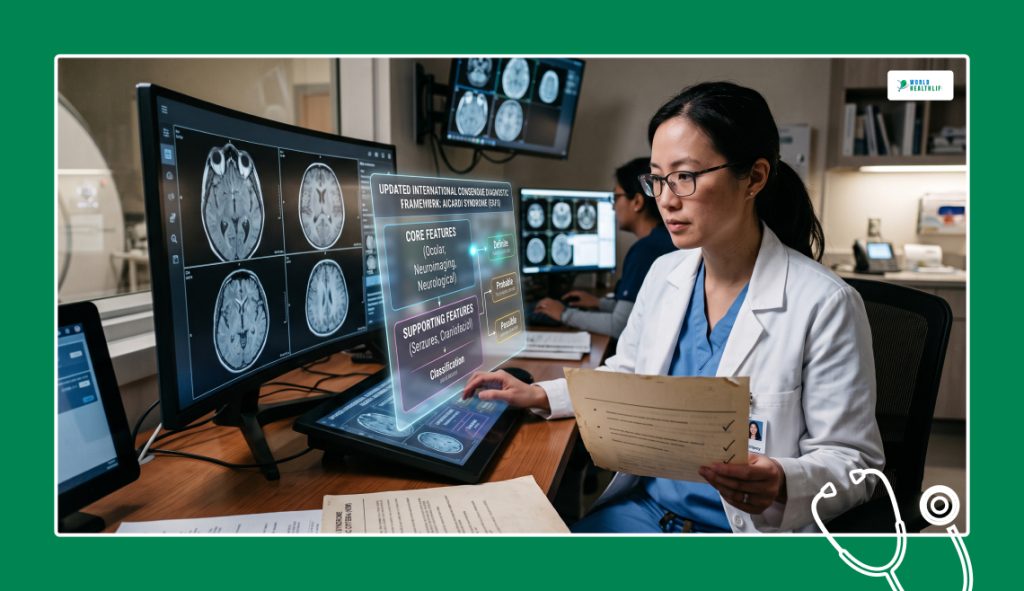
For decades, clinicians relied on strict three-part criteria to confirm a case of Aicardi syndrome.
If a child presented with all three conditions, the diagnosis was absolute.
However, modern neuroimaging and international clinical panels have fundamentally updated how we view this framework.
The Classic Core Triad
An expert consensus updated the diagnostic guidelines to better reflect how differently the syndrome can manifest in individual children.
While the historical triad remains the essential baseline, major additions now give doctors a clearer roadmap.
Agenesis Of The Corpus Callosum
This is the partial or complete absence of the vital bridge of the white-matter tissue that connects the left and right hemispheres of the brain.
Without it, the two sides of the brain cannot communicate normally. Consequently, it forces the nervous system to adapt through alternatives, less efficient natural pathways.
Chorioretinal Lacunae
Chorioretinal lacunae are considered as highly specific and distinct lesions that are found at the back of the eye.
During an ophthalmology exam, they appear as small pigment-free yellowish-white spots on the retina.
Additionally, they are a structural signature unique to this disorder.
Infantile Spasms
In Aicardi syndrome, within the first few months of life, severe intractable seizures typically start to manifest.
They occur in rapid clusters, disrupting early milestones and contributing to developmental stagnation if left unchecked.
The Modern Major Criteria Expansion
Medical guidelines officially added two additional core pillars to the primary diagnostic checklist.
First is the documented presence of multiple cerebral malformations. This includes polymicrogyria, which is an excessive number of unusually small, improperly formed brain folds.
Besides that, it includes periventricular nodular heterotopia, where brain cells migrate to the wrong locations during fetal development.
Second is the universal inclusion of varied cognitive impairment as a baseline major marker, rather than a secondary side effect.
The Genetic Enigma: Why Girls?
One of the most fascinating and heartbreaking elements of Aicardi syndrome is its strict demographic boundary. That is, it appears almost exclusively in biological females.
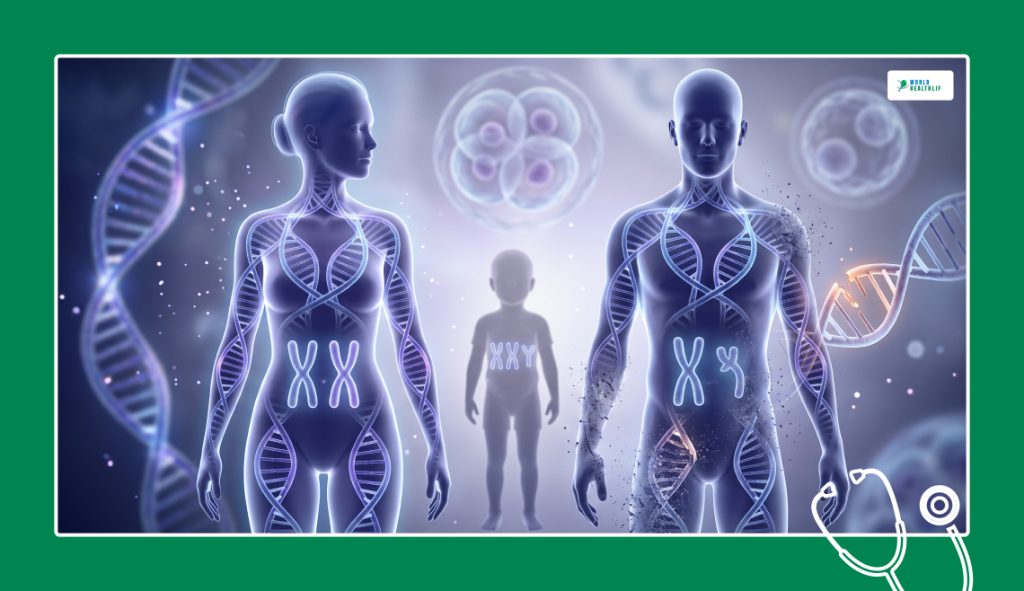
The scientific consensus points directly to a mutation on the X chromosome. Females carry two X chromosomes (XX), whereas males carry one X chromosome and one Y chromosome (XY).
The current leading genetic model indicates that the underlying mutation is X-linked dominant and completely lethal in hemizygous males.
When a male embryo inherits this flawed gene, the lack of a second, healthy X chromosome to offset the mutation results in a failure to survive early embryonic development.
Females survive because their second, normal X chromosome sustains development, though they still face profound systemic challenges.
The rare exceptions to this rule prove the genetic theory. The only biological boys diagnosed with the syndrome are those born with an extra X chromosome, which is a genetic state known as Klinefelter syndrome (47,XXY).
Furthermore, the mutation is almost completely de novo. It happens randomly at the earliest stages of cellular division. This means it is not inherited from the parents and does not typically run in families.
Beyond The Brain: Systemic Physical Manifestations
The software of the central nervous system is not the only area altered by the condition. Aicardi syndrome has a broad structural reach, causing distinct skeletal, facial and gastrointestinal anomalies as a child grows.
| Body Part | What Happens | The Real-World Impact |
| Spine & Bones | Deformed spinal discs, crooked vertebrae, or missing ribs. | The uneven bone layout forces the spine to pull sideways. Kids almost always end up needing heavy back braces. Major spinal surgery just to sit upright comfortably. |
| Face & Eyes | Unusually small head size, tiny or underdeveloped eyes, and an asymmetric face. | The facial traits are mostly cosmetic, but the actual eye issues cause serious vision loss. You have to work closely with eye doctors to protect whatever sight they have left. |
| Gut & Digestion | Bad acid reflux, painful constipation, and a complete lack of swallowing control. | The brain can’t tell the throat and mouth muscles how to move properly. Eating normally becomes dangerous because they can choke easily, so a lot of kids need a feeding tube. |
Coordinating The Care Blueprint
Since the condition leaves no two children with the exact same level of severity, treatment cannot follow a generic template.
It requires a multidisciplinary care matrix that is particularly designed to treat symptoms individually while preserving the child’s comfort and developmental progress.
| Medical Specialty | Primary Clinical Focus | Core Therapeutic Interventions |
| Pediatric Neurology | Epilepsy control and cortical malformation tracking. | Anti-seizure medications, ketogenic diets, and vagus nerve stimulation. |
| Ophthalmology | Retinal monitoring and functional vision optimization. | Corrective lenses, low-vision therapy, and intervention for optic nerve hypoplasia. |
| Orthopedics & PT | Spinal alignment, posture support, and limb spasticity management. | Custom back braces, targeted physical therapy, and mobility aids. |
| Speech & Occupational Therapy | Communication development and safe feeding mechanics. | Alternative communication devices (AAC) and adaptive swallowing techniques. |
Navigating The Realities Of Seizure Resistance
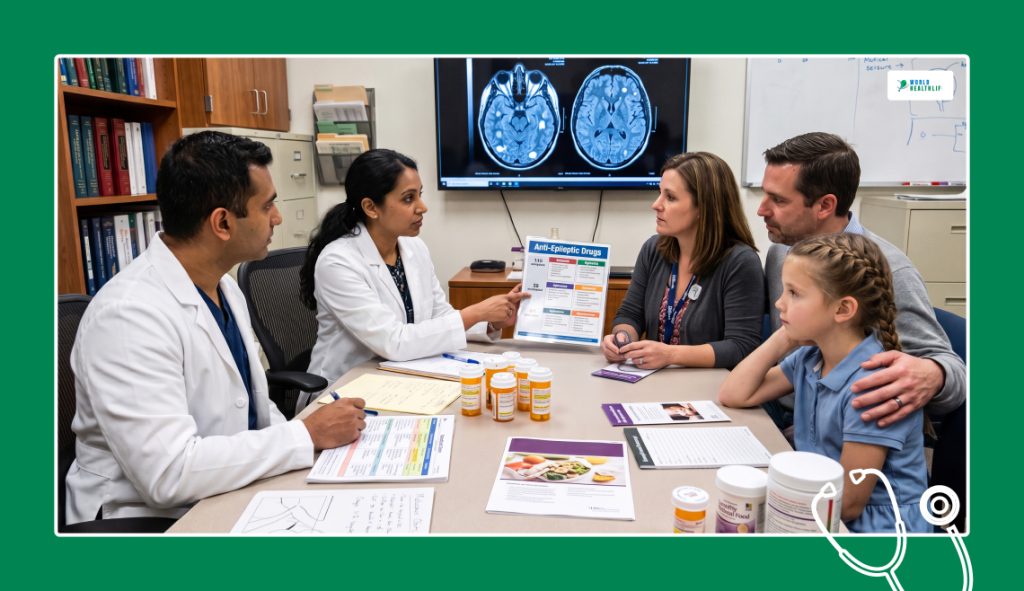
The single greatest operational hurdle for medical teams is the management of associated epilepsy. The seizures seen in this disorder are notoriously drug-resistant.
Standard anti-epileptic medications often provide only temporary relief before the brain adapts and the spasms return.
Neurologists must frequently balance complex drug combinations, cycling through options like vigabatrin or valproate while monitoring for severe side effects.
Traditional focal brain surgery is rarely an option due to widespread, multifocal seizure origins across the brain. Thus, alternative approaches become essential.
Many families find success by implementing a strict, medically supervised ketogenic diet. Consequently, it alters the metabolic chemistry of the brain to naturally dampen electrical storms.
Conversely, others rely on neurostimulation devices to break up seizure patterns before they escalate into full-scale medical emergencies.
Embracing A New Perspective On Progress
A diagnosis of Aicardi syndrome leads to fundamentally resetting the overall expectation of normal childhood development for a family.
The learning curves are steep and the physical demands are constant.
Lifespan outcomes vary widely. Although some individuals face severe life-threatening complications in their early childhood, others tend to grow well into adulthood.
Furthermore, they go on to develop their unique ways to communicate, smile and connect with their environments.
Standard developmental charts do not measure progress for these children. Instead, families and educators find it in small, triumphant milestones. These can be a sustained look of recognition or a successful feeding session without reflux.
Parents can also take joy in seeing their child having a day completely free from the exhausting burden of seizures.
Ultimately, we can shift the focus from finding a non-existent cure to optimizing daily comfort and communication. Additionally, families can navigate this profound genetic riddle with absolute dignity and deep unconditional resilience.
Disclaimer: The information provided in this article is for general informational purposes only. It does not, and is not intended to, constitute medical or health advice. Please consult a qualified healthcare professional for medical guidance or expert health assistance.
References
- Aicardi syndrome: MedlinePlus Genetics. (2026). MedlinePlus.
- Masnada, S., De Giorgis, V., Carugo, U., Bahi-Buisson, N., Cavallin, M., Corbett, M., Formica, M., Gecz, J., Petros, N., Perucca, E., Pichiecchio, A., Fusar Poli, P., Sherr, E. H., Van den Veyver, I. B., Zara, F., Geroldinger, M., Veggiotti, P., & Arzimanoglou, A. (2025). Refining Aicardi Syndrome diagnostic Criteria: An expert-based consensus using a modified Delphi approach. European Journal of Paediatric Neurology, 60, 58-70.
- Sharma, V., Sinha, A., & Chawla, R. (2026, June 1). Chorioretinal lacunae aid in the diagnosis of Aicardi syndrome. Digital Journal of Ophthalmology.
- Klinefelter Syndrome. (2026, January 21). Cleveland Clinic.