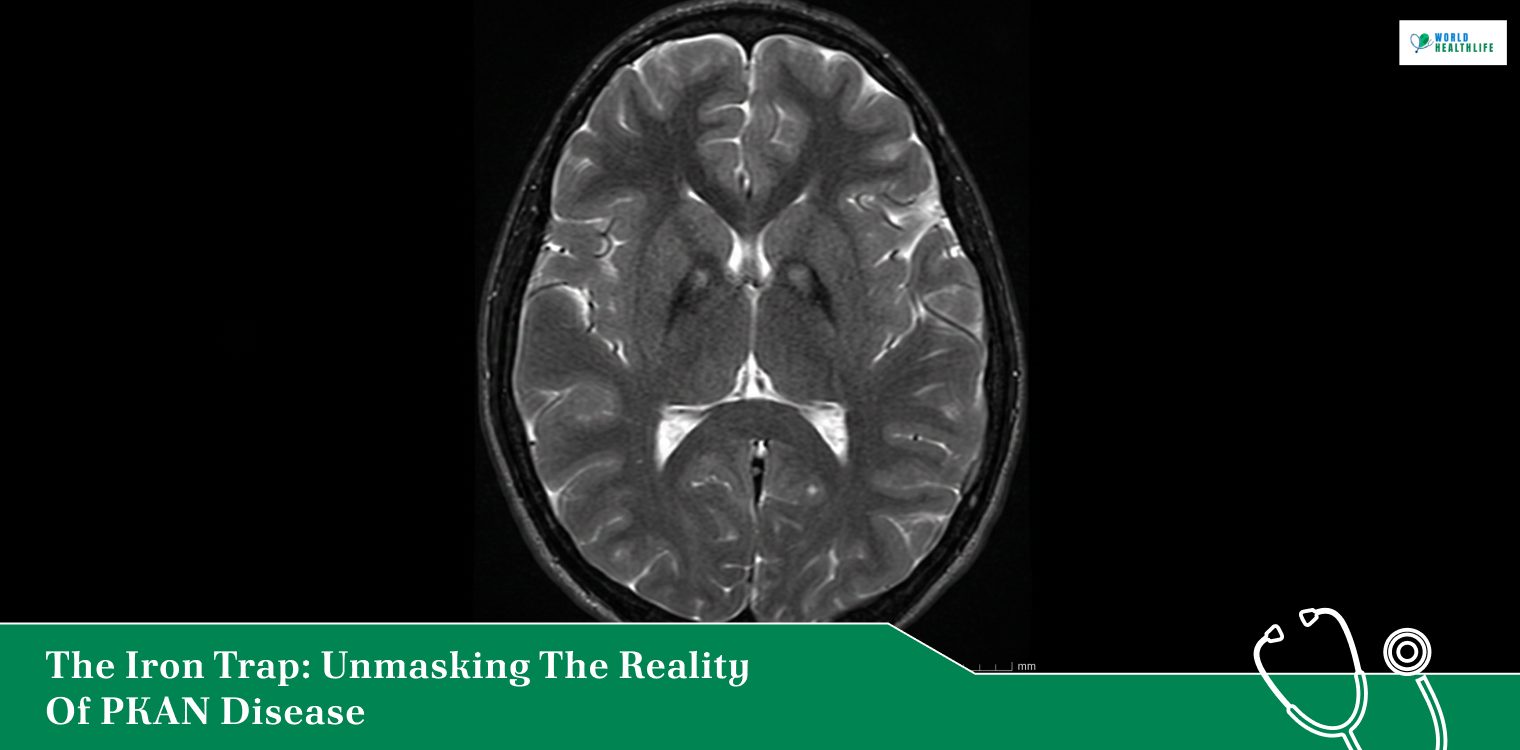
When a five-year-old child suddenly starts to trip over their own feet, parents usually assume it is just a clumsy developmental phase.
However, when that slight stumble rapidly hardens into severe and agonizing muscle locking, the medical search begins.
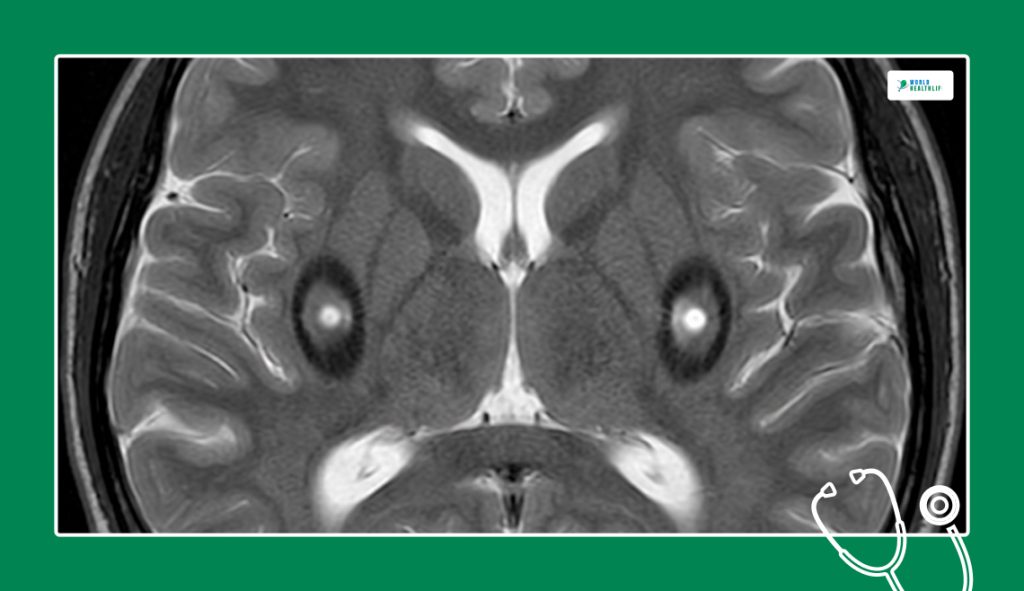
Usually, the answer hides deep inside a brain scan, showing a distinct ring of dark iron surrounding a patch of dead cellular tissue.
Neurologists call this type the “eye-of-the-tiger” sign.
This visual marker confirms a diagnosis of PKAN disease.
Medically termed Pantothenate Kinase-Associated Neurodegeneration, and formerly Hallervorden-Spatz syndrome, this condition is the most aggressive variant under the Neurodegeneration with Brain Iron Accumulation (NBIA) umbrella.
The condition is an ultra-rare metabolic glitch where the brain fails to process basic vitamins correctly. As a result, it leads to toxic iron literally rust inside the motor control centers.
Navigating this diagnosis requires a complete, realistic, and human look at the way genetic error operates. Thus, the following guide will focus on exactly that, along with how it impacts mobility and what it takes to handle the daily physical fallout.
The Core Genetic Mechanism: A Mitochondrial Glitch
Unlike many standard movement disorders, this condition is explicitly an autosomal recessive genetic disorder.
A child must inherit two mutated copies of a specific gene to trigger an illness, with one from each parent.
If both parents carry a single mutated copy, they show no symptoms themselves. However, they face a one-in-four chance of passing it to their children during pregnancy.
The scientific blueprint behind this breakdown sits entirely within the PANK2 gene located on chromosome 20.
Additionally, this specific gene offers the instructions to build pantothenate kinase 2. This is an essential enzyme inside the cellular mitochondria.
The primary job of this enzyme is to transform vitamin B5 into Coenzyme A (CoA), which is a crucial element for cell survival.
When a PANK2 mutation deactivates this system, a dangerous domino effect ripples through the nervous system.
Without proper CoA levels, lipids cannot clear out, cell membranes warp, and metabolic waste accumulates.
For reasons researchers are still investigating, this specific cellular crisis forces a massive, toxic abnormal accumulation of iron straight into the globus pallidus and substantia nigra.
Moreover, the brain effectively short-circuits its own physical circuitry under the weight of the metal buildup.
Mapping The Two Phenotypic Pathways
The condition presents in two starkly different ways. Though the root genetic breakdown is identical, the age of onset is responsible for completely altering the speed of the physical tracking symptoms.
| Attribute Matrix | Classic PKAN Presentation | Atypical PKAN Presentation |
| Typical Age of Onset | Emerges early in childhood, almost always before age 6. | Develops later, usually after age 10 or during early adulthood. |
| Early Warning Sign | Severe gait issues, rapid loss of balance, and frequent falls. | Marked speech anomalies and distinct psychiatric changes. |
| Progression Speed | Rapid and aggressive. Mobility drops quickly within years. | Slower and more gradual. Physical skills decline over decades. |
| Vision Loss Factors | Pigmentary retinal degeneration is extremely common. | Retinal damage is rare; optical pathways remain largely intact. |
Spotting The Signs: Clinical Progression And Symptoms
The symptom profile centers heavily on the breakdown of voluntary movement.
As iron pools in the basal ganglia, the brain loses its ability to send smooth and controlled signals to individual muscle groups.
Extrapyramidal Movement Chaos
The primary clinical features involve severe extrapyramidal symptoms, presenting predominantly as progressive dystonia.
These include painful and repetitive muscle contractions that force the limbs, neck, or torso into unnatural and twisted shapes.
Patients also deal with severe muscle rigidity, a shuffling Parkinsonian gait, and involuntary writhing movements called choreoathetosis.
Over time, these continuous spasms can cause joint dislocation on improper management or complete negligence.
Speech And Swallowing Vulnerabilities
As the condition spreads to the cranial muscles, it triggers two things
- Dysarthria: slurred and unintelligible speech
- Dysphagia: difficulty swallowing
In the classic form of the disease, swallowing problems lead directly to a high risk of choking or aspiration pneumonia.
Since eating normally becomes dangerous, clinical nutrition teams often intervene early to implement feeding tubes to protect the weight and lungs of the patient.
Behavioral And Vision Shifts
While classic cases involve rapid motor decline, atypical PKAN symptoms lean heavily into cognitive and behavioral disruptions.
These can include sudden mood swings, impulsivity, depression, and localized outbursts.
Concurrently, the eye pathways break down, causing night blindness and visual impairment through optic atrophy or retinal degeneration.
The Diagnostic Signature On Brain MRIs
Confirming a case requires matching genetic blood screens with targeted neuroimaging.
When a doctor runs a T2-weighted magnetic resonance imaging (MRI) scan on a patient with this condition, the output displays an unmistakable signature.
This specific “eye-of-the-tiger” sign is caused by two conflicting structural issues occurring side-by-side in the globus pallidus. The outer dark ring represents areas choked out by dense iron accumulation.
This blocks the MRI signals.
The bright glowing centre point represents necrotic, dying tissue that has filled up with cellular fluid.
Finding this specific pattern on a scan is an immediate red flag for neurologists, which is then verified through targeted DNA testing.
Navigating The Care And Treatment Pipeline
There is currently no way to stop or reverse the damage.
Because a universal cure does not exist, medical teams focus entirely on managing secondary complications, soothing painful muscle configurations, and preserving independence.
| Care Domain | Tactical Intervention | Desired Clinical Goal |
| Dystonia Relief | Oral muscle relaxants like baclofen or trihexyphenidyl. | Minimizes continuous muscle spasms and curbs joint dislocations. |
| Targeted Neurostimulation | Deep Brain Stimulation (DBS) surgery on the basal ganglia. | Interrupts erratic brain signals to soothe extreme, painful muscle twisting. |
| Iron Reduction | Iron-chelating drugs like deferiprone. | Crosses the blood-brain barrier to strip excess iron out of the brain tissue. |
| Physical Preservation | Intensive physical and occupational therapy. | Stretches rigid limbs to prevent permanent muscle contractures and lockouts. |
Facing The Reality Of Living With NBIA
A diagnosis completely redefines a family’s daily life.
The challenges are relentless, requiring constant home modifications, adaptive wheelchairs, and intense physical labor just to handle basic daily care.
Because the condition is progressive and leads to early immobility, the focus must shift from chasing a non-existent cure to maximizing daily comfort. It should also focus on minimizing pain and finding functional ways to communicate.
Through targeted symptom relief, assistive technology, and global patient support alliances, families can navigate this complex iron trap. That is, with absolute dignity, protecting their child’s quality of life through every stage of the condition.
Disclaimer: The information provided in this article is for general informational purposes only. It does not, and is not intended to, constitute medical or health advice. Please consult a qualified healthcare professional for medical guidance or expert health assistance.