If you’ve ever found it difficult to choose between omeprazole vs pantoprazole, you’re not alone. A lot of people pause at that point. On the surface, both medicines seem to do the same thing. They calm acid. They’re used for similar stomach problems. And they’re often prescribed for the same reasons.
Still, they aren’t exactly the same. And that’s where the confusion usually begins.
In this piece, we’ll walk through omeprazole vs pantoprazole the way doctors often explain it in the clinic. Most importantly, we need to know where each one works best. Again, we need to understand how we usually take the meds.
What Are Omeprazole And Pantoprazole?

Omeprazole and pantoprazole are meds from the same genre that also have similar functions. To clarify, they are means of addressing the same or similar problems.
But what problem do they solve? When there is high gas accumulation, your food pipe hurts badly. In simple words, you feel like someone is scraping off inside it. However, your stomach’s inner lining is also impacted at the same time!
That’s where you need either of the two. But which one should you choose: omeprazole vs pantoprazole? Now here is the catch. Since they work similarly, people take either of the two. They don’t think twice before buying one of them.
Most importantly, they are both OTC medicines in the Philippines. That’s why people dont give much thought before deciding which one is better for their respective condition!
What The Small Differences Of Omeprazole Vs Pantoprazole That We Miss?
When it comes to omeprazole vs pantoprazole, there are small differences in how both meds work. Firstly, you can get one easily as an OTC med from your nearby druggist. That is the same for all of the Philippines. But the other is slightly different in terms of application.
You should actually have it when you are taking multiple meds at once! Keep reading for further details!
How Do Proton Pump Inhibitors Work?
Both the meds fall under the category of PPIs. Again, PPIs turn off acid‑producing pumps (H⁺/K⁺‑ATPase) inside stomach cells. Once blocked, these pumps stay inactive until the body makes new ones.
That’s why you must take the meds in moderation. In other words, one dose can ward off acidity for at least 1 full day. In this way, prolonged use will create a natural resistance towards acidity.
However you must take the meds under strict medical observation. Especially when you are taking them for a long time chronically!
Things You Didn’t Know:
PPIs won’t work in 7 or 10 seconds, as some ads say. However, they work steadily and gradually. As doctors in the Philippines say, they are better off when taken as a chronic dose for several days at a stretch. Again, consult your doctor when you are planning to have it in the long run!
FDA‑Approved Uses
Here is a quick guide about uses of both:
Omeprazole Uses
Omeprazole is approved for:
- GERD and frequent heartburn
- Erosive esophagitis (short‑ and long‑term)
- H. pylori eradication (with antibiotics)
- Zollinger‑Ellison syndrome
Notably, omeprazole is available over the counter for frequent heartburn.
Pantoprazole Uses
Pantoprazole is approved for:
- Short‑term and maintenance treatment of erosive esophagitis
- GERD symptom control
- Hypersecretory conditions, including Zollinger‑Ellison syndrome
In severe cases, doctors inject pantoprazole directly into your veins. That offers quick relief. That is also a kind of life-saving medication. We call them IV formulas.
Omeprazole Vs Pantoprazole: How They Really Differ
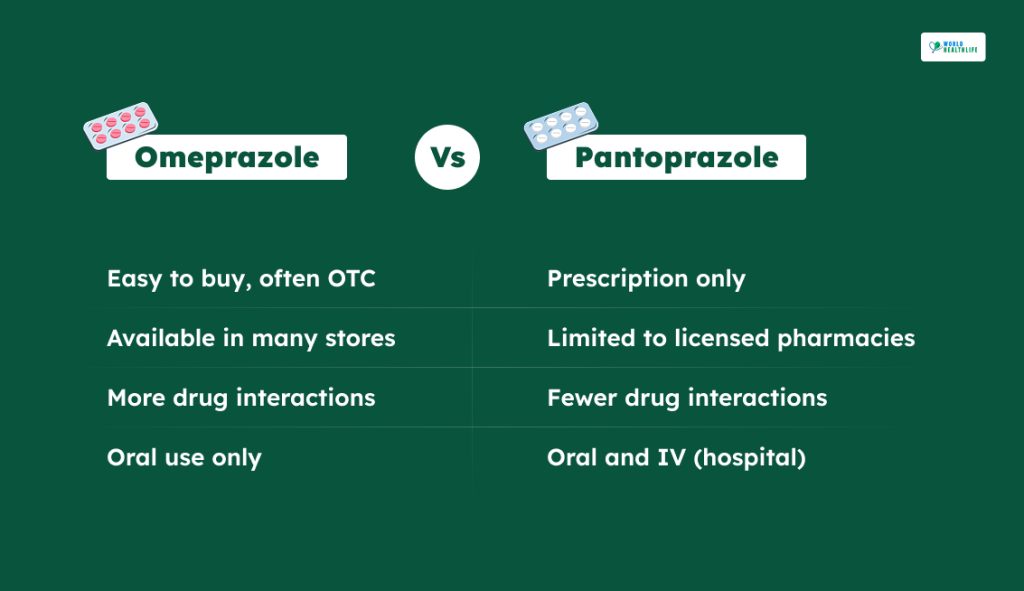
People want a straightforward choice when they are divided between omeprazole vs pantoprazole. Here are some differences that will help you to choose one. You can easily get Omeprazole from your nearest drug store. Even some FMCG stores keep it. Again, you don’t need a doctor’s prescription to buy it in the Philippines.
In contrast, buying Pantoprazole is challenging. You need a valid doctor’s prescription to get it from a licensed drugstore. That said, random stores don’t keep this med. That alone shapes how and when it’s used.
Then there’s how these medicines behave once they’re in your body. Omeprazole can clash with a wider range of other drugs. Pantoprazole usually causes fewer issues on that front. That’s one reason some doctors prefer it for people who are already on several medications.
There’s also a practical difference most people never think about. Pantoprazole can be given through a vein in a hospital. Omeprazole can’t. You may never need that option, but in certain situations, it matters.
Even with all that, most people will get similar relief from either medicine. Heartburn, reflux, and inflammation. Both tend to calm things down just as well.
Key Differences At A Glance
| Feature | Omeprazole (Prilosec) | Pantoprazole (Protonix) |
| Availability | Over-the-counter (OTC) and Prescription | Prescription only |
| Drug Interactions | Higher risk (Interferes with liver enzymes processing other medications) | Lower risk (Fewer clinically significant interactions) |
| Use with Blood Thinners | Can reduce the effectiveness of clopidogrel (Plavix) | Preferred for patients taking clopidogrel |
| Food Requirements | Must be taken 30–60 minutes before your first meal | Tablets can be taken with or without food |
| Formulations | Oral capsules, tablets, liquids | Oral tablets, liquids, and Intravenous (IV) in hospitals |
Is One Actually Better?
If you compare omeprazole and pantoprazole head‑to‑head, they usually do the same job. Studies say that. Doctors say that. And most patients figure it out pretty quickly once they’ve tried both. Symptom relief and healing rates are broadly similar.
When someone swears that one works better, it’s rarely about effectiveness on paper. It’s more personal than that. Maybe one causes fewer side effects. Maybe taking it fits better into their day. Sometimes it’s as simple as, “This is the one I started with, and it didn’t give me problems.”
Pantoprazole shows up a lot in hospitals and in longer treatment plans, mostly because it plays well with other medications and long‑term use.
How People Usually Take Them
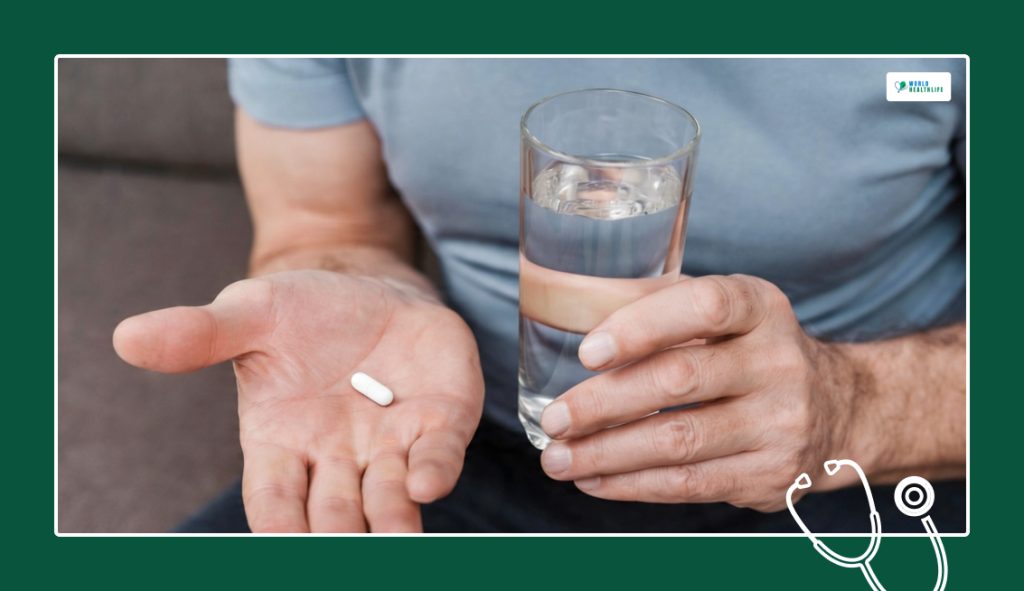
You pop an Omeprazole on an empty stomach in the morning. Most doctors’ prescriptions say that. But here is a statutory warning. Don’t use it for 2 to 3 weeks without asking your doctor.
It is a medicine for quick relief. Don’t use it for a long time unless your doctor has advised you to.
But what about Pantoprazole? You can take it flexibly. In other words, doctors often ask you to have it post-meals and often pre-meals. Simply put, it depends upon your condition. Moreover, it depends on the condition that you are treating.
Side Effects You Might Notice
Many people take these medicines without problems. Still, some things do pop up.
Headaches happen. Bowel habits can change. Mild stomach discomfort isn’t unusual at first.
With longer use, other concerns come into the picture. Low vitamin levels, bone thinning, and kidney strain have all been linked to extended use of this type of medicine. That doesn’t mean they’ll happen to you. It just means they shouldn’t be ignored.
Regular check‑ins help catch problems early.
Why Interactions Matter
This is one area where omeprazole vs pantoprazole can feel more personal.
Omeprazole tends to interfere with more medications. If you’re already taking pills for your heart, blood, or chronic conditions, that overlap can become important.
Pantoprazole usually stays out of the way. Because of that, many doctors lean toward it when someone’s medication list is already long.
It’s not about fear. It’s about keeping things simple and safe.
So, Which One Makes Sense for You?
If you need quick relief, omeprazole is the drug you need. Again, there are other differentiators of omeprazole vs pantoprazole. However, I would recommend that you get medical advice from a qualified doctor before you buy either.
For frequent heartburn and acid reflux, omeprazole is a natural choice. Otherwise you must choose pantoprazole for a gradually and permanent relief.
Pantoprazole tends to come into play for various reasons. If you’re already taking several medications, or if acid problems keep coming back, doctors often lean this way. It’s also the option used when treatment needs close follow‑up or medical supervision.
Neither choice is about “right” or “wrong.” It’s more about timing, health history, and what else is going on in your body.
What does matter is checking in before staying on either medication for a long time. That decision should never be made alone.
When to See A Doctor: Red Flags You Shouldn’t Ignore
While over-the-counter omeprazole is highly convenient for managing standard acid reflux, masking your symptoms with PPIs can sometimes hide a more serious underlying medical condition.
You should bypass self-treatment entirely and schedule an immediate appointment with a healthcare professional if you experience any of the following warning signs:
- Difficulty or pain when swallowing food or liquids
- Unexplained weight loss or a persistent loss of appetite
- Vomiting blood or material that looks like dark coffee grounds
- Black, tarry, or bloody stools
- Chest pain that radiates to your jaw, neck, or shoulder, or chest pressure accompanied by sweating and shortness of breath (which can mimic severe heartburn but may indicate a heart attack)
- Heartburn that persists or worsens even after taking an over-the-counter PPI for a full 14-day course.
Can You Switch From One Medication To The Other?
Yes, you can safely switch between omeprazole and pantoprazole, but you should always consult your doctor first to ensure your dosage remains accurate.
Because they belong to the same family of drugs, transitioning from one to the other is common if you experience mild side effects or if your current medication list changes.
Is It Safe To Stop Taking These Medications Suddenly?
Stopping a PPI cold turkey can cause a phenomenon known as “acid rebound,” where your stomach temporarily produces even more acid than before.
This can make your heartburn feel much worse.
If you have been taking omeprazole or pantoprazole for more than a few weeks, your doctor will usually recommend tapering your dose down gradually over a week or two to prevent this sudden flare-up.
Questions People Commonly Ask
You can choose either one anytime. But let your doctor decide that. I will recommend that you take omeprazole, which is also short-acting for quick relief. For any other serious need, see a doctor first!
Do not take both meds together. However, doctors recommend it in rare cases. So it all rests on what your doctor says. Don’t go for self-medication!
They can be, but only when there’s a clear reason and regular follow‑ups. Review from time to time, if using for the long term.
Disclaimer: This article is for informational purposes only and does not constitute medical advice, diagnosis, or treatment. Always consult a qualified healthcare professional or doctor regarding any medical condition, changes to your healthcare regimen, or before starting using any mouthwash for tonsil stones. Never disregard professional medical advice or delay seeking it because of something you have read online.