When we are hit by the common flu during seasonal changes in the Philippines, we usually ask druggists for an effective OTC. But if you observe the pattern, some medicines are popular for relief from cold and flu.
Why do we seek OTC? It is simple. Either we have a fever and an ache. Paracetamol is a customary medicine for that. Or we face the other symptoms of cold and flu, such as congestion, breathing difficulties, and coughing. A combination medicine addresses all concerns and provides prompt relief.
However, not all medicines work the same way. Some target specific problems better than others. This brings us to the debate of Bioflu vs Decolgen. Both are popular in the Philippines for cold and flu relief.
They share some ingredients but differ in how they tackle symptoms. For example, one focuses more on general aches while the other hits sinus issues harder.
The two meds have some key differences. What are their uses, key ingredients, safety norms, and when to pick each one? If you want to make a smart choice next time you feel under the weather, you need these details. By the end, which is a more effective medicine.
What Are Bioflu and Decolgen?

There are two popular combination medicines with almost the same indications. But the debate of Bioflu vs Decolgen entails which one Filipinos would choose over the other, and why?
Overview of Bioflu
Bioflu is a multi-symptom medicine for colds and flu. You can buy it as tablets or suspensions. Therefore, it works for adults and kids. Doctors often recommend it because it addresses several issues at once.
It relieves fever, body pain, nasal congestion, and post-nasal drip cough. In addition, it helps relieve allergy symptoms such as sneezing.
When To Choose Multi-Symptom Relief
Suppose you have chills and a runny nose from a cold, Bioflu steps in. However, it is not for severe sinus problems alone. People like its balanced approach for everyday colds.
Overview Of Decolgen
Decolgen is a type of medication that is designed for rapid relief of conditions such as severe nasal congestion and sinusitis. Available in both standard and “No-Drowse” formulas, they also offer relief for associated cold symptoms.
It offers effective treatment for clogged noses, sinus pressure and headaches. As a result, it is a preferred choice for high-potency and congestion-heavy colds.
Targeted Relief For Stuffy Sinuses
The medicine addresses nasal congestion as well as sinus blockages with high potency. This is done with the utilization of Phenylpropanolamine (PPA) as its primary decongestant.
The PPA plays a key role in actively constricting swollen blood vessels inside the nasal passages. As a result, the trapped mucus is drained quickly while opening up airway flow and alleviating painful sinus pressure. Th targetted action makes Decolgen highly effective for individuals who suffer from severe head colds.
Daytime And Nighttime Versatility
In order to accommodate different lifestyle needs, Decolgen is available in two distinct formulations. While the standard version includes Chlorphenamine Maleate, an antihistamine that dries up a runny nose and stops sneezing, it causes drowsiness. Moreover, this makes it an ideal medicine to take for nighttime rest.
For daytime productivity, however, the variant “No-Drowse” completely removes a blocked nose, which is the primary source of discomfort.
Key Ingredients & How They Work
Bioflu and Decolgen share some ingredients. However, differences stand out in the decongestants.
Bioflu contains paracetamol for pain and fever relief. As the fever goes away, the body ache also goes down. One of the main ingredients, Chlorphenamine, helps release nose blockage. While doing so, it shrinks the fine viens and tissues within the nose.
The next important ingredient is antihistamine. We also call it chlorphenamine maleate. Its main use is stopping frequent sneezes and a blowy nose.
Decolgen Forte also contains paracetamol. Its concentration is 500 mg. Moreover, it has phenylpropanolamine HCl, which differs slightly in application, compared to phenylpropanolamine. Phenylpropanolamine HCl is better for removing all kinds of nasal obstructions.
Now, compare the decongestants. Phenylephrine works mildly on swelling. However, phenylpropanolamine is stronger for severe congestion.
Both antihistamines cause similar effects, such as reduced itching. Therefore, Decolgen packs more punch for sinuses. Paracetamol stays the same in both, so the overdose risks match.
These ingredients make each medicine fit different symptoms.
Key Distinction Between The Decongestants
When you face a common cold during the shifting seasons, you may be confused about the whole aspect of ‘Bioflu vs Decolgen’.
While Bioflo uses Phenylpropanolamine HCl, a potent systemic vasoconstrictor, for significant sinus pressure.
A key distinction arises when you compare these decongestants. The use of PPA HCl, updated global evidence and regulatory consensus, including from the US FDA, indicate one thing. This is that oral phenylephrine is largely ineffective due to the rapid breakdown in the gut.
Conversely, PPA found in Decolgen offers stronger relief for severe congestion. Both products carry similar risks associated with paracetamol, despite their ingredient focuses suiting different symptom profiles.
Bioflu vs Decolgen: Side-by-Side Comparison
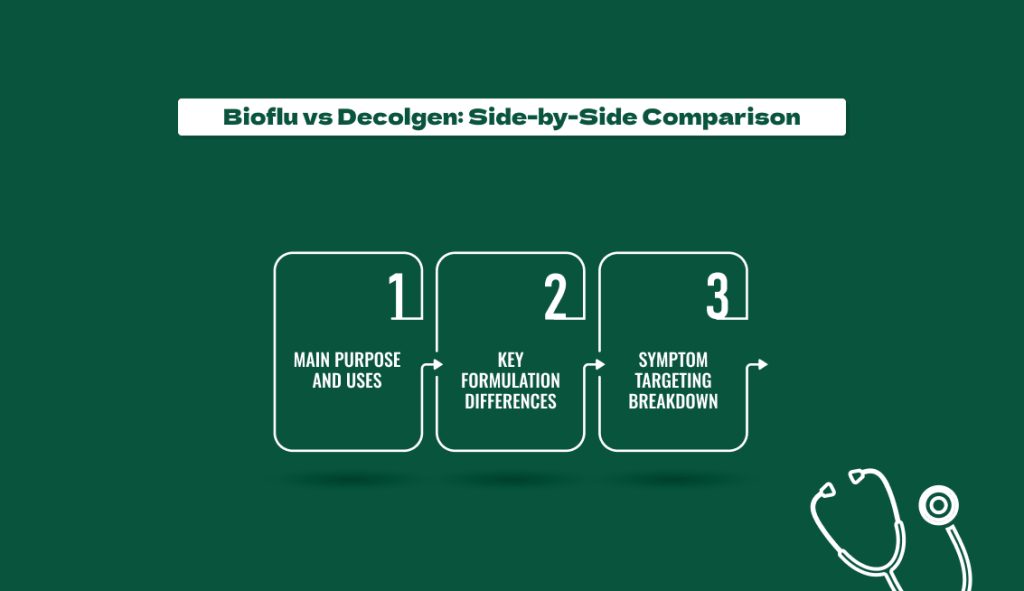
When it comes to these two medicines, many get confused about the application and usability factors. However, this comprehensive comparison will remove your dilemma on Bioflu vs Decolgen.
- Main Purpose and Uses
Bioflu provides broad relief for colds and flu symptoms. It handles fever, body aches, and mild allergy signs, too. Therefore, people choose it when they feel general discomfort throughout their bodies. For example, if chills and post-nasal drip bother you, Bioflu is a good fit. However, it does not focus only on the nose.
On the other hand, Decolgen targets congestion and sinus problems more directly. Its formula clears heavy blockage in the nasal passages. As a result, breathing becomes easier & faster. In addition, it helps with sinus pressure that makes your face hurt. So, Decolgen works best when the nose feels completely stuffed.
- Key Formulation Differences
Bioflu uses phenylephrine as its decongestant. This ingredient reduces nasal swelling. However, it acts more mildly than others. Both medicines also contain paracetamol for pain and fever. In addition, chlorphenamine serves as the antihistamine in Bioflu. Therefore, it controls sneezing and a runny nose.
Decolgen uses phenylpropanolamine instead. Many users find this decongestant stronger and longer-lasting. For instance, it clears clogged sinuses more effectively during severe colds.
Chlorphenamine stays the same for allergy relief. However, Decolgen offers variants like No-Drowse. As a result, you avoid sleepiness if needed. This makes Decolgen more flexible for daily tasks.
- Symptom Targeting Breakdown
Each medicine suits different symptoms based on its strengths. Bioflu is the best fit for tackling body aches, chills, and post-nasal drip. It also helps manage mild congestion and provides some allergy relief. Therefore, treat it as the flu, which spreads to multiple areas.
Decolgen shines for severe nasal blockage and sinus pressure. The phenylpropanolamine gives it an edge there. In addition, it relieves headaches from congestion. However, both handle fever and sneezing similarly because they share ingredients.
Here is a simple table to compare:
| Feature / Symptom | Bioflu | Decolgen (Forte) |
|---|---|---|
| Primary Focus | General Flu & Systemic Pain | Nasal & Sinus Blockage |
| Decongestant Agent | Phenylephrine HCl | Phenylpropanolamine HCl |
| Fever & Pain Relief | Paracetamol (500 mg) | Paracetamol (500 mg) |
| Antihistamine Power | Chlorphenamine Maleate | Chlorphenamine Maleate |
| Best For | Body aches, chills, post-nasal drip | Severe congestion, sinus pressure |
| Impact on Drowsiness | Likely (causes sleepiness) | Likely (unless No-Drowse) |
| Form Availability | Tablets & Suspensions | Tablets (Forte and No-Drowse) |
Practical Implications
The ingredient differences lead to real-world choices. For example, if you drive to work with a cold, Decolgen No-Drowse keeps you alert. Bioflu might make you drowsy from chlorphenamine. However, Bioflu covers more flu symptoms at once.
Decolgen’s stronger decongestant helps relieve sinusitis during allergy season. Therefore, it prevents that stuffed feeling. In addition, both risk changes in blood pressure. So, check with a doctor if you have heart issues.
Overall, Bioflu suits balanced cold relief. Decolgen targets nose-heavy problems. As a result, read labels to match your symptoms correctly. This way, you get better results without side effects.
Here is a table for symptom targeting:
| Feature / Symptom | Bioflu | Decolgen (Forte) |
| Primary Focus | General Flu & Systemic Pain | Nasal & Sinus Blockage |
| Decongestant Agent | Phenylephrine HCl | Phenylpropanolamine HCl |
| Fever & Pain Relief | Paracetamol (500 mg) | Paracetamol (500 mg) |
| Antihistamine Power | Chlorphenamine Maleate | Chlorphenamine Maleate |
| Best For | Body aches, chills, post-nasal drip | Severe congestion, sinus pressure |
| Impact on Drowsiness | Likely (causes sleepiness) | Likely (unless No-Drowse) |
| Form Availability | Tablets & Suspensions | Tablets (Forte and No-Drowse) |
This table shows clear differences. For example, Decolgen wins on sinus pressure. Bioflu covers body aches more widely. Therefore, pick your main problem.
When to Use Bioflu vs Decolgen?
The right choice depends on your symptoms. Therefore, follow these guidelines.
Use Bioflu if you have general cold or flu signs. For example, body pain, fever, headache, mild congestion, and sneezing fit well with this one. It also works for watery eyes from allergies. In addition, Bioflu’s suspension form is the best for kids. However, skip it if there is severe sinus blockage.
Use Decolgen if nasal congestion dominates. Therefore, go for it when sinus pressure hurts your face. The stronger decongestant clears better. In addition, choose the No-Drowse version of the medicine if you need to stay alert. However, it matches less for pure body aches.
Here are typical cases. If heavy sinus congestion and facial pressure hit, Decolgen may work better. For a moderate cold with fever and a runny nose, Bioflu suits.
Safety, Side Effects & Precautions
Both medicines have similar side effects. However, know them to stay safe.
Common issues include drowsiness from chlorphenamine. Therefore, you might feel sleepy, have dry mouth, or dizziness. Decongestants can raise blood pressure. As a result, people with hypertension need caution.
Phenylpropanolamine in Decolgen acts stronger. However, it carries similar heart risks as phenylephrine. In addition, both paracetamol levels risk liver toxicity if overdone.
Avoid mixing with other paracetamol drugs. For example, do not take pain relievers. Pregnant or breastfeeding women should ask a doctor. In addition, check for drug interactions.
Cardiovascular Concerns and Blood Pressure
It should be noted that both Bioflu and Decolgen contain active ingredients that can increase the risk of rapid heart rate as well as significantly elevated blood pressure.
To prevent severe liver damage, users should avoid mixing the medications with other paracetamol products to stay within the safe daily dosage limit.
Can You Take Bioflu And Decolgen Together?
Generally no. They overlap in ingredients, so an overdose happens easily. Therefore, pick one only. Follow doses strictly. Adults max 4 grams of paracetamol daily. Kids need weight-based amounts. If symptoms last over three days, see a doctor. Therefore, these steps keep risks low.
Frequently Asked Questions (FAQs)
Decolgen has a stronger decongestant for congestion. However, Bioflu covers general symptoms better. Therefore, “stronger” depends on your needs.
Decolgen works better for severe sinus blockage. Its phenylpropanolamine clears faster. In addition, the Forte version targets pressure well.
Yes, but use child forms like suspensions. However, dose by weight. Consult a doctor for kids under two. Therefore, safety comes first.
Effects start in 30 minutes to an hour. Fever drops first, then congestion eases. However, full relief takes 4-6 hours. Take as directed.
Both decongestants affect BP. Therefore, ask your doctor. No-Drowse Decolgen might suit if drowsiness worries you less.
Which is the best OTC Med for You?
Bioflu and Decolgen both help fight cold symptoms. However, Bioflu gives broad relief for flu, aches, and mild allergies. Decolgen excels at congestion and sinus pressure with its potent decongestant. That ends the debate of bioflu vs decolgen.
Key differences lie in ingredients and focus. Therefore, choose Bioflu for whole-body colds. Pick Decolgen for nose and sinus woes. Always mind safety, such as dose limits and health conditions.
In addition, read labels and avoid mixing. Consult healthcare pros for personal advice. As a result, you get relief without risks. Stay healthy this season.
Always Remember This When You Have A Common Cold Again
Key differences lie in ingredients and focus. Therefore, choose Bioflu for whole-body colds. Pick Decolgen for nose and sinus woes. Always mind safety, such as dose limits and health conditions.
In addition, read labels and avoid mixing. Consult healthcare pros for personal advice. As a result, you get relief without risks. Stay healthy this season.