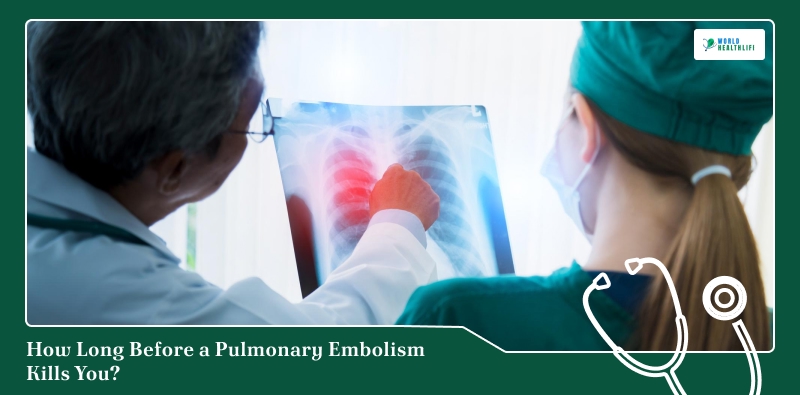
Pulmonary embolism is a blood clot that lodges in the lungs, traveling from a deep vein in the leg. This way, it blocks blood flow. Although it is not rare, the problem is not always loud.
In fact, people keep asking about how long before a pulmonary embolism kills you. Basically, the timeline depends on clot size and where it lands. Also, it is about how the heart responds in the first few minutes. So, it depends on immediate medical attention.
In 2026, clinicians are leaning harder on structured severity categories and faster pathways. That matters because the first hours can decide everything.
This guide discusses fast-danger windows and their effects on survival. Also, you will know what recovery can look like after you make it through.
What Is Pulmonary Embolism?

A pulmonary embolism (PE) is usually a traveling clot. Essentially, it forms most often in the deep veins of the leg, sometimes the pelvis. Then it breaks loose and rides the bloodstream into the lungs.
When it lands, two things happen at once:
- Oxygen exchange gets worse.
- The right side of the heart is forced to push against a blocked circuit.
In those situations, some bodies compensate, and some do not.
Quick note: There are rare “emboli” that are not classic blood clots. These include fat or air, usually in specific trauma or procedure settings. That is not what most people mean by PE in everyday care. So this article stays with clot-related PE.
Can You Survive Pulmonary Embolism?
Yes, in 2026, most people survive when pulmonary embolism is diagnosed and treated promptly. Modern anticoagulants, catheter directed procedure have significantly improved outcomes.
Survival depends on how quickly treatment starts and whether the clot has already caused heart strain.
Pulmonary Embolism Signs And Symptoms
Before we jump into the causes and timeline, let’s go through some signs for PE. If there is severe difficulty, call emergency services right away.
Symptoms include:
- heavy breathing
- chest pain
- fainting
- fast heartbeat
- coughing up blood
Get urgent medical evaluation, and it is advisable not to drive by yourself. It could be PE or something else equally serious.
And sometimes the first sign is collapse. In fact, public health sources note that sudden death can be the first symptom in about one quarter of people with PE. In other cases, mild chest tightness or leg swelling may be brushed off. That slow burn is why PE is missed.
If symptoms are severe, treat them like an emergency. This holds in situations of fainting, severe breathlessness, chest pain, or a very fast heartbeat. It is important to get urgent help.
Pulmonary Embolism Treatment in 2026
Treatment today focuses on restoring blood flow, preventing new blood clots, and reducing the risk of future complications. The exact approach depends on the severity of the PE and whether the patient remains stable.
Common treatment options include:
- Anticoagulants (blood thinners) to prevent blood clots from forming
- Direct Oral anticoagulants (DOACs), which are now preferred by eligible patients because they are more manageable than warfarin
- Thrombolytic (clot-busting) for people with severe or life-threatening PE
- Catheter-related thrombectomy to dissolve the large clots without open surgery
- Surgical embolectomy is a selected emergency procedure when other treatments are not appropriate
In 2026, people with acute PE can be treated at home after careful assessment. Yet people with severe conditions need constant hospital monitoring.
Clinical Guidelines 2026
Current clinical guidelines place greater emphasis on knowing how large the clot is and how severe the condition is before rushing for treatment.
Instead of treating every PE the same way, healthcare providers have now classified patients into A-E categories: (A, B) Low, (C) Intermediate, (D, E) High-risk.
These categories help doctors classify patients and determine how thier treatment will proceed. Whether the patient can be treated at home or needs immediate medical assessment.
How is Pulmonary Embolism Diagnosed?
Diagnosis of PE often involves several tests because the symptoms can resemble those of a heart attack, pneumonia, or anxiety.
A healthcare provider may begin with a physical examination and assess your symptoms, medical history, and risk factors.
On the basis of the tests and assessments, the doctors can recommend:
- D-dimer blood test to recognize any abnormal clot formation
- CT pulmonary angiography (CTPA) is a gold standard procedure for confirming PE
- Ventilation-Perfusion (V/Q) scan is an alternative for the CT scan
- ECG and Ultrasound to find out the source of the clot and if it is causing any heart strain
Major Causes and Risk Factors
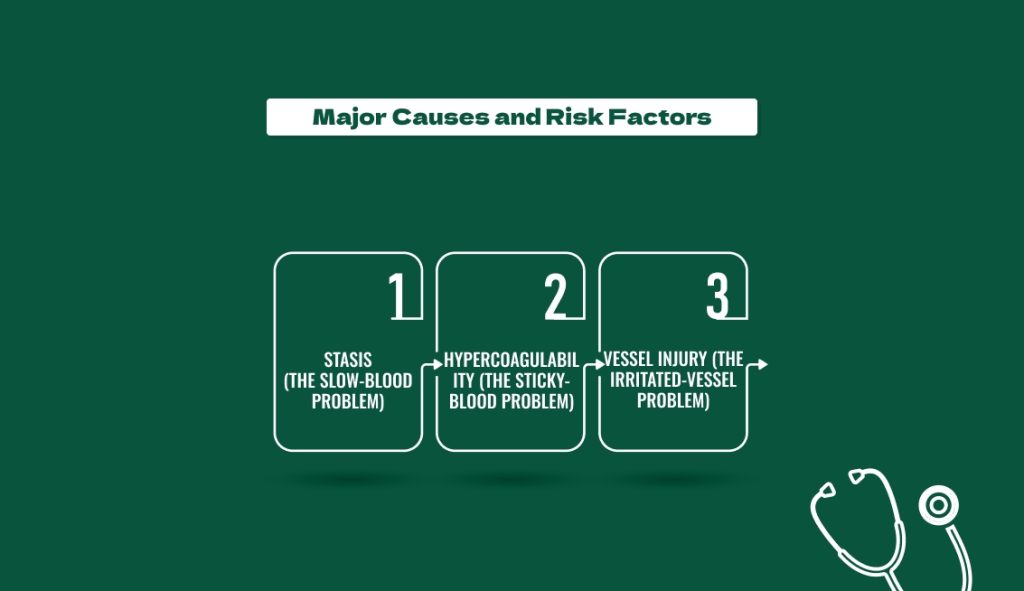
The following are the major causes and risk factors of pulmonary embolism:
1. Stasis (The Slow-Blood Problem)
It might happen due to long hospitalization or during recovery after surgery. Some classic setups are sitting for long stretches, including travel.
2. Hypercoagulability (The Sticky-Blood Problem)
The problems that raise risks are:
- Cancer and cancer treatment
- Pregnancy and the postpartum window
- Hormonal contraception or hormone therapy
3. Vessel injury (The Irritated-Vessel Problem)
It might happen after major surgery, trauma, fractures, or central lines. These are situations that jolt the clotting system into action.
In fact, a lot of VTE (Venous thromboembolism) events are tied to healthcare exposure. Recent hospitalization is a big theme. Also, many cases are considered preventable with the right prophylaxis.
Who Is At More Risk?
Although it is uncertain who might actually have PE, some people are at higher risk than others.
Common risk factors include:
- Recent surgery/hospitalized
- Long periods of sitting
- Bed rest
- Pregnancy or molar pregnancy
- Cancer or chemotherapy
- Obesity
- Previous history of PE diagnosis
Immediate Danger Timeline: How Fast Can PE Become Fatal
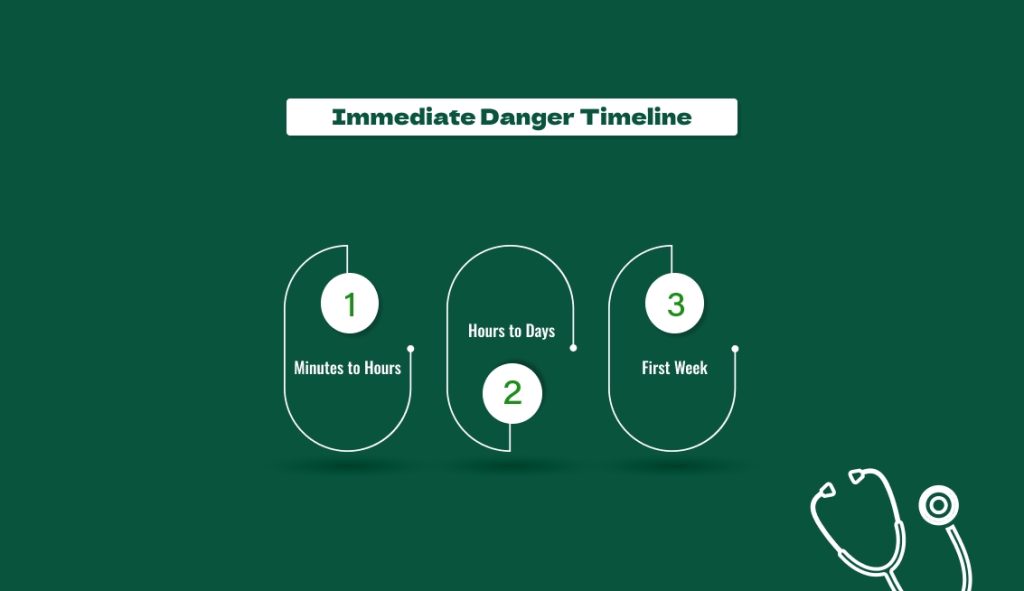
Basically, a high-risk PE can kill fast, sometimes, before anyone has time to connect the dots. That is why the question of how long before a pulmonary embolism kills you does not have one clean number.
Minutes to Hours
A large clot can trigger obstructive shock. The right ventricle dilates and struggles. So, blood cannot move forward. This way, pressure tanks. That spiral can end in arrest.
Hours to Days
Intermediate-risk cases can appear stable on arrival but then deteriorate. The clot burden, RV strain, and oxygen issues stack up. This is where monitoring and timely anticoagulation matter.
First Week
Most deaths that happen from PE happen early, not months later. That early window is why emergency response and risk stratification exist in the first place.
Can You Survive PE Without Treatment?
Untreated PE can be lethal. In fact, mortality can be as high as 30% if left untreated. However, treatment changes the slope. Anticoagulation is the mainstay. Some patients also need reperfusion therapies to prevent collapse or rescue failing circulation.
Moreover, low-risk patients can sometimes be treated as outpatients. This is stable and carefully selected. Early discharge is on the table for that group.
However, high-risk patients are different. They need hospitalization and often ICU-level capability. Sometimes, they require advanced therapies. These include systemic thrombolysis, catheter-based interventions, mechanical thrombectomy, or surgical embolectomy.
Mortality Risk Timelines and Risk Stratification
The following points show the risk timelines and the ways of dealing with them:
First 24 to 48 hours
This is the danger zone. In this case, the body either compensates or it cannot. Clinicians look hard for signs of right ventricular dysfunction and poor perfusion because that is where outcomes pivot.
30-Day Risk
At the outset, risk scores exist for a reason. PESI (Pulmonary Embolism Severity Index) and simplified PESI help estimate 30-day mortality. Also, imaging and biomarkers are included.
2026 update
A 2026 multisociety guideline introduces clinical categories for acute PE to improve severity classification and decision-making. Also, it pushes the idea of matching therapy intensity to risk category. Obviously, not everyone needs the same escalation.
Weeks to Months
If you survive the early phase, the risk of immediate death drops. However, follow-up still matters. In fact, persistent dyspnea signals chronic thromboembolic disease or other sequelae.
Factors That Affect How Long One Can Survive
| Factors | Description |
| Size and location of the clot | Central clots and heavy clot burden raise risk. A small peripheral clot is still serious, but the physiology is different. |
| Heart and lung reserve | Pre-existing heart failure, chronic lung disease, and older age can shrink the margin for compensation. |
| Delay in treatment | Time to anticoagulation and proper triage is survival math. |
Why Early Treatment Changes Everything?
Anticoagulants prevent the clot from growing and reduce the formation of new clots. They buy time for the body to break down the clot naturally.
In fact, if a patient needs initial parenteral anticoagulation, low-molecular-weight heparin is recommended over unfractionated heparin in many situations.
For many eligible patients, direct oral anticoagulants are preferred over warfarin. This is due to bleeding and practicality trade-offs, unless contraindicated.
Moreover, PE response teams are increasingly being used to expedite decisions for intermediate- and high-risk cases. Hence, coordination is faster, and delays are reduced. Apart from that, some form of physical exercise is necessary.
Life After Pulmonary Embolism
The long-term consequences of a PE episode are no longer as severe as they formerly were. Therefore, before and after therapy, physicians stratify the risks of each PE patient. For example, they determine:
- Severity of the clot
- The amount of threat it poses
- Possibility of recurrence, and more.
This classification determines the treatment and follow-up care a patient should get. PE can be treated with a blood-thinning medication and discharged the same day or after a few days of hospital monitoring for lower-risk individuals.
For individuals at higher risk, the clot is frequently treated right away with clot-busting medicines or surgery. In addition, patients may expect a certain amount of aftercare following embolism surgery based on the type of risk assessment they received during treatment.
Patients at low risk of clotting again should expect to use blood thinners for only a few months after therapy. However, patients at high risk of clotting again might expect to be on long-term drug therapy.
Long-Term Outlook
Many people recover well with treatment. Still, there is a recurrence. In fact, about one-third of people with VTE have recurrence within 10 years.
Meanwhile, the duration of anticoagulation depends on the underlying cause of the PE. Essentially, continuing anticoagulation beyond 3 to 6 months is recommended when there is no major reversible risk factor or a persistent risk factor remains.
Also, follow-up is especially important. It is important to check PE-related symptoms and functional limitations at visits for at least 1 year. Screening is necessary for chronic thromboembolic pulmonary disease and other causes of persistent dyspnea.
Recovery Timeline (Weeks to Years)
| Timeline | Recovery |
| Week 1 | Fatigue. Breathlessness. Anxiety that feels physical. |
| Weeks 2 to 6 | Many people notice steadier breathing and less chest discomfort. They assume treatment is consistent and there are no complications. |
| Months Later | Some people still feel off. Persistent shortness of breath requires follow-up, as chronic thromboembolic disease is a recognized complication of PE. |
How to Prevent Pulmonary Embolism?
After surgery or hospitalization, early mobilization helps. Although it is not a magical shield, it still matters.
Moreover, hospital-associated VTE is a big chunk of the problem. In fact, many healthcare-associated events are preventable with measures such as appropriate anticoagulant prophylaxis and compression strategies, yet fewer than half of patients receive these measures.
If you travel long distances, stand up when you can. Make sure to move ankles and calves. Also, hydrate sensibly. In fact, long immobility is the enemy, not a single flight by itself.
If you have major risk factors, ask what prevention plan is appropriate for you. Especially around surgery, cancer care, and pregnancy-related periods.
Signs and Symptoms That Mean Emergency Care
If there is severe difficulty, call emergency services right away. Symptoms include heavy breathing, chest pain, fainting, or a very fast heartbeat. Also, make sure not to drive by yourself.
Moreover, if breathing trouble comes on suddenly or there is coughing up blood, get urgent medical evaluation. It could be PE or something else equally serious.
Frequently Asked Questions (FAQs)
Yes, in high-risk cases with shock or cardiac arrest, it can happen quickly. That is why sudden collapse can be the first symptom for some people.
No. Selected low-risk patients can be discharged home for treatment with structured follow-up. However, higher-risk categories should be hospitalized.
Speed to correct triage and anticoagulation. And fast escalation to reperfusion therapies when there is hemodynamic collapse or impending failure.
Usually not. Testing must be limited to specific situations where results would change management decisions.
It depends on the risk category and treatment speed. Some high-risk events collapse rapidly. Many stable cases do well with prompt anticoagulation and monitoring.
Early Steps Are Crucial
Pulmonary embolism is a time-sensitive emergency because outcomes swing the most in the early hours. Some cases deteriorate in minutes. Many survive, especially when treatment starts quickly, and risk is classified correctly.
If you remember one thing, do not wait for severe shortness of breath, chest pain, coughing blood, or fainting. Rather, get urgent care.
Moreover, if you came here asking how long before a pulmonary embolism kills you, the cleanest answer is still this. The clock is variable, but the response should not be.
Read Also: