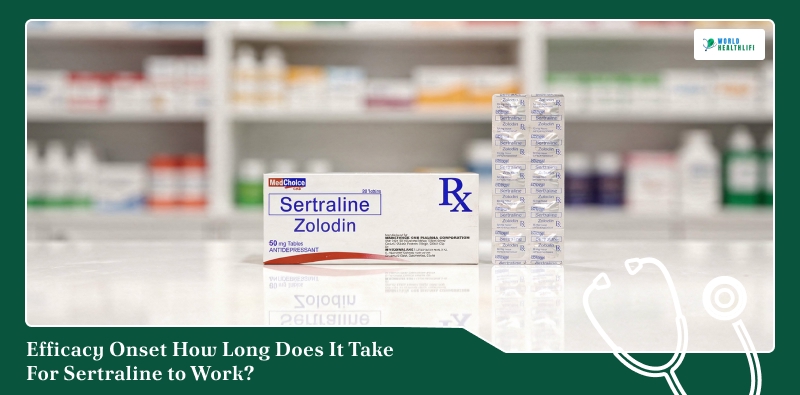
You just picked up your sertraline prescription, popped the first pill, and now you’re wondering: “When will I actually start feeling better?”
That question keeps so many people up at night, especially here in the Philippines. Here, work stress from long commutes and family expectations already weighs heavy.
The uncertainty drags on, often for days, which may turn into a week with no real lift. In the same vein, frustration builds until some quit too soon, triggering the risk of a hard relapse.
But here’s the thing: this article cuts straight through that fog with clear timelines from FDA trials and real patient data. Keep reading to learn more about the week-by-week expectations that you’ll actually notice after having the drug.
Also expect practical tips to help you manage the ride safely, alongside your doctor’s guidance. No guesswork, just solid info to help you stay the course. But how long does it take for sertraline to work?
What Is Sertraline?
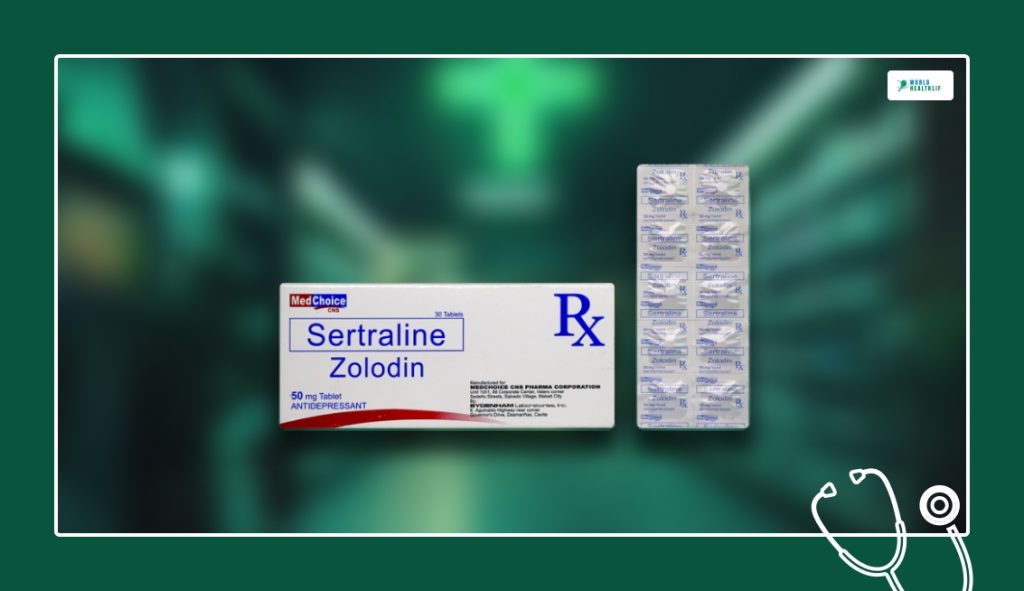
Sertraline is a selective serotonin reuptake inhibitor, or SSRI for short, one of the most trusted antidepressants out there. Doctors prescribe it first for major depressive disorder.
The drug is also helping pull folks out of that deep, exhausting fog where even getting out of bed feels impossible. It works for anxiety disorders, too.
Whether it’s a generalized worry that never quits, or panic attacks hitting during rush hour traffic in Manila, or social anxiety turning simple chikahan into dread, sertraline is as effective.
It also helps with OCD, especially those repeating thoughts and routines that eat up so much time. It’s used for PTSD too, including stress from big storms, losses, or other tough experiences that many people go through here.
Most people know it as Zoloft, the Pfizer version that’s been around since 1991. It’s one of the most prescribed meds in the U.S. But now, the clinics in the Philippines are increasingly using it.
Doctors sometimes use it off‑label for PMDD, when mood drops sharply before periods. It’s well‑researched, dependable, and a common next step when therapy alone isn’t enough.
How Sertraline Works in the Brain?

Sertraline targets your brain’s serotonin system. It becomes the key chemical messenger handling mood and sleep. It also helps with that fight-or-flight stress response we all feel too much of sa Pinas life. But how long does it take for sertraline to work?
Here’s how it plays out:
- Neurons fire serotonin across the synapse, the tiny gap between cells
- But normally, most gets pulled back in through reuptake, leaving too little behind.
Sertraline steps in and blocks that pump. Kaya, serotonin hangs around longer, mas tumatagal, and builds stronger signals over time.
But it doesn’t happen overnight, like taking paracetamol for headache relief. Instead, those higher levels trigger slow adaptations.
In the same vein, neurons sprout new connections through neuroplasticity. Also, receptors help reduce the sensitivity. Lastly, areas like the amygdala (your brain’s fear hub) calm hyperactivity.
Typical Timeline: How Long Sertraline Takes to Work
Realistic timelines come straight from Zoloft’s FDA trials and Cochrane reviews of thousands of patients. Most see benefits unfold steadily, not in a flash.
First Few Days (0–3 Days)
During the first few days, most people don’t feel major mood changes yet. A few notice small improvements. Maybe falling asleep a bit more easily after a rough day, or getting some appetite back so dinner doesn’t feel like a chore.
Anxiety might dip slightly during tense moments, but the heavier sadness usually stays the same at first because your body is still adjusting to the medicine. Someone from a local forum once said that on day two, their stomach finally relaxed.
But the low mood didn’t really move yet. That’s normal. Early side effects can show up before the benefits do, so just hold steady for now. However, the concern is how long does it take for sertraline to work?
1–2 Weeks
In the initial few weeks, you will observe the first signs of improvement. Some incremental changes can help you feel energized while doing domestic chores. Moreover, your sleep cycles will also improve.
Some people in local groups mention feeling slightly lighter in the mornings by around day ten. It helps to jot things down so you can see the slow improvements add up.
4–6 Weeks
This is usually the stage where people finally feel real change settling in. Around half of users start noticing that the heavy, hopeless mood loosens a bit. Colors feel less dull, and those sudden panic moments don’t hit as hard or last as long.
Someone in one study even said they laughed by week five. Evidence also said that they genuinely laughed, for the first time in months. Most folks land in this window, but some feel improvements as early as week three.
While others need closer to seven weeks, depending on their dose and how their body handles it. Keeping a short daily log can help you notice these small shifts turning into actual progress.
8–12 Weeks and Beyond
By this point, the bigger changes usually show up. OCD routines often drop sharply, and PTSD triggers lose some of their intensity. People dealing with anxiety usually see the slowest but steadiest improvements, sometimes building for several months if they stay consistent.
Some long‑term follow‑ups even noted better focus at work around week ten. This stage rewards patience. However, remember that stopping early often means missing the part where everything finally clicks.
Why Sertraline Takes Time to Work
SSRI meds like Sertraline don’t start working overnight. The main reason behind that is that the brain needs time to adapt. Firstly, you undergo a rise in serotonin levels after having it. However, your brain’s receptors are not yet trained to process the medicine.
That explains why people feel a bit nauseated when they use sertraline. Again, you may encounter some initial hurdles, after which your brain settles and syncs with the medication.
After that early stretch, the bigger changes kick in. If your brain can process the medicine, proteins such as BDNF help brain cells start growing and reconnect in healthier ways. Think of it like planting seeds. At first, you water daily. But you don’t see leaves for a few weeks.
Benzos can calm you fast, but they can hook you. In contrast, Sertraline is slower and steadier, building a solid base over time. Most people notice real benefits around weeks four to six. That’s why doctors keep saying: don’t rush it, don’t quit early. The timing is part of how it works.
Factors That Influence How Quickly Sertraline Works
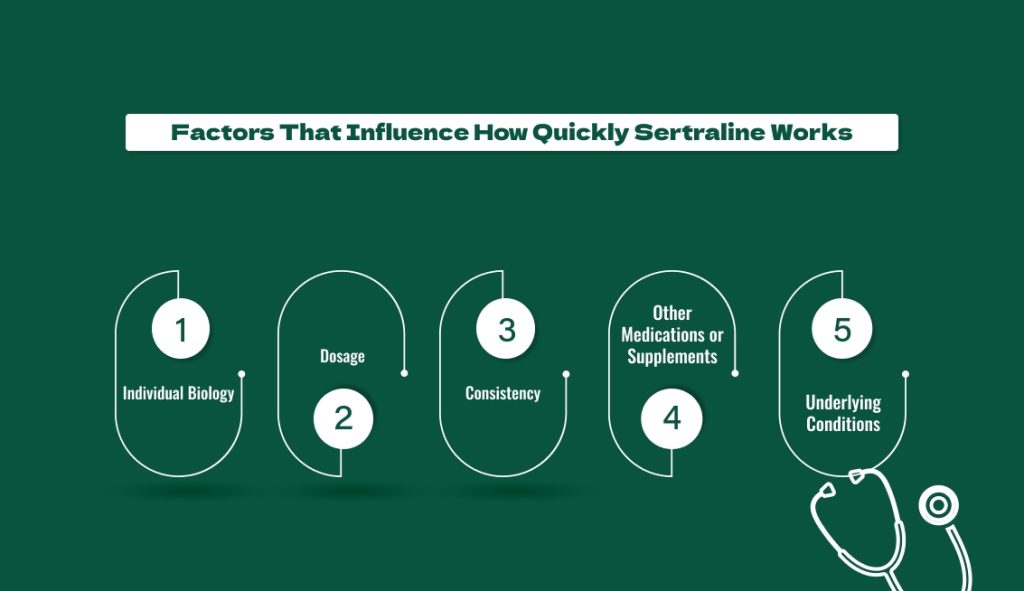
Everyone’s wiring differs. Remember, what speeds one slows another:
Individual Biology
Everyone’s body handles sertraline a little differently. Some people process the medicine quickly because of their genetics, so it takes longer for the level to build up in their system.
Others have stronger symptoms or a brain chemistry that just needs more time before the medicine settles in. Milder cases often feel improvements sooner, while tougher cases stretch the timeline.
Dosage
Most start at 50 mg so the side effects stay manageable, and the dose is slowly increased only if needed, sometimes up to 200 mg.
Raising the dose can make the effect stronger once it kicks in, but it doesn’t make the medicine work faster. The progress still builds gradually week by week. That’s why some may question: how long does it take for sertraline to work?
Consistency
Taking it every day at the same time keeps the dose steady. Missing doses or taking it at random times can mess with that balance and delay improvements.
Some people use reminder apps or simple alarms to stay on track, and it really helps the treatment settle in more smoothly.
Other Medications or Supplements
Some herbal products and medications can interfere with how sertraline is processed, while others can increase certain risks, like bleeding.
That’s why doctors always ask for a full list of everything you take, including vitamins and teas. In short, anything that interacts can slow progress or cause issues.
Underlying Conditions
If you have other conditions like thyroid issues, bipolar tendencies, or major sleep problems, the benefits of sertraline can take longer to show. These extra layers can slow the turnaround, especially with things like sleep or energy, so the timeline stretches compared to someone without those complications.
Managing Expectations and Side Effects
If you start this medicine, the initial few days will be turbulent. You will undergo a few psychological problems. The medicine might not yield the desired results.
Kaya, knowing what’s normal talaga helps you stay steady and less worried. Think of it as a gradual reset, not an instant switch.
Common Side Effects Early On
Sa first week, nausea is common. It is okay if you have ample water and food. As a result, you can easily digest and absorb the medicine.
A few people feel that if you take it with food and plenty of water. In the initial phase, you may feel headaches or feel jittery, parang sobra ang kape, and a disrupted sleeping schedule (mas antok sa araw, gising sa gabi).
A dip in libido happens for some, too, and that can feel frustrating. But there is Good news: Most of these ease by around week four for most people, lalo na if you stick to a consistent schedule and avoid caffeine late in the day.
When to Expect Side Effects vs. Benefits?
Side effects usually show up first. The body reacts fast to the serotonin shift, lalo na sa gut and nerves, so minsan mas ramdam mo muna ang hilo, stomach flips, or restlessness. The benefits are visible slowly, week by week.
Kaya may short “worse before better” phase for some. Therefore, it is important to track your feelings. Kahit quick notes sa phone. If it’s too much, your doctor can adjust the dose, split it, or change timing to smooth the rough patch. Important: don’t self‑tweak the dose.
Tips for Supporting Treatment
Don’t stop abruptly! Biglaang hinto can cause dizziness and withdrawal‑type symptoms like brain zaps or rebound anxiety. Pair the med with therapy (CBT works well) for better, longer‑lasting gains.
Do not reduce your daily sleep time below the 7-hour threshold. Simultaneously, you can switch off your mobile phone much before going to bed. If possible, go off to sleep at a particular time.
In addition, you should consider taking a little walk after dinner. It will speed digestion and lift your psychological health. Remember: consistency lang.
Secondly, you can focus on increasing the omega-3 intake. Having leafy greens and drinking plenty of water are also essential. Meanwhile, you already know the medicine can have serious side effects.
To counter them, you can also adopt some practices. For example, if you feel jittery after lunch, avoid coffee or other caffeinated drinks for a while.
When to Seek Help
If your mood suddenly drops, ask for help now. If thoughts of self‑harm show up, call 988 or head to the ER. Wag mag‑delay. Watch for serious side effects: high fever, very stiff muscles, a spreading rash, confusion, or vomiting that won’t stop. Urgent care iyan.
Wait, are you under 25? Then, you must be extra watchful in the first weeks. Younger folks can have faster mood shifts early on, so loop in a family member or a friend who can check in with you.
Frequently Asked Questions (FAQs)
Can sertraline work faster if I take more?
No. Mas risky, no speed boost. The right way is slow titration with your doctor so your body adapts safely. Huwag mag‑self‑adjust.
Will I feel worse before feeling better?
Yes, it can happen. About 10–15% of people feel a small dip at the start before things improve. It usually fades in a few weeks. Check with your doctor if it lasts or feels too heavy.
How long do side effects last?
Kadalasan 1–4 weeks. If they linger, doctors sometimes add helpers like bupropion, change timing, or adjust the dose. Good sleep and lighter caffeine also help.
Can I take it with alcohol or other meds?
Doctors say that the best is to skip alcohol. It can worsen dizziness and sleep. Give your pharmacist a full list of your meds (including herbal and over‑the‑counter). No MAOIs, and always check for interactions first.