Headaches strike hard midday, and fever spikes with chills are common during the flu season in the Philippines. In this situation, we usually pop paracetamol and wait. But how soon will it work?
Many of us in the Philippines go to buy paracetamol with the same thing in mind. Knowing the onset time sets the right hopes. It stops you from taking extra doses or worrying. This guide shares everything you need to know about paracetamol overdose.
At first, you need to know what the usual speed of paracetamol to work. So how long does paracetamol take to work? This will prevent you from popping two pills in close succession. Keep reading for more dosage tips.
These facts will induce smarter use. Always check your pack label first.
Introduction
Pain or fever makes you want quick relief, and paracetamol is usually the first thing people reach for. But many still wonder how fast it actually works. Minutes? Hours? It matters because taking doses too close together can do more harm than good. Fast relief feels nice, but knowing the real timing keeps you safe.
How long does paracetamol take to work? Most people start feeling better in 20–30 minutes, with the strongest effect around 1–2 hours. The relief usually lasts 4–6 hours.
Food, age, and health can shift this a bit. There are clear dose limits for adults and kids, and plenty of myths that confuse things, so this guide breaks them down simply.
If paracetamol isn’t helping, a doctor should be your next step. Trends promise instant fixes, but facts make safer choices. By the end, you’ll know how to properly time each dose. Labels are your rulebook. Let’s break it down in plain language now.
What Is Paracetamol?
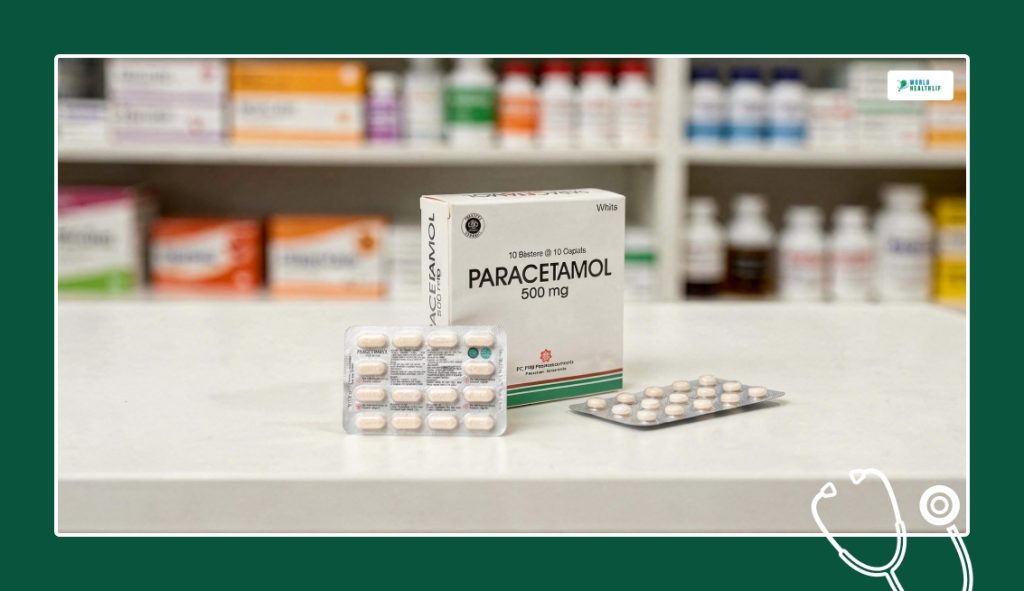
Paracetamol is one of the most common medicines people use for everyday pain and fever. In some places, it’s called acetaminophen, but it works the same.
You can buy it easily over the counter in tablet, liquid, or suppository form. No prescription needed, basta OTC lang, pwede mo agad bilhin.
People take it for all sorts of things: sharp headaches, muscle aches after a workout, fever from colds or flu, tough period cramps, tooth pain, or back strains from daily chores.
It’s not strong on inflammation. That’s where ibuprofen usually does better. The important part is the limit. In the same vein, taking too much can hurt the liver. Used properly, though, it’s a simple go‑to medicine for many.
How Paracetamol Works in the Body?
Paracetamol mainly works in the brain, not the whole body. It tones down the pain signals there, so you feel aches less. Meanwhile, it also lowers fever by adjusting the hypothalamus, basically resetting your body’s temperature point.
Eventually, it blocks prostaglandin activity in the brain but not much in the rest of the body, which is why it doesn’t help reduce swelling as much as ibuprofen does. Above all, it’s better for nerve‑type pain, headaches, and fevers than for big joint inflammation.
Once you swallow it, the medicine moves quickly through the small intestine. To sum up, the liver breaks down most of it. In the same vein, the half‑life in the blood is usually around 2–3 hours.
However, how fast it kicks in depends on how fast your gut absorbs it. Most people feel it working once the blood level rises, usually within 30 minutes to 2 hours.
Food slows things down a bit. Meanwhile, an empty stomach makes the effects show up faster. In addition, age, liver health, and overall metabolism also change how your body handles it.
However, why do you need to know all this? Firstly, it sets realistic expectations. Paracetamol isn’t instant. On the contrary, it builds up, peaks, then slowly wears off. That’s what creates safe dosing windows.
Meanwhile, since it works differently from ibuprofen, the two can be paired carefully when needed. Basta tama ang spacing at sundin ang dosage, safe silang gamitin together. In other words, knowing the basics helps you time your doses smartly and avoid mistakes.
How Long Does Paracetamol Take to Work?
The onset time is usually the same for all cases. However, the time may vary from one person to another:
General Onset Time
How long does paracetamol take to work? Most people start feeling the first bit of relief about 20–30 minutes after taking a tablet. That’s pretty standard for oral paracetamol.
The strongest effect usually occurs around 1–2 hours, when the medicine reaches its peak in the blood. In the same vein, you must know that your pain tends to ease slowly rather than all at once.
In the same vein, all healthy adults often follow the usual pattern. At the same time, your kids respond similarly as long as the dose is based on weight.
Studies show the onset can range from 15 to 60 minutes, with about half of people reaching their peak around the one‑hour mark. However, you will usually get relief gradually.
So it’s important to wait for the full dose to take effect. Don’t take another one too soon just because you don’t feel it right away. The timing on the label is there for a reason.
Formulation Differences
Different forms of paracetamol kick in at different speeds. A regular tablet usually starts helping in about 30 minutes. The soluble or fizzy tablets dissolve in water and tend to work faster, often around 15–20 minutes.
How long does paracetamol take to work? For kids, liquid syrups are absorbed quickly, usually within 10–25 minutes. Rapid‑release capsules also have a slight edge, with many people feeling relief at around the 20‑minute mark, mas mabilis kumapit kaysa regular tablets.
Effervescent types kick in fast because they’re already dissolved, while suppositories are slower. Often, 30–60 minutes, since they are absorbed through the rectum. Chewables for kids work fairly fast, too.
Pick the form that matches what you need. Liquids work quickest on an empty stomach; tablets are fine with food. Brands differ a bit in speed. So, check the label if timing matters.
Science generally shows the soluble versions lead the pack, though they can cost more. Choosing the right form simply helps you cut the waiting time.
How Long Does Paracetamol Last?
The effect length of paracetamol stays fairly steady for most people, and sticking to the usual intervals matters a lot. You generally get 4–6 hours of relief, keeping pain lower during that window. Fever control lasts about the same.
After that, the next dose is fine. The medicine isn’t gone. Its effect just eases off. The liver clears it slowly, with a half-life of 2–3 hours. Six hours is a safe upper gap, though labels list 4–6. Severe pain may fade sooner, and mild pain lasts longer.
Kids follow weight‑based spacing. Never take doses back‑to‑back. Track timing. Stop once better. Short‑term use only.
Factors That Affect How Fast It Works
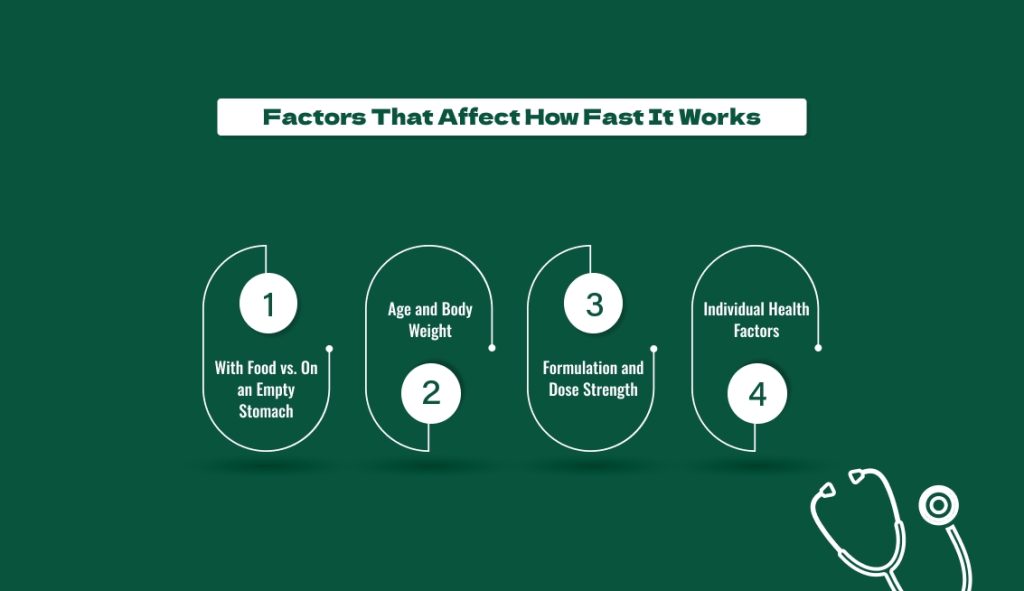
The speed of the medicine and its effect on the body shift with daily habits. Know what changes affect it.
With Food vs. On an Empty Stomach
An empty stomach works 15–30 minutes quicker. Food delays it by 30–60 minutes more. Fatty meals slow it the most. Light snacks are okay for paracetamol.
Ibuprofen needs food to protect the stomach. Paracetamol is more flexible. Mornings on empty are often fastest. Nights after big meals are slower. Test what feels right for you.
Age and Body Weight
Kids process it faster per pound. Dose must match mg/kg. Adults stay steady from 30 to 65. Seniors over 60 have slower liver action, so lower doses help.
Kasi mas mabagal na ang metabolismo nila, kaya mas safe ang mas mababang dose. Higher weight may need stronger doses; lighter people peak faster. Doctors rely on weight charts for kids.
Formulation and Dose Strength
A 1000 mg dose feels stronger but starts at the same speed. Rapid‑release tablets shave about 10 minutes off. Liquids are best taken on an empty stomach. 500 mg suits mild pain. Combo products require watching the total amounts.
Individual Health Factors
Liver problems slow the whole process. At the same time, IBS or slow digestion delays absorption. In addition, some medicines are metabolized in the liver.
Simultaneously, if you have an alcohol history, it raises risks. Meanwhile, the kidneys handle it mostly fine. Hydration helps absorption. Illness slows everything overall.
Safe Usage and Dosing Guidelines
Doses in strict limits save lives. However, overdose can work just the opposite:
Adults
Take 500mg every 4–6 hours upto 4 times in 24 hours. The maximum is 4000 mg in 24 hours. That’s eight 500 mg tablets. Always count all paracetamol sources. Use only for 2–3 days unless advised otherwise.
Children
Dose is 10–15 mg/kg every 4–6 hours. Daily limit is 60 mg per kg. Measure syrup carefully. Follow the age chart on the pack. Babies under 12 weeks old need to see a doctor first.
Importance of Spacing Doses
Keep at least 4 hours between doses. Taking more early will not speed relief and can cause an overdose quietly. Track timing carefully. If you miss one, just wait for the next scheduled time.
What to Do If It’s Not Working
- If you still feel no relief after 1–2 doses, you can switch to ibuprofen or add it safely with spacing.
- When a fever lasts more than 72 hours, see a doctor.
- If pain spreads or gets worse, get help.
- Chest pain, nausea, or yellow skin means ER immediately.
- For kids: unusual sleepiness or a rash needs urgent care.
- For ongoing daily pain, see a doctor immediately. It might be driven by a latent cause that has not yet been detected.
Frequently Asked Questions (FAQs)
Can I take paracetamol on an empty stomach?
Yes. It’s gentle on the stomach, so most people take it even without food. Many actually feel it works a little quicker this way.
Can I take it with food?
Also yes. Food doesn’t harm its effect. It may slow things down slightly, but nothing major. Take whichever way feels comfortable for you.
Does it work faster as a liquid or a tablet?
Liquids usually kick in sooner because they don’t need to break down first. Tablets take a bit longer, but both work well once they’re absorbed.
Can I take it with other painkillers?
It depends on the painkiller. It’s commonly paired with ibuprofen if spaced properly, but avoid mixing it with anything that already contains paracetamol. Always check the label.
Caution: Paracetamol is not a targeted medicine. It is an OTC. Yet you need to be alert about the dose. However, it does not act specifically. It creates a sensation that leads the brain to believe the effect of the anatomical condition is mitigated. So, it is always better for you to consult your doctor first, then decide the right dose and the appropriate dosage of the medicine!