Say you wake up in the middle of the night to a crushing, agonizing pressure under your ribs can trigger immediate panic.
Your first instinct would obviously be to try anything to make it stop. For instance, it would start by drinking glass after glass of water.
Following this, you will pace the floor or dig through your medicine cabinet for antacids.
However, if the root cause is a trapped gallstone, standard digestive remedies will not offer relief.
When a sudden episode hits, knowing how to stop a gallbladder attack while it is happening comes down to understanding the mechanics of your body.
Contrary to regular stomach discomfort, this pain is caused by a physical blockage in your bile ducts.
This means your primary goal must be resting the digestive system and easing medical muscle spasms.
Trying to force the stone out with home remedies or “cleanses” can actually backfire. This triggers violent contractions that can make your agony worse.
In order to help you safely navigate through the intense discomfort, this guide will break down the following:
- Immediate and evidence-based steps you can take at home to comfort your body
- The biological reasons why popular quick-fixes fail
- Critical warning signs that mean it is time to head to the emergency room
Gallbladder Attack: What Is It?
First, let us understand what a gallbladder attack is.
Medically known as biliary colic, a gallbladder attack is a sudden and intense episode of abdominal pain that happens when a gallstone blocks one of the bile ducts.
The gallbladder is a small organ that stores bile, a fluid that helps your body digest fats. When you eat, the gallbladder squeezes to pump bile into your small intestine.
However, if a stone gets stuck in the exit duct during this process, the gallbladder keeps squeezing violently against the blockage.
As a result, this leads to severe pressure and pain.
Symptoms Of A Gallbladder Attack
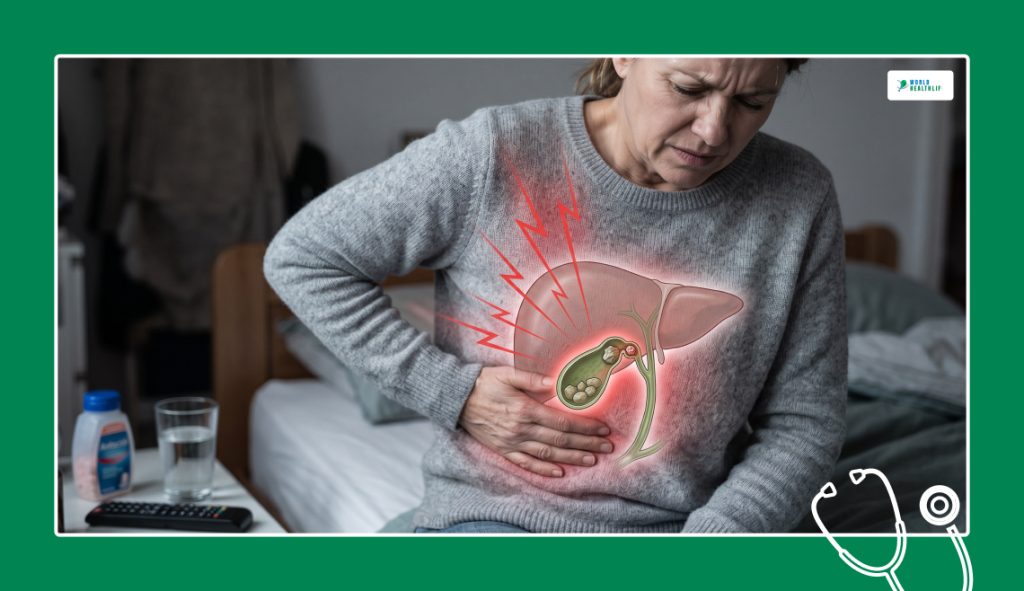
When a gallstone blocks the flow of bile, the body signals the obstruction through a highly specific cluster of symptoms.
Recognizing these distinct signs can help you differentiate a true gallbladder episode from ordinary indigestion.
Sharp And Sudden Pain
In a gallbladder attack, the hallmark sign is a rapid, intense ache that strikes the upper right quadrant of your abdomen. This is directly beneath the right rib cage.
Also, it can manifest as a severe, crushing pressure in the center of the stomach, just below the breastbone, catching you completely off guard.
Radiating Pain
Due to shared nerve pathways in the torso, gallbladder discomfort rarely stays in one place.
The pain frequently shoots upward and outward, radiating directly into your right shoulder blade.
This creates a deep, intense ache across the upper back between your shoulder blades.
Digestive Distress
As the digestive process grinds to a halt due to the blocked bile duct, severe nausea and acute vomiting are common.
Also, you may experience intense bloating, a feeling of extreme fullness, and general stomach upset that makes it impossible to get comfortable.
Unrelenting Duration
Unlike typical gas pains or intestinal cramps that come and go in short waves, gallbladder pain is steady, constant, and unyielding.
A standard episode features a continuous plateau of pain that typically lasts anywhere from 1 to 5 hours.
This is before the stone finally shifts and the pressure subsides.
What Causes A Gallbladder Attack?
Fundamentally, a gallbladder attack is a mechanical and chemical issue instead of a simple stomach bug. Moreover, it triggers when the normal flow of digestive fluid is physically disrupted.
As a result, this leads to intense internal pressure.
Formation Of Stones In The Gallbladder (Gallstones)
Actually, the root cause of most attacks is the presence of stones, medically known as cholelithiasis.
In addition, these form when substances in the bile, typically cholesterol or bilirubin.
These become highly concentrated and crystallize into hardened pebble-like deposits inside the gallbladder.
Physical Duct Blockage
An attack actively begins when the gallbladder contracts to pump out bile and accidentally pushes a stone into the narrow cystic duct or common bile duct.
The stone becomes physically wedged. Moreover, it acts like a cork in a bottle and traps the remaining bile inside the organ.
Violent Muscular Contractions
As bile builds up behind the stuck stone, internal pressure spikes.
In response, the muscular walls of the gallbladder begin to contract violently and spasm in an attempt to force the blockage out.
Consequently, this causes the severe, steady pain associated with an attack.
Dietary Triggers
Consumption of foods that are high in fat, heavy creams, fried items, or even large amounts of caffeine signals the small intestine to release a hormone known as cholecystokinin (CCK).
CCK forces the gallbladder to squeeze intensely, making heavy meals the most common immediate trigger for an episode.
How To Stop A Gallbladder Attack While It Is Happening?
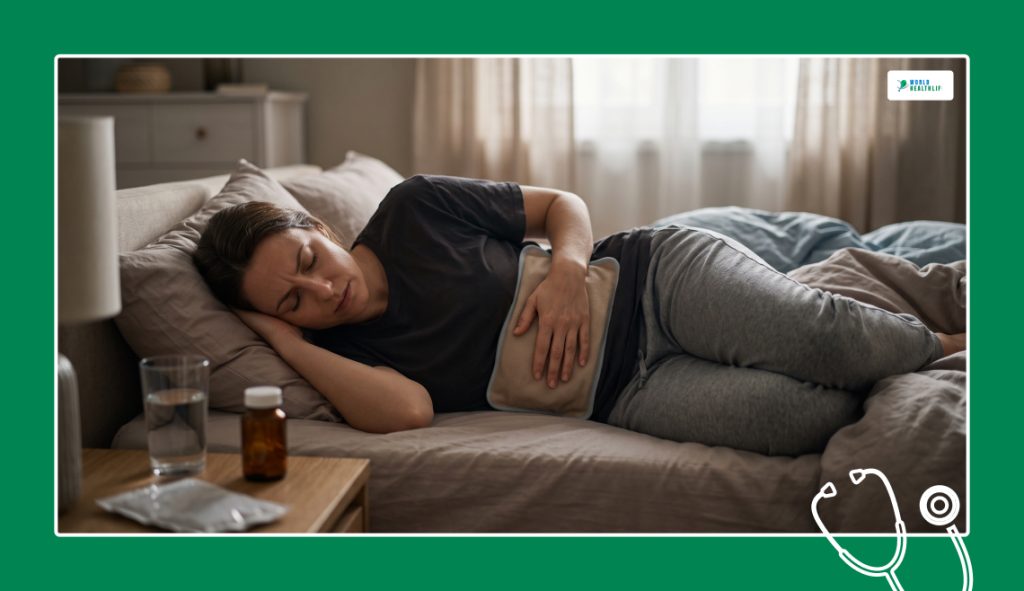
In order to manage or stop a gallbladder attack while it is happening, you first need to rest the organ immediately.
After that, focus on easing muscle tension and wait for the gallstone to shift or for medical care to take effect.
Immediate Steps To Take At Home
When you feel like you are facing a sudden gallbladder attack, try to follow these steps at home on an immediate basis.
While, of course, medical professionals are required, these steps can help for the time being.
Immediate Relief: At A Glance
| Action | Why It Helps |
| Stop Eating | Prevents the gallbladder from contracting and squeezing against the stuck stone. |
| Apply Heat | A heating pad or hot water bottle relaxes core muscles to reduce cramping. |
| Change Position | Sit upright or lie on your left side to ease mechanical pressure on your organs. |
| Breathe Deeply | Slow, deliberate belly breaths relax the diaphragm and lower your pain response. |
| Sip Water | Take tiny sips of room-temperature water only; avoid heavy drinking or cold fluids. |
| Use OTC Relief Cautiously | If you aren’t vomiting, anti-inflammatories (like ibuprofen) can help blunt the ache. |
What Would Not Work: Avoid These Myths At All Costs
As discussed earlier, a gallbladder attack is caused by a physical stone blocking a duct. This means common digestive remedies such as antacids, liquids, or cleanses cannot relieve your pain.
While we have discussed what you can do at home to ease your pain and condition, there are certain myths that you should avoid.
| Myth | Fact | Why? |
| Digestion clears it: Gas, burping, or bowel movements relieve the pain | It is a structural blockage. | Pain is caused by a stone physically wedged in the duct, not by digestive gas. |
| Antacids will fix it: Reflux medications stop the attack | Stomach acid is not the cause. | Acid reducers cannot relieve pain from a gallbladder contraction. |
| Liquids flush it: Water, milk, or apple cider vinegar dissolves stones | Gallstones cannot be washed away. | • Liquids do not contact the stone. • Fluids cannot melt hardened cholesterol or bilirubin. |
| Cleanses clear it: Olive oil and juice flushes force stones out | Cleanses create “fake” stones. | • The passed lumps are just chemically altered oil. • Heavy fat loads can worsen the attack. |
| Coffee eases it: Drinking coffee wakes up the digestive system | Caffeine worsens the blockage. | Caffeine triggers gallbladder contractions, increasing pressure and pain. |
| Light food is safe: Small amounts or creamy soups are fine | All fat triggers contractions. | • Even small fat loads signal the organ to squeeze. • Fasting is required during an attack. |
The Blockage Mechanism
In a gallbladder attack, a hardened stone physically wedges itself into the cystic duct or common bile duct.
Since it is a mechanical blockage, internal air, burping, or passing a bowel movement cannot relieve the pressure or dislodge the stone.
The Failure Of Antacids
In the case of antacids and proton pump inhibitors (like Prilosec or Nexium), they work in two ways:
- Neutralizing the stomach acid
- Lowering stomach acid.
However, a gallbladder attack is not caused by acid reflux.
Instead, it is caused by the muscular wall of the gallbladder violently squeezing against a trapped stone.
Consequently, acid-reducing medications provide no relief.
The Liquid Flush Illusion
Extra water can help flush out kidney stones, which travel through the urinary tract.
However, the gallbladder is a dead-end storage pouch for the digestive system.
Drinking large amounts of water, milk, or apple cider vinegar has no way of physically reaching.
It can neither chemically melt a hardened cholesterol or bilirubin stone that is trapped in the biliary ducts.
The Saponified Oil Cleanse Myth
According to various chemical analyses, there have been confirmations that the soft, green, or tan lumps passed during an olive oil and citrus juice “cleanse” are not gallstones.
Instead, they are “soap stones.” Moreover, these are created by a chemical reaction in the gut called saponification.
Here, your digestive enzymes and the juice’s potassium turn the massive dose of ingested oil into solid soap-like masses.
Why Coffee And Light Foods Hurt Or Make It Worse
Whenever you consume fat, cream, or caffeine, your small intestine releases a hormone known as cholecystokinin (CCK).
In addition, CCK tells the gallbladder to contract sharply to pump out bile
In the case of coffee, it contains caffeine. This triggers sudden contractions, which force the gallbladder to squeeze hard against the stuck stone.
This severely spikes the pain.
On the other hand, fatty or creamy foods signal a major contraction, even if it is a small amount.
This is the reason why medical guidelines advise fasting completely to rest the gut during an active and acute attack.
When To Seek Emergency Medical Care
In the majority of cases of gallbladder attack, the duration is between 1 to 5 hours. This subsides once the stones shift out of the bile duct.
However, you should go to the nearest medical emergency room or seek urgent medical help if you experience the following:
- High fever or chills
- Yellowing of your skin or the whites of your eyes (jaundice)
- Dark, tea-colored urine
- Pale, clay-colored stools
- Intense and constant pain preventing you from finding a comfortable position
- Uncontrolled vomiting, where you cannot keep your fluids down
Disclaimer: The information provided in this article is for general informational purposes only. It does not, and is not intended to, constitute medical or health advice. Please consult a qualified healthcare professional for medical guidance or expert health assistance.
References
- Sies, C. W., & Brooker, J. (2005). Could these be gallstones? The Lancet, 365(9468), 1388.
- Johns Hopkins Medicine. (2025). Gallstone disease treatment. Johns Hopkins Medicine.
- National Institute of Diabetes and Digestive and Kidney Diseases. (2025). Symptoms & Causes of Gallstones. National Institute of Diabetes and Digestive and Kidney Diseases.
- Cleveland Clinic. (2026). Cholecystitis (Gallbladder inflammation). Cleveland Clinic.