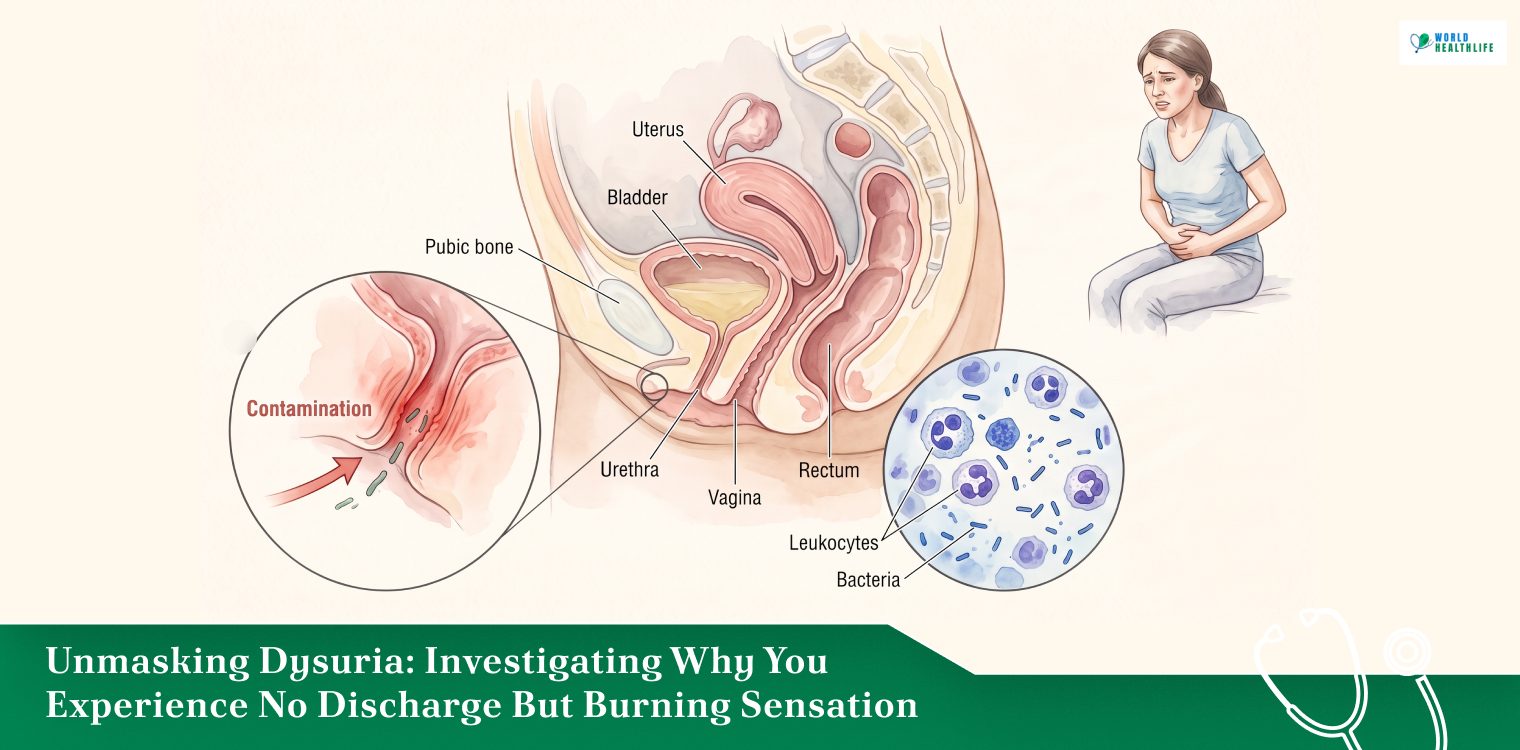
When an individual experiences a sharp and stinging sensation during urination, the immediate clinical suspicion frequently defaults to one thing. That is a standard sexually transmitted infection (STI).
Public health campaigns heavily link localized pain with visible fluid changes. Therefore, the absence of fluid leads many to assume they are safe from infection.
However, presenting with no discharge but burning sensation is a highly common clinical reality.
This specific combination indicates that while the mucosal lining of the reproductive tract may not be shedding heavy inflammatory fluids, there is something else.
Instead, the sensitive nerve endings of the lower urinary tract or local tissue walls are actively misfiring. This is due to chemical irritation, bacterial colonization, or structural trauma.
Relying on generic symptom checkers or waiting for fluid changes can allow a minor localized issue to spread upward into the deep pelvic organs.
Reclaiming your physical comfort requires a raw, precise look at the distinct non-secretory categories of pelvic distress.
Therefore, in this guide, you will find exactly that.
You’ll also learn the specific anatomical differences between biological sexes and the diagnostic steps needed to target the true underlying culprit.
Anatomical Quadrants: Mapping The Friction Points
To narrow down the source of a dry, burning sensation, clinicians divide the lower pelvic anatomy into distinct physical zones.
The urethra sits in close proximity to the bladder, reproductive organs, and local muscle sheets, where the burning chooses to anchor itself.
As a result, this immediately alters the diagnostic roadmap.
| Anatomical Distress Zone | Associated Conditions | Primary Physiological Trigger | Common Clinical Signs |
| Central Bladder Zone | Interstitial Cystitis or Early Ascending UTIs | Thinning or breakdown of the protective glycosaminoglycan lining of the bladder wall. | Dull, throbbing central pelvic pain and intense urinary urgency or frequency |
| Internal Sphincter Zone | Chronic Non-Bacterial Urethritis or Hypertonic Pelvic Floor Dysfunction | Persistent muscular spasticity or inflammation surrounding the upper urinary channel. | Knife-like stinging during the urine stream and difficulty initiating urination |
| Localized Surface Tissue | Chemical Dermatitis or Contact Vulvitis / Balanitis | Direct topical irritation or hypersensitivity of the external mucosal membranes. | Superficial burning triggered by urine contact alongside external redness and structural dryness |
Central Bladder Pressure And Microscopic Friction
When the stinging sensation is accompanied by a heavy and dull ache directly in the middle of the lower pelvis, the primary suspect is the internal bladder wall. Moreover, this area is right above the pubic bone.
Conditions such as Interstitial Cystitis (IC) cause the protective glycosaminoglycan layer of the bladder to wear thin. This is often called painful bladder syndrome.
When this happens, highly acidic urine makes direct contact with the raw, unprotected tissue underneath.
This triggers a constant, burning sensation and an urgent need to urinate, completely independent of any bacterial infection or visible fluid changes.
Internal Sphincter And Urethral Spasticity
If the burning is felt deep inside the urinary channel during or immediately after the urine stream passes, the cause is often a localized muscle spasm or chronic urethritis.
The pelvic floor is made up of a complex sheet of muscles that support the bladder and bowels.
If these muscles become chronically tight and fail to relax completely, they mechanically squeeze the urethra. This is a condition known as hypertonic pelvic floor dysfunction.
Concurrently, this continuous compression creates a raw and bruised sensation that burns intensely whenever urine forces its way through the tight channel.
Gender-Specific Vulnerabilities: The Female Urinary Tract
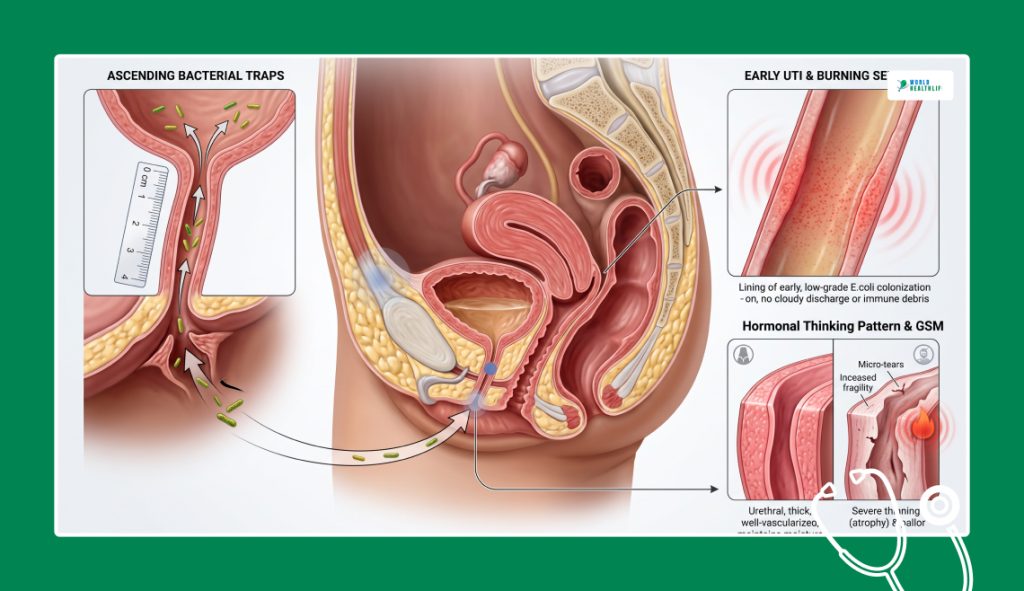
The unique anatomical designs cause the female pelvis to face a distinct set of mechanical and hormonal challenges.
As a result, it can trigger persistent burning without any accompanying fluid changes.
Ascending Bacterial Traps
The primary anatomical factor for women is the physical length of the female urethra, which measures only about 4 centimetres.
This short distance allows surface bacteria from the perineal region to travel upward into the urinary tract with ease.
During the early stages of a urinary tract infection (UTI), the bacteria irritate the urethral walls without triggering enough immune debris to cause a visible discharge. This is the same as during a low-grade E.coli colonization.
As a result, this leaves the patient with a sharp, knife-like burning sensation during urination as the sole early warning sign.
The Hormonal Thinking Pattern
In perimenopausal, postmenopausal, or postpartum women, a sharp drop in estrogen levels can completely alter the local tissue architecture.
Estrogen is directly responsible for maintaining the thickness, moisture, and acidity of the vulvovaginal and urethral tissues.
When estrogen levels decline, these tissues sustain a structural thinning known as genitourinary syndrome of menopause (GSM).
The ultra-thin mucosal layer becomes exceptionally fragile. Consequently, this makes it highly vulnerable to severe burning sensations from simple walking, clothing friction, or concentrated urine, with zero fluid changes present.
Gender-Specific Vulnerabilities: The Male Urinary Tract
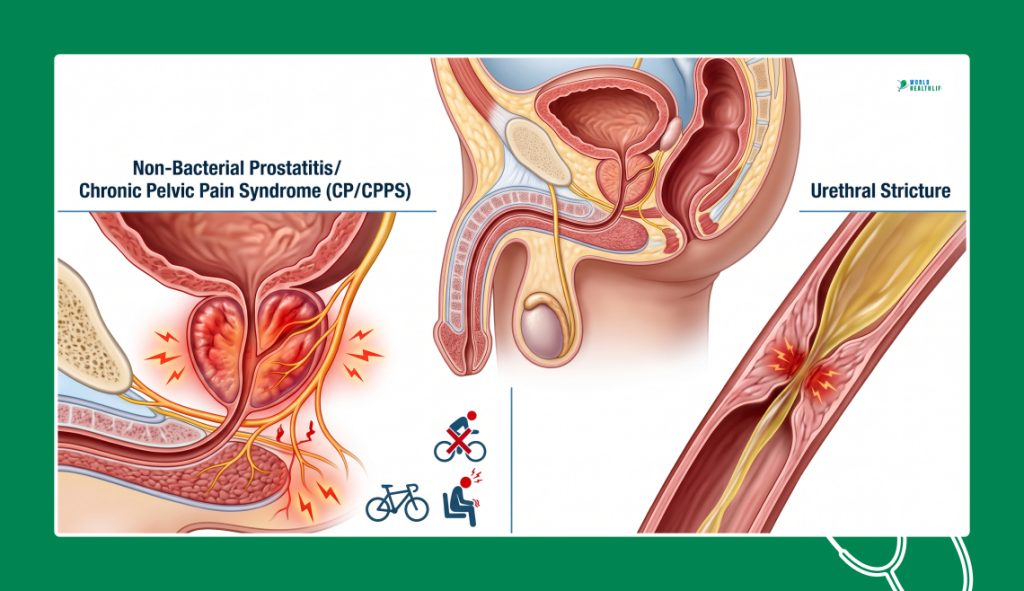
In biological males, experiencing a burning sensation without fluid changes requires shifting the diagnostic focus away from superficial surface issues. Instead, you need to look deeper at the hidden internal glands.
Non-Bacterial Prostatitis Realities
The single most common driver of dry and burning sensation in men is Chronic Prostatitis/Chronic Pelvic Pain Syndrome (CP/CPPS). The prostate gland wraps directly around the upper section of the male urethra right beneath the bladder.
If the prostate becomes inflamed due to nerve irritation, structural tissue congestion, or historical micro-traumas (such as prolonged cycling), it continuously irritates the surrounding nerve networks.
This chronic inflammation causes a deep, burning sensation in the urethra or perineum. Typically, it intensifies after ejaculation or during urination, without ever producing a single drop of fluid.
Structural Urethral Strictures
Another purely mechanical cause of male burning is a urethral stricture.
This is a physical narrowing of the urinary channel caused by scar tissue from an old sports injury, a past medical procedure, or long-term catheter use.
As urine hits this narrow structural bottleneck, the increased fluid pressure creates high friction against the delicate internal walls.
This mechanical stress causes a localized stinging burn and a significantly weakened urine stream.
Non-Secretory Pelvic Pain Differential Matrix
To help your medical team isolate the root cause of your discomfort, your specific symptoms should be tracked on the basis of their mechanical behavior and timing.
Evaluating Causes of Dry Urinary Burning
| Suspected Condition | Specific Pain Pattern | Key Clinical Indicator | Common Non-Infectious Trigger |
| Interstitial Cystitis | Deep, throbbing central pelvic pain that improves temporarily after the bladder empties. | Accompanied by extreme frequency (urinating up to 20 times a day) with clean cultures. | Spicy foods, citrus fruits, caffeine, or high-potassium beverages. |
| Hypertonic Pelvic Floor | A dull, aching burn in the perineum that worsens after long periods of sitting or stress. | Physical difficulty initiating the urine stream; a feeling of incomplete emptying. | High-anxiety periods, structural hip injuries, or chronic breath-holding. |
| Chemical Dermatitis | Superficial, external stinging that flares up the second urine touches the outer skin. | Visible redness, dry peeling, or intense itching on the external local tissue. | Scented body washes, laundry detergents, synthetic fabrics, or latex condoms. |
Advanced Medical Diagnostics: Moving Past Guesswork
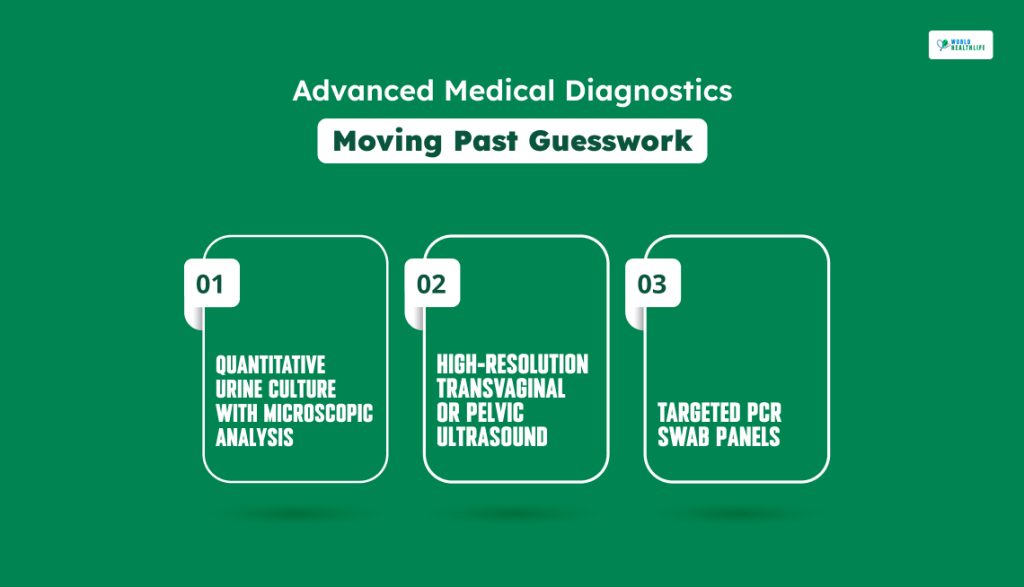
The achievement of a lasting solution requires deploying precise clinical testing to evaluate the exact architecture of your urinary and pelvic tracts.
- Quantitative Urine Culture with Microscopic Analysis: This baseline test moves past standard dipsticks to search for low-grade bacterial strains or hidden white blood cells, ruling out atypical urinary tract infections.
- High-Resolution Transvaginal or Pelvic Ultrasound: This tool views the deep pelvic space, allowing specialists to rule out hidden structural lesions, uterine anomalies, or prostate enlargement pressing against the bladder neck.
- Targeted PCR Swab Panels: Even with no visible discharge, running high-sensitivity Polymerase Chain Reaction (PCR) tests ensures that dry-variant infections like Mycoplasma genitalium or Ureaplasma are completely identified.
Rebuilding Urinary And Pelvic Tissue Health
True recovery is never about ignoring a persistent burning sensation or trying to mask the discomfort with endless cycles of over-the-counter flush kits.
Your urinary tract is a highly sensitive, interconnected biological system.
When an internal tissue layer or an inflamed gland flags a warning sign, ignoring that signal can allow minor localized irritation to freeze into chronic pelvic pain.
You can successfully fix these broken lines of physical communication. First, focus on tracking the exact timing and physical triggers of your flare-ups.
From there, consult a specialized clinical team to run targeted diagnostics and balance your systemic pelvic health.
Taking a focused approach allows you to step out of the burning loop and permanently protect your long-term physical well-being.
Disclaimer: The information provided in this article is for general informational purposes only. It does not, and is not intended to, constitute medical or health advice. Please consult a qualified healthcare professional for medical guidance or expert health assistance.