
The female pelvic region houses a complex and overlapping network of reproductive, urinary, and gastrointestinal organs.
These distinct anatomical systems sit in quite a close physical proximity. Thus, any disruption in one organ can easily trigger a wave of radiating pain across the entire lower torso.
When you look up what causes lower abdominal pain in females, the sheer volume of potential medical explanations can feel completely overwhelming.
The underlying trigger is rarely a minor, isolated issue.
Instead, lower pelvic discomfort is usually a dynamic signal telling you that a specific internal system is struggling.
That can be under acute inflammation, mechanical stretching, or structural pressure.
In order to find lasting relief, you have to move past generic symptom checkers.
Reclaiming your physical comfort requires a raw and realistic look at the distinct biological categories of pelvic distress.
Additionally, it needs a deep-dive into the specific pain maps that isolate different quadrants and the crucial diagnostic steps needed to protect your long-term health.
The Quadrant Map: Locating The Source Of Distress
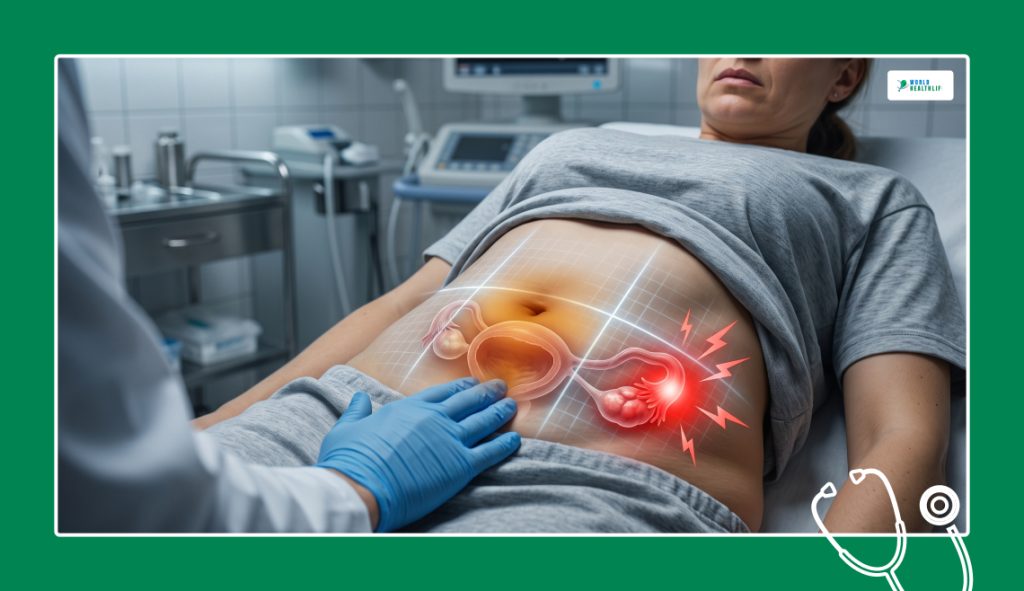
Doctors rarely evaluate pelvic pain as a single and vague sensation.
In order to narrow down the clinical possibilities, a medical professional will mentally divide your lower abdomen into distinct geographic quadrants.
Where the pain chooses to anchor itself completely determines the immediate diagnostic roadmap.
Central Pelvic And Bladder Friction
When discomfort settles directly in the middle of the lower pelvis, right above the pubic bone, the primary suspects are the urinary system or the uterus.
Acute conditions such as cystitis, a painful bladder infection, or brewing uterine fibroid can cause a heavy and dull ache in this central zone.
The pain frequently spikes during urination or physical intercourse. Usually, this signals local tissue inflammation.
Right-Side Lower Quadrant Red Flags
Sudden and sharp pain localized strictly to the lower right side requires immediate clinical vigilance.
This specific quadrant houses the appendix and the right ovary.
A sudden structural twist of the ovarian tissue, or ovarian torsion, or acute appendicitis can trigger a rapid, life-threatening emergency in this zone.
As a result, this requires swift surgical intervention before tissue death occurs.
The Left-Side Anomaly: Tracking Targeted Deep Tissue Irritation
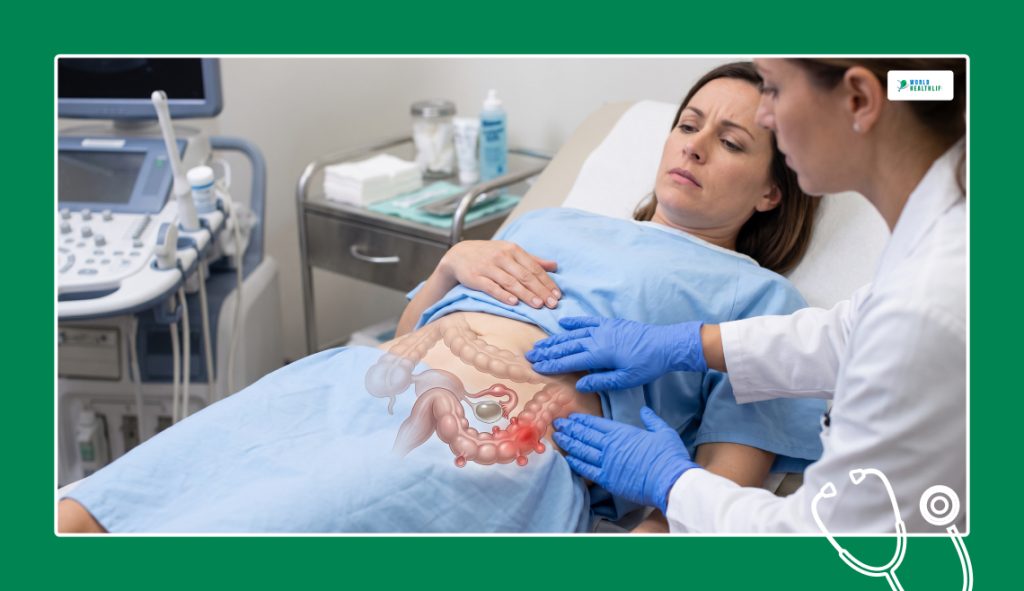
When you evaluate localized discomfort, clinicians pay special attention to the lower left side of the torso.
Thus, to understand what causes lower left abdominal pain in females, you need to look directly at certain aspects.
This includes the structural mechanics of the lower descending colon and the left reproductive tract.
Diverticulitis And Bowel Inflammation
The lower left quadrant is home to the sigmoid colon, the final stretch of the large intestine before it reaches the rectum.
As bodies age, high internal pressure from chronic constipation can force small and weak pouches known as diverticula to bulge outward through the colon walls.
In case trapped food particles or bacteria inflate these pockets, it triggers acute diverticulitis.
In this condition, a sharp and persistent ache starts to manifest in the lower left side.
Additionally, it is often accompanied by a sudden fever, nausea and changes in bowel habits.
Ovarian Cysts And Ectopic Emergencies
From a reproductive standpoint, the left adnexa houses the left ovary and fallopian tube.
If a fluid-filled follicular cyst grows abnormally large or ruptures, it spills inflammatory fluid directly into the pelvic cavity, causing sharp left-sided distress.
More critically, a non-viable pregnancy that implants inside the left fallopian tube will rapidly stretch the delicate tube walls. The condition is known as an ectopic pregnancy.
This structural expansion triggers agonizing lower left pain and represents a catastrophic medical emergency that requires immediate emergency room care.
The Radiating Axis: Connecting Frontal Pelvic Strain To The Spine
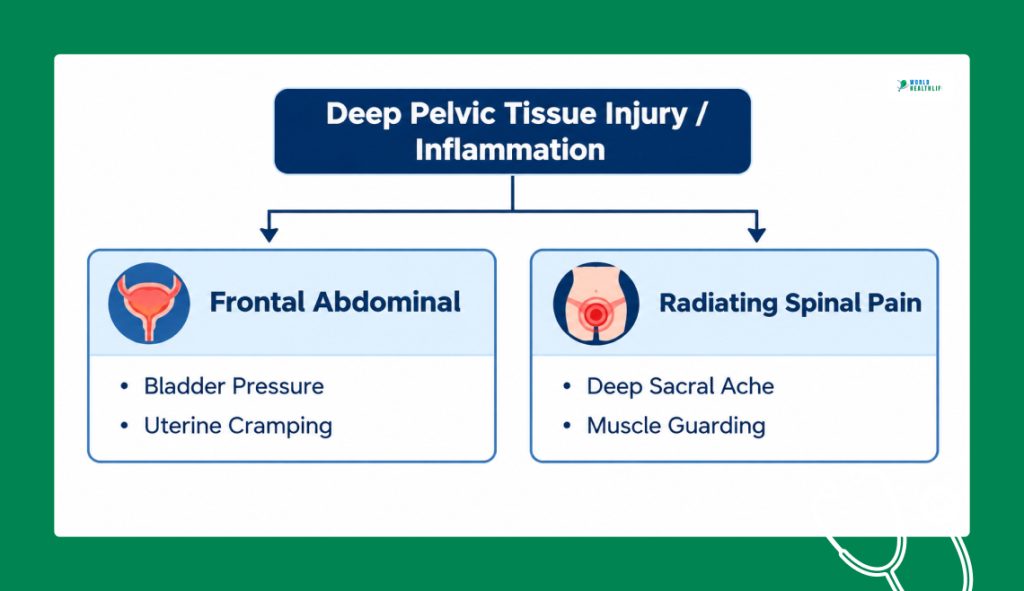
Pelvic distress rarely stays completely confined to the front of the body. Looking deeply into what causes lower abdominal pain and lower back pain in females reveals a shared neurological network.
Here, a single internal injury sends warning signals that radiate outward across the entire lower torso.
The Destructive Reach Of Endometriosis
Endometriosis is a chronic inflammatory condition where tissue resembling the lining of the uterus mistakenly grows outside the womb. Then it goes on to attach itself to the ovaries, fallopian tubes, and outer pelvic walls.
Every month, this displaced tissue swells and bleeds in sync with your menstrual cycle.
Since the trapped blood has no way to exit the body, it creates dense scars, deep adhesions, and continuous internal inflammation.
This structural dragging pulls hard on local nerve networks, triggering a constant, deep sacral ache.
As a result, it causes agonizing lower abdominal and lower back pain simultaneously.
Pelvic Inflammatory Disease (PID) Pathways
Another major driver of this dual-zone pain is Pelvic Inflammatory Disease. This condition is a severe, ascending bacterial infection that travels from the cervix upward into the uterus, fallopian tubes, and ovaries.
The resulting widespread inflammation creates pocketed abscesses and thick pelvic scars. As the immune system fights the infection, the localized swelling creates intense pressure that radiates straight through to the lower spine.
Consequently, this leads to a persistent and low-grade fever and a deep and heavy backache that worsens with simple movement.
Female Lower Abdominal Pain Differential Matrix
In order to help your medical team isolate the root cause of your discomfort, your symptoms must be evaluated across different anatomical systems on the basis of their specific pain characteristics.
Systemic Causes Of Lower Pelvic Pain
| Affected Internal System | Common Clinical Condition | Specific Pain Characteristics | Primary Diagnostic Test |
| Gastrointestinal Tract | Irritable Bowel Syndrome (IBS) or Acute Diverticulitis. | Cramping, sharp left-side pain that temporarily improves after a bowel movement. | Stool panels or a high-resolution Abdominal CT Scan. |
| Urinary Infrastructure | Nephrolithiasis (Kidney Stones) or Complex UTIs. | Intense, burning pain accompanied by an urgent, frequent need to urinate. | Urinalysis, culture and non-contrast CT Urography. |
| Reproductive System | Endometriosis, PMOS, or Ovarian Cysts. | Deep, throbbing pelvic ache that spikes violently during your menstrual window. | Transvaginal Pelvic Ultrasound or Diagnostic Laparoscopy. |
Advanced Medical Diagnostics: Moving Past Guesswork
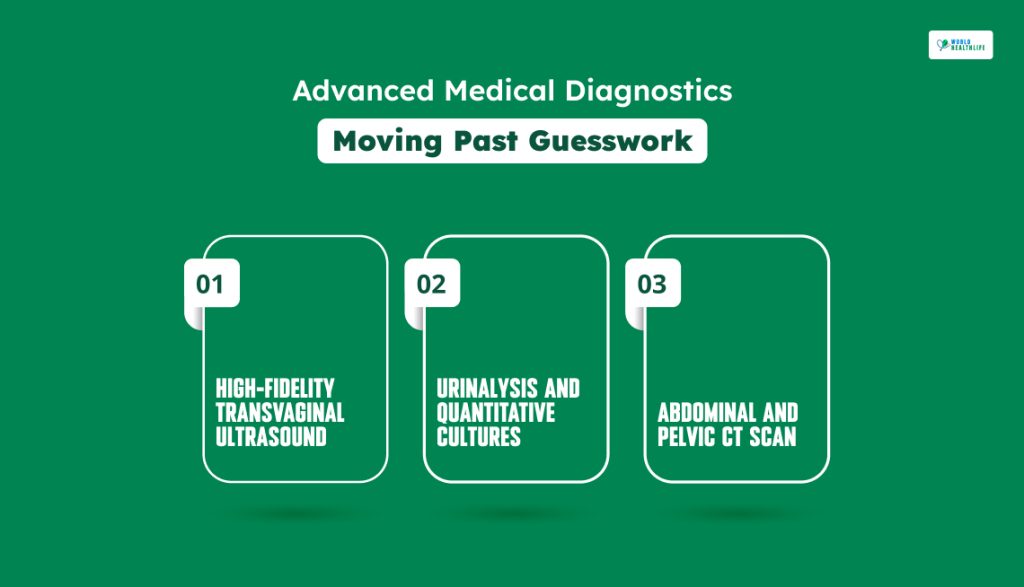
Achieving a true and permanent solution needs you to move past superficial assumptions. Moreover, you need to deploy precise clinical testing.
Your medical team will utilize a specific sequence of diagnostic steps to pinpoint the exact source of your pelvic distress.
- High-Fidelity Transvaginal Ultrasound: This imaging tool serves as the primary gateway to view the reproductive tract.
It allows gynecologists to spot hidden ovarian cysts, track uterine wall thickening, and measure fibroid sizes in real time.
- Urinalysis and Quantitative Cultures: A quick fluid screen rules out underlying bladder or kidney infections.
This test verifies whether an ascending urinary tract infection is the primary source of your central pelvic pressure.
- Abdominal and Pelvic CT Scan: If your physician suspects a gastrointestinal crisis like diverticulitis or appendicitis, a contrast CT scan provides a highly detailed look at the soft tissue walls of your intestines.
Step Out Of The Pain Loop
True pelvic health is never about masking severe discomfort with endless doses of over-the-counter pain relievers.
Your lower abdomen is a highly sensitive, interconnected biological center.
When an internal organ flags a warning sign, ignoring that signal can allow minor localized inflammation to freeze into permanent and painful tissue scars.
You can successfully fix these broken lines of communication.
First of all, you need to focus on tracking the exact location and timing of your flare-ups. From there, consult a specialized physician to run targeted diagnostics and build an accurate anatomical map.
It takes focused clinical patience. However, it allows you to step out of the pain loop and permanently protect your long-term physical well-being.
Disclaimer: The information provided in this article is for general informational purposes only. It does not, and is not intended to, constitute medical or health advice. Please consult a qualified healthcare professional for medical guidance or expert health assistance.
References
- Wood, E. (2026). Ectopic Pregnancy. Medscape.
- Thomas, A. (2026). Nursing school knowledge: abdominal quadrants and organs. SimpleNursing.
- World Health Organization: WHO & World Health Organization: WHO. (2025, October 15). Endometriosis. World Health Organization Newsroom.


