
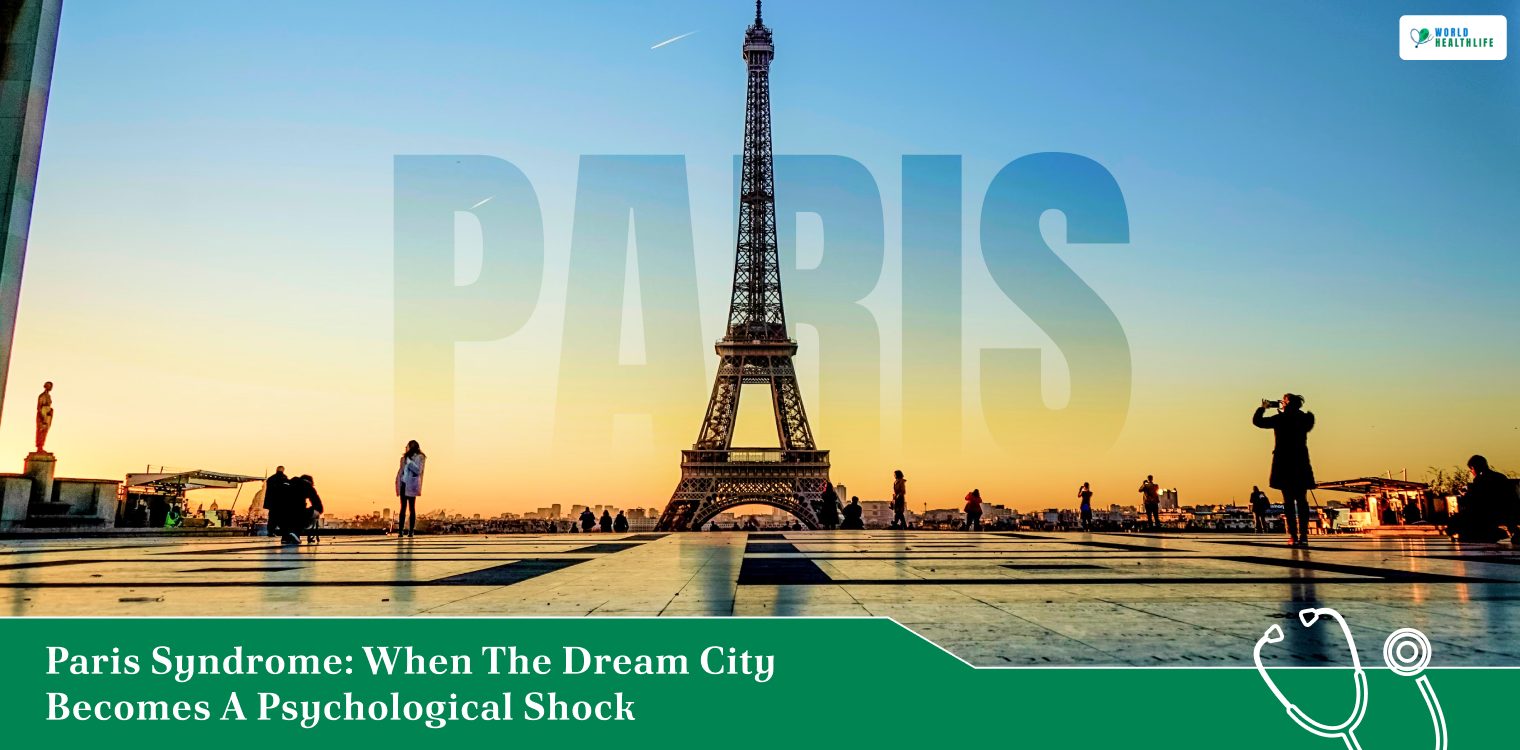
Everyone needs a vacation. But can your vacation affect you mentally?
Imagine stepping off a long flight and having your heart fluttering with decades of anticipation. Moreover, you have spent years consuming various types of media. That includes cinema, literature, and advertisements painting Paris as an immaculate and timeless wonderland.
There are expectations of accordion music drifting through quiet cobblestone alleys, effortlessly chic locals offering warm smiles, and the scent of fresh croissants hanging in a pollution-free air. In addition, you can see yourself as a protagonist of an Amelie-style romance, walking along the Seine under a perpetual golden-hour glow.
Instead, you emerge from the underground metro station into a harsh and jarring reality. Moreover, the air smells heavily of exhaust fumes and cigarette smoke.
Besides that, the cobblestones are slick with litter while you must aggressively dodge scammers offering cheap trinkets.
When you try to order a coffee using your nervously practiced French, the busy barista snaps an impatient response while brushing aside for the next customer.
You also find out that the crowds at the Louvre are suffocating, the noise is deafening, and the romantic illusion shatters instantly.
For most people, this can be a disappointing reality check, causing just a mere bitter complaint over dinner. However, for certain individuals, this sudden confrontation with an unromantic reality triggers a profound, terrifying psychological breakdown.
This extreme manifestation of severe travel disillusionment is called Paris syndrome. Although it is not classified as an official psychiatric illness in standard medical manuals, it is a thoroughly documented clinical phenomenon.
Below, you can understand the fragile relationship between human imagination, cultural exception, and mental health.
What Is Paris Syndrome

In order to truly comprehend this condition, one needs to look beyond standard travel fatigue and examine how deep psychological dissonance can destabilize the human mind.
Paris syndrome is far more acute, rapid, and severe than the typical slow-burning culture shock that expats or long-term travelers experience over months.
The Historical Origin Of The Phenomenon
In 1986, Dr. Hiroaki Ota, a Japanese psychiatrist working at the Sainte-Anne Hospital Center in France, coined the term.
Furthermore, Dr. Ota noticed a strange and recurring pattern among several of his compatriots who had recently arrived in the French capital. These patients were presenting with severe psychiatric symptoms that seemed entirely triggered by their arrival in the city.
The phenomenon started to gain wider academic and media attention, followed by a comprehensive 2004 study published in the French psychiatric journal Nervure by Dr. Ota and his colleagues.
The study analyzed decades of clinical data. Moreover, it revealed that dozens of tourists required psychiatric hospitalization or emergency repatriation every year due to this specific form of breakdown. It also became clear that Paris syndrome was not just a mere internet myth.
Instead, it is a tangible psychological crisis, which was born at the intersection of idealized tourism and stark urban reality.
Acute Breakdown Vs Standard Culture Shock
While regular culture shock is a gradual process of adapting to a new environment, Paris syndrome strikes with the speed and force of an emotional freight train.
It represents a total collapse of psychological defense mechanisms when an individual’s deeply cherished worldview is violently contracted by reality.
Standard culture shock generally involves feelings of homesickness, mild frustrations with local customs, and temporary exhaustion. In contrast, Paris syndrome manifests as an acute medical and psychological emergency.
The sufferer does not just feel down. Rather, they feel deeply disoriented, unsafe, and psychologically unmoored in a world that looks nothing like the sanctuary they had envisioned.
The Symptoms Of Paris Syndrome
The manifestations of Paris syndrome are diverse.
Additionally, it spans a complex spectrum of psychological distress and physical, psychosomatic reactions. It fundamentally alters the way an individual perceives their immediate surroundings and their own body.
Psychological Manifestations Of Distress
The psychological toll of this condition is profound and is deeply distressing for the individual who experiences it. In addition, it usually mimics severe psychiatric episodes.
Acute Anxiety and Panic
Sufferers are frequently overcome by sudden, unprovable waves of terror. As a result, this makes it impossible to navigate public spaces.
Derealization
The environment begins to feel entirely fake, artificial, or dreamlike. It is as if the traveler is watching a movie instead of experiencing real life.
Depersonalization
An individual may feel detached from their own body, identity, or thoughts. They may further experience a terrifying sense of watching themselves from the outside.
Persecutory Ideas
Sufferers usually develop intense feelings of hostility toward the environment. They may also have a belief that locals, waiters, or strangers are actively plotting against them or mocking them.
Physical And Psychosomatic Symptoms
The intense mental distress quickly bleeds into the physical body, while generating a cascade of automatic nervous system responses that mimic physical illness.
| Symptoms | Description |
|---|---|
| Tachycardia | An alarmingly elevated heart rate that frequently triggers secondary fears of having a heart attack. |
| Dizziness and Vertigo | A persistent spatial disorientation that makes walking through crowded tourist hubs incredibly difficult. |
| Profuse Sweating and Chills | Sudden and uncontrollable fluctuations in body temperature independent of the actual weather. |
| Nausea and Vomiting | Gastrointestinal distress directly brought on by high-stress hormone production and emotional turbulence. |
Severe Neurological And Psychotic Cases
In the most extreme and rarest cases, Paris syndrome can escalate into a full, brief psychotic episode requiring immediate medical intervention.
Sufferers may experience vivid auditory or visual hallucinations while hearing voices that are not there or seeing distortions in the surroundings around them.
They may develop complex and unshakeable delusions. Furthermore, they may have beliefs of being monitored by foreign intelligence agencies or that their hotel room is bugged.
When a case reaches this level of severity, the individual is completely rendered incapable of taking care of themselves. This makes immediate clinical containment and psychiatric stabilization necessary.
Why It Happens: The Core Theories

Psychologists, sociologists, and travel experts have spent decades trying to untangle the exact mechanisms behind Paris syndrome.
The consensus points to a perfect storm of media idealization, communication barriers, physiological exhaustion, and underlying psychological vulnerabilities.
The Media Fantasy Vs. The Gritty Reality
Paris is such a city on Earth that has been heavily commercialized, romanticized, and mythologized.
Be it classic cinema such as Café de Flore or modern streaming hits such as Emily in Paris, global media constructs an untouchable fantasy of the city.
When a traveler encounters the normal everyday friction of a massive metropolis, such as dirty subway stations, visible poverty, labor strikes, and heavy traffic, the psychological fall is immense.
Additionally, the brain starts to struggle in reconciling the immaculate postcard fantasy with the gritty reality. This causes severe cognitive dissonance that compromises emotional stability.
The Exhaustion Of The Language Barrier
Navigating a foreign country where you do not speak the language can be inherently stressful. However, French linguistic culture adds a unique layer of pressure for unprepared tourists.
French social etiquette has a heavy reliance on specific subtle micro-interactions. This includes greeting a shopkeeper with a distinct “Bonjour” before speaking.
When tourists unknowingly breach these unwritten rules, they are often met with blunt corrections or overt indifference. Furthermore, combined with the severe sleep deprivation of long-haul travel, this constant social friction rapidly drains a traveler’s cognitive reserves.
As a result, they are left completely vulnerable to panic.
Extreme Cultural Distance
While Paris syndrome can affect anyone, it is historically and most famously documented among travelers from East Asia, particularly Japan.
The cultural distance between Tokyo and Paris is vast. Furthermore, it is particularly regarding public behavior as well as customer service.
Pre-Existing Mental Health Vulnerabilities
It is important to note that travel stresses rarely create a psychotic break entirely out of thin air.
Moreover, many clinicians argue that Paris Syndrome often acts as an environmental catalyst for individuals who already possess underlying and pre-existing mental health vulnerabilities.
The stress of traveling solo while being far from a familiar support network can lead to experiencing sensory overload.
As a result, it can cause latent anxiety disorders, depression, or borderline personality traits to erupt into an acute crisis.
Who Is At Risk
Understanding who is most vulnerable to Paris syndrome requires looking at demographic data, travel habits, and the specific ways people plan their journeys.
The Japanese Tourist Demographics
Historically, the archetypal demographic for Paris Syndrome consists of young Japanese women in their late 20s or 30s.
Additionally, this group has frequently been targeted by luxury fashion advertising and romanticized lifestyle media centered around French aesthetics.
However, modern clinicians offer vital critiques of this narrow framing. Limiting the syndrome to one nationality ignores the fact that other types of tourists also suffer from this.
The list is inclusive of Western tourists, independent backpackers, and luxury travelers from all over the world who frequently experience the exact same symptoms.
The apparent overrepresentation of Japanese citizens was largely due to the proactive and unique medical infrastructure established by their embassy instead of just an exclusive genetic or cultural flaw.
High-Risk Travel Factors
Outside of specific nationalities, certain travel profiles are significantly more susceptible to developing travel-induced psychological distress.
| Factors | Description |
|---|---|
| First-Time International Travelers | Individuals who have never crossed major borders lack the experiential coping mechanisms that are needed to handle these intense cultural differences. |
| Solo Adventurers | Traveling entirely alone eliminates the immediate reality check and emotional comfort provided by a trusted companion. |
| Hyper-Scheduled Itineraries | Tourists who pack every single hour with sights leave no time for their nervous system to rest and reset. |
| Severe Jet Lag | Crossing multiple time zones fundamentally disrupts circadian rhythms. That is while impairing emotional regulation and logical reasoning. |
Is It A Recognized Medical Condition

When analyzing Paris syndrome from a clinical perspective, it is important to be fully transparent about its formal medical status.
It is not a recognized standalone disorder that has been recorded in the American Psychiatric Association’s DSM-5. Moreover, it has not been listed in the World Health Organization’s ICD-11.
Instead, global clinicians view it as a fascinating case study in psychosomatic medicine, acute situational anxiety and culture-bound syndromes.
Furthermore, it belongs to a unique family of localized travel-induced psychological conditions. These manifest when human psychology collides with historically and culturally heavy locations.
Other Related Travel Conditions
Other than Paris syndrome, there are certain travel conditions that should be taken into consideration.
| Travel Syndrome | Primary Location | Core Psychological Trigger | Common Manifestations |
|---|---|---|---|
| Paris Syndrome | Paris, France | Extreme disappointment and clash between romantic fantasy and urban reality | Acute anxiety, derealization, physical sickness, and rare psychosis |
| Stendhal Syndrome | Florence, Italy | Emotional overload caused by sudden exposure to immense concentrated artistic beauty | Dizziness, rapid heart rate, fainting, profound disorientation |
| Jerusalem Syndrome | Jerusalem, Israel | Intense religious devotion triggering a psychotic state or identity crisis | Delusions of being a biblical figure, obsessive clean clothing rituals |
Treatment And Recovery Protocols
If a traveler falls victim to Paris syndrome, the treatment path is straightforward and highly effective. It further prioritizes immediate physical safety, grounding the individual and rapidly restores emotional equilibrium.
To mitigate an acute crisis, sufferers must be removed from crowded tourist environments and brought into quiet and low-sensory spaces.
Besides that, aggressive physical hydration and immediate bed rest are non-negotiable. This is because severe exhaustion heavily amplifies psychological panic.
For severe cases that involve acute psychosis or persistent hallucinations, local medical professionals or embassy staff must step in. Moreover, the definitive cure for Paris syndrome is almost always the permanent removal of the environmental stressor.
In addition, boarding a flight back to the traveler’s home country immediately drops stress levels.
Once back in a familiar linguistic and cultural environment that is surrounded by a reliable support network, the vast majority of sufferers experience a rapid resolution of symptoms.
Stripping The Postcard: Embracing The Authentic Journey
At its core, Paris syndrome serves as a profound and fascinating reminder of the powerful connection between our mental health and our expectations.
Travel is one of the most enriching experiences life has to offer. However, it requires us to meet the world exactly as it is instead of how we demand it to be.
Cities are living, breathing, and imperfect. They are built for people who inhabit them. Furthermore, they are not immaculate theme parks that are engineered for our aesthetic pleasure.
By practicing mindfulness, pacing our bodies, and embracing the beautiful messy realities of global destinations, we can protect our psychological well-being.
Ultimately, letting go of the perfect dream will allow us to discover something far better. That is an authentic and unforgettable adventure.
References
- What is Paris syndrome and how to know if you are suffering from it. Times of India Lifesytle Desk. 2025. https://timesofindia.indiatimes.com/life-style/travel/destinations/what-is-paris-syndrome-and-how-to-know-if-you-are-suffering-from-it/articleshow/124989065.cms
- The cities that need a warning label? BBC. 2019. https://www.bbc.com/future/article/20190408-paris-syndrome-when-travel-sparks-a-psychotic-state
- Understanding Paris Syndrome: Does it actually exist? Psychologs. 2023. https://www.psychologs.com/understanding-paris-syndrome-does-it-actually-exist/?srsltid=AfmBOoqoK6eqgrPJk6z5u7JJ3yusQuRaV3y6hn3acA0bHtn7fQ3cutDk
- Paris Syndrome: When Shock And Disappointment Take Over. Ledsom. 2024. https://www.forbes.com/sites/alexledsom/2024/07/08/what-is-the-paris-syndrome/


