
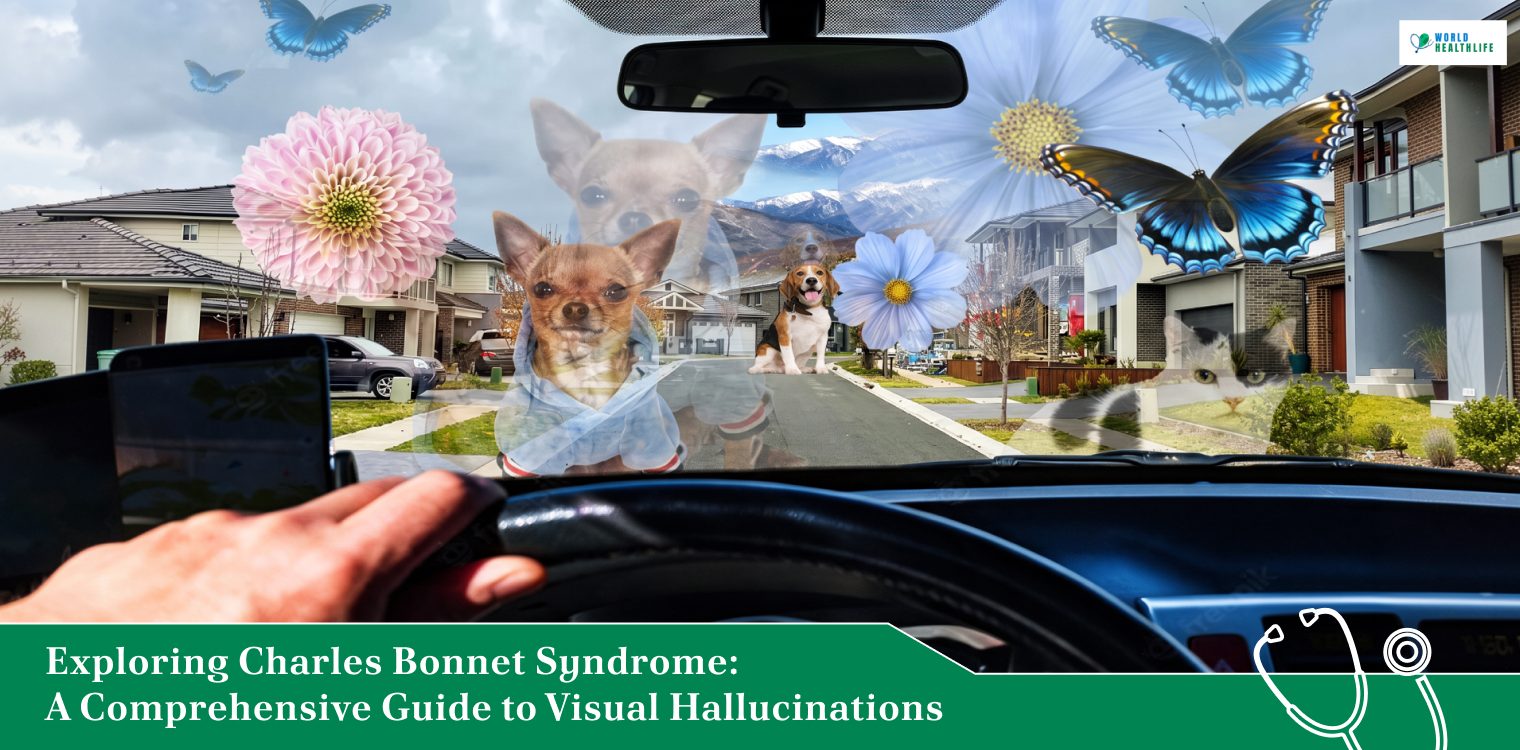
Visual hallucinations can be a deeply unsettling experience. Moreover, it often triggers immediate fears about mental health, cognitive decline, or neurological diseases such as dementia.
However, when these vivid visions start to occur in individuals who have experienced a drop in their eyesight, they are frequently caused by a specific condition. This under-recognized physiological phenomenon is called Charles Bonnet syndrome (CBS).
Named after the Swiss naturalist who first described the condition in 1760, CBS is an eye-related neurological response to vision loss. Despite affecting hundreds of thousands of people worldwide, it remains widely misunderstood.
This leads many individuals to suffer in silence out of fear of being stigmatized.
The following comprehensive article explores the intricate details of Charles Bonnet syndrome. It will further detail its underlying mechanisms, typical symptoms, clinical diagnosis and practical strategies for daily management.
An Overview Of Charles Bonnet Syndrome
To have a full and comprehensive understanding of Charles Bonnet syndrome, it is important to separate it from psychological or psychiatric conditions first.
Charles Bonnet Syndrome: A Physical Reaction
One of the most essential facts about the syndrome is that it is a fundamental physical reaction to sensory deprivation.
It is not a mental health disorder and occurs almost exclusively in individuals losing a significant portion of their vision due to conditions such as macular degeneration, glaucoma, or cataracts.
The most vital characteristic of CBS is that the individuals experiencing the hallucinations retain their “insight.” Despite how vivid or strange the visions may appear, the person is fully aware that what they are seeing is not actually real.
Furthermore, they understand that their environment has not suddenly changed. This marks a clear distinction between this syndrome and the delusions associated with psychoses.
Understand The Condition
The simplest way to conceptualize CBS is by viewing it as the visual equivalent of “phantom limb syndrome.”
When an individual loses a limb, the sensory map of the brain continues to fire. This makes ther person feel as though the missing arm or leg is still there. Sometimes they experience phantom pain or itching.
Similarly, when the pathways between the eyes and the brain get damaged or degraded due to eye disease, the visual cortex gets deprived of its normal continuous stream of data.
Furthermore, the brain does not tolerate this sudden silence well. To compensate for the lack of external input, the brain’s visual processing centers start filling the gaps. This is done by generating their own imagery, pulling from stored memories, shapes, and patterns.
Visual Hallucinations
CBS makes its patients go through visual hallucinations. Here, these are unique. This is because they do not involve any other senses.
A person who experiences a hallucination through this syndrome will never hear the figures speaking, smell any associated odors, or feel a physical touch. The visions are strictly theatrical and operate like a silent movie being projected onto the patient’s field of vision.
These hallucinations can appear completely out of nowhere and can last anywhere from a few fleeting seconds to several continuous hours. Often appearing far sharper than the person’s actual, degraded everyday eyesight, they can look remarkably crisp, bright, and detailed.
This adds to the surreal nature of the experience.
Types Of Hallucinations
The visions experienced by someone with CBS are strictly visual. This means that they do not involve hearing voices, feeling touch, or experiencing smells.
They generally fall into two categories.
- Simple (Unformed): Gridlines, brickwork patterns, complex geometric lattices, network of lines or sudden flashes of vibrant color floating across the field of view.
- Complex (Formed): Detailed and intricate. These are startingly vivid images of recognizable subjects such as people dressed in elaborate historical costumes, small children, unexpected animals wandering through the room, repeating rows of buildings, or beautiful rolling landscapes superimposed directly onto a room.
Symptoms Of Charles Bonnet Syndrome
Recognizing how Charles Bonnet Syndrome manifests is key to differentiating it from other medical conditions.
While the hallmark of this syndrome is the presence of visual visions, the specific way these imagery episodes occur offers vital clues for clinicians and caregivers who are looking to offer support.
Vivid Visual Hallucinations
The core symptom involves seeing images that are not physically present in the room.
These hallucinations can look remarkably realistic, crisp, and colorful. Furthermore, they usually appear with sharp clarity despite the individual’s actual vision impairment. [Text Wrapping Break]
Preserved Insight And Awareness
Individuals who experience these visions maintain complete awareness that the images are not real.
They recognize that their surrounding physical environment has not actually changed. This allows them to rationally process the hallucination without experiencing delusional thoughts.
Environmental And Inactivity Triggers
The imagery that is produced by the syndrome remains strictly confined to the visual spectrum.
Patients never hear accompanying voices, experience strange smells, or feel phantom textures. This can be distinguished clearly from psychiatric presentations.
Lack Of Sensory Overlap
The visions are highly prone to appearing during specific times of sensory monotony or quiet rest.
Common trigger environments include sitting quietly alone in a dim room, waking up in the middle of the night or resting quietly in bed before sleeping.
Causes: Why Charles Bonnet Syndrome Happens
To understand why Charles Bonnet syndrome happens, we need to examine the delicate relationship between the human eye and the brain’s visual processing networks.
The eyes serve as sensors that collect light. However, it is the brain’s visual cortex that interprets this information to construct the images we perceive.
Sensory Deprivation And Information Gaps
When chronic eye diseases damage the physical components of the eyes, the steady stream of light data traveling to the brain drops significantly.
This creates a severe data deficit that leaves the visual cortex under-stimulated and straining to process information.
Visual Cortical Hyperactivity
Faced with sensory starvation, the nerve cells located within the visual cortex become hyper-excitable.
Deprived of normal external control data, these cells begin firing spontaneously. This generates internal activity without any actual input from the eyes.
Perceptual Release Of Stored Memories
Under normal visual conditions, real-time light data actively suppresses our brain’s internal imagery-generating systems.
When vision loss lifts this suppression, the brain releases stored visual memories, shapes, and patterns into conscious awareness. As a result, hallucinations occur.
Underlying Eye Diseases
The structural trigger for this neurological chain reaction is always an advanced eye condition that compromises sight.
The syndrome is most frequently brought on by age-related macular degeneration (AMD), severe glaucoma, diabetic retinopathy, or advanced cataracts.
Diagnosis And Prognosis
An accurate diagnosis of Charles Bonnet Syndrome is vital for the patient’s emotional well-being.
Since many individuals have a fear of visions pointing towards dementia or psychiatric breakdown, receiving a clear and non-psychiatric medical explanation offers immense psychological relief.
Currently, there is no single diagnostic scan, blood test, or definitive clinical tool that is used to identify the syndrome. Instead, physicians and specialists arrive at a diagnosis through a careful process of elimination and contextual evaluation.
Diagnosis
The diagnosis of CBS relies heavily on a thorough medical history and clinical examination.
A doctor, typically an ophthalmologist, neurologist, or geriatric specialist, will confirm the presence of significant bilateral vision loss or a recent sharp decline in eyesight.
The physician will then conduct a detailed interview on the nature of the hallucinations. Furthermore, they will verify that they are purely visual and that the patient maintains healthy insight into their unreal nature.
To rule out alternative causes, the doctor may order cognitive evaluations. This includes the Mini-Mental State Examination (MMSE) or neuroimaging scans such as an MRI or CT scan of the brain.
These steps ensure the symptoms are not caused by a tumor, a recent stroke, Lewy body dementia, or Parkinson’s disease.
Prognosis
For individuals with CBS, the long-term outlook, or prognosis, is usually encouraging. However, it requires patience.[Text Wrapping Break]
For the vast majority of patients, the syndrome is a temporary, self-limiting condition instead of a permanent state.
As the brain gradually adapts to the reduced level of visual data over time, the frequency and intensity of the hallucinations typically begin to wane.
On average, the episodes become less frequent or disappear entirely within one to two years from their initial onset.
However, if the patient experiences a further drop in their remaining vision due to progressing eye disease, the hallucinations may temporarily resurface or intensify before settling down once again.
Treatment And Management Of Charles Bonnet Syndrome
At present, medical science offers no universal medical cure or specific prescription medication designed solely to eliminate Charles Bonnet syndrome.
Since the condition stems from permanent structural changes within the eye or visual pathways, standard medical interventions focus primarily on symptom management and psychological adaptation.
Moreover, the cornerstone of addressing the syndrome involves educating the patient and their family.
It should also be noted that simply understanding that the visions are a natural, physical reaction to vision loss can drastically lower anxiety. As a result, this often reduces the frequency of the hallucinations.
On the other hand, if you treat it as a sign of losing one’s mind, then that can backfire.
When Should I Consult A Doctor
It is crucial for anyone experiencing new or changing visual hallucinations to consult a healthcare professional promptly.
Although CBS is benign, an accurate medical assessment is mandatory. This ensures doctors do not overlook other serious underlying conditions.
It is advised that patients book an appointment with their ophthalmologist or primary care physician as soon as the visions begin. Furthermore, this ensures that any treatable aspects of their vision loss can be addressed immediately.
This also includes accelerating cataracts, which can be addressed immediately. Moreover, this may resolve the hallucinations entirely.
The Mind’s Eye Reimagined: Finding Peace With Silent Phantoms
Charles Bonnet syndrome is a fascinating yet challenging intersection of ophthalmology and neurology.
It serves as a powerful testament to the brain’s remarkable, proactive nature, illustrating how the mind attempts to reconstruct a visual world. That is even when the eyes can no longer provide the necessary structural pieces.
You are not alone if you or a loved one navigates the unsettling waters of vision loss and experiences unexplained visual phenomena. Also note that you are not losing your mind.
Besides that, open communication with your healthcare team is the most critical step forward.
By shedding light on CBS, demystifying its causes, and practicing targeted management techniques, individuals can successfully minimize the impact of these silent phantoms and maintain an excellent, fulfilling quality of life.





Paris Syndrome: The Shock of Reality vs Dream
September 21, 2026[…] may experience vivid auditory or visual hallucinations while hearing voices that are not there or seeing distortions in the surroundings around […]