Most of us take it for granted that our brains correctly tell us who is who. You look at a family member and know them. On the other hand, you look at a stranger and see an unfamiliar face.
It is a simple and automatic process that keeps us grounded in our daily lives.
Now, just imagine your brain starts to trick you every single time you step out your front door. You walk down a crowded city street. Suddenly, you notice that every single person you pass looks strangely familiar. You look closely at the barista, the ticket collector, and a random jogger.
Despite their different outfits and faces, you can feel an unshakeable conviction that they are all the exact same person in disguise, following you. This terrifying cognitive distortion is a real medical reality that is officially known as the Fregoli syndrome.
This disorder completely warps the way an individual perceives human identity and monitors their physical surroundings.
The following guide offers a comprehensive and deeply researched breakdown of this condition. Moreover, it explores its symptoms, neurological origins and crucial differences from other misidentification delusions.
What Exactly Is Fregoli Syndrome?

To truly grasp this psychiatric phenomenon, look past the superficial symptoms and examine how the brain constructs reality.
This condition fundamentally alters a person’s relationship with the public world, transforming daily encounters into a perceived web of deception and surveillance.
Unmasking The Medical Definition
Fregoli syndrome is classified by medical professionals as delusional misidentification syndrome (DMS).
DMS is a distinct group of psychiatric conditions where a patient cannot properly match a person’s true physical identity with their psychological identity.
The disorder owes its name to the famous Italian actor Leopoldo Fregoli. He was a famous actor in the late 19th century.
Specifically, he was renowned for his lightning-fast costume changes while impersonating dozens of different characters during a single stage show.
Later, psychiatrists P.Courbon and G.Fail first introduced the term in 1927 while treating a 27-year-old woman with the condition. She believed two popular theatre actors were inhabiting nearby strangers and that they did this to disrupt her daily life.
Demographics And High-Risk Patient Profiles: Who Gets The Disease
Fregoli syndrome is exceptionally rare on its own. Moreover, it almost never develops without an underlying health trigger. Primarily, it targets individuals who deal with severe psychiatric conditions.
Also, it affects those with structural damage to the brain.
Anyone can get this neuropsychiatric condition. Both men and women are susceptible to the disorder. However, it shows a slightly higher prevalence in specific groups, including patients experiencing acute psychosis in later life.
Appearing more in people with visible brain scan abnormalities, doctors often spot these issues on a standard MRI scan.
Therefore, the condition rarely appears out of nowhere in healthy individuals, almost always tied to an existing brain issue.
Common Symptoms To Watch Out For
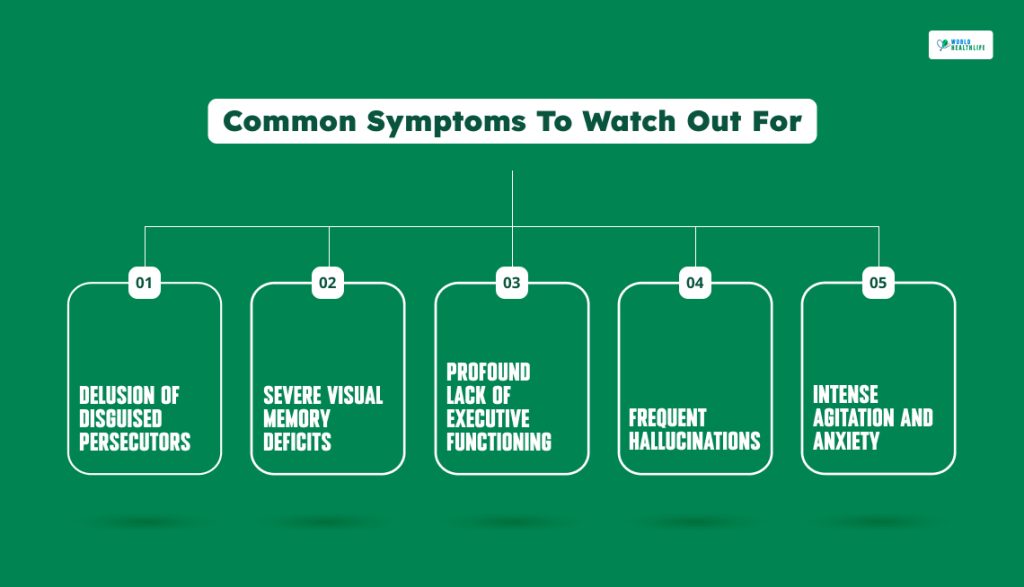
Detecting this condition early requires careful and precise observation. However, the core issue is not a failure of the eyes. Instead, it is a breakdown in the way the brain processes familiarity. Patients do not experience blurred vision or physical blindness.
Instead, their internal recognition system gets stuck, remaining in a constant state of hyper-activation. Consequently, they see familiarity everywhere despite non-existence.
Delusion Of Disguised Persecutors
The patient holds a firm and unshakeable belief that unfamiliar strangers are actually known acquaintances. Specifically, they believe these people are enemies wearing clever disguises.
In addition, no amount of logical proof can convince the patient otherwise.
Severe Visual Memory Deficits
The brain experiences a massive breakdown, failing to store and recall facial structures properly. As a result, this prevents the patient from tracking facial features over time.
Their internal facial database becomes completely corrupted and unreliable.
Profound Lack Of Executive Functioning
The condition completely compromises internal self-monitoring systems while destroying normal and healthy cognitive flexibility.
The symptom makes it entirely impossible to reason with them. Consequently, their logical reality-testing mechanisms have completely shut down.
Frequent Hallucinations
Many patients experience vivid auditory or visual hallucinations. Moreover, these experiences constantly reinforce their false beliefs.
For instance, they might hear phantom footsteps behind them in public or perceive malicious whispers from random strangers.
Intense Agitation And Anxiety
Living in this distorted world triggers massive daily anxiety. As a result, patients frequently suffer from sudden and severe panic attacks. This constant terror often boils over into defensive aggression.
Thus, they act out verbally or physically to protect themselves.
Common Underlying Causes
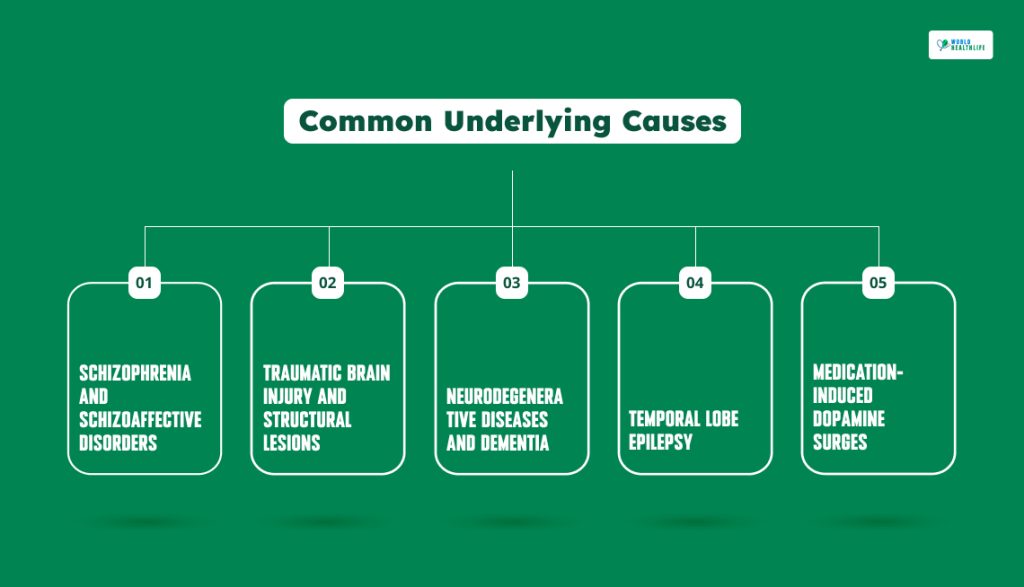
The clinical presentation looks entirely psychiatric to observers. However, the root causes are deeply physical and tied to structural changes inside the brain tissue.
Specifically, neurologists view the condition as a physical disconnect.
Schizophrenia And Schizoaffective Disorders
Research from the National Institutes of Health highlights this link, where a vast majority of cases occur within severe psychopathology.
Chronic schizophrenia introduces severe chemical imbalances to the mind. Consequently, functional disruptions break down how the mind categorizes reality.
Traumatic Brain Injury And Structural Lesions
Physical trauma can trigger this condition directly, usually affecting the right frontal lobe.
Also, it impacts the left temporo-parietal cortex. Thus, this damage disrupts the neural pathways connecting faces to memory.
Neurodegenerative Diseases And Dementia
Advanced neurodegenerative conditions slowly degrade vital brain structures, including Alzheimer’s disease and Lewy body dementia.
As these progressive diseases break down tissue, memory fails. Thus, the internal facial database becomes increasingly corrupted over time.
Temporal Lobe Epilepsy
Severe and unregulated epileptic seizure activity can lead to major issues. Moreover, seizures localized within the temporal lobes trigger spontaneous spikes.
This neural chaos happens inside the visual processing cortex. Consequently, it artificially forces an intense feeling of familiarity onto strangers.
Medication-Induced Dopamine Surges
Long-term reliance on heavy dopaminergic medications poses risks. Doctors use these drugs like Levodopa for Parkinson’s disease.
Excessive flooding of dopamine can induce intense psychosis. Thus, this chemical surge actively fuels complex persecutory delusions.
Why People Confuse It With Capgras Syndrome
It is incredibly common for students and writers to confuse fregoli syndrome with Capgras syndrome. General medical practitioners also mix them up frequently. Both belong to the exact same diagnostic family.
Specifically, they are both delusional misidentification syndromes.
Both conditions cause a profound distortion of identity recognition while manifesting alongside heavy paranoia and suspicion.
Patients display defensive behaviors in both cases, where people to lump them together without realising that they are mirror opposites.
The cognitive errors move in completely opposite directions.
For instance, the Fregoli delusion forces familiarity outward onto the public world. Contrarily, Capgras syndrome strips familiarity away from loved ones inside the home.
They are two entirely different visual processing mistakes.
Know The Difference Between The Two
Both disorders belong to the same diagnostic family. However, they operate as distinct mirror images.
To understand how they diverge, we need to look closely and examine their impact on relationships and brain pathways.
Difference At A Glance
| Dimension | Fregoli Syndrome | Capgras Syndrome |
| Primary Definition | Strangers are seen as a known person | A loved one is seen as an imposter |
| Error Type | Hyper-identification occurs | Hypo-identification occurs |
| Physical Appearance | Outer faces look different | Outer face looks identical |
| The “Target” | Usually a perceived stalker | Usually a close spouse or parent |
| Emotional Connection | High familiarity is felt falsely | Physical match lacks emotional warmth |
| Predominant Emotion | Severe paranoia of being hunted | Defensive anger and deep isolation |
| Anatomical Breakdown | Overactivation in the face area | Broken link to the amygdala center |
| Direction of Misidentification | Familiarity projects outward | Unfamiliarity projects inward |
Primary Definition
In Fregoli syndrome, the patient looks at a stranger, falsely identifying them as a known person.
In stark contrast, Capgras syndrome is different. The patient looks at a loved one while claiming that they are an imposter.
Error Type
The cognitive error in the Fregoli variant is hyper-identification. The brain over-activates its sense of familiarity. As a consequence, this feeling is applied to random people.
On the other hand, in Capgras delusion, it is rather considered an example of hypo-identification. As a result, the brain fails to trigger familiarity.
Physical Appearance
A Fregoli patient notes that the stranger looks different. However, they believe the person changed their look to hide.
By contrast, a Capgras patient notes the face looks identical but insists the true internal essence is missing.
The “Target”
The target of a Fregoli delusion is a perceived enemy, which is often a stalker or authority figure.
However, Capgras’ delusions almost exclusively target intimate connections. These include a spouse, a child, a parent, or a household pet.
Emotional Connection
With the Fregoli variant, the patient experiences a surge of a powerful and incorrect wave of familiarity with strangers.
Meanwhile, Capgras patients experience the exact opposite, seeing the correct face. However, they feel an eerie and cold lack of warmth.
Predominant Emotion
Paranoia and profound fear dominate the Fregoli patient’s mind, feeling trapped in a global conspiracy daily. They think a master of disguise is watching them.
When it comes to Capgras patients, it’s the complete opposite. They experience deep betrayal, confusion, anger and hostility.
Anatomical Breakdown
Neurologically, the Fregoli variant involves over-activation, where the hyper-excitation happens within the fusiform face area. This area is the brain’s facial processing hub.
Conversely, Capgras occurs when the link between this area and the amygdala is severed.
Direction of Misidentification
The direction of misidentification moves completely outward in Fregoli. Additionally, a patient takes an internal memory projecting it publicly.
However, Capgras delusion moves entirely inward, where a patient takes a familiar relationship while pushing it away into the stranger realm.
Treatment: How Do You Manage Fregoli Syndrome

Addressing a deeply entrenched delusion requires a multi-faceted approach. Moreover, doctors must stabilize brain chemistry first. Furthermore, they need to keep the patient anchored in reality.
Treatment plans depend heavily on the underlying cause.
Prognosis: The Long Way With Fregoli
The management of fregoli syndrome is incredibly challenging for medical teams. Moreover, the long-term prognosis varies by patient.
For instance, if a temporary infection or medication toxicity caused it, treatment is simple. Resolving that primary illness can clear the delusion entirely.
However, chronic conditions require a lifetime of care, which applies to schizophrenia or irreversible brain damage. Thus, these cases require structured psychiatric management over many years.
Clinical Intervention And Care Strategies
- Antipsychotic Medications: First, doctors prescribe modern atypical antipsychotics like Risperidone. These drugs successfully reduce the severity of delusions and hallucinations.
- Anticonvulsant Medications: Doctors check for underlying seizure activity. If epilepsy triggers the misidentifications, anti-seizure drugs stabilize brain cells.
- Individualized Cognitive Therapy: Specialized cognitive behavioral therapy helps patients. Once stabilized on medication, they learn to reality-test their assumptions safely.
- Environmental Habilitation Therapy: Finally, caretakers create a highly predictable, calm environment. Low-stress surroundings reduce daily anxiety triggers and prevent aggression.
Fractured Mirrors and Shifting Realities
Our brains perform a delicate and miraculous balancing act. Every second, they stitch together shapes and emotions.
However, when a rare neurological glitch flips this internal switch, reality breaks. The ordinary world becomes a terrifying maze of hidden identities.
Ultimately, studying these rare cognitive missteps helps us to support vulnerable patients. Also, we gain a deeper appreciation for our neural machinery. This fragile system further allows us to recognize a friendly face in a crowd.
Consequently, it keeps our social world safe and predictable.
References:
Bashir, S., Mars, J. A., & Gunturu, S. (2024, December 11). Delusional misidentification syndrome. StatPearls – NCBI Bookshelf.
Fregoli Syndrome. (2025, September 17). Cleveland Clinic.
Teixeira-Dias, M., Dadwal, A. K., Bell, V., & Blackman, G. (2022). Neuropsychiatric Features of Fregoli Syndrome: An Individual Patient Meta-Analysis. Journal of Neuropsychiatry, 35(2), 171–177. https://doi.org/10.1176/appi.neuropsych.22010011
Kumar, P. S., Gopalakrishnan, A., & Williams, M. (2018). A case of Fregoli syndrome in schizophrenia. Asian Journal of Psychiatry, 36, 119–120. https://doi.org/10.1016/j.ajp.2018.07.003
Levodopa. (2024). Parkinson’s Foundation.
De Faria Ferrao, C., & Cheniaux, E. (2022). Fregoli Syndrome: An atypical presentation.