
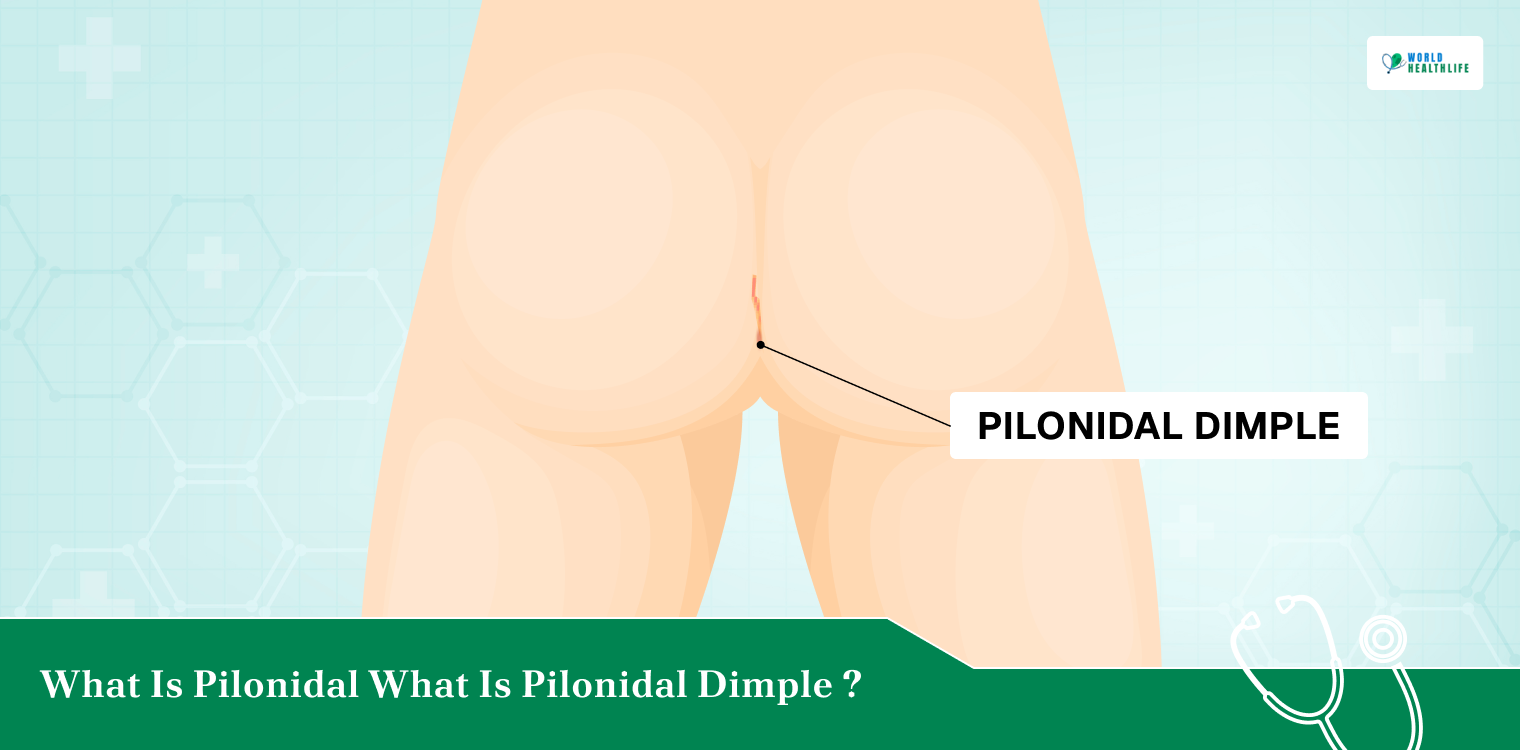
Sacral dimples are one of the most common characteristic features in a newborn. Moreover, most pilonidal dimples are benign. However, some can indicate occult spinal dysraphism.
Moreover, this can include a tethered cord, dermal sinus tract, or lip myelomeningocele. These things can often lead to irreversible neurological, urological, and orthopedic defects.
You should be able to distinguish benign dimples from the high-risk ones. This will help in timely medical intervention to avoid any issues.
In this article, we will learn about the embryological origins, the diagnostic criteria, and strategies for management of the pilonidal dimple.
This will help you to identify the problematic ones. Thus, this will ensure medical intervention at the right point in time.
What Are The Most Relevant Things To Learn About Pilondial Dimple?
One should study the embryology of caudal spinal development to understand the pilonidal dimple. In addition, they should also know about the classification of spinal dysraphism.
They should also learn about the classification of spinal dysraphism. Studies on the diagnostic accuracy of ultrasonography and magnetic resonance imaging in infants are also very important.
How To Recognize A Pilonidal Dimple?
The pilonidal dimple is also known as the pilonidal pit. These dimples are typically formed in the midline, right between the buttocks of an infant. You will find it near a child’s tailbone.
Such a pilonidal dimple can be shallow or deep. They are generally a depression or a pit on the skin.
These would appear as a small hole right on the top of the buttocks. You should check for hair around the area of the depression.
Hair often becomes trapped beneath the skin, leading to the formation of a pilonidal cyst. These things are very normal. In most cases, they are benign.
What Is The Difference Between Pilonidal Dimple And Sacral Dimple?
People often mix up both. However, a pilonidal dimple and a sacrum dimple are much different from one another, even though they are formed in the same region.
The sacral dimples are generally pits that are located on the base of the spine. However, these dimples are present from birth. Hence, they are generally benign.
On the other hand, the Pilonidal dimples are also very small. They are also found in the sacral region.
However, these are generally related to Pilonidal cyst disease. It comes from some kind of trauma caused to the tailbone. Moreover, they are not common.
A small pit or dimple becomes infected. Thus, this leads to the formation of a cyst or abscess. Doctors call this Pilonidal cyst disease.
Pilonidal dimples generally form when there is fluid inside a dimple. In addition, hair trapped in the dimple accumulates.
The cyst often becomes infected and can rupture after a certain point. Thus, this leads to a pit or a depression. When a proctologist ruptures it, it leads to a sinus tract.
It is likely benign when your child gets a sacral dimple without any symptoms. However, when it experiences swelling, pain, and other concerning symptoms in the sacral region, you should seek medical attention.
Proper diagnosis is important to figure out the underlying cause of the dimple.
What Are The Treatment Options For Pilonidal Dimples?
Pilonidal dimples generally do not require treatment. However, during exceptional conditions, it requires medical intervention.
Hence, you should always reach out to a proctologist when you notice pain in the region, pus formation, or redness.
You should follow the steps mentioned below while treating Pilonidal dimples.
1. Observation
Proctologists generally urge patients to be observant and vigilant when a pilonidal dimple is asymptomatic.
Medical professionals consider waiting and seeing more important than undergoing an unnecessary procedure.
This is the best solution when the dimple does not cause any symptoms, such as pain. Thus, there is no urgency for any treatment.
2. Antibiotic
The proctologist prescribes antibiotics when a pilonidal dimple gets infected. Moreover, this will help you to get rid of the infection in the area.
Antibiotics generally reduce inflammation and help the body combat bacteria. Moreover, this provides a much more natural healing process.
3. Drainage And Incision
The proctologist generally tries to make an incision and drain the abscess when one forms within the pilonidal cyst.
Moreover, the surgeon does an incision to release all the fluids that have accumulated. This surgical procedure facilitated the entire drainage process.
Incision and drainage help to relieve pressure. It also addresses the infection and enhances the process of healing. This process and incision should be performed only at a doctor’s office.
4. Removal Of Hair
You should maintain good hygiene and cleanliness in all affected regions. Healthcare providers often prescribe laser hair removal or waxing for the affected area.
Moreover, this preventive measure helps reduce the risk of hair becoming trapped. Regularly removing hair can help prevent abscess-related issues.
5. Surgical Excision
In recurrent cases, surgical excision is very important. The doctors suggest a procedure in the most complicated cases.
Moreover, the doctors completely remove the pilonidal pit, cyst, or sinus. Thus, the surgical procedure aims to completely remove the cause of the problem.
It removes the pilonidal cyst completely. The proctologist also removes the sinus or the cyst.
Tips For People Who Are Suffering From Pilonidal Disease
Patients with pilonidal disease should always maintain good hygiene. They should specifically maintain the hygiene of the sacral region.
Removing hair from the area can help maintain good hygiene. This also prevents trapping of hair in the area of the cyst.
Sitting in one specific posture for too long can cause immense pain. You should use soft spots to sit on. Using cushions and other things shall prevent all types of pain.
Wear breathable clothes. Do not wear clothes with tight fittings. This would make the place swell further and cause pus to accumulate.
Always try to maintain a healthy diet. Consuming an adequate amount can help with detoxing. Drinking plenty of water should help in the best way possible.


