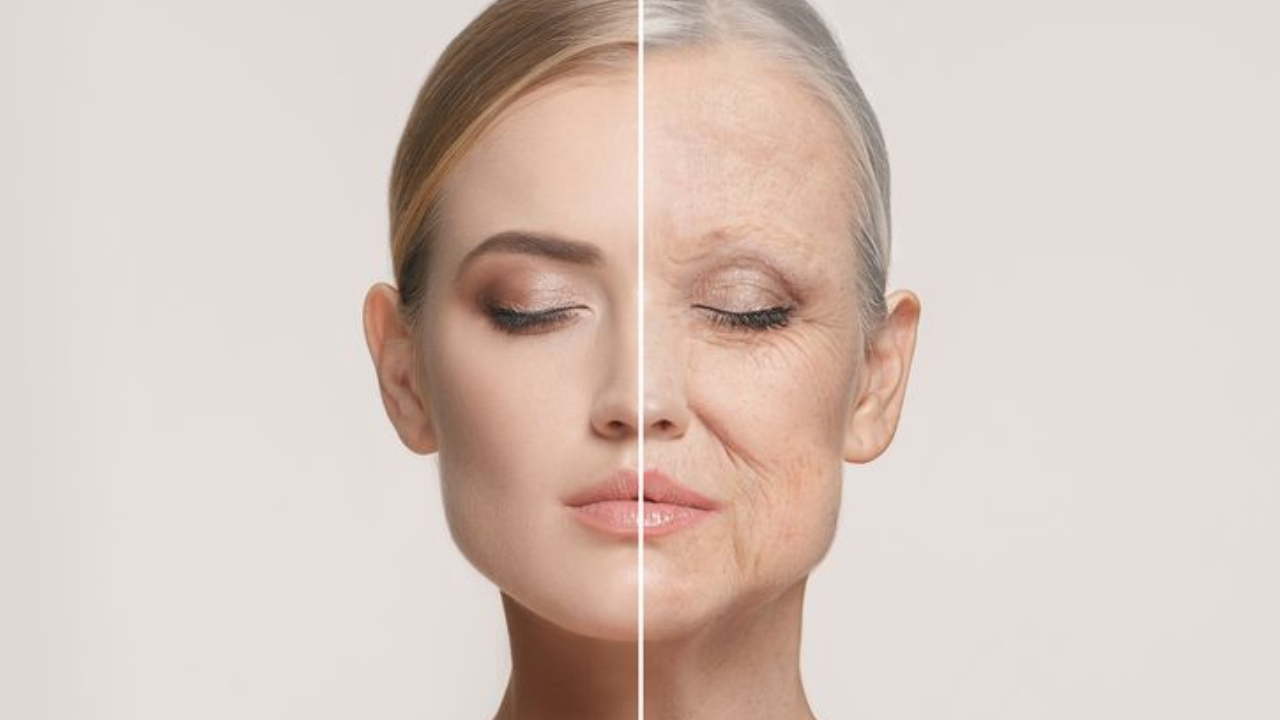
The age of 40 is one of the most crucial stages in a person’s life. Around 40, skin transforms structurally hormonally.
Moreover, during this stage, collagen and elastin levels decline sharply.
Additionally, cell turnover lags, dryness intensifies, and the wrinkles etch permanently.
Furthermore, volume redistributes unevenly, and hyperpigmentation blooms from sun exposure.
Recognizing these paves the way for smarter routines and interventions to sustain vitality and appearance.
Hence, in this article, we will learn how skin changes in your 40s. And will also learn about all the remedies that shall protect your skin once you cross 40.
How Are The Forties Impacting Your Skin?
Crossing the threshold into your 40s is often a time of newfound confidence and a sense of “knowing yourself”.
However, the skin tends to start playing by a whole new set of rules despite the confidence remaining sharper than ever.
The cumulative effects of previous sun exposure, hormonal shifts, and slowed cellular regeneration become very visible.
Hence, the high-street moisturisers often stop working well with your skin. This happens as the elasticity of the skin goes away.
Hence, in this situation, several people often think of professional intervention to bring back their youth.
For example, people often notice a softening of the jawline or deeper folds around the mouth.
However, in this situation, they might consider a non-surgical facelift to lift and tighten your features.
Moreover, this happens without the significant downtime or risks associated with traditional surgery.
However, before this, you should thoroughly understand the changes the skin is undergoing.
A proper understanding of these physiological shifts that the body goes through helps people in several ways
This allows people to adopt an effective skin care routine that will help them properly in the new phase of their life.
1. The Decline Of Collagen And Elastin
Prime subsurface shift collagen elastin decreases heavily. On the other hand, proteins scaffold strength, resilience, and snap-back.
When you step into your 40s, collagen production halves each year, and the post-20s fibers become brittle.
You can witness several changes in the body. Moreover, the face loses firmness. This results in significant laxity.
Furthermore, you can notice cheek sags, neck bands, and loose skin on the hands.
By the time you reach forty, the body’s natural synthesis of these proteins has dropped significantly, and the quality of the remaining fibres begins to degrade.
This leads to a loss of firmness and the beginning of skin laxity.
2. Slower Cellular Regeneration
In your younger years, the skin is an efficient renewing machine. During the twenties, skin cells typically turn over every twenty-eight days.
However, by your forties, this cycle can stretch to forty-five days or even longer.
This sluggishness means dead skin cells linger on the surface for far too long, leaving a complexion that looks dull, sallow, or “ashy”.
When the skin is not regenerating as quickly, any damage, be it from a blemish or a small scratch, takes significantly longer to heal.
Hence, this slower pace also means that topical skincare products may take longer to show visible results, requiring more patience and consistency from your daily routine than in previous decades.
3. Hormonal Shifts And Increased Dryness
Women experiencing perimenopause experience an erratic decline in estrogen, sebum, and hyaluronic acid.
Moreover, oestrogen is directly linked to the production of sebum and hyaluronic acid, both of which are essential for maintaining a healthy moisture barrier
Also, the skin’s ability to retain any form of hydration diminishes when these levels drastically drop in the body.
In such scenarios, ceramide, cholesterol, and fatty acid creams rebuild lipids.
Humectants glycerin, hyaluronic pull hold.
Moreover, drink water and intake omega-3s from flaxseed and fish.
4. The Emergence Of Static Wrinkles: How Skin Changes In Your 40s
Initially, during 30s, the dynamic expression lines fade. Then, eventually, the 40s bring static, permanent folds, collagen voids, and dermal etching.
Your skin goes through several changes after 40. Hence, glabellar elevens, forehead horizontals, periorbital crow feet, and nasolabial furrows become more prominent.
High-strength retinol 0.1% thicken epidermis, but the purge phase irritates the initial buffer moisturizer.
Fillers, hyaluronic plump pros, Botox relax if hybrid. Chemical peels: TCA smooth texture. Eye cream peptides caffeine depuff. Start slow, age sensitivity up.
5. Redistribution Of Facial Volume
Subtle structural fat pads atrophy due to gravity. Youth plump slowly, eventually you see even, triangular, voluminous cheeks and a defined jaw.
Hence, 40 hollows tear through the midface, flatten the marionette, deepen the jowls, and create a submental pooch.
Contour makeup can offer temporary solutions. Also, you can prevent bone resorption with calcium and vitamin D in your lifestyle.
6. Hyperpigmentation And Sun Damage
Decades of UV debt collects melanocytes, hyperclumped freckles, lentigines, age spots on hands, décolletage, and forehead.
Tone sallow mottled sallowness. UK overcast deceives UVA clouds, windows penetrate collagen shred pigment chaos.
Brighteners, C, E niacinamide, and tranexamic inhibit melanin production. Prescription hydroquinone 4% short-term rebound risk.
Lasers Q-switched Pico IPL fractional target spots even without downtime.
Tyrosinase blockers: licorice, kojic. SPF 50+ zinc titanium PA++++ reapply 2hrs after application, hat, seek shade.
Adapting To The Change
While you learn about how skin changes in your 40s, it is also important to adapt to these changes.
Aging is inevitable. However, you should not fear at all. You can use advances in derm aesthetics counter effectively.
Antioxidants include ferulic, resveratrol, SPF ritual core, layer serum essence cream, targeted pro, LED light, microneedle RF, and ultrasound injectables.
50s radiant feasible. Customize listening cues, patch in new products, and introduce them slowly.
In addition, you should also sleep 7-9 hours. Moreover, this acts like a stress cortisol wrecker.
Moreover, antioxidants, berries, greens, collagen, and bone broth in the diet help collagenagen production to maintain the elasticity of the skin.
You should combine a robust home care routine featuring antioxidants and SPF with targeted professional treatments.
Also, it is entirely possible to maintain a healthy, glowing complexion well into your fifties and beyond.
Hence, the key is to listen to your skin’s changing needs and provide the extra nourishment and care it deserves during this transitional decade.