

So you run your hand over your face or arms and feel a random, rough patch of tiny colorless itchy bumps on skin. It completely sucks.
Honestly, it is so annoying. The worst part is that these little spots do not have that bright red look of a classic zit.
They do not turn into clear, fluid-filled blisters either. They just sit there, basically invisible, driving you crazy with a constant urge to scratch.
Figuring out where they came from means playing detective with your own body.
You have to look closely at where they group up, how bad the scratching gets, and if you recently swapped out your laundry soap.
Most of the time, these flesh-colored spots are harmless. They are actually pretty simple to clear up once you know the actual culprit.
Let’s look at what might be causing them, how to calm the irritation at home, and when to just go see a doctor.
What Are These Tiny Colorless Itchy Bumps On Skin
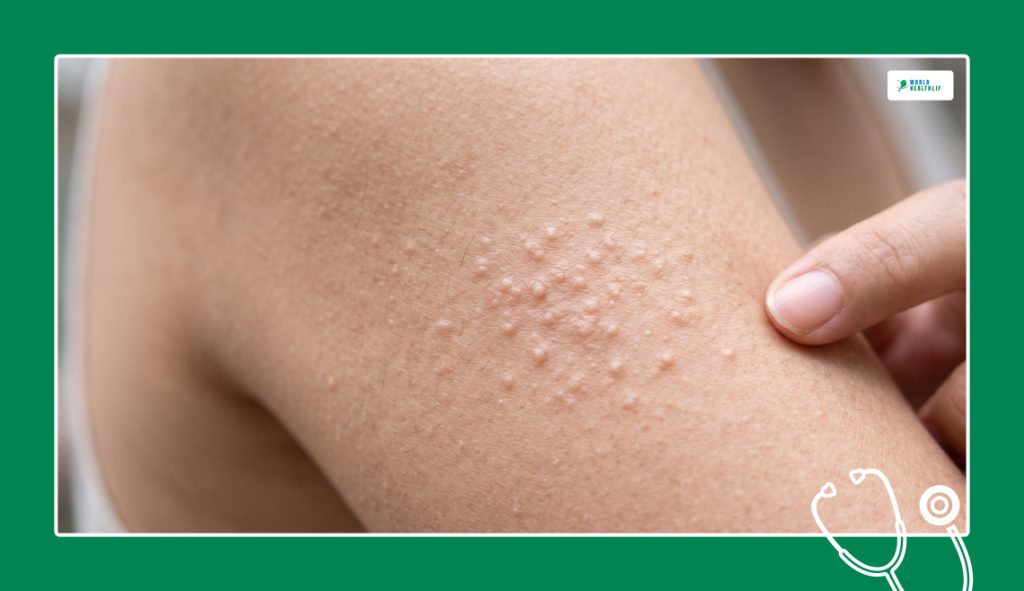
First, let’s skip the heavy medical jargon for a second. In the dermatology world, any solid, raised bump on your skin under a centimeter gets called a papule.
When they match your normal skin tone or look sort of clear, they get labeled flesh-colored or colorless.
Standard acne pops up because bacteria trigger an inflammatory response inside a trapped pore, but colorless bumps are a whole different story.
They usually trace back to clogged sweat pathways, trapped dead skin flakes, a minor local allergy, or a temporary overgrowth of natural skin yeast.
That annoying itch? That is just your body’s nerve endings reacting to a tiny, localized irritant.
Doctors look closely at how these spots cluster together and exactly where they show up to pinpoint the cause.
Five Common Causes Of Colorless Itchy Bumps
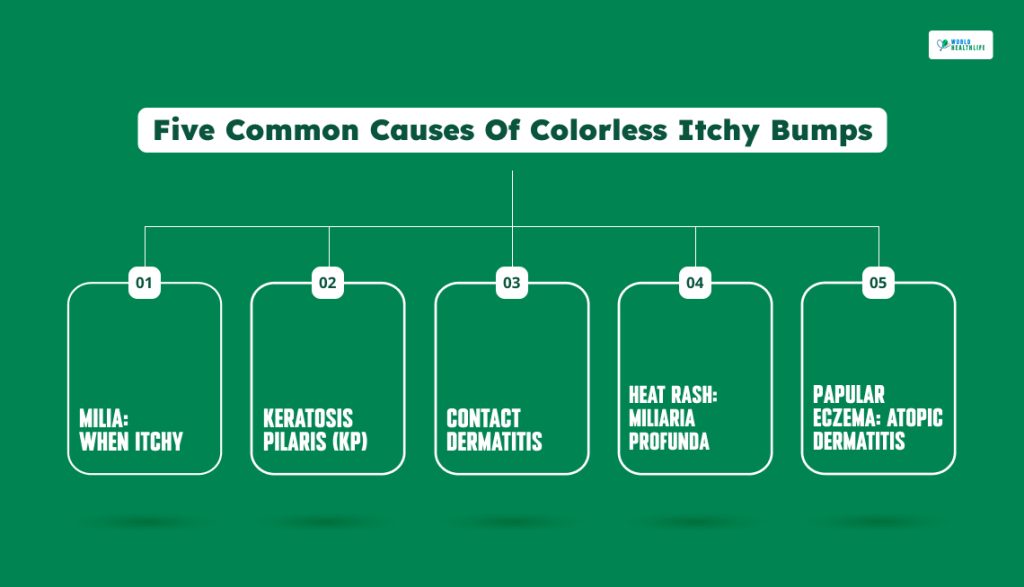
Trying to figure out what’s popping up on your skin? Here is a fast, no-nonsense breakdown of the five usual suspects behind colorless, incredibly itchy bumps.
Milia: When Itchy
Milia are basically tiny, hard cysts. They show up when dead skin cells get trapped just under the top layer of your skin.
Mostly, you will spot them hanging out around your eyes, cheeks, or forehead. They don’t normally hurt.
That said, they can absolutely start itching like crazy if you slather on thick, heavy face creams or if simple everyday friction irritates the area.
Keratosis Pilaris (KP)
Most people just call this “chicken skin.” It is a totally harmless, genetic quirk where your body builds up too much keratin, which ends up clogging your hair follicles.
It loves to take over the back of your upper arms, thighs, and buttocks.
Usually, it just feels rough like dry sandpaper without actually itching, but dry winter air or low humidity can trigger a sudden flare-up that gets fiercely scratchy.
Contact Dermatitis
This is a localized allergic reaction. It happens the exact moment your skin touches something it absolutely despises.
Think along the lines of a harsh new laundry detergent, a strong perfume, or jewelry made with nickel.
You’ll suddenly break out in a tight cluster of flesh-colored or pale pink bumps, and the itching will be intense right on that specific patch of skin.
Heat Rash: Miliaria Profunda
When your sweat ducts get completely plugged, that moisture leaks backward into the deeper layers of your skin instead of evaporating off the top.
While a standard heat rash looks like bright red dots, this deeper version shows up as firm, skin-colored bumps that look exactly like goosebumps.
They hit out of nowhere after intense workouts or hot, muggy days, bringing a sharp, prickly itch.
Papular Eczema: Atopic Dermatitis
Eczema doesn’t always look like a dry, red, flaky patch.
The papular type forms tight clusters of tiny, solid, flesh-colored bumps, which are usually in elbow creases, behind the knees, or right on the wrists.
It happens because a weak skin barrier pairs up with an overactive immune system.
The dead giveaway is a stubborn, intense itch that gets significantly worse right when you’re trying to fall asleep.
Comparing The Key Symptoms
| Condition | Primary Locations | Distinctive Texture | Major Triggers |
| Milia | Around eyes, cheeks, forehead | Hard, smooth, dome-shaped seed | Thick creams, trapped dead skin cells |
| Keratosis Pilaris | Upper arms, outer thighs, buttocks | Rough, sandpapery, dry feel | Genetics, freezing weather, low humidity |
| Contact Dermatitis | Hands, neck, face, or anywhere exposed | Slightly raised, localized clusters | Added perfumes, soaps, specific metals |
| Heat Rash | Chest, back, inner skin creases | Firm, deeply set, goosebump-like | Hot weather, tight clothes, heavy sweating |
| Papular Eczema | Elbow creases, behind knees, wrists | Small, dry, intensely itchy papules | Heavy stress, dry air, allergens, harsh soap |
How To Treat And Manage Colorless Bumps At Home

Changing up what you use in the bathroom can fix a lot.
A few basic tweaks might get rid of those flesh-colored spots completely. You won’t even need a doctor visit.
Here is what actually works.
Switch To Gentle Chemical Exfoliants
Throw away those rough physical scrubs. They are terrible for this.
Scrubbing hard breaks your skin barrier when you have trapped cells like milia or chicken skin. It just makes the itching way worse.
Try a chemical wash instead. Get something with Salicylic Acid since it cleans deep inside pores to break down trapped oil.
Lactic or Glycolic Acid work great too. They just melt away dead skin on top to smooth out the rough patches.
Adopt A Fragrance-Free Skincare Routine
Your skin barrier needs a break. That is double true if an allergy or eczema flare-up is causing the mess.
Stop using soaps, heavy lotions, and laundry detergents that have perfumes or dyes. Use plain, basic moisturizers with ceramides instead.
Put it on the second you get out of the shower. Do it while your skin is still wet to lock the moisture in.
Regulate Shower Temperatures
Hot showers strip away the natural oils your skin needs to stay calm.
Super hot water causes a massive histamine release in your skin. That makes the deep itch feel ten times worse.
Keep your showers under ten minutes. Drop the temperature until the water is just lukewarm.
Keep Skin Cool And Ventilated
Stop wearing tight clothes. Stick to loose cotton outfits so sweat does not get trapped.
If your house gets bone-dry in the winter, run a cool-mist humidifier by your bed.
It stops your skin from drying out at night so you do not wake up scratching.
When To Consult A Dermatologist
Most of these pale bumps are benign. Still, you cannot patch up every single skin issue in your own bathroom. You need to watch out for real warning signs.
Get an appointment booked if nothing shifts after trying basic remedies for a few weeks.
Definitely go see someone if the itching starts messing with your life. If it keeps you up at night or ruins your focus during the day, get it checked.
Keep an eye out for actual infections too. If the spots hurt to touch, feel unusually warm, leak fluid, or get a weird honey-colored crust, go get medical help.
Do not sit around waiting if a breakout explodes across your body in just an hour or two.
A skin doctor can figure out the mess using quick patch tests or a visual exam. They can write prescriptions for strong topicals, retinoids, or oral allergy pills to finally clear your skin up.
Disclaimer: The information provided in this article is for general informational purposes only. It does not, and is not intended to, constitute medical or health advice. Please consult a qualified healthcare professional for medical guidance or expert health assistance.
References
- Mayo Clinic. (2026). Keratosis pilaris – Symptoms and causes. Mayo Clinic.
- Eva Pimples Skin & Hair Clinic. (2025). Papules: Causes, treatment, and prevention | EVA. Eva Pimples Skin & Hair Clinic.
- DermNet. (2023). Keratosis pilaris. DermNet®.
- NHS.UK. (2025). Contact dermatitis. nhs.uk.
- Ellis, M. E. (2024). 25 Causes of Raised Skin Bumps (with Pictures). Healthline.
- Deyga Organics. (2026). Is salicylic acid good for open pores. Deyga Organics.
- Dr Tanya Skincare UAE. (2026, April 26). Lactic Acid vs Glycolic Acid: Which is Right for You? Dr Tanya Skincare UAE.


