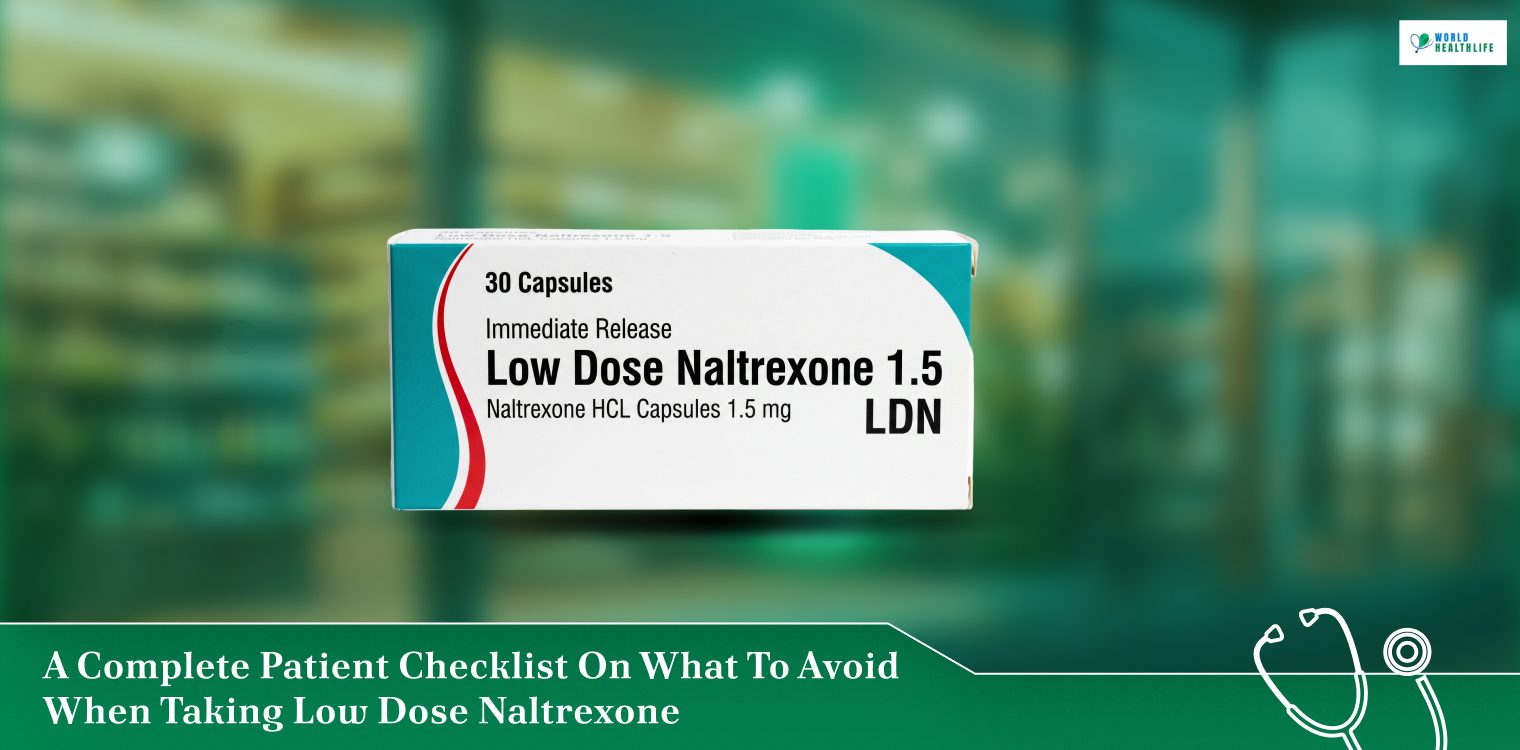
People talk about low-dose Naltrexone when it comes to mild relief from chronic pain, fibromyalgia, autoimmune issues, and inflammation. However, it is important to know what to avoid when taking low dose naltrexone. This is because it might make or break the whole experience.
And honestly, that is where people slip. Not always because they are careless. Rather, sometimes it is just confusion.
For instance, one doctor says it is fine, while a random forum says something else. Hence, it is crucial to ensure that any naltrexone dose does not backfire. Read on to learn about the right naltrexone dose for safe consumption.
What Low-Dose Naltrexone Actually Is
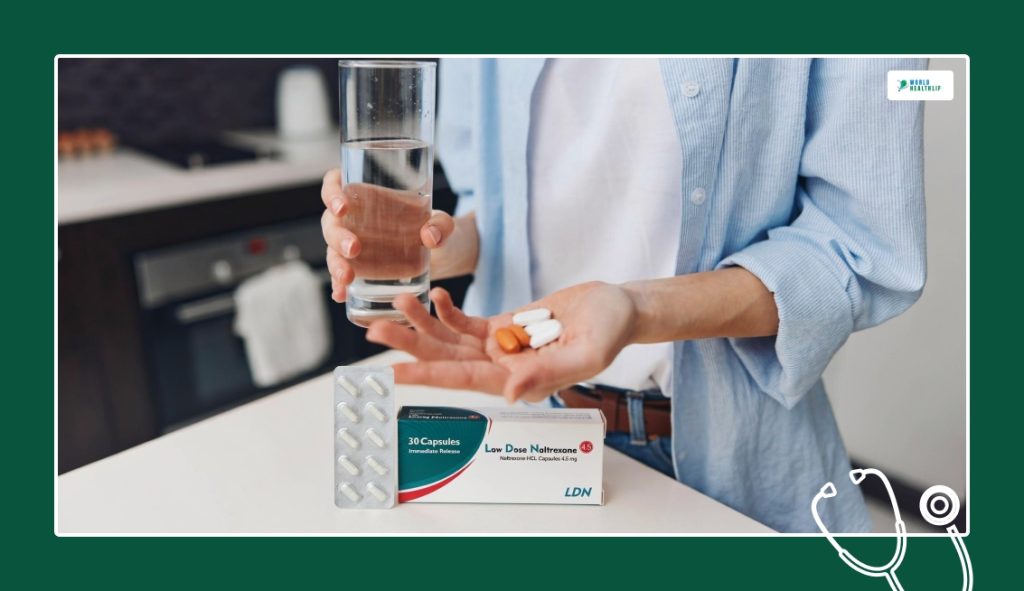
Before talking about what to avoid when taking low dose naltrexone, let’s talk about LDN.
Low-dose naltrexone (LDN) is simply naltrexone used at a much lower dose than the standard version. Primarily, standard naltrexone has a longer history in addiction treatment.
However, LDN gets used off-label. It is often brought into the conversation for pain, fatigue, inflammatory conditions, and immune-related issues. Of course, it is the same medication. But the intent and the dose are not the same thing.
At the outset, with LDN, the concern is less about the label and more about the context.
What else are you taking?
When did you stop taking it?
Are you trying to mix it with pain medication and hoping for the best?
Medyo obvious siya, but this is the big one.
What To Avoid When Taking Low Dose Naltrexone
Avoid anything that interferes with opioid receptors, messes with your tolerance, or makes side effects harder to read. That includes obvious things like opioid pain medications, and less obvious things like certain cough or gut medications. Moreover, it includes alcohol in some cases and random self-adjustments.
In general, people want a neat rulebook. However, real life is more complex than that. For instance, a person may not be taking “pain meds” the way they imagine.
Still, they might use something that contains an opioid ingredient. Or they may think one drink is no big deal, then spend the night feeling dizzy and off.
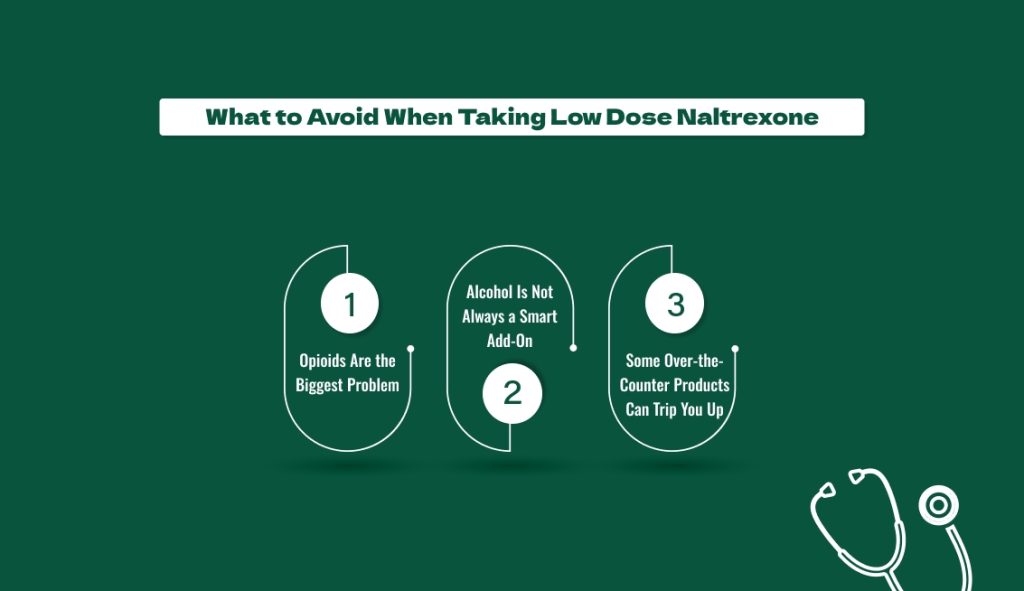
Opioids Are the Biggest Problem
LDN interacts with opioid receptors. So, if you take it alongside opioid medications, it will reduce how those drugs work. Or, it might trigger withdrawal-related issues in people who are dependent on them. That is why opioids are usually treated as the main red flag, not just one warning among many. [Source: Drugs.com Naltrexone Interactions]
This is where people make assumptions like, “It is just one pain tablet,” or “I only take this after a bad flare-up.” But with LDN, that casual attitude might get rough very quickly. Pwede namang feel mo okay ka, then one small mix-up changes the whole week.
Alcohol Is Not Always a Smart Add-On
Now, alcohol is not always discussed with the same urgency, but it still deserves caution. Some guidance suggests it can worsen dizziness, drowsiness, or nausea. Also, it might make side effects harder to interpret.
That matters because, early on, you are trying to understand how your body reacts. If you throw alcohol into the mix, the signal gets muddy.
Parang small thing lang, but timing matters. If you are just starting LDN or increasing the dose, that is the worst time to experiment casually.
Basically, you want clean feedback. Also, you want to know whether the headaches, vivid dreams, or restlessness are due to the medication, sleep, a glass of wine, or all three.
Some Over-the-Counter Products Can Trip You Up
This part gets overlooked because over-the-counter products feel harmless by default. They are easy to buy, so people assume they are easy to combine. However, this generalization is not true.
In fact, some cough syrups and antidiarrheal medicines may contain opioid-related ingredients. Also, they might contain ingredients that call for extra caution when you are on LDN. That is why it is important to check labels.
Although it sounds annoyingly cautious, it is better than realizing later that the “small cold medicine” you grabbed without thinking was the exact thing you were supposed to avoid. Honestly, minsan, the problem is not the pill but the impatience.
How People Usually Get It Wrong
Primarily, most mistakes that people make with LDN are premature. Someone starts to feel strange and immediately changes the dose. Meanwhile, someone feels nothing for a week and decides it is useless.
Also, someone takes it inconsistently and then complains that the results are all over the place. That kind of stop-start pattern does not help anybody understand what is actually happening.
There is also the tendency to treat LDN like a supplement. Although it may be used in low doses and discussed in wellness circles, it still requires structure. Hence, reaching out to a medical professional, such as a doctor, is mandatory here.
Hindi ito about being scared of LDN. It is about not being casual with it.
Safer vs. Riskier Choices
| Situation | Riskier Move | Safer Move |
| You use pain medication sometimes | Assume all pain meds are fine | Confirm whether any of them are opioid-based first |
| You feel mild side effects early on | Change your dose on your own | Give your provider a clear update and follow the plan |
| You have a cough, cold, or stomach issue | Grab any OTC product fast | Read labels carefully and ask a pharmacist if needed |
| You are just starting LDN | Add alcohol and see what happens | Keep things simple until your response is clearer |
| You want faster results | Increase the dose too quickly | Start low and build gradually if advised |
How to Take It Without Making the Process Harder
Most practical advice around LDN sounds simple. You merely need to follow the steps below:
- Start low.
- Increase gradually.
- Be consistent.
- Report side effects.
It sounds almost too basic, which is probably why people ignore it.
Moreover, nighttime dosing is often mentioned because some people tolerate it better that way. Also, it fits with the rhythm providers want for use and monitoring. But even there, this is not about copying what worked for someone online.
In fact, what works for you depends on what else is happening in your routine. It includes your sleep, your other medications, and your body’s unpredictability.
The following is a list of some good habits with low dose naltrexone:
| Habit | Why It Helps |
| Taking LDN at the same time daily | It gives your body a steadier routine and makes reactions easier to track |
| Starting low instead of chasing a “working” dose fast | It may reduce the chance of early side effects feeling overwhelming |
| Reviewing your medication list before starting | It lowers the chance of hidden interactions catching you off guard |
| Reporting mood changes, nausea, dizziness, or insomnia | It helps your provider tell the difference between an adjustment and a problem |
Side Effects Do Not Always Mean Something Is Wrong
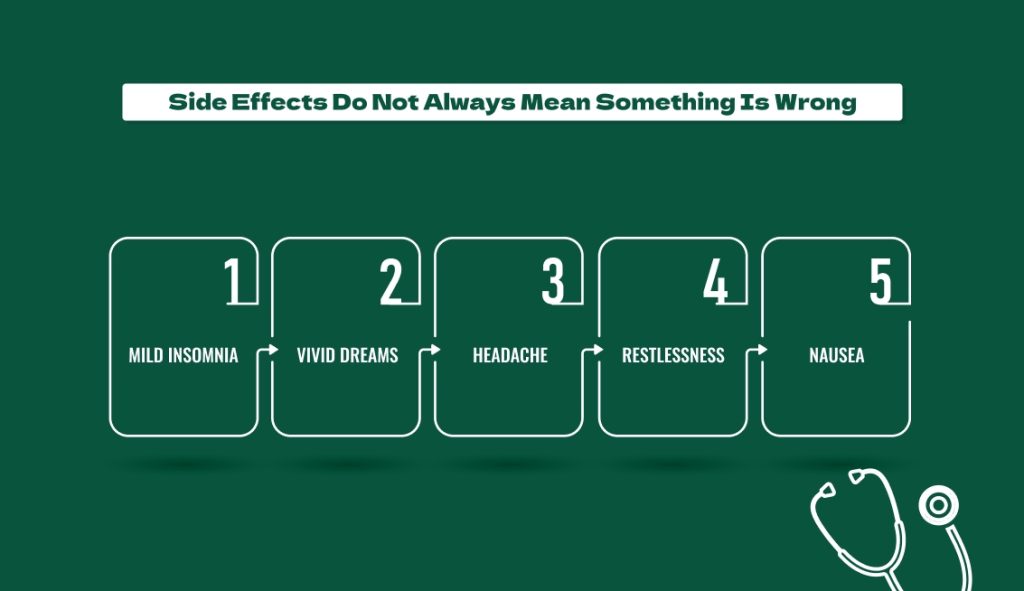
In many cases, people panic when they see side effects. The following are some of the most common side effects you must be aware of:
- Mild insomnia
- Vivid dreams
- Headache
- Restlessness
- Nausea
In general, these show up early for some people. That does not always mean the medication is wrong for you. Sometimes it means your body is adjusting. At other times, it merely means the dose needs refining. Also, it might mean something else you added is clouding the picture.
However, there is a difference between watching and ignoring. Reach out, ask the basic questions, and clarify what changed.
If symptoms persist, worsen, or feel out of character, that is the best time to reach out to a doctor. Kasi totoo lang, guessing is what drags simple situations into complex ones.
Why Patience Is Part of the Process
One reason people obsess over what to avoid when taking low dose naltrexone is that they want results fast and clean. However, with LDN, sometimes the improvement is subtle at first. It comes with:
- Better sleep
- Slightly calmer mornings
- Fewer flare-heavy days.
So, if you expect dramatic results in three days, you may stop too early or start mixing things that were never needed.
Always try to give it enough structure to be evaluated properly. Also, do not sabotage your own read on the medication by throwing five variables into the same week.
Safe Counterparts Vs. Dangerous Pitfalls
You do not have to just sit there and suffer through a bad head cold or seasonal allergies just because you are taking this medication.
The whole trick is knowing two things. Which common store drugs stay away from your opioid receptors and which ones will lock onto them.
Once you map out these two categories, managing normal daily bugs and aches is easy.
What Is Safe to Take
If you hurt your back, get a bad headache, or deal with chronic flares, you can safely take basic over-the-counter pain relievers. This includes Tylenol, Advil, Aleve, or aspirin.
For a stuffy nose or bad seasonal allergies, standard allergy meds like Claritin, Zyrtec, and Allegra are usually fine.
On the other hand, plain Mucinex works well for breaking up chest congestion.
If your stomach goes sideways, you are also totally clear to use gas drops or Pepto-Bismol for nausea and diarrhea.
What You Must Avoid
Prescription painkillers like Vicodin, Percocet, tramadol, codeine, and morphine are your absolute worst enemies here. This is because they will cause an immediate, violent withdrawal flare or just fail to manage your pain at all.
You also have to watch out for sneaky traps at the grocery store like dextromethorphan. This cough suppressant is hidden in almost every multi-symptom cold liquid on the shelf.
Do not grab Imodium for a bad stomach either. Accordingly, it relies on gut-opioid pathways that your medication completely blocks.
Moreover, stay far away from herbal trends like kratom.
Critical Safety Factors the Article Missed
Most online health forums focus so much on standard prescription interactions that they skip how this medication affects real-world medical scenarios.
A sudden change in your health status or an unexpected trip to the clinic can throw a massive wrench into your routine. That is if you do not know what to watch out for.
Keeping these lesser-known risks on your radar protects your daily progress from getting completely derailed.
Surgery And Dental Work
Standard patient guides rarely warn you about the strict timeline required for upcoming surgeries or invasive dental work.
If you are facing an unexpected operation or a major dental procedure that requires narcotic sedation, you have to hit pause on your daily routine ahead of time under a doctor’s eye.
This guarantees your brain’s receptors are wide open so surgical anesthesia and post-op painkillers can actually do their jobs.
Organ Function And Immune Risks
How well your body processes this compound depends entirely on your vital organs and your overall physical baseline.
If you are dealing with active liver failure or severe kidney issues, you need an incredibly cautious, low dosing plan.
That is because your body will struggle to clear the medication safely.
Furthermore, organ transplant recipients generally cannot take this therapy.
Its natural immune-modulating effects can directly fight the critical immunosuppressant drugs keeping your body from rejecting a transplant.
The Thyroid Shift
Because this therapy is incredibly good at cooling down chronic, systemic inflammation, your thyroid function can suddenly wake up and optimize.
If you take a daily thyroid hormone replacement like levothyroxine, your current prescription might suddenly become way too strong for your body’s updated metabolic needs.
You will need to watch your blood panels closely with your doctor.
Also, prepare to drop your thyroid dose if you suddenly get racing heartbeats, severe jitters, or random insomnia.
How To Verify What Is Safe
Protecting your daily routine means cutting out the guesswork entirely before you swallow a new pill or liquid remedy.
By building a fast, repeatable screening habit, you can stop dangerous drug combinations before they ever cross your lips.
Taking a few proactive steps puts you completely in control of what enters your system.
Read The Drug Facts Box
Stop looking at the flashy marketing claims on the front of the medicine bottle and flip the packaging over to the actual Drug Facts panel.
Scan the active ingredients list line by line to verify exactly what chemicals are inside the formula.
If you spot dextromethorphan, codeine, or loperamide listed anywhere in that text, drop it and find a single-ingredient alternative instead.
Respect The Washout Window
Timing is everything when you are transitioning away from old pain management routines to this low-dose therapy.
Your system has to be completely and entirely free of short-acting opioids for at least seven full days before you take your very first dose.
For long-acting options, you have to wait an even stricter ten to fourteen days to ensure you do not trigger sudden, agonizing precipitated withdrawal.
Ask A Professional
If you ever find yourself staring at an unfamiliar label or a brand-new wellness supplement, let an expert handle the screening for you.
Walk right up to the local pharmacy counter with your current medication list and show them the product you want to buy.
Ask them point-blank if the formula contains any hidden opioid agonists, peripheral gut-binding agents, or heavy liver-straining compounds.
Frequently Asked Questions (FAQs):
It is not recommended. This is because that combination might interfere with opioids. Hence, it might cause serious problems.
Not always. However, staying cautious is smart. Otherwise, it may worsen side effects or confuse your body’s response.
Most doctors recommend taking LDN at night. However, always stick to your own prescriber for your personal case.
Yes, they do. In fact, some cough or stomach products may require extra caution, especially opioid-related ones.
Although LDN is not usually considered addictive, changing your routine without medical guidance is still a bad idea
Avoid the Obvious Mistakes
In the end, the answer to what to avoid when taking low dose Naltrexone is quite obvious. All you have to do is avoid opioids. Also, be careful with alcohol. Moreover, check cough and gut medications. Furthermore, do not freestyle the dose.
Also, do not treat inconsistent use like a proper trial. Make sure not to assume something is safe just because it is common or sold without a prescription.
Although LDN may be useful for some people, the quiet medications still need clear boundaries. Hence, try to keep the routine clean and ask questions early. Also, read labels and give your body a fair shot at telling you what is actually going on.
Disclaimer: This article is for informational and educational purposes only and does not substitute for professional medical advice. Reading this content does not create a doctor-patient relationship. Always consult a qualified healthcare provider for medical concerns and never delay seeking professional advice based on what you read here.
Additional Reading: