
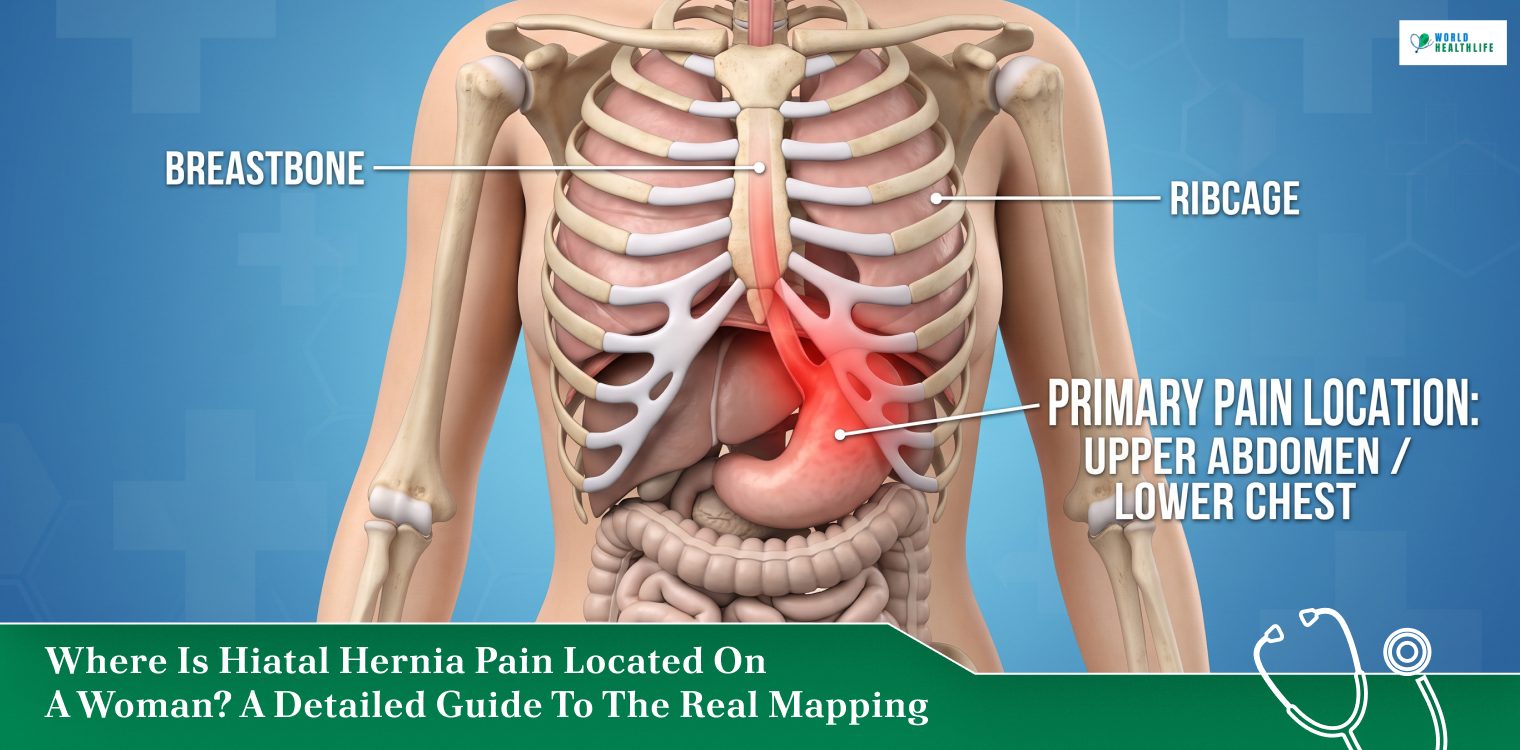
When we talk about hiatal hernias, most medical brochures give a very generic description of upper stomach burning.
However, if you talk to actual women living with this condition, the description of the discomfort changes completely.
A woman’s internal framework interacts continuously with the shifting hormonal cycles, smaller chest cavity spaces, and fluctuations in abdominal pressure.
Thus, the physical pain layout does not just stay confined to neat little box.
When you look up where is hiatal hernia pain located on a woman, the answer involves tracking an entire radiating network of discomfort.
This is due to the structural displacement of the stomach sliding into the chest cavity.
This can send warning signals vibrating anywhere from the lower jaw down to the middle spine.
To help you figure out what your body is actually telling you, let us throw out the sterile medical jargon.
Instead, we will map out the exact zones where this deep tissue distress strikes.
Furthermore, we will focus on why it mimics other serious issues and how to track the warning signs safely.
The Primary Target Zones: Mid-Chest And Upper Torso
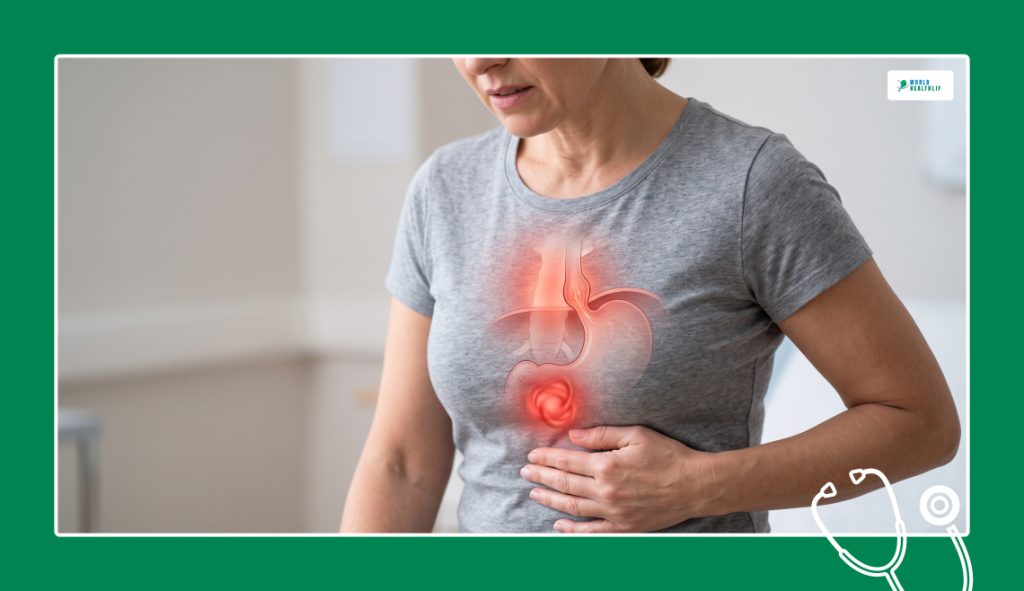
When the top of the stomach is compressed by a weakened diaphragm, the nerve endings at the base of the esophagus fire off continuous distress signals.
In women, this localized pressure maps out across two main areas on the front of the body.
The Substernal Burning Zone: Behind The Breastbone
The single most common zone location for hiatal hernia pain in women is right behind the breastbone.
Clinically known as the substernal area, this discomfort usually manifests as a deep, heavy, and tearing heat.
The physical pinch point sits directly beneath the rib cage, making it often feel as if a hot localized pressure is pushing outward against the chest wall.
The sensation typically spikes intensely about thirty minutes after eating a meal or whenever you bend forward to pick something up.
The Epigastric Center: The Upper Abdomen
Directly beneath the V-shape where your ribs meet sits the epigastric region.
This is the anatomical root of the hernia. Women frequently report a tight, knot-like sensation in this exact spot.
It does not just feel like standard acid indigestion.
Instead, it feels like a physical structural blockage, which is often accompanied by an early sense of being uncomfortably full after only eating a few bites of food.
The Radiating Axis: Back, Shoulders, And Throat Discomfort
The vagus nerve and multiple spinal pathways run directly alongside the esophageal hiatus. Thus, deep pelvic or diaphragmatic inflammation rarely stays in one place.
The pain regularly travels along shared nerve tracks, resulting in the creation of completely unexpected secondary distress zones.
| Main Diaphragm Pinch Point | Pain or Sensations Felt |
| Posterior Pathway | Interscapular Back Pain Left Shoulder Blade Radiations |
| Upper Ascending Pathway | Burning Throat Friction Globus “Lump” Sensation |
The Interscapular Back Pain Lock
A highly frequent but often overlooked symptom is pain that is located directly between the shoulder blades in the middle back.
When the stomach remains wedged inside the diaphragmatic opening, the continuous mechanical stretching pulls on the deep ligaments anchored to the posterior wall.
As a result, this creates a dull and exhausting pain in the middle back.
This can make you feel like you constantly need to adjust your posture, even though the root cause is entirely digestive.
Left Shoulder Blade Radiations
When a sliding or trapped paraesophageal mass irritates the phrenic nerve, the brain easily misinterprets the signal. This nerve sheet controls the diaphragm.
The pathway sends a sharp, referred pain signal straight up to the top of the left shoulder blade or along the side of the neck.
This unique pathway is a major reason why many women mistake an active digestive flare-up for a pulled shoulder muscle or an orthopedic issue.
The Ascending Throat Tightness
As acid and digestive fluids pool inside the lower chest cavity, the irritation travels upward into the throat.
This leads to a persistent burning throat friction and a distinct globus sensation, which feels like a permanent, solid lump is stuck in your windpipe.
Moreover, it often triggers constant, involuntary throat clearing, a dry nocturnal cough, and a raw, hoarse voice in the morning.
The Unique Female Footprint: Pregnancy And Hormonal Shifts
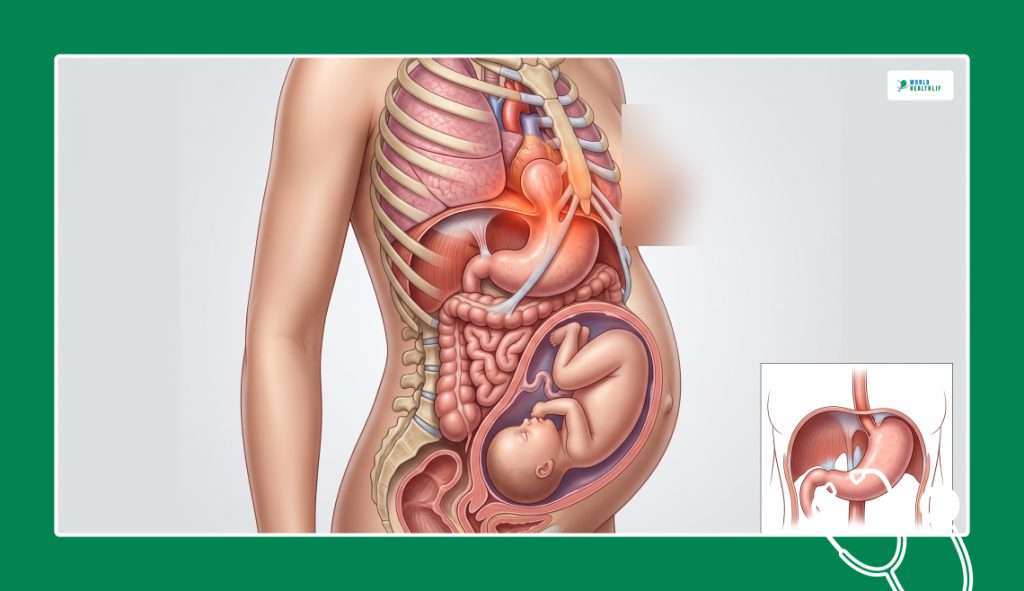
The location and intensity of diaphragmatic pain change drastically across a woman’s lifetime due to regular mechanical and hormonal changes inside the body.
The Third-Trimester Mechanical Choke
During pregnancy, the rapidly growing uterus physically pushes all the lower digestive organs upward against the diaphragm.
This massive shift in internal space forces the stomach directly through the hiatus.
This mechanical choke makes the substernal burning and the left–sided chest pain incredibly intense during the third trimester, as the lungs and the stomach compete for the exact same space.
Progesterone And Ligament Laxity
During the second half of the monthly cycle, or during the transition into perimenopause, the body experiences significant shifts in progesterone levels.
Progesterone naturally relaxes smooth muscle tissues across the body.
This helps the reproductive tract. However, it also relaxes the lower esophageal valve and loosens the connective tissues lining the diaphragm opening.
Consequently, this hormonal softening allows the stomach to slide upward much more easily.
Furthermore, it causes the upper gastric pain to flare up predictably in sync with your calendar.
Direct Pain Isolation Matrix
In order to help you monitor your symptoms and communicate clearly with your doctor, use this clean structural overview of the primary pain locations.
Common Presentation Sites Of Hernia Distress
| Primary Discomfort Location | Exact Physical Sensation | Common Structural Trigger |
| Behind the Breastbone | Sharp, heavy, or tearing heat that mimics severe cardiovascular pressure. | Acid backup irritating the raw, unshielded tissue walls of the lower esophagus. |
| Upper Abdomen (Epigastric) | A tight, localized knot-like pressure directly underneath the rib cage junction. | The physical compression of the stomach tissue being squeezed by the diaphragm walls. |
| Between the Shoulder Blades | A deep, dull, exhausting ache in the middle back that doesn’t change with movement. | Continuous pulling and structural strain on the deep ligaments tracking along the spine. |
| Left Shoulder & Neck | Intermittent, sharp referred pain tracking along the upper left muscles. | Direct irritation of the phrenic nerve caused by structural crowding inside the chest cavity. |
Reclaiming Internal Stability
Figuring out exactly where this internal discomfort lives helps you stop chasing the wrong treatment paths. In addition, your torso is a highly sensitive, deeply connected balance of moving parts.
When a structural shift flags a warning sign in your chest, back, or throat, trying to mask it with random over-the-counter antacids won’t repair the actual mechanical teardown in your diaphragm.
You can successfully take control of these lines of communication.
First, track the exact quadrant locations and hormonal timing of your painful episodes.
From there, collaborate with a specialist to run a barium swallow or high-resolution ultrasound to map out your exact anatomy.
It takes daily consistency and focused patience, but it allows your body to step out of the physical crossfire.
Thus, you get your comfort, your deep breathing, and your daily lifestyle back.
Disclaimer: The information provided in this article is for general informational purposes only. It does not, and is not intended to, constitute medical or health advice. Please consult a qualified healthcare professional for medical guidance or expert health assistance.


