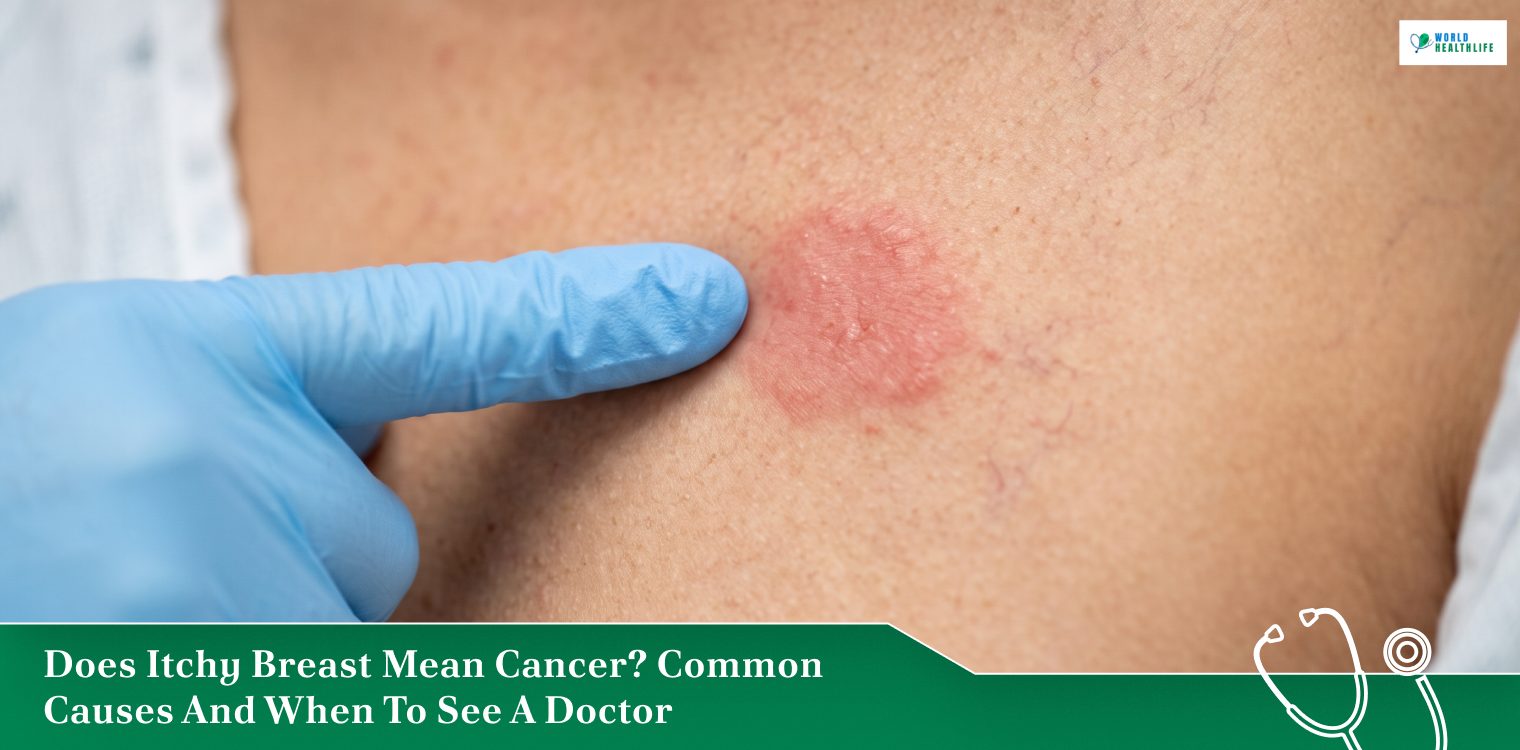
It is a moment many women dread. You notice a persistent itch, your mind starts to race, and you immediately run to Google.
Then, you start an immediate search: does itchy breast mean cancer?
It is completely normal to feel anxious when you notice these changes in your body.
Let me be clear first. The reassuring truth is that an itchy breast is rarely a sign of cancer.
In the vast majority of cases, the culprit is something entirely harmless and easily fixable.
Your skin might simply be reacting to a new laundry detergent, seasonal dryness, hormonal shifts, or an ill-fitting bra.
However, since your peace of mind and health are paramount, it is important to ignore the persistent changes.
Rare conditions such as Inflammatory Breast Cancer (IBC) or Paget’s disease can present with skin irritation and itching as early symptoms.
Knowing how to tell the difference between a simple skin allergy and a medical concern is the best way to protect your health.
Let’s explore the most common benign causes of breast itching, the specific warning signs you should never ignore, and when it is time to consult a doctor.
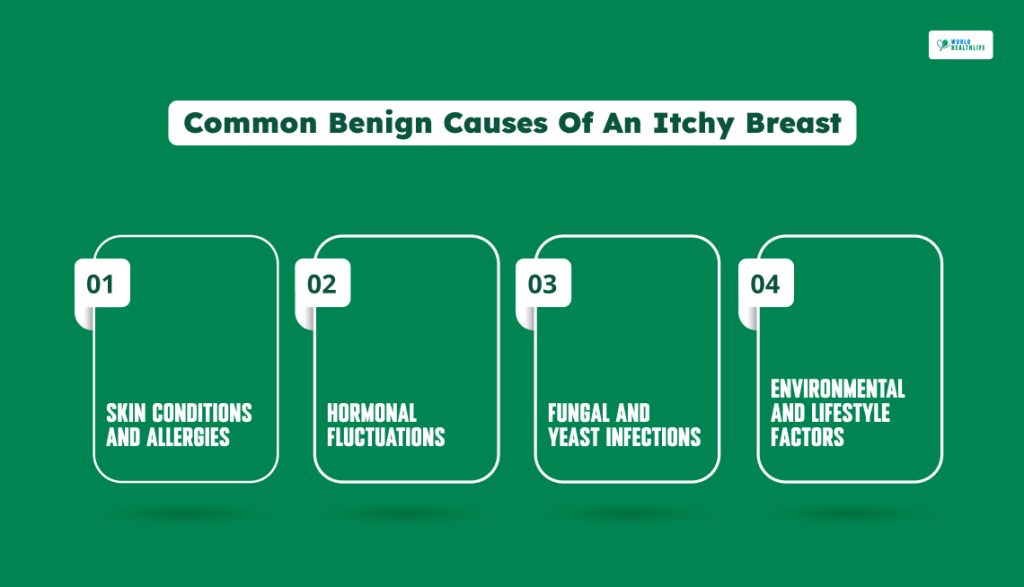
Common Benign Causes Of An Itchy Breast
Before letting your anxiety take over the fact that does itchy breast mean cancer, it would first help to understand this: The breast skin is incredibly sensitive.
It reacts quickly to environmental, hormonal, and physical changes.
The human breast is composed of delicate glandular tissue, fat, and a dense network of blood vessels. This is entirely wrapped in a highly responsive skin barrier.
When this barrier is disrupted, an itch is the body’s primary alarm system.
Skin Conditions And Allergies
The most frequent cause of localized itching is contact dermatitis. This occurs when your skin reacts to an irritating substance.
A new body wash, heavily fragranced laundry sheets, or synthetic bra fabrics can trigger an intense allergic response.
The friction of clothing rubbing against the chest exacerbates this irritation, leading to a vicious cycle of scratching and further inflammation.
Conditions like eczema and psoriasis can also develop on or under the breasts.
Eczema disrupts the outer layer of the skin, causing it to lose moisture rapidly and become highly vulnerable to external irritants.
Conversely, psoriasis, an autoimmune condition, causes skin cells to build up too quickly.
Consequently, this leads to dry, flaky, and intensely itchy patches of skin that can be incredibly uncomfortable.
Hormonal Fluctuations
Hormones play a massive role in how your breast tissue feels on a day-to-day basis.
During regular menstrual cycles, pregnancy, or menopause, shifting estrogen and progesterone levels can cause physical changes in the body.
For instance, right before a menstrual period, these hormonal surges increase blood flow and fluid retention within the breasts.
This hormonal surge usually causes tissue expansion and rapid stretching of the skin.
As the skin stretches to accommodate the swollen glandular tissue, the nerve endings just beneath the surface become sensitized. Consequently, this triggers a deep and frustrating itch.
In the case of a pregnancy, this effect is amplified significantly as the body prepares for lactation, causing the breasts to grow rapidly over a short period.
Fungal And Yeast Infections
The underside of the breast is a warm, dark and moist environment, which is prone to constant friction.
This specific anatomy makes it a prime breeding ground for a fungal infection called intertrigo, which is typically caused by an overgrowth of Candida yeast.
This yeast is known to thrive in environments where sweat gets trapped against the skin.
Intertrigo creates a burning, itchy, and bright red rash directly in the skin fold beneath the breast. Moreover, the rash often has a distinct, sour odor and can develop small cracks or fissures in the skin if left untreated.
This can look alarming and feel incredibly painful.
However, it is a completely benign surface infection that responds well to targeted antifungal topical treatments and keeping the area thoroughly dry.
Environmental And Lifestyle Factors
Sometimes the root cause of the discomfort is simply the environment around you.
Cold winter weather, indoor heating, and hot showers strip the skin of its natural sebum. As a result, this causes severe xerosis.
This is the medical term for dry skin. Accordingly, dry skin is naturally prone to itching, and the chest area is no exception.
Physical activity can also play a role. When you exercise, sweat tends to accumulate under and around your breasts.
If you wear an ill-fitting sports bra made of non-breathable materials, the trapped moisture combined with repetitive friction can cause severe chafing.
This chafing leads to damage of the epidermal layer.
As a result, there is a persistent raw itch that lingers long after your workout is over.
Comparing Itch Vs. Cancer Warning Signs
The vast majority of itches stem from the everyday issues listed above.
However, it is important to understand how standard skin irritation compares to rare malignant symptoms.
Recognizing these distinctions can help you evaluate your symptoms calmly and logically.
| Feature | Benign Skin Irritation | Potential Malignancy Signs |
| Onset | Appears suddenly after using a new product, or cycles predictably with your period. | Develops gradually and gets progressively worse over weeks without a clear environmental trigger. |
| Skin Appearance | Shows dry flakes, raised red bumps, or a rash that spreads evenly across both breasts. | Displays thick, pitted skin texture resembling an orange peel, often without a rash. |
| Nipple Changes | Remains anatomically normal, though the skin around the areola may flake slightly due to dryness. | Retracts inward, discharges spontaneous fluid, or develops a crusty, scaly sore that refuses to heal. |
| Response to Treatment | Improves quickly with heavy moisturizers, gentle hygiene, or over-the-counter hydrocortisone. | Fails to improve or change after using standard topical allergy creams or antibiotics. |
| Associated Feel | Feels superficially itchy, slightly tender, or warm exclusively due to aggressive scratching. | Feels heavy, firmly swollen, visibly bruised, or contains a hard, fixed, painless lump underneath. |
Rare Types Of Cancer Associated With Itching
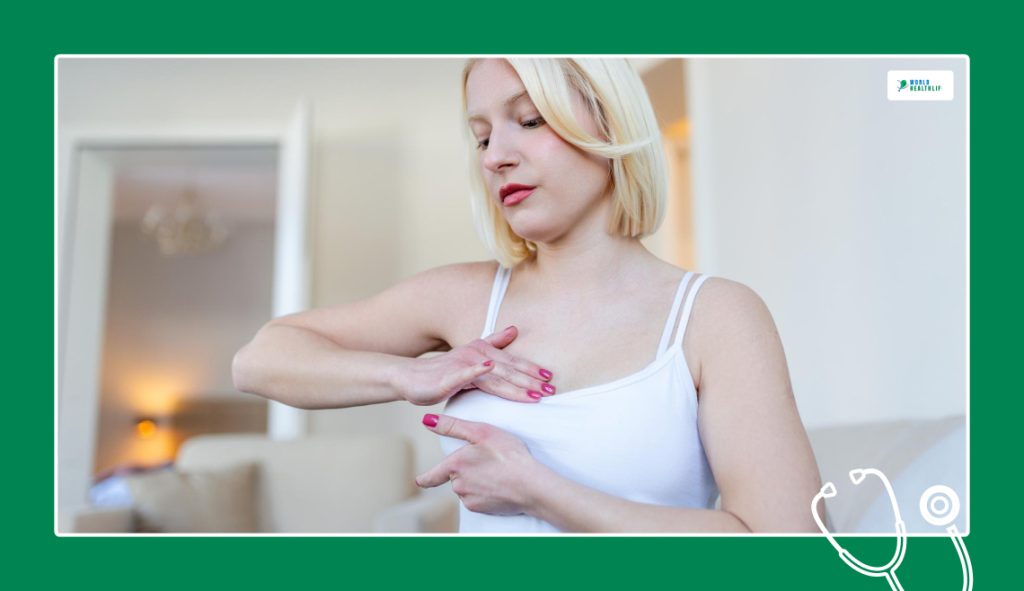
In very rare instances, however, a persistent itch that does not go away can be an early indicator of specific types of breast cancer.
Understanding these conditions helps demystify the Google search results that cause so much initial panic.
Inflammatory Breast Cancer (IBC)
Unlike classic breast cancer forms, Inflammatory Breast Cancer rarely forms a distinct localized lump that you can easily feel during a routine self-exam.
Due to this, it is frequently misdiagnosed in its earliest stages as a simple bout of mastitis or a skin infection.
Instead of forming a tumor, IBC cells aggressively block the tiny lymph vessels located within the skin of the breast.
This systemic blockage creates a rapid and severe inflammatory response. The affected breast quickly becomes warm to touch, noticeably swollen, tender, and intensely itchy.
As the lymph fluid accumulates, the skin may also take on a pitted, dimpled texture similar to an orange peel. This is a classic medical sign known as peau d’orange.
Moreover, the breast may rapidly increase in size or change color, appearing pink, purple, or bruised.
Paget’s Disease Of The Breast
This is another rare form of cancer that accounts for a very small percentage of all breast cancer cases.
It typically starts in the breast ducts and gradually spreads along the fluid pathways to the surface of the nipple and the surrounding dark circle of the areola.
The earliest symptom is almost always an itchy, tingling, or burning sensation concentrated directly on the nipple.
As the condition advances through the tissue, the skin on the nipple becomes bright red, crusty, and scaly. It may bleed slightly or ooze a straw-colored fluid.
Because Paget’s disease looks almost identical to severe eczema or contact dermatitis, patients often try to treat it with topical steroids first.
A key differentiating factor is that Paget’s disease usually affects only one nipple and does not respond to standard eczema treatments.
When Should You Consult A Doctor?
Managing breast health requires a balanced approach of vigilance without any panic.
Knowing when to transition from home care to a professional medical evaluation is essential for long-term wellness.
If your breast itching is caused by a simple allergy, dry skin, or a mild yeast infection, it should respond to basic interventions.
Switching to hypoallergenic soaps, applying high-quality moisturizers, and wearing loose, breathable cotton clothing generally brings relief within a few days.
You should schedule an evaluation with a primary care doctor or a gynecologist if your breast itching lasts longer than two weeks without any visible improvement.
A persistent itch that resists standard skincare adjustments deserves a professional look, even if there are no other visible symptoms present.
While the timeline is a good general guide, certain accompanying signs require immediate medical attention rather than a waiting period.
You should seek a prompt clinical examination if the itching occurs alongside a noticeable change in the overall shape, size, or contour of one breast.
If you experience a sudden onset of severe swelling, redness, and heat across the breast without a known injury, this also warrants an immediate visit to rule out acute infections or inflammatory conditions.
When you visit your doctor, they will begin by taking a detailed medical history to understand your symptoms.
They will likely ask about your skincare routine, recent product changes, family history of breast health, and your menstrual cycle.
If they suspect a benign skin condition, they may prescribe a targeted cream.
Conversely, if they notice any ambiguous features or wish to be completely certain, they will order diagnostic imaging.
This includes a screening mammogram or a targeted ultrasound to view the underlying tissue structures and provide you with definitive answers.
Disclaimer: The information provided in this article is for general informational purposes only. It does not, and is not intended to, constitute medical or health advice. Please consult a qualified healthcare professional for medical guidance or expert health assistance.
References
- Cancer Research UK. (2026). Can itching be a sign of breast cancer? Cancer Research UK
- Cafasso, J. (2023. Xerosis cutis. Healthline.
- Inflammatory breast cancer. (2025). Cleveland Clinic.
- Candidiasis. (2025). Cleveland Clinic.
- Gupta, E., & Medanta. (2026, January 13). Itchy breast: Top causes, warning signs & when to worry. @Medanta.