
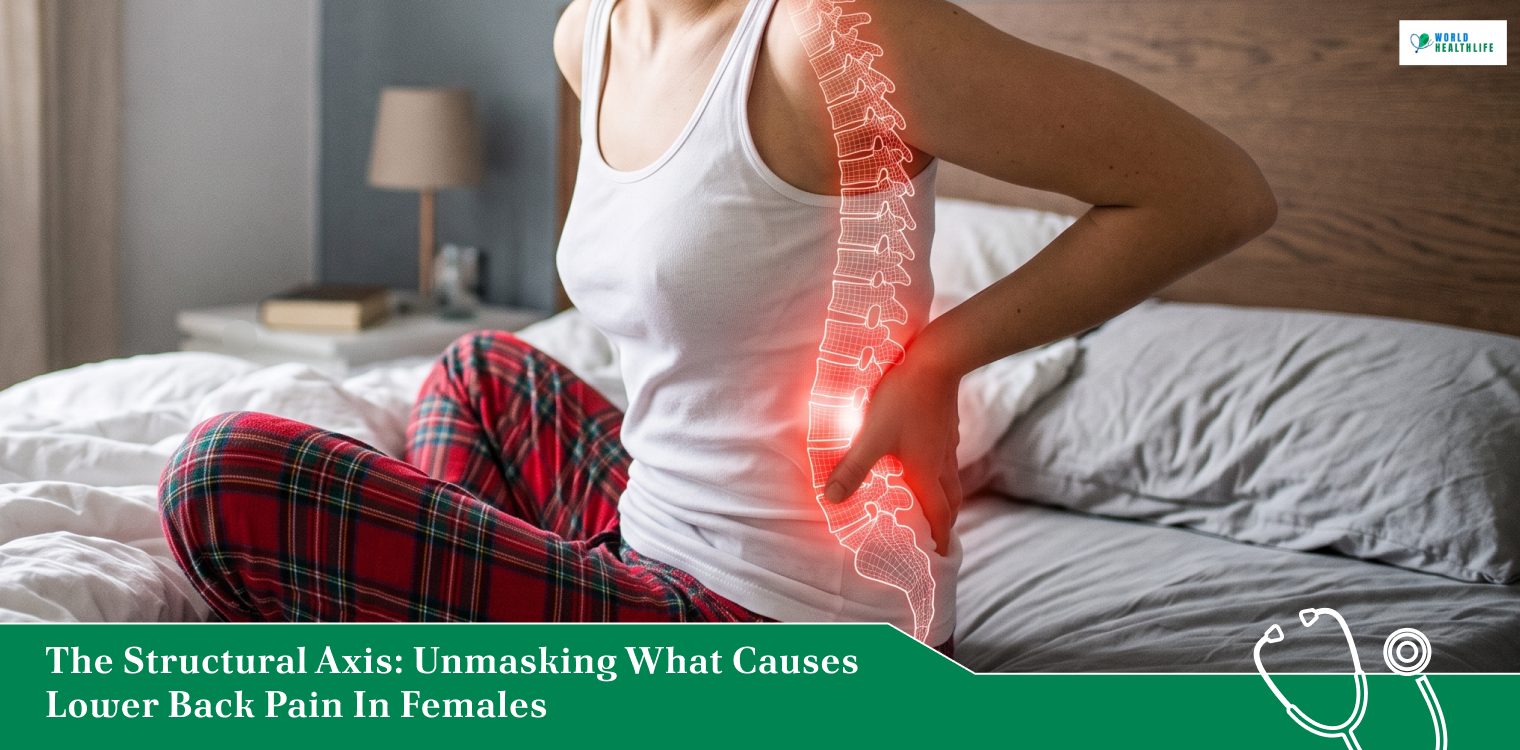
The human spine serves as the physical anchor for the entire skeletal framework, bearing weight, absorbing shock, and protecting the central nervous system.
In the female body, this mechanical column faces an array of unique structural stresses.
Unlike a standard engineering model, the spine does not operate in a vacuum.
Instead, it interacts continuously with shifting hormonal cycles, deep pelvic ligaments, and muscular imbalances.
When you seek answers on what causes lower back pain in females, the immediate explanation is rarely as simple as a minor muscle strain or poor desk posture.
True lumbar distress is often a dynamic and complex signal. It highlights a breakdown in communication between the musculoskeletal frame and deep internal systems.
To break out of chronic discomfort, you need to look past generic remedies. Reclaiming your physical mobility requires a deep dive into the distinct mechanical and systemic categories of spinal strain.
In addition, it would require you to look into the quadrant maps that isolate localized pain and the vital clinical choices needed to restore your structural alignment.
The Triple-Zone Mapping Framework
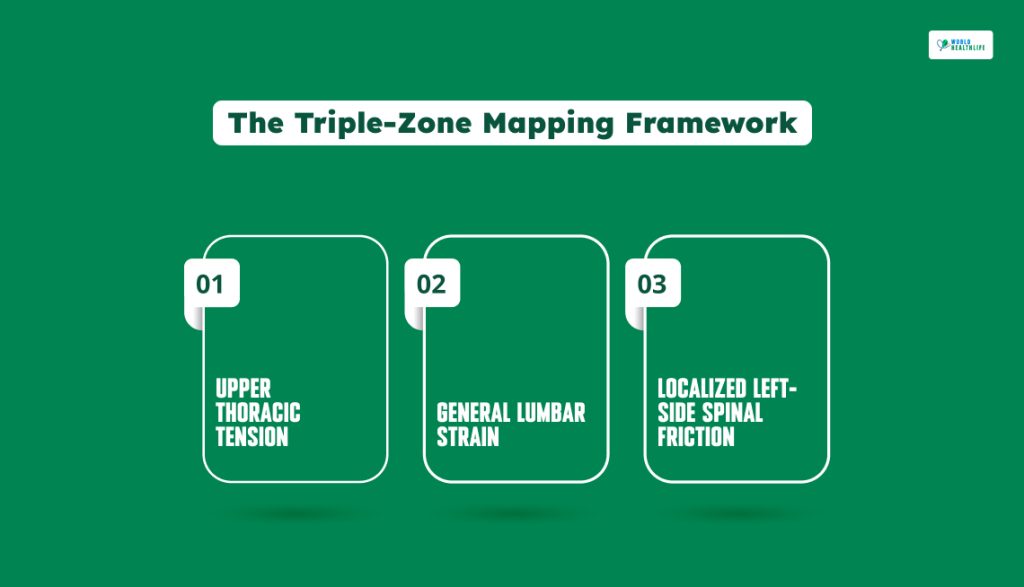
Spinal pain rarely stays perfectly confined to a single and neat location. To build an accurate clinical profile, specialists segment the posterior torso into three primary zones.
Where your discomfort chooses to anchor itself completely alters the underlying diagnostic path.
Upper Thoracic Tension
Understanding what causes upper back pain in females requires looking directly at a combination of muscular overload, postural demands, and structural compensation.
The thoracic spine is built for stability instead of flexibility.
However, carrying a heavy purse on one shoulder, continuous nursing posture, or shifting weight profiles can force the rhomboids and trapezius muscles into a state of chronic elongation.
This continuous tension can lead to painful trigger points along the shoulder blades. Occasionally, these mimic rib misalignment or cardiovascular distress.
General Lumbar Strain
When analyzing what causes back pain in females across the broader lower spine, the root cause is frequently a structural vulnerability. This is due to the shifting tides of reproductivity biochemistry.
During pregnancy or the late luteal phase of the monthly cycle, the body pumps out a hormone called relaxin.
While its primary job is to soften the ligaments in the pelvis to allow for flexibility, relaxing does not target the pelvis alone.
It flows throughout the entire bloodstream. As a result, this makes the ligaments supporting the lumbar spine loose and unstable.
Without rigid ligament support, the lower back muscles must work twice as hard to maintain balance. Consequently, this leads to chronic deep tissue fatigue along with a persistent and dull ache.
Localized Left-Side Spinal Friction
In order to isolate a more targeted issue, doctors closely evaluate the exact quadrant of the lower back.
To figure out what causes left lower back pain in females, you need to look beyond the skeletal muscles. Instead, an investigation of the internal organs sitting right behind the left posterior rib cage is required.
Acute left-side back pain can signal a structural or functional issue in the left kidney.
For instance, it can be an undetected kidney stone scraping through the ureter. Moreover, it may also be a localized urinary tract infection (UTI) that has traveled upward into the renal tissue.
On a separate front, the descending sigmoid colon sits low on the left side of the torso.
As a result, chronic digestive stagnation or diverticular irritation can send radiating pain signals straight backward into the left lumbar muscles. This mimics a pinched nerve.
The Pelvic-Spinal Axis: Interlinking Internal Inflammations
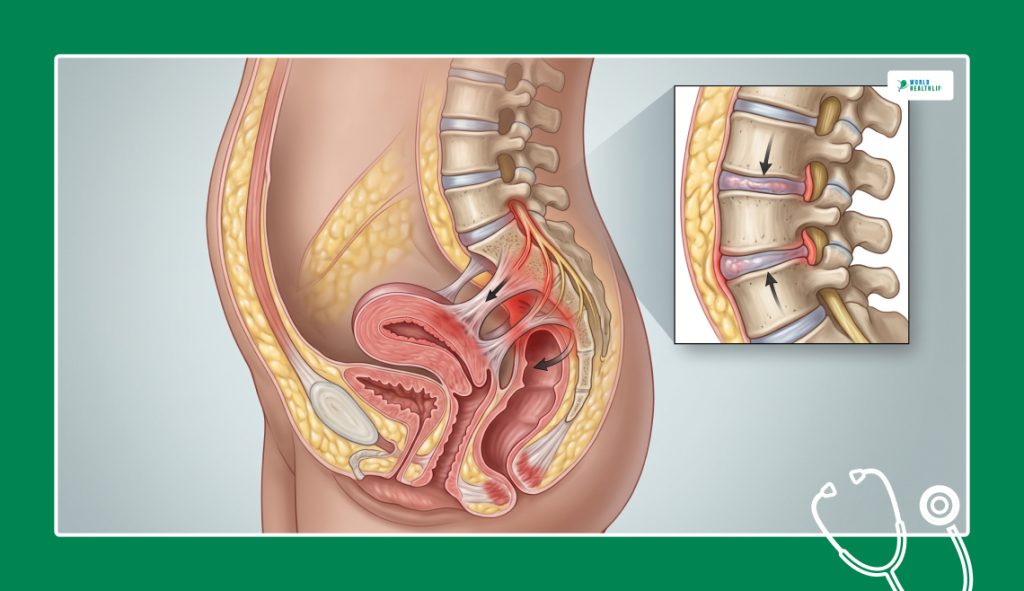
A major clinical reality of female anatomy is that deep pelvic conditions frequently masquerade as pure back injuries.
As detailed in our comprehensive guide on what causes lower abdominal pain in females, internal tissue swelling can put massive structural pressure on the surrounding sacral nerve networks.
Endometriosis Adhesions And The Sacral Drag
When endometrial tissue grows outside the uterine cavity, it frequently chooses to bind itself to the uterosacral ligaments. These are thick bands of tissue that physically anchor the uterus to the tailbone.
Every month, as these displaced lesions swell and bleed, they create thick and non-flexible scar tissue. This continuous internal dragging pulls hard on the sacral nerve roots.
As a result, this continuous internal bleeding and dragging pulls hard on the sacral nerve roots.
This sends a deep, throbbing ache straight through to the spine and triggers intense lower back pain that worsens during your menstrual window.
The Metabolic And Structural Fallout Of PMOS
Polyendocrine Metabolic Ovarian Syndrome (PMOS) also plays a hidden role in lower back vulnerability.
Since PMOS causes chronic systemic inflammation and rapid, insulin-driven weight gain around the midsection, it forces a massive mechanical shift in your posture.
This sudden distribution of visceral fat pulls the pelvis forward into an unnatural tilt. As a result, the lower spine is forced into hyper-lordosis and crushing the delicate lumbar disc spaces over time.
Spinal Distress Differential Matrix
In order to help your medical team build an accurate treatment plan, your symptoms should be tracked on the basis of their specific timing and mechanical presentation.
Chronic Mechanical Vs. Systemic Drivers
| Spinal Region | Primary Potential Condition | Specific Pain Pattern | Key Clinical Indicator |
| Upper Thoracic | Postural Overload / Muscle Knotting. | Burning ache across the shoulder blades that spikes after sitting at a computer. | Relieved temporarily by targeted heat therapy or manual massage. |
| Left Lumbar | Nephrolithiasis or Left Adnexal Cysts. | Sharp, intermittent left-side pain that radiates downward to the flank or groin. | Accompanied by microscopic blood in the urine or sudden nausea. |
| Lower Lumbar | Sacroiliac (SI) Joint Dysfunction or Endometriosis. | Deep, heavy, grinding ache across the tailbone that worsens with long periods of standing. | Spikes predictably in sync with your monthly hormonal cycle changes. |
Advanced Diagnostic Pipelines
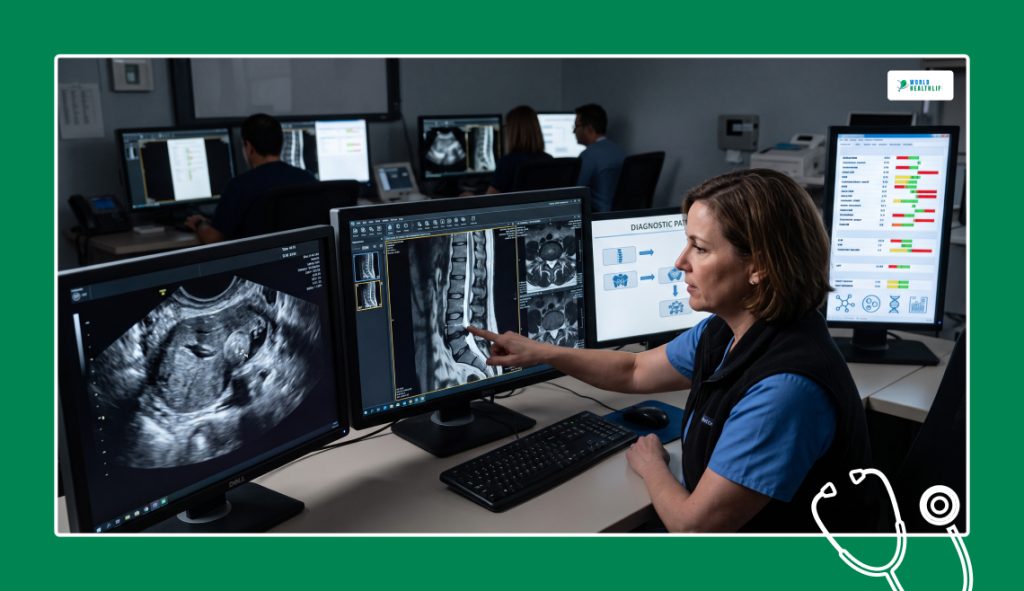
Achieving a lasting solution requires moving past the simple symptom checks.
Instead, it is about integrating targeted medical imaging to read the exact architecture of your spine.
This begins with a high-resolution lumbar MRI to spot narrow nerve root channels or hidden disc bulges. If discomfort tracks predictably alongside a monthly cycle, the clinical focus pivots toward a targeted transvaginal pelvic ultrasound.
This helps in ruling out deep fibroids or physical cysts pressing backward against the sacral nerves.
Finally, a comprehensive metabolic blood panel examining specific inflammatory markers and fasting insulin levels can be conducted.
This helps in determining whether systemic joint irritation or an underlying condition like PMOS is fueling chronic back strain.
Rebuilding Spinal Integrity
True recovery is never about masking spinal discomfort with endless cycles of over-the-counter anti-inflammatories.
Your back is a highly sensitive, interconnected structural matrix.
When an internal system or a muscular imbalance flags a warning sign, ignoring that signal can allow minor wear-and-tear to freeze into permanent disc degeneration.
You can successfully fix these broken lines of physical communication. Begin with a focus on tracking the exact quadrant and timing of your flare-ups.
Following this, ensure a consultation with a specialized clinical team to run targeted diagnostics and balance your physical posture.
It just takes a focused step-by-step approach. However, it will allow you to step out of the pain loop while permanently protecting your long-term skeletal health.
Disclaimer: The information provided in this article is for general informational purposes only. It does not, and is not intended to, constitute medical or health advice. Please consult a qualified healthcare professional for medical guidance or expert health assistance.
References
- Ortho, P. N. J. |. M. D. (2026, March 7). Upper back pain in women: Unique causes and solutions. ANSSI Wellness.
- Cleveland Clinic. 2026. Relaxin. Cleveland Clinic: Body Systems & Organs.
- Roch, M., Gaudreault, N., Cyr, M. P., Venne, G., Bureau, N. J., & Morin, M. (2021). The Female Pelvic Floor Fascia Anatomy: A Systematic Search and Review. Life, 11(9), 900. National Library of Medicine.


