

Getting an internal organ removed can be quite a scary thought. Moreover, say you have to surgically remove your gallbladder. The mere thought can give you a scare.
But here is the thing.
In actuality, surgeons remove roughly a million gallbladders a year in the United States alone.
Moreover, most of those patients go back to eating pizza within a few months.
In fact, the real aspect that offers true reassurance to some people and worries others is that it raises an obvious question:
“How does a digestive organ disappear without consequences?”
The long-term effects of gallbladder removal are usually mild and manageable, but they are real, and they are not the same for everyone.
Some people notice nothing. Others deal with looser stools, bloating, or lingering pain for months or years.
This guide, thus, will go on to help you understand the following:
- What your body does without the organ
- Which effects are common and which are rare
- What the research says about weight, cholesterol, and cancer
- When a symptom deserves a closer look.
How Your Body Works Without A Gallbladder
Understand one thing first.
So, your gallbladder is a storage pouch, not a factory.
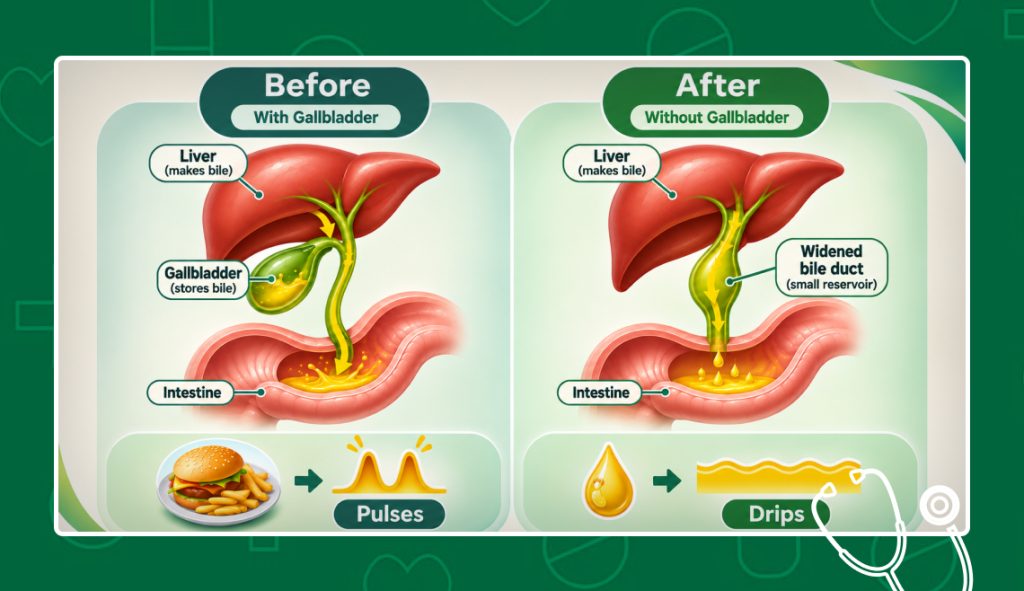
Your liver makes bile all day. On the other hand, the gallbladder is responsible for holding it, concentrating it, and releasing a measured dose when fatty food arrives.
Without it, the liver still makes bile. However, the delivery system changes.
Understanding that single shift explains almost every long-term effect that follows.
Bile Now Drips Instead Of Pulses
After surgery, bile flows from the liver straight into the small intestine in a slow, steady trickle.
There is no stored reserve to release when you eat a large or fatty meal.
In most people, the intestine adapts, and the bile duct widens slightly over time to act as a small substitute reservoir.
This adjustment is why symptoms often fade within weeks to months.
Why Fat Is The First Thing To Cause Trouble
Bile breaks fat into tiny droplets so enzymes can digest it.
When less concentrated bile meets a heavy meal, some fat may pass through undigested, which can cause gas, cramping, and loose stools.
Meanwhile, bile that isn’t needed for digestion travels further down the gut than it used to.
That extra bile in the colon is behind the most common lasting complaint, covered below.
Long-Term Effects Of Gallbladder Removal At A Glance
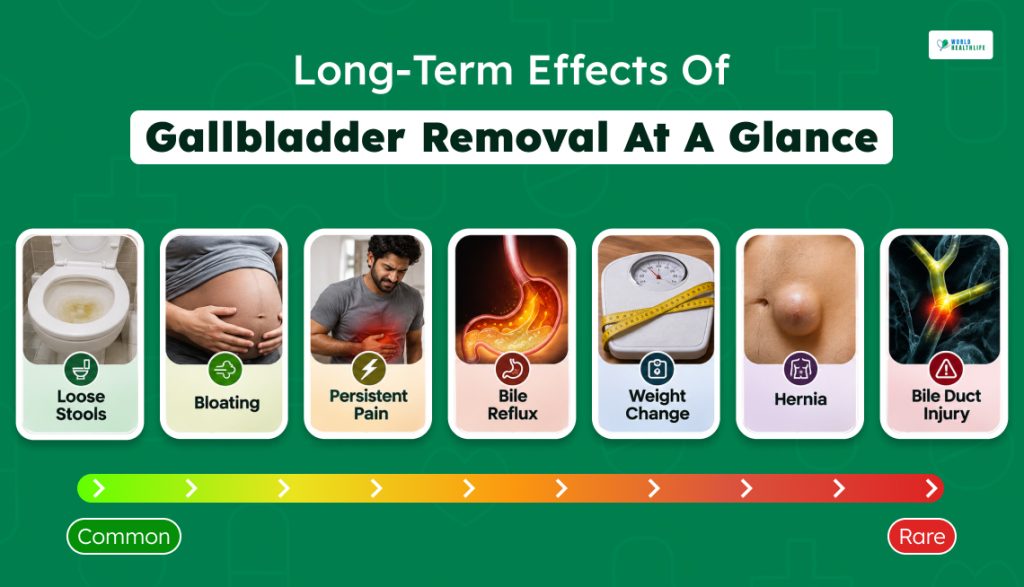
Most people fall into one of three groups: no lasting changes, mild digestive changes that settle or are easy to manage, and a smaller group with persistent symptoms.
Below, the table below sorts the main effects by how often they occur and how long they tend to last.
Figures vary between studies, so treat them as rough ranges.
| Effect | How Common | Typical Duration | Outlook |
| Looser or more frequent stools | Common early; persists in roughly 5 to 10% | Weeks to months, sometimes longer | Often improves; treatable |
| Bloating, gas, indigestion | Common early | Weeks to months | Usually fades with diet changes |
| Persistent abdominal pain (post-cholecystectomy syndrome) | About 10 to 15% | Variable | Cause can usually be found and treated |
| Bile reflux or gastritis | Uncommon | Variable | Treatable with medication |
| Weight change | Mixed evidence | First 1 to 2 years | Mostly lifestyle-related |
| Trocar-site hernia | About 1 to 3% | Permanent until repaired | Repaired surgically |
| Bile duct injury or stricture | Rare, well under 1% | Long-term if it occurs | Needs specialist care |
Long-Term Effects Of Gallbladder Removal On Digestion
The digestive effects are the ones people ask about most.
Most notice a short adjustment period in which fatty, fried, or very large meals trigger cramps or urgency.
For the majority, this eases within a few months as the body adapts. A minority keep a lower tolerance for rich food permanently.
Actually, this is an inconvenience rather than a medical problem. Eating smaller, more frequent meals tends to help, since it matches the steady drip of bile.
Chronic Diarrhea And Bile Acid Malabsorption
Persistent loose stools after surgery are often due to bile acid diarrhea.
When excess bile salts reach the colon, they irritate the lining and pull water into the stool.
This can show up as urgent, watery stools shortly after meals, and it may continue for years.
Doctors can treat it with bile acid binders such as cholestyramine or colesevelam, which soak up the extra bile salts.
If diarrhea lasts beyond a few weeks, it is worth mentioning.
This is because infections, lactose intolerance, and irritable bowel syndrome can look similar and are treated differently.
Post-Cholecystectomy Syndrome: When Symptoms Don’t Go Away
Not everyone feels better after surgery.
Post-cholecystectomy syndrome is an umbrella term for symptoms that persist or return after the gallbladder is gone.
These symptoms include:
- Upper abdominal pain
- Nausea
- Bloating
- Indigestion.
The name sounds like a single disease. However, it is really a signal that something else is going on.
Finding the cause is the key, and it is usually possible.
Common Causes Behind Lingering Pain
In many cases, the pain never came from the gallbladder in the first place.
Acid reflux, ulcers, pancreatitis, irritable bowel syndrome, and liver conditions can all mimic gallbladder pain.
Moreover, they continue after the organ is removed.
Other causes are directly linked to the biliary system, as the table below shows.
| Possible Cause | What Is Happening | Clues |
| Retained or new bile duct stone | A stone remains in or travels into the common bile duct | Pain with jaundice, dark urine, or fever |
| Sphincter of Oddi dysfunction | The muscle controlling bile flow spasms or fails to relax | Pain similar to the original attacks, normal ultrasound |
| Bile reflux | Bile flows backward into the stomach | Burning pain, bitter taste, nausea |
| Bile duct narrowing (stricture) | Scarring after surgery narrows the duct | Recurrent pain, jaundice, abnormal liver tests |
| Non-biliary conditions | Reflux, ulcers, IBS, pancreatitis | Pain unrelated to fatty meals |
How Doctors Investigate And Treat It
Evaluation starts with blood tests for liver enzymes and bilirubin, followed by imaging such as ultrasound or MRCP. This is a type of MRI that shows the bile ducts.
If a stone or blockage is found, a procedure called ERCP can often clear it. Sphincter dysfunction is managed with medication or, in selected cases, a procedure to relax the muscle.
Therefore, treating reflux or irritable bowel syndrome often resolves the rest. The important point is that persistent pain deserves investigation rather than acceptance.
Weight, Cholesterol, And Liver Health
Because the gallbladder is part of fat metabolism, researchers have looked closely at whether removing it changes the wider metabolic picture.
The findings are mixed, and several studies show only associations, not proof that surgery is the cause.
People who need their gallbladder removed already tend to have risk factors. For instance, factors such as excess weight make the picture harder to untangle.
Weight Changes
Some people gain weight in the first year or two after surgery, while others lose it.
A likely reason for gain is behavioral: after months of avoiding food that triggered attacks, people feel free to eat normally again and eat more.
On the other hand, weight loss tends to come from temporary diarrhea or cautious eating.
Neither outcome is fixed, and diet and activity matter more than the missing organ.
Cholesterol And Fatty Liver
Several studies suggest that people who have had a cholecystectomy are somewhat more likely to develop fatty liver disease.
They may also have higher triglycerides or a less favorable lipid profile.
Researchers think the constant flow of bile may alter how the body handles cholesterol and signals metabolism.
The evidence is not strong enough to say surgery causes these problems on its own.
Conversely, in practice, it is a good reason to have your cholesterol and liver enzymes checked occasionally and to keep a healthy weight.
Nutrient Absorption And Vitamins
Bile helps absorb the fat-soluble vitamins A, D, E, and K.
As a result, people sometimes worry about deficiencies.
In most patients, absorption stays adequate. This is because the liver still supplies bile and the small intestine adapts.
The risk rises if you have ongoing diarrhea or fat malabsorption, since nutrients pass through before they can be absorbed.
Warning signs of a deficiency include easy bruising (vitamin K), night vision problems (vitamin A), bone pain or fractures (vitamin D), and unexplained weight loss.
A doctor can check levels with a simple blood test. If a deficiency turns up, supplements and treating the underlying diarrhea usually fix it. There is no need to take vitamins “just in case” without testing.
Colon Health And Cancer Questions
There have been some large observational studies that have correlated gallbladder removal with a slightly increased risk of colorectal cancer, especially on the right side of the colon.
A possible explanation is that the altered bile flow allows more secondary bile acids to reach the colon, causing irritation to the lining.
But other research has not shown a connection, and gallbladder disease has risk factors in common with colon cancer, including obesity and a low-fiber diet.
The practical takeaway is modest. The increase in risk, if it exists, is small, and it does not change the standard advice:
- Follow routine colorectal screening guidelines, usually beginning at 45
- Report blood in the stool or persistent changes in bowel habits
- Do not delay a medically needed surgery over this concern
Surgical Aftereffects That Can Appear Later
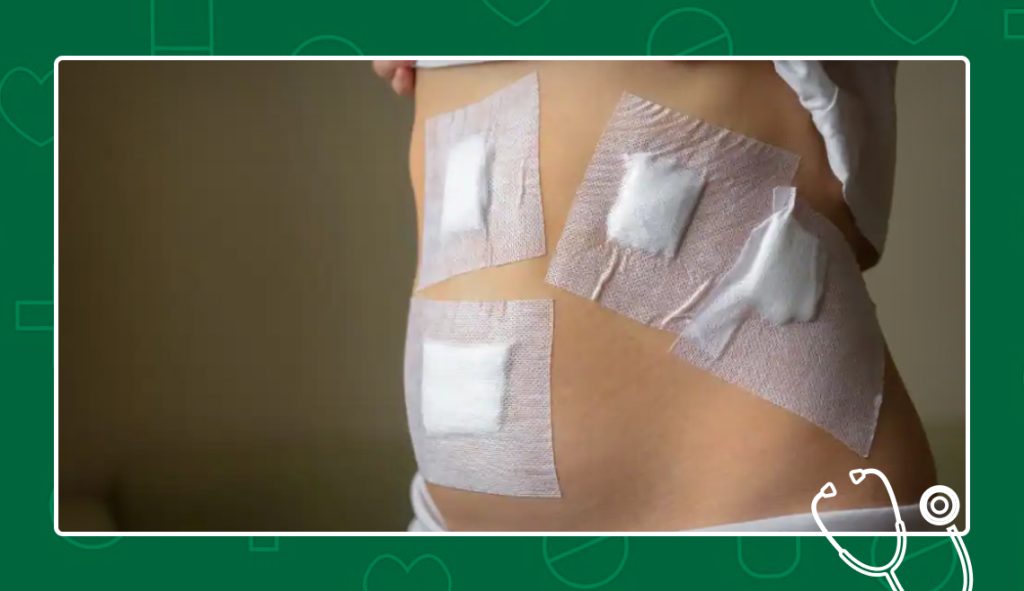
There are a couple of long-term side effects that are not directly related to digestion, but rather to the operation itself. They are rare.
However, if you know about them, you will be able to identify them early.
Hernias And Scar Problems
Laparoscopic surgery involves a few small incisions, and the one in the belly button is the most likely to weaken. A hernia at the trocar site will present as a bulge or tenderness around the scar, usually when coughing or lifting.
It occurs in a small number of patients and can be corrected in a quick repair surgery. There may also be some scar pain or numbness around the incisions that persist for a while, but typically go away.
Adhesions And Bile Duct Injury
After any abdominal surgery, internal scar tissue (adhesions) can develop and sometimes lead to pain or, rarely, to bowel obstruction years later.
Bile duct injury is the most serious surgical complication, occurring in well under 1% of laparoscopic procedures.
It is typically noticed shortly after surgery, but a narrowing (stricture) may occur months or years later.
As a result, this leads to recurrent jaundice, fever, or abnormal liver tests. These cases need a specialist team.
Eating For The Long Term
There is no single “gallbladder-free diet” that has been proven, and you do not have to follow a strict diet for the rest of your life.
The idea is to cooperate with the slow flow of bile, rather than fighting it. What works best for most people is summarized in the table below.
| Lean Toward | Go Easy On |
| Small, regular meals through the day | Very large, heavy meals |
| Lean protein: fish, poultry, beans | Deep-fried food and greasy takeout |
| Soluble fiber: oats, bananas, psyllium | Cream sauces, butter, and rich desserts in large portions |
| Fruits, vegetables, and whole grains | Excess caffeine and alcohol if you have loose stools |
| Healthy fats in modest amounts: olive oil, nuts, avocado | Spicy food if it triggers urgency |
Reintroducing Foods Gradually
Do not eliminate a food for good, but if it does cause problems, try it again a few weeks later in smaller amounts.
Tolerance often improves.
A food and symptom diary can be useful to identify your own triggers, which vary from person to person.
Fiber And Fluids
Soluble fiber will absorb excess bile in the gut and harden stools, which is beneficial if diarrhea continues.
Add fiber gradually to prevent additional gas and drink plenty of water, particularly when stools have been loose.
Some people also find that reducing the amount of sugar alcohols and high amounts of caffeine can help reduce urgency.
What The First Years Typically Look Like
Most people go through a rough arc of the experience.
The following is a general guideline and not a guarantee since recovery is dependent upon your health, surgery type and cause.
| Time After Surgery | What Is Typical |
| First 2 weeks | Incision soreness, shoulder pain from gas used in surgery, bloating, gradual return to normal activity |
| 1 to 3 months | • Loose stools or gas following rich foods; digestion readjusting • Most people return to a near-normal diet |
| 3 to 12 months | • For most, symptoms resolve • For a minority, symptoms persist and should be assessed for diarrhea or pain |
| Beyond 1 year | Most people do not have any significant digestive restrictions and they can have regular health checks without any issues |
Who Is More Likely To Have Lasting Problems
There are a number of factors that increase the likelihood of ongoing symptoms.
Those with symptoms who did not have obvious gallstones prior to surgery are at increased risk for having pain after surgery.
This is because the gallbladder might not have been the actual cause.
If a child already has IBS, anxiety, or chronic reflux, this is a risk factor for continued complaints.
In some studies, younger patients and women experience persistent symptoms more frequently.
Lastly, emergency surgery for severe inflammation has been linked to slower recovery than a planned surgery.
When To Consult A Healthcare Professional: A Life Without Gallbladder
Yes, it would not be a problem to live without a gallbladder.
There are some things that you should get checked out, however.
If it appears to be minor, say, any symptom that persists for more than three months. If diarrhea persists for weeks, pain returns, the abdomen becomes bloated again, or weight is lost without a known cause, it’s time for a visit.
The reason behind this is that most causes are treatable once found. For instance, a bulge around a scar should also be seen.
If you have pain, fever and chills, yellow skin or eyes, dark urine, pale stools or vomiting more than once, seek urgent care.
Since these can signal a retained stone or bile duct problem, go see a professional.
Furthermore, seek immediate medical attention for severe abdominal pain, a hard belly or black or bloody stools.
In addition, seek medical attention if you experience chest pain or difficulty breathing with abdominal pain.
Most people do not experience any complications after the first few months without a gallbladder.
The long-term impact of gallbladder removal is best viewed as a change, not a hurt: Your digestion is slightly different and you discover what it enjoys.
If it is nagging you, think of it as a problem that can be solved, as in most cases it can.
Disclaimer: The information provided in this article is for general informational purposes only. It does not, and is not intended to, constitute medical or health advice. Please consult a qualified healthcare professional for medical guidance or expert health assistance.
References
- Zheng, M. (2025). Fifteen-year impact of cholecystectomy on multiple organs. Clinical and Molecular Hepatology, 32(1), e43. PubMed Central.
- Zackria, R., & Lopez, R. A. (2023). Postcholecystectomy syndrome. StatPearls – NCBI Bookshelf.
- Cleveland Clinic. (2026). Cholecystectomy (Gallbladder removal). Cleveland Clinic.


