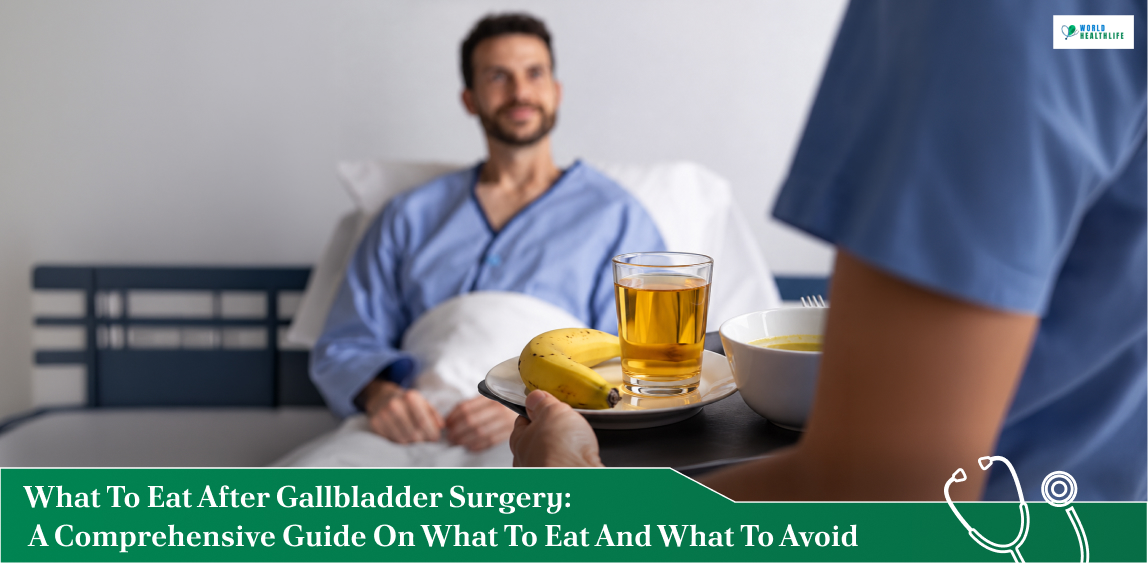
Having your gallbladder removed is a great step toward ending painful attacks. However, it does change how your body handles food.
Normally, your gallbladder stores bile to help break down fats. Without it, your liver drips bile directly into your digestive system.
So, due to this change, eating a heavy or greasy meal too soon can cause unpleasant side effects.
These include:
- Bloating
- Stomach cramps
- Diarrhea
Thus, learning what to eat after gallbladder surgery is the best way to avoid this discomfort while giving your body time to heal.
Your digestive tract simply needs a few weeks to adapt to its new setup.
By choosing the right foods during early recovery, you can prevent digestive issues and help your body bounce back much faster.
This comprehensive guide will give you a clear, easy-to-follow roadmap for your recovery.
We will break down exactly what to eat during the first few days, which low-fat foods are safe to add later, and which items you should avoid.
Therefore, with the right nutrition, you can rebuild your digestive strength smoothly. Not just that, but you can get back to your normal routine without any worry.
The Necessity Of Gallbladder Surgery: Why Does It Happen In The First Place
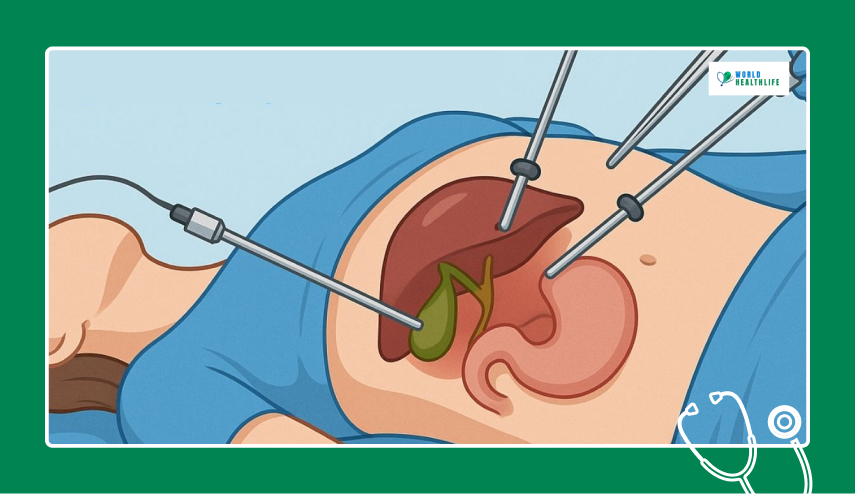
Let us learn what this surgery is and why it even happens in the first place.
Your gallbladder is a small, pear-shaped organ located just under your liver.
Moreover, its primary job is to store bile, which is a digestive fluid made by the liver, helping break down fats.
While you can live a perfectly healthy life without your gallbladder, certain medical issues can cause the gallbladder to become inflamed, infected, or blocked.
So, when this happens, surgical removal, or cholecystectomy, is usually the safest and most effective solution.
Symptomatic Gallstones: Cholelithiasis
In medical terms, gallstones are referred to as cholelithiasis. They are hard deposits which are made of cholesterol or bilirubin, forming inside the gallbladder.
They can range in size from tiny grains of sand to golf balls.
If a stone gets stuck in the exit duct, it causes a sudden, intense pain in the upper right abdomen known as biliary colic.
These painful attacks usually happen after eating fatty meals.
Gallbladder Inflammation: Cholecystitis
If a gallstone completely blocks the cystic duct, bile gets trapped inside the gallbladder.
As a result, this leads to severe inflammation, swelling, and sometimes a bacterial infection.
Cholecystitis causes constant, severe pain, often accompanied by a fever and nausea.
Bile Duct Obstruction: Choledocholithiasis
In certain cases, a gallstone slips out of the gallbladder and blocks the common bile duct.
Consequently, this blocks bile from leaving the liver and pancreas as well.
Moreover, this can cause life-threatening complications such as the following:
- Jaundice or yellowing of the skin and eyes
- Pancreatitis or severe inflammation of the pancreas
Large Or Growing Gallbladder Polyps
While small polyps are generally considered harmless, any mucosal growth that reaches 10 mm or larger, or a rapid growth on an ultrasound, carries a risk of becoming cancerous.
Thus, removal of the gallbladder removes the overall risk entirely.
What Happens In A Gallbladder Surgery?
Also termed cholecystectomy, gallbladder surgery is actually quite a common operation where there is a removal of a diseased or gallstone-filled gallbladder.
The primary goal of the procedure is to safely disconnect the organ from the liver and bile ducts.
As a result, this helps relieve chronic pain while preventing future infections.
Based on your specific medical history, a surgeon will perform the operation using one of two primary methods.
| Surgical Type | Technique | Key Recovery Benefit |
| Laparoscopic Surgery (Most Common) | 3–4 tiny keyhole incisions using a camera and scope | • Less pain • Faster recovery, usually home the same day |
| Open Surgery (Less Common) | One larger 10–15 cm incision under the ribs | • Used for severe scarring and complex infections • Or tumors |
Timeline Of Recovery
Usually, the recovery period following a gallbladder removal is largely dependent on whether the procedure was performed laparoscopically or through open surgery.
While external surgical wounds typically close within a few weeks, internal digestive adaptation can take up to a month or more.
| Recovery Stage | Timeframe (Laparoscopic) | Timeframe (Open Surgery) | Clinical Description & What to Expect |
| Immediate Post-Op | Hours 1 to 24 | Days 1 to 3 | • Patients wake up in recovery • Laparoscopic patients usually go home the same day • Open surgery requires a multi-day hospital stay |
| Early Recovery | Days 2 to 7 | Weeks 1 to 2 | • Abdominal soreness peaks and subsides • Patients transition to soft foods and light walking while avoiding heavy lifting |
| Return to Normal Activities | Weeks 1 to 3 | Weeks 4 to 6 | • Incisions are completely healed externally • That allows most individuals to return to desk work and light physical routines |
| Full Internal Healing | Months 1 to 3 | Months 2 to 3 | • The digestive tract fully adapts to the continuous flow of bile • Now, a standard, unrestricted diet can usually be enjoyed |
What To Eat After Gallbladder Surgery? A Detailed Roadmap To Nutrition
Having a modification to your diet after a cholecystectomy is an essential step you should take.
This helps you prevent digestive distress while your body adapts to the continuous flow of bile.
The following sections outline a structured, step-by-step roadmap to guide your nutritional choices through each phase of your recovery.
Immediate Post-Surgery: First 24 To 48 Hours
During the first 24 to 48 hours immediately after surgery, your digestive system is waking up from general anesthesia.
This makes it vital to keep your intake incredibly light.
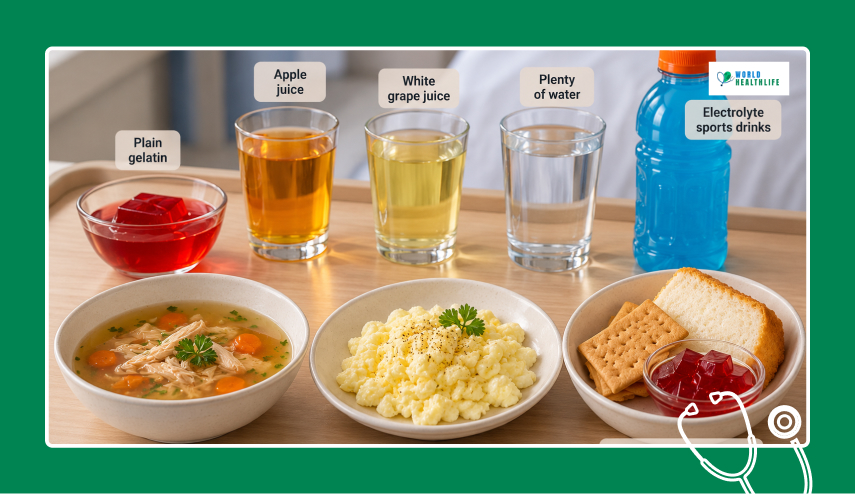
Doctors universally recommend starting with a strict clear liquid diet to minimize nausea and ease your stomach back into action.
Try to focus entirely on easily absorbable fluids such as clear broths. That includes chicken, vegetables, or beef.
You may also include the following in your diet:
- Plain gelatin
- Apple juice
- White grape juice
- Plenty of water
- Electrolyte sports drinks
One more thing. Try to avoid all dairy, solid foods, or carbonated beverages during this immediate window.
Ultimately, transition forward only when you can tolerate liquids without any cramping or nausea.
Days 2 To 4 And Early Recovery: Soft, Low-Fat Foods
Now, on to the next stage. Here, your body is ready for solid foods.
As your body signals its readiness for solid foods, you should slowly transition to bland, soft, and ultra-low-fat options for days 2 through 4.
During this early recovery window, your liver cannot process large quantities of fat at once.
Thus, keeping your total fat intake under 3 grams per serving is highly recommended.
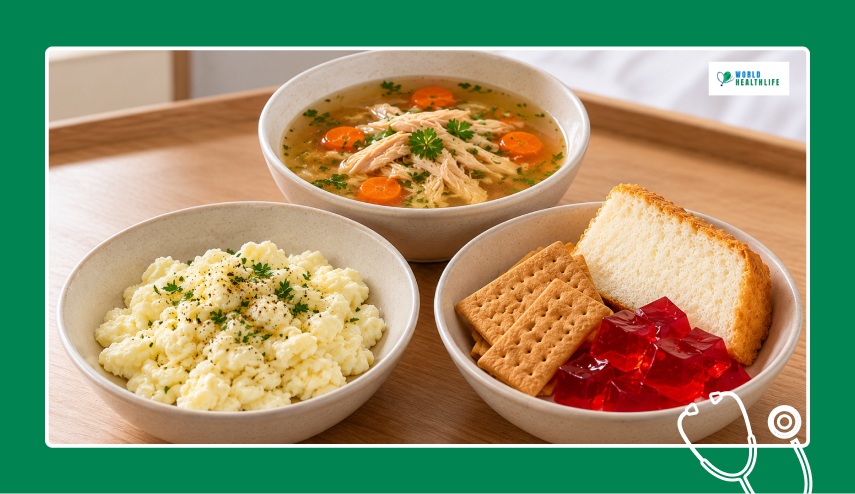
In this stage of recovery, typically, the ideal choices include:
- Plain oatmeal
- Applesauce
- Plain toast (no butter or any other bread accompaniment)
- Bananas
- White rice
- Plain crackers
For consumption of proteins, opt for soft, easily digestible, low-fat items.
For instance, you can integrate items such as plain, fat-free Greek yogurt, egg whites, boiled potatoes, or very small portions of unseasoned, skinless chicken breast.
Safe Foods To Include Gradually
After the first few days of smooth digestion, you can begin expanding your menu by slowly introducing a wider variety of whole foods over the next few weeks.
When you are trying to reintroduce items, try doing that one at a time. In this way, you can easily isolate any foods that might trigger bloating or gas.
| Food Category | Recommended Options | Health Benefit & Recovery Role |
| Lean Proteins | Skinless turkey breast, baked white fish (like cod or tilapia), pork tenderloin, and tofu | Provides essential amino acids for tissue repair without overloading the liver with fat. |
| Soluble Fiber | Cooked carrots, sweet potatoes, zucchini, and barley | Helps bind loose bile acids in your gut, effectively preventing post-op diarrhea. |
| Healthy Carbohydrates | Brown rice, quinoa, and whole-wheat pasta or bread | Supplies sustained energy; should be added in tiny portions to check your fiber tolerance. |
| Healthy Fats (Strict Moderation) | Small drops of olive oil, thin slices of avocado, or a tiny smear of nut butter | Promotes nutrient absorption; never exceed more than a teaspoon per meal during the first month. |
What To Not Eat: Foods To Limit Or Avoid
In order to prevent unpleasant side effects such as sudden diarrhea, severe bloating, stomach cramps, and nausea, you must carefully regulate one thing.
That is, what you put on your plate during the first four to six weeks of recovery.
Without a gallbladder to store bile, a sudden influx of heavy or irritating foods will overwhelm your digestive system.
So, to ensure a comfortable recovery, you need to strictly limit or completely avoid the following food categories.
High-Fat And Deep-Fried Foods
This is the most critical category to avoid.
Try to keep away from French fries, fried chicken, potato chips, pizza, donuts, and heavy gravies.
That is because your liver cannot dump a concentrated dose of bile into your gut to emulsify a large volume of lipids.
Instead, eating these items will cause undigested fat to pass directly into your large intestine, leading to greasy, urgent stools (steatorrhea).
Fatty And Processed Meats
You should also avoid meats with visible fat marbling or high processed fat contents.
The list here includes
- Bacon
- Sausage
- Hot dogs
- Bologna
- Pepperoni
- Salami
- Ribs
- High-fat ground beef.
Ultimately, try to stick exclusively to skinless, lean poultry and white fish during early recovery.
Full-Fat Dairy Products
Foods such as the following are highly difficult for your body to process right now:
- Whole milk
- Heavy cream
- Sour cream
- Ice cream
- Butter
- Full-fat cheeses such as cheddar, mozzarella, and brie
However, if you still choose to consume dairy, ensure it is labeled as 100% fat-free or skim.
Gas-Producing And High-Fiber Foods
While healthy fiber is eventually necessary to solidify bowel movements, introducing heavy or raw fiber too quickly can cause painful bloating and flatulence.
Limit cruciferous vegetables like raw broccoli, cauliflower, cabbage, and Brussels sprouts.
Not just that, but also legumes like beans, lentils, and chickpeas for the first few weeks.
Caffeine, Alcohol, And Carbonation
Coffee, energy drinks, and strong black teas contain caffeine, which acts as a natural gastrointestinal stimulant.
This can speed up an already irritated digestive tract and worsen diarrhea.
Carbonated sodas can trap excess air in your stomach, while alcohol can place unnecessary stress on your liver as it heals.
Highly Spicy And Acidic Items
Dishes heavily seasoned with hot sauce, cayenne pepper, chili powder, curry, or citrus juices can severely irritate your stomach and intestinal lining.
Thus, this can worsen post-surgical nausea or acid reflux.
Red Flag Ingredients To Spot On Food Labels
When you buy packaged foods, always flip the box over to read the nutrition facts panel.
During your early recovery window, try selecting individual items that contain less than 3 grams of far per serving.
Also, aim to keep your total daily fat intake under 30 grams until your doctor clears you for a standard diet.
| Instead of… | Choose… |
| Cream-based soups (Chowders, cream of mushroom) | Clear, broth-based soups (Chicken, beef, vegetable bone broth) |
| Whole eggs or eggs fried in butter | Egg whites cooked in a non-stick pan with light cooking spray |
| Mayonnaise, creamy salad dressings, or margarine | Fat-free vinaigrettes, lemon juice, or a splash of white vinegar |
| Standard pastries, pies, cookies, and chocolate | Angel food cake, plain graham crackers, or low-sugar gelatin |
Ensure Faster Recovery With Proper Nutrition
Trying to transition back into your regular routine after a gallbladder surgery is a gradual journey. Remember, it is not an overnight shift.
Your body is incredibly resilient, and your digestive system will naturally adapt over the coming weeks to process healthy fats smoothly once again.
The secret to a faster, pain-free recovery lies entirely in your patience and consistency:
- Eat small, frequent meals rather than large feasts
- Drink plenty of water between dishes
- Introduce new whole foods very gradually
First, keep your fat intake low during the early weeks. Then, listen closely to your body’s signals.
In that way, you can steer clear of frustrating digestive setbacks like bloating or sudden diarrhea.
Give your liver and intestines the perfect, low-stress environment to heal. That way, you will be able to ensure that you can return to your energetic, everyday life with absolute comfort and confidence.
Disclaimer: The information provided in this article is for general informational purposes only. It does not, and is not intended to, constitute medical or health advice. Please consult a qualified healthcare professional for medical guidance or expert health assistance.
References
- Guo, C., Lan, Y., Zhang, Y., Guo, Y., Sun, C., & Li, M. (2026). Post-Cholecystectomy nutritional management: A comprehensive review of evidence-based guidelines and clinical practice. Frontiers in Surgery, 13, 1911177. National Library of Medicine.
- Dahmiwal, T., Zade, A., Tote, D., Reddy, S., & Sudabattula, K. (2024). Dietary Considerations in Cholecystectomy: Investigating the Impact of Various Dietary Factors on Symptoms and Outcomes. Cureus, 16(5), e61183. National Library of Medicine.
- Johns Hopkins Medicine. (2024). Cholecystectomy. Johns Hopkins Medicine.
- Mayo Clinic. (2025). Cholecystectomy (gallbladder removal) – Mayo Clinic.
- Harvard Health. (2025, March 22). Cholecystectomy. Harvard Health.
- Asad, U., Wang, C. F., & Jones, M. W. (2025, July 2). Laparoscopic cholecystectomy. StatPearls – NCBI Bookshelf.