
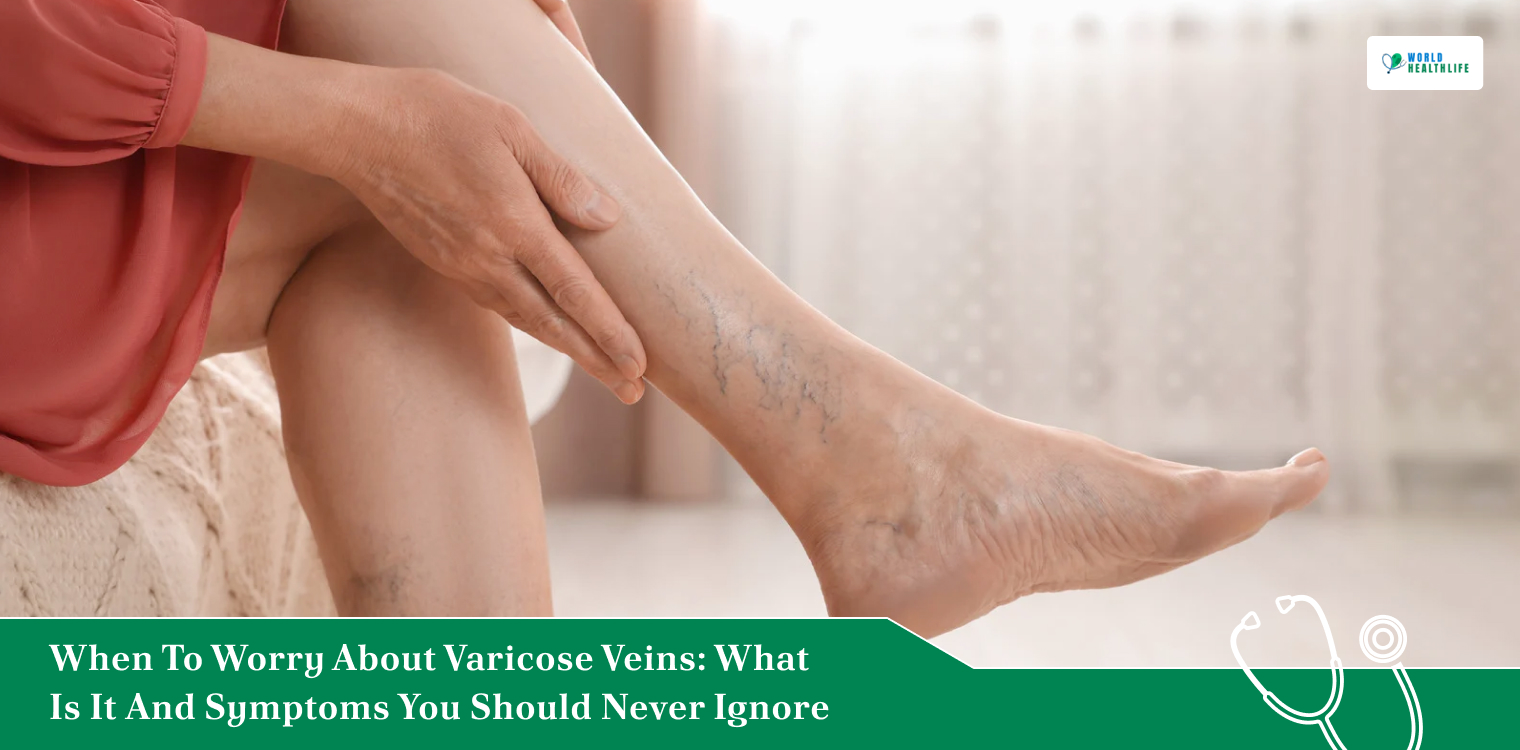
Have you ever noticed any veins that seem to appear twisted, bulging, or bluish purple in color?
If the answer is yes, then you’re not alone. There are over a million people who live with varicose veins.
Varicose veins most commonly develop in the legs and feet due to the daily pressure of standing and walking.
For many, these changing veins are primarily a cosmetic concern. Generally, they are something to hide under longer clothing. Otherwise, these are usually ignored.
However, varicose veins are not always some harmless aesthetic issue. A circulatory condition known as venous insufficiency often causes them as a visible outward sign.
When the tiny one-way valves inside your veins start to weaken or fail, blood starts to pool. This happens instead of flowing efficiently back towards your heart.
Over time, this backward pressure stretches the vein walls, causing discomfort that goes far beyond appearance.
Although you can often manage mild vein changes with simple lifestyle adjustments, ignoring evolving symptoms can lead to more severe issues.
The difference between a minor inconvenience and a genuine medical concern can be quite difficult to know.
This is why knowing when to worry about varicose veins is crucial to protect your overall long-term mobility and comfort.
The following guide will cover everything that you need to be aware of when tracking your symptoms, identifying the root causes, and recognizing the critical warning signs.
The signs further help you to know when to seek professional medical care.
Understanding Varicose Veins
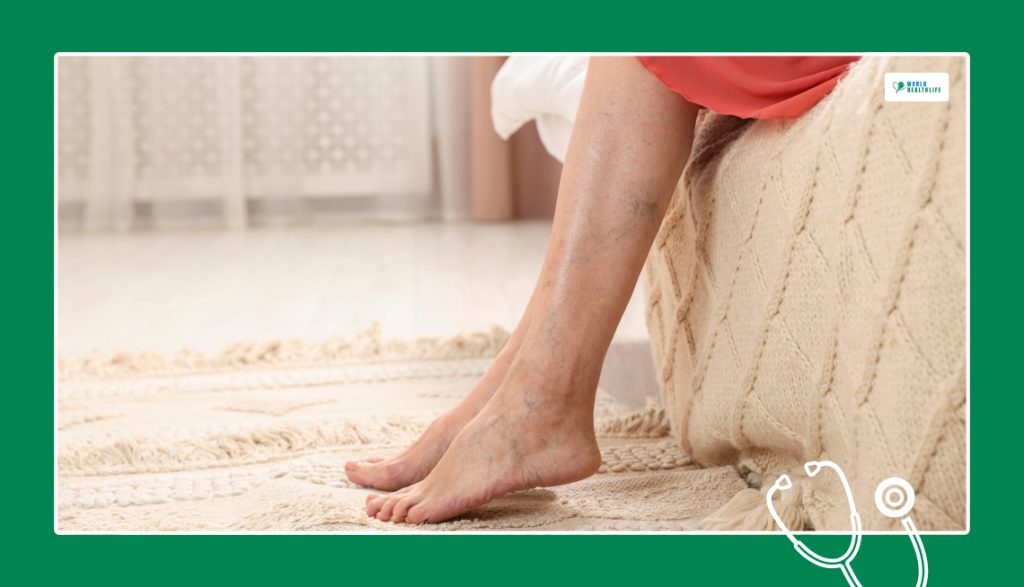
To understand when to worry about varicose veins, you first need to understand what they are.
Swollen and twisted blood vessels, known as varicose veins, bulge under your skin and appear blue or purple.
Usually, they appear in your legs, feet, and ankles, where they can be painful or itchy.
In most cases, people see varicose veins as a cosmetic issue. However, in certain cases, they can mean you have a more serious health concern.
In that case, a healthcare provider can help you determine whether home remedies are enough to relieve symptoms or you need further treatment.
Twisted or Bulging Blue Veins
When the dynamic return system fails, it produces the trademark sign: bulging, twisted blue or purple lines.
These rise under the skin’s surface. This distortion occurs due to blood actively pooling in the superficial venous system.
Since veins have thinner and more elastic walls than thick arteries, they are highly prone to stretching under excess pressure.
The expanding physical volume of trapped blood forces the vein to dilate, lengthen, and loop back on itself. The looping creates the characteristic rope-like structure.
Furthermore, you most commonly see these across the calves and the back of the knees.
Damaged or Weakened Vein Valves
The root mechanical failure that lies behind those bulging structures lies directly with the tiny one-way valves that line your veins.
When it comes to a healthy circulatory system, these delicate flaps open to allow upward blood flow toward the heart. Moreover, they immediately snap shut to prevent gravity from pulling that blood backward.
However, factors such as high pressure, physical strain, or aging can permanently stretch the vein walls.
When a vein stretches, the edges of these internal valves can no longer meet tightly while closing.
As a result, the breakdown leads to a condition which is called venous reflux. Here, blood continuously leaks backward through the faulty seals, while creating local tension.
Chronic Venous Insufficiency (CVI)
In the case of untreated venous reflux, it generally progresses into a more serious medical condition. This is also known as Chronic Venous Insufficiency (CVI).
Having CVI means your circulatory system in the lower limbs is fundamentally facing struggles to return deoxygenated blood to the central cardiorespiratory system over the long term.
Though simple varicose veins can look pronounced, CVI moves the issue deeper. Furthermore, it alters the fluid pressure across the entire lower leg.
With this sustained venous hypertension, fluid and metabolic waste is forced to leak out of the microcapillaries. It further pools into the surrounding skin and soft tissues.
Over time, this chronic stagnation can cause permanent swelling, inflammatory skin changes and hard-to-heal open wounds.
Key Risk Factors And Causes
Before you start thinking “when to worry about varicose veins”, you first need to know the key causes and risk factors associated with it.
Although the mechanical failure of vein valves triggers blood pooling, the whole breakdown rarely happens in a vacuum.
By recognizing the primary catalysts, you can be able to determine your individual level of vulnerability.
Prolonged Standing or Sitting
When you stay in a stationary position for hours at a time every day, it can be a common and direct trigger for vein damage.
On the other hand, when you are walking or moving, your calf muscles contract dynamically. Furthermore, they effectively squeeze your lower leg veins to propel blood back up towards your heart.
Moreover, when you sit or stand completely still, this natural muscle pump remains entirely inactive. Without that muscular assistance, your vascular system relies on internal pressure to fight gravity.
Over time, this stagnant stance forces blood to pool in your lower extremities. Moreover, it continuously stretches the vein walls and weakens the internal valves.
Genetic Predisposition and Family History
If your parents or close relatives have struggled with vascular issues, you have a higher statistical likelihood of developing them yourself.
Research shows that if both of your parents have a history of varicose veins, your personal risk can skyrocket to nearly 90%.
Genetics directly dictate the baseline structural integrity of your circulatory system. Moreover, certain individuals simply inherit naturally weaker vein walls or fewer internal valves.
They stretch and fail under normal and everyday physical pressures.
Hormonal Changes and Pregnancy
Vascular changes are highly prevalent among women. Furthermore, this is largely driven by shifting hormone levels.
Hormones such as progesterone relax and soften body tissues. This inadvertently causes the smooth muscle walls of your veins to lose their firm elasticity as well as stretch.
This hormonal relaxation is heavily compounded during pregnancy. In order to support a developing fetus, a pregnant woman’s total blood volume increases substantially, putting an immense baseline strain on the vascular network.
Simultaneously, the expanding uterus physically presses against the major pelvic veins. This blocks the smooth upward blood flow and raises lower leg pressure.
Increased Vascular Pressure from Obesity
When you carry excess body mass, it places a relentless physical burden on your entire circulatory network. The sheer mass of extra tissue causes a rise in the intra-abdominal pressure.
The extra pressure acts as a literal physical bottleneck for blood trying to travel from your legs back up to your heart.
Since the blood must push harder to move past this high-pressure midsection, the structural tension in your lower-leg veins increases dramatically.
The persistently elevated vascular wall tension accelerates the breakdown of fragile valve mechanisms.
Natural Aging and Loss of Vein Elasticity
The simple wear and tear is natural, being a primary driver of venous degradation.
As the human body ages, it leads to a natural production of less collagen as well as elastin. These are the fundamental structural blocks, keeping your blood vessels firm and springy.
Without this youthful resilience, vein walls naturally become brittle and prone to sagging under ordinary blood flow.
Concurrently, the tiny internal valves that have been snapping open and shut for decades begin to fray, losing their tight seal. This makes backward leakage and blood pooling an increasingly common occurrence over time.
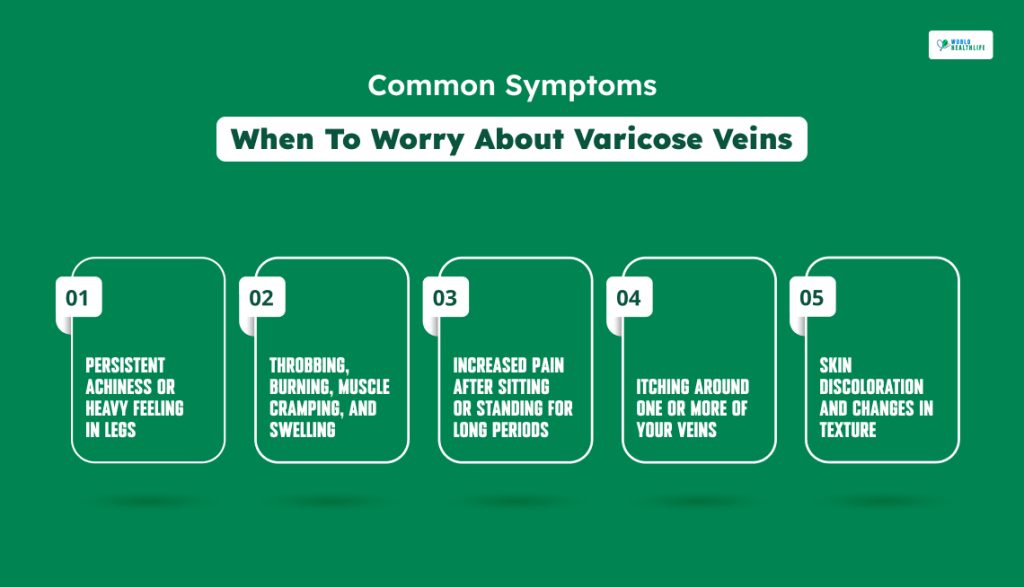
Common Symptoms: When To Worry About Varicose Veins
To understand when to worry about varicose veins, recognizing the transition from a cosmetic issue into a medical concern is needed.
That would require paying close attention to daily physical sensations. Though mild vein changes usually are painless, developing specific physical discomforts suggests otherwise.
This indicates that your circulatory system is under sustained and unhealthy pressure.
Persistent Achiness or Heavy Feeling in Legs
Facing constant dull ache or an overwhelming sense of fatigue in your lower limbs is one of the earliest signs of worsening venous pressure.
Patients generally describe this sensation as feeling like their legs are made of lead. This is a heavy sensation that is caused by the physical volume of deoxygenated blood pooling in the lower tissue beds.
Since the blood is stagnant, oxygen delivery decreases while lactic acid and other metabolic waste products accumulate in the muscle tissues. As a result, a persistent and draining ache is caused.
Throbbing, Burning, Muscle Cramping, and Swelling
As venous pressure increases, symptoms usually become sharper and more disruptive. You may experience a distinct throbbing or burning sensation directly over the affected veins.
This indicates localized inflammation of the vessel wall. At night, this poor circulation can lead to triggers in causing painful and sudden muscle cramps.
Commonly called charley horses, as the oxygen-deprived muscles involuntarily contract, they are frequently accompanied by edema.
This type of swelling is known as edema. It causes your shoes or socks to leave deep visible indentations in your skin by the end of the day.
Increased Pain After Sitting or Standing for Long Periods
If the discomfort in your leg intensifies dramatically after periods of physical stillness, your veins are actively struggling to fight gravity without muscular assistance.
You may notice a sharp and throbbing pressure, building steadily while sitting at a desk or standing in a line. The stillness allows blood to pool rapidly in the weakened vessels while stretching the sensitive nerve endings wrapped around the vein walls.
However, relief often comes only after you elevate your legs above your heart or engage in prolonged walking to reactivate the calf muscle pump.
Itching Around One or More of Your Veins
Having intense and persistent itching in the skin immediately overlying a varicose vein is a symptom that may surprise many patients. However, it points directly to an internal inflammatory process.
Medically termed as stasis dermatitis, this localized itching occurs when high vascular pressure forces red blood cells and fluid to leak out of the capillaries and into the surrounding skin layers.
Your immune system treats this leaking fluid as a foreign threat. It further triggers a localized inflammatory response, dryness and severe irritation that scratching will not resolve.
Skin Discoloration and Changes in Texture
When blood pools long enough in the lower leg, the iron from the leaked red blood cells stains the skin from the inside out. Turning the tissue a dark brown, rusty, or deep red in color.
However, if left untreated, this chronic fluid leakage alters the actual cellular structure of your skin. The tissue may also become thick, leathery, or unusually brittle and dry.
This structural deterioration is a critical warning sign, indicating that your skin may lose its healthy blood supply. Furthermore, it becomes highly susceptible to spontaneous tearing, infection, and poor healing.
Advanced Warning Signs Of Complications
When varicose veins progress beyond baseline discomfort, they trigger structural damage to the surrounding tissues and the deep vascular network.
Developing any of these advanced warning signs prompts you when to worry about varicose veins. These suggest the venous insufficiency has reached a severe phase, which requires immediate medical intervention.
Open Sores or Venous Ulcers Near the Ankle
The appearance of open breaks in the skin suggests that chronic fluid pooling has entirely cut off healthy cellular nutrition. This is especially alarming around the bony prominence of the ankle.
These painful and shallow wounds are known as venous stasis ulcers. Since the surrounding skin is starved of fresh and oxygenated blood while being saturated with metabolic waste, the tissue breaks down under the slightest friction.
These ulcers are highly resistant to standard topic first aid and heal incredibly slowly. Moreover, they carry a high risk of developing a deep bacterial skin infection if left untreated by a vascular specialist.
Sudden Severe Swelling Suggesting Blood Clots (DVT)
Although mild and symmetrical ankle swelling by the end of the day is a common symptom of varicose veins, a sudden dramatic rise in swelling is a medical emergency. Furthermore, it is especially applicable when it is confined to just one leg.
Often accompanied by deep calf tenderness, the rapid change strongly suggests the formation of a blood clot in the deep venous system. This causes a condition known as Deep Vein Thrombosis (DVT).
If a piece of this deep clot breaks loose, it can travel through the bloodstream to the lungs, causing a life-threatening blockage called a pulmonary embolism.
Spontaneous Bleeding From a Surface Vein
As varicose veins stretch and bulge, they push closer to the surface of the body. It further stretches the overlying skin until it becomes incredibly thin and fragile.
Since the blood inside these vessels is under high pressure, even a minor scrape can rupture the delicate vein wall. As a result, a sudden and heavy painless bleeding that looks alarming can occur, which is difficult to stop with only simple pressure.
Any bleeding from a surface vein requires immediate elevation of the leg and firm compression. Additionally, this is followed by an urgent medical evaluation.
Lipodermatosclerosis: Hardening of the Skin
Lipodermatosclerosis is an advanced complication of chronic venous insufficiency. Here, chronic and long-term inflammation causes the subcutaneous fat layer and skin issues in the lower leg to harden and scar.
The lower leg gradually loses its natural elasticity, while turning stiff and even painful to touch.
Over time, this progressive scarring can alter the leg’s physical shape, causing the area above the ankle to shrink. On the other hand, the upper calf remains swollen. This gives the lower limb a distinctive appearance often compared to an inverted champagne bottle.
Effective Treatment And Management Options
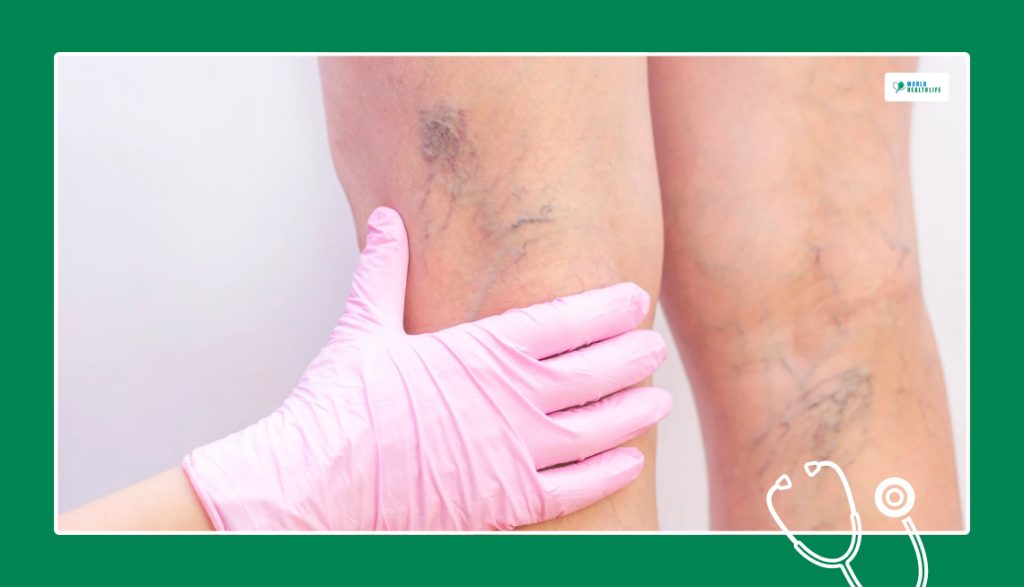
Depending on the severity of your symptoms and the structural integrity of your vascular network, you should know when to worry about varicose veins.
Addressing varicose veins involves a spectrum of care ranging from daily lifestyle adjustments to targeted medical interventions.
A vein specialist will tailor a plan to restore efficient blood flow and alleviate your discomfort, based on your symptoms and vascular structure.
At-Home Care: Compression Stockings and Leg Elevation
For mild symptoms or early-stage venous insufficiency, you can significantly reduce venous pressure and prevent disease progression through conservative daily management.
Specialized garments called graduated compression stockings apply tight, precise pressure at the ankle. They also gently loosen as they move up to the calf to mechanically force pooled blood back toward the heart.
Minimally Invasive Procedures: Sclerotherapy and Endovenous Ablation
In case home treatments turn out to be insufficient, modern vein treatments offer highly effective office-based solutions. These require virtually no downtime.
Sclerotherapy is a process that involves injecting a specialized liquid or foam chemical solution directly into smaller varicose or spider veins.
This leads to the irritated vessel walls sticking together, collapsing, and permanently scar shut.
On the other hand, for larger and deeper target vessels, endovenous ablation uses a tiny catheter inserted into the vein to deliver targeted radiofrequency energy or laser heat.
Surgical Interventions: Vein Stripping and Ambulatory Phlebectomy
For exceptionally deeply damaged vessels that are large or twisted, heat or chemicals will not treat these effectively.
Minor surgical procedures are utilized to physically remove the problematic tissue. Furthermore, ambulatory phlebectomy is a meticulous outpatient procedure.
Here, a doctor makes a series of tiny puncture-like incisions directly over the bulging vessel to gently hook and remove the superficial varicose veins section by section under local anesthesia.
Seek Emergency Care Whenever Necessary
Although many vascular changes develop gradually, certain symptoms indicate an acute crisis that requires immediate medical intervention.
Go to the nearest emergency room or call emergency services if you experience a sudden and dramatic increase in swelling confined to a single leg.
It is further alarming, especially if it is accompanied by deep calf tenderness, severe pain, or skin redness. These are the hallmark warning signs of a DVT, where a blood clot breaks free and travels to your lungs, causing a life-threatening pulmonary embolism.
In addition, seek emergency care immediately when a varicose vein ruptures and starts to bleed spontaneously. Since the blood inside these stretched vessels is under high pressure, a rupture is very dangerous.
Take Control Of Your Vascular Health Today
Varicose veins are far more than a simple aesthetic inconvenience to be hidden away under long clothing.
They serve as a visible, outward warning system for your internal circulatory health, mapping out the precise areas where your venous network is actively struggling against gravity.
While it can be tempting to minimize the early signs of achiness, swelling, or localized itching, ignoring these progressive symptoms allows venous insufficiency to quietly advance toward far more difficult and permanent complications.
The good news is that modern vascular medicine offers highly effective, gentle solutions that can stop this damage in its tracks and restore your quality of life.
Listen to what your body is telling you, track your symptoms closely, and take the definitive step of scheduling a consultation with a qualified vein specialist or vascular doctor today to protect your long-term mobility, health, and comfort.


