I am not trying to get pregnant right now. However, several friends my age are thinking about it deeply.
Specifically, a few of them are navigating the intense world of fertility treatments. Consequently, I have watched them ride an absolute emotional rollercoaster.
Initially, seeing a positive blood test brings them immense joy. But immediately after, that joy gets replaced by constant anxiety. Ultimately, they want to know when they can finally breathe a sigh of relief.
As someone who loves to dive into journals, expert commentaries, and new studies in this field that is constantly evolving, I interviewed leading reproductive specialists.
Therefore, in this comprehensive guide, I am sharing exactly what the experts say about their most pressing question: after how many weeks IVF pregnancy is safe?
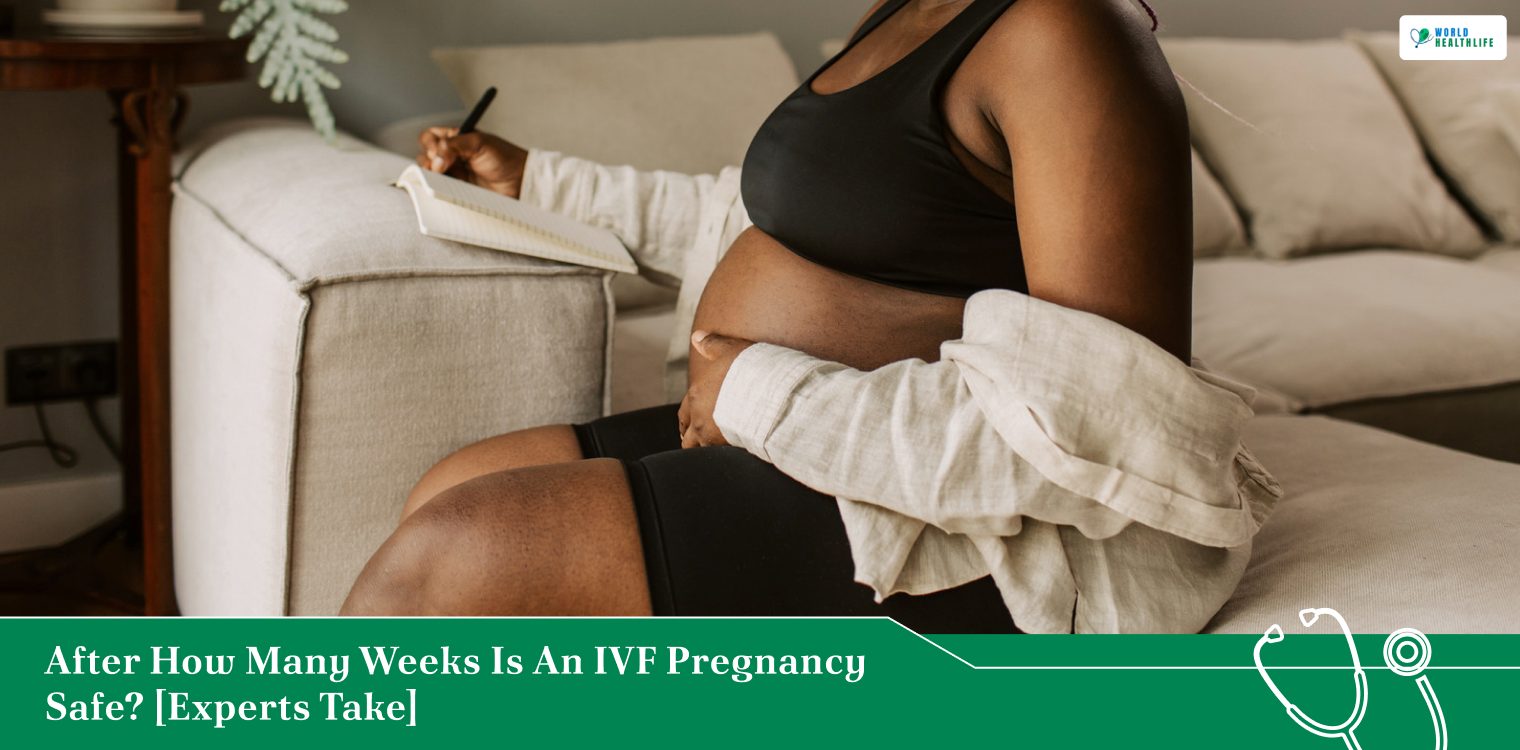
After How Many Weeks IVF Pregnancy Is Safe?

To give you a direct answer, the reproductive endocrinologists I interviewed generally consider an IVF pregnancy relatively stable and safe after 12 weeks. In fact, this milestone marks the official completion of the first trimester.
Before this point, fertility teams monitor patients very closely. However, passing the 12-week threshold changes everything.
At this stage, the overall miscarriage risk drops sharply to below 5%. Furthermore, medical care usually transitions from a specialized fertility clinic to a regular OB-GYN.
Understanding this timeline is exactly how patients learn after how many weeks ivf pregnancy is safe.
The Timeline Of IVF Safety: Key Milestones
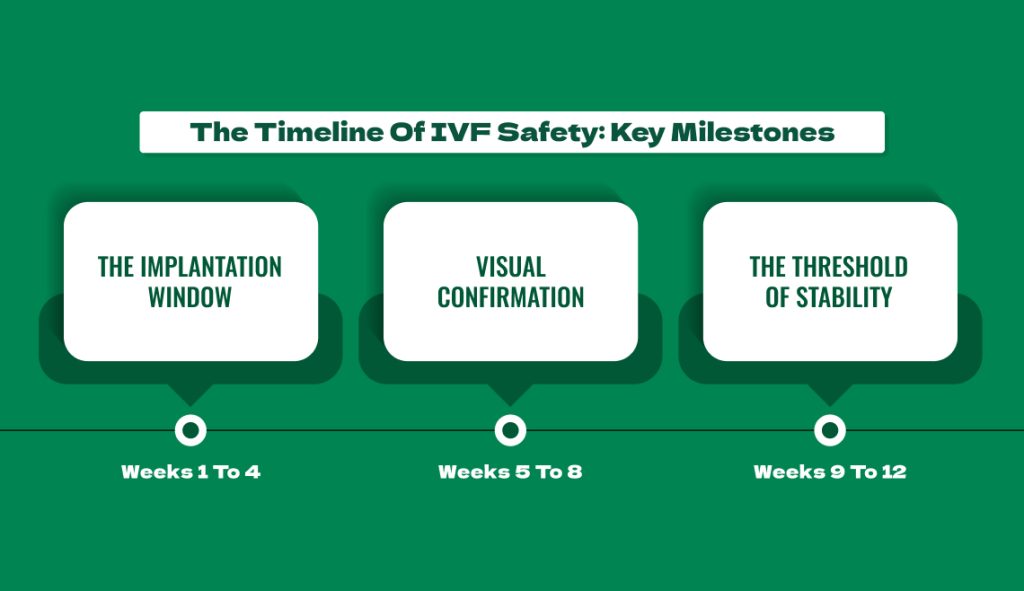
To fully explain why the 12-week mark is so critical to my friends, the doctors broke it down week by week. Essentially, safety in IVF is not a single day on the calendar. Instead, it is a series of successful biological milestones.
Weeks 1 To 4 (The Implantation Window):
The clinical team performs the embryo transfer. During this early phase, the embryo must successfully implant into the uterine lining.
Then, clinicians confirm a chemical pregnancy using beta-hCG blood tests. At this point, the pregnancy is real, but the risk of early chemical failure remains around 1 in 4.
Weeks 5 To 8 (Visual Confirmation):
Patients undergo an early ultrasound around week six or seven. During this scan, the reproductive doctor looks for a gestational sac.
More importantly, they check for a visible fetal heartbeat. Once a strong heartbeat is detected, the experts confirmed that the risk of loss drops to about 10%.
Weeks 9 To 12 (The Threshold Of Stability):
The patient enters the final stretch of the first trimester. During these weeks, the body undergoes massive hormonal shifts. As they cross the 12-week mark, the fetus is fully formed.
Anxieties ease because the statistics show the risk drops to just 1 in 100, which is the ultimate confirmation of how safe IVF pregnancy is after how many weeks. [Source: Srishti Fertility]
The Biology Behind The 12-Week Milestone: Why It Changes

So, what exactly happens inside the body at the 12-week mark to make it so secure? The specialists explained three major physiological changes to me:
1. The Placenta Takes Over:
By week 12, the placenta finishes growing. Consequently, it takes over the full job of feeding the baby. It also makes all the necessary hormones naturally.
2. Stopping Extra Hormones:
Your body supports itself now. Therefore, your doctor will tell you to stop taking daily progesterone shots or pills. You do not need external help anymore.
3. The Baby Takes Shape:
The baby’s main organs are completely formed by this stage. As a result, the risk of severe growth or developmental issues drops to an all-time low.
Factors That Influence Personal IVF Risks
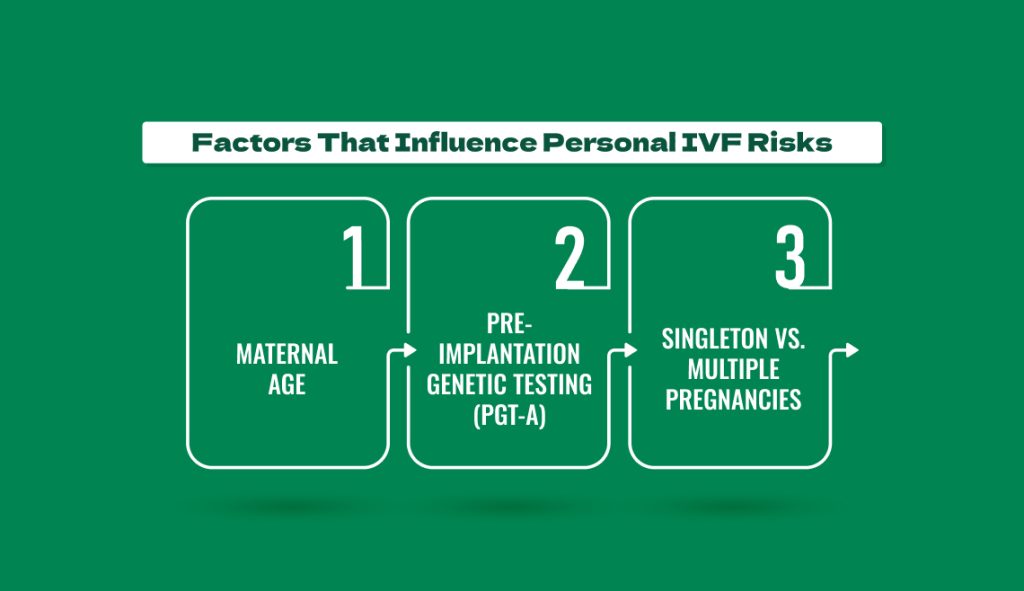
Of course, every individual biological profile is different. Accordingly, while the general rule points to 12 weeks, the doctors reminded me that certain personal factors can shift the risk timeline:
1. Maternal Age:
First of all, age is a really big factor in how stable an early pregnancy will be.
As an example, women who are 35 years old or older already have a somewhat increased baseline risk of having a miscarriage at an early stage.
As a result of that, their family physician could recommend more caution even after the first three months.
2. Pre-implantation Genetic Testing (PGT-A):
Using a genetically screened embryo changes the baseline statistics.
Specifically, a PGT-A normal embryo carries a much lower risk of early genetic failure [Source: Next Generation Clinic].
As a result, the data shows that these patients often reach clinical safety milestones much faster,
3. Singleton vs. Multiple Pregnancies:
Carrying twins or triplets increases the overall risk profile. Typically, multiple pregnancies require stricter monitoring. Thus, the safety timeline might extend deeper into the second trimester.
Future Stability Markers To Look Forward To
Even after passing the initial first-trimester safety threshold, patients still look forward to future milestones. My conversations with OB-GYNs highlighted these key shifts as time passes:
- 20-Week Mark: The patient will have a comprehensive anatomy scan. This ultrasound checks the baby’s physical structure, and the overall risk of loss drops to roughly 2%.
- 24-Week Mark: The pregnancy reaches the point of fetal viability. This means that if the baby is born early, advanced medical teams can safely intervene.
- 37-Week Mark: The pregnancy is considered full term. Interestingly, my research indicates that IVF singletons are often safely delivered a bit early – around week 39 – due to proactive medical monitoring.
Embrace The Journey Patiently And Safely
In conclusion, watching my friends go through fertility treatments has shown me that it requires immense patience.
When analyzing the medical timeline, the clinical data and expert advice point directly to the end of the first trimester. Specifically, passing 12 weeks means the pregnancy can be treated just like a natural conception.
So, I tell my friends to follow their clinical protocols closely. Take medications exactly as prescribed, and trust the medical care team. By doing so, they can navigate this beautiful journey with confidence.
Disclaimer: This article is strictly for informational purposes based on my personal research and interviews. It does not replace professional medical advice, diagnosis, or treatment from a fertility clinic or OB-GYN.