A large number of women tend to closely track their bodies while looking for signs of conception immediately after intercourse.
Moreover, when they are looking forward to getting pregnant, they tend to search for this, and they are lying awake with one question: did it work?
The honest answer is that the first 72 hours of pregnancy symptoms, counted from conception, don’t exist in any way you could feel.
After intercourse, fertilization happens quietly. However, your body does not yet know it has occurred.
True pregnancy symptoms are triggered by the hormone hCG, which is not produced until an embryo implants in the uterus. This is a process that takes up to a week.
What you feel in those opening days is almost always the normal hormonal shift after ovulation, which looks identical to PMS.
This guide explains what is actually happening inside your body hour by hour, which early signs are real, and when a test can finally give you an answer.
What Happens in the First 72 Hours After Conception
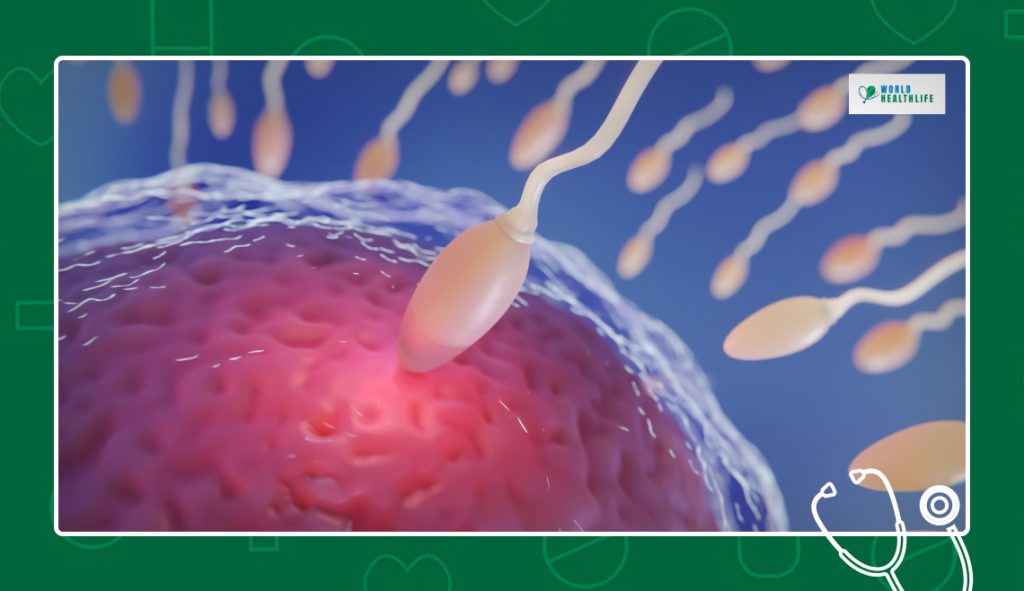
Let us get one thing straight. Conception is not a single moment. Instead, it is not a single moment.
An egg survives only 12 to 24 hours after ovulation. On the other hand, sperm can live up to five days inside the body.
Therefore, fertilization happens within about a day of ovulation. Moreover, the days after are spent on a slow journey.
Nothing in this stage sends a signal strong enough for you to notice.
Day 1: Fertilization
If a sperm meets the egg in the fallopian tube, the two cells merge into a single cell called a zygote.
Moreover, its genetic makeup, including the baby’s sex, is set at this moment. Right at this stage, you will not feel anything.
Also, there is no hormone change that your body can detect yet.
Days 2 And 3: Cell Division
The zygote begins dividing as it drifts down the tube toward the uterus.
By day three it is a tiny cluster of about 8 to 16 cells. But, it is still smaller than a grain of sand. This has not touched the uterine lining.
Thus, it has not released any pregnancy hormone.
Why The First 72 Hours Of Pregnancy Symptoms Are Not Real Symptoms
Pregnancy symptoms are caused mainly by human chorionic gonadotropin (hCG).
Medically, this is known as the hormone which is made after the embryo attaches to the uterine wall.
In that case, implantation usually occurs 6 to 10 days after ovulation. At certain times, this can be as late as 12 days.
Until then, hCG is absent, and your body has no pregnancy-specific signal to react to. The table below puts the timeline in order.
| Time after ovulation | What is happening | Can you feel it? |
| 0 to 24 hours | Egg is released and fertilized | No |
| Days 2 to 3 | Zygote divides while traveling down the tube | No |
| Days 4 to 5 | Cluster of cells reaches the uterus | No |
| Days 6 to 10 | Embryo implants in the uterine lining | Possibly light spotting or cramps |
| Days 8 to 11 | hCG becomes detectable in blood | Rarely |
| Days 10 to 14 | hCG detectable in urine; period is due | Yes, for some |
So, What Are You Even Feeling?
Any symptom in the first three days after ovulation comes from something called progesterone.
This rises after the egg is released, whether or not you are pregnant.
Moreover, it can cause breast tenderness, bloating, fatigue, mood swings, mild cramps, and a slightly higher body temperature.
Due to this, the same signs appear in a cycle that ends in a period. This is the main reason early symptom-spotting is so unreliable.
Why It Feels So Convincing
Hope makes people more alert to normal body sensations. A twinge you would ignore in an ordinary week suddenly feels meaningful, and online lists of “very early signs” fuel it.
Studies of self-reported symptoms show that people who turn out not to be pregnant report nearly the same early signs as those who are.
Early Pregnancy Symptoms Vs. PMS: How Similar Are They?
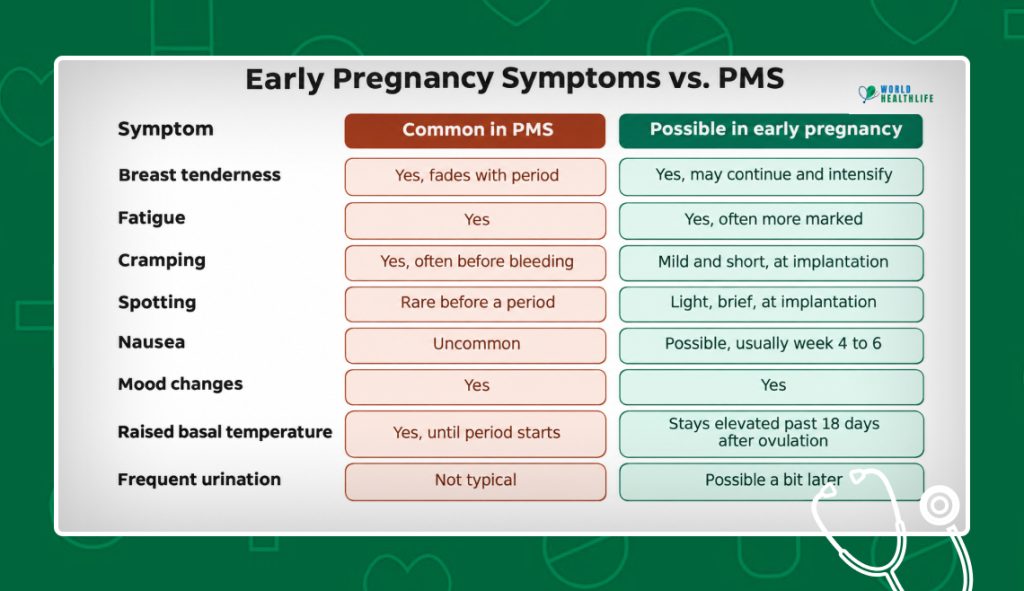
Since the two share a hormonal source, telling them apart before a missed period is close to impossible.
A few features lean slightly toward pregnancy. However, none of these are actually proof.
The table below shows where the overlap is and where small differences can appear.
| Symptom | Common In Pms | Possible In Early Pregnancy |
| Breast tenderness | Yes, usually fades when the period starts | Yes, and it may continue and intensify |
| Fatigue | Yes | Yes, often more marked |
| Cramping | Yes, often before bleeding | Yes, mild and short, around implantation |
| Spotting | Rare before a period | Light, brief spotting around implantation |
| Nausea | Uncommon | Possible, though usually starts around week 4 to 6 |
| Mood changes | Yes | Yes |
| Raised basal temperature | Yes, until the period starts | Stays elevated past 18 days after ovulation |
| Frequent urination | Not typical | Possible a bit later |
Implantation Bleeding And Cramping
About a quarter of pregnant people notice light spotting when the embryo attaches. Usually, look out for the following:
- it is pink or brown
- Lasts from a few hours to two days
- Much lighter than a period
- Mild pulling or pinching cramps can come with it
Both of these occur around days 6 to 12 after ovulation, which is well after the first 72 hours.
Basal Body Temperature
If you track temperature each morning, your reading rises after ovulation because of progesterone.
Additionally, it falls again just before a period. If it stays high for 18 days or longer. This is a stronger sign of pregnancy than any single symptom.
Moreover, it still is not a diagnosis. Thus, a test should confirm it.
The Other “72 Hours”: Implantation And A Missed Period
Not everyone means the first three days after conception. Some people are asking about 72 hours after implantation.
Others tend to be about the first three days after a missed period.
Moreover, both stages look very different from the days right after fertilization, and symptoms are far more likely.
The First 72 Hours After Implantation
Once the embryo implants, it starts the production of hCG, where the levels roughly double every 48 to 72 hours in a healthy early pregnancy.
This is when the first real changes may begin. You might notice sore or heavier breasts, unusual tiredness, a heightened sense of smell, or a metallic taste in your mouth.
Many people still feel nothing, which is entirely normal.
The First 72 Hours After A Missed Period
By this point, hCG is usually high enough for a home test to read positive.
Common signs include the following:
- Nausea (not only in the morning)
- Breast changes
- Frequent urination
- Bloating
- Fatigue that feels out of proportion to your day
- In certain cases, or darker areolas.
About half of those pregnant have some nausea by week 6, but a fifth have none.
When Can You Take A Pregnancy Test?
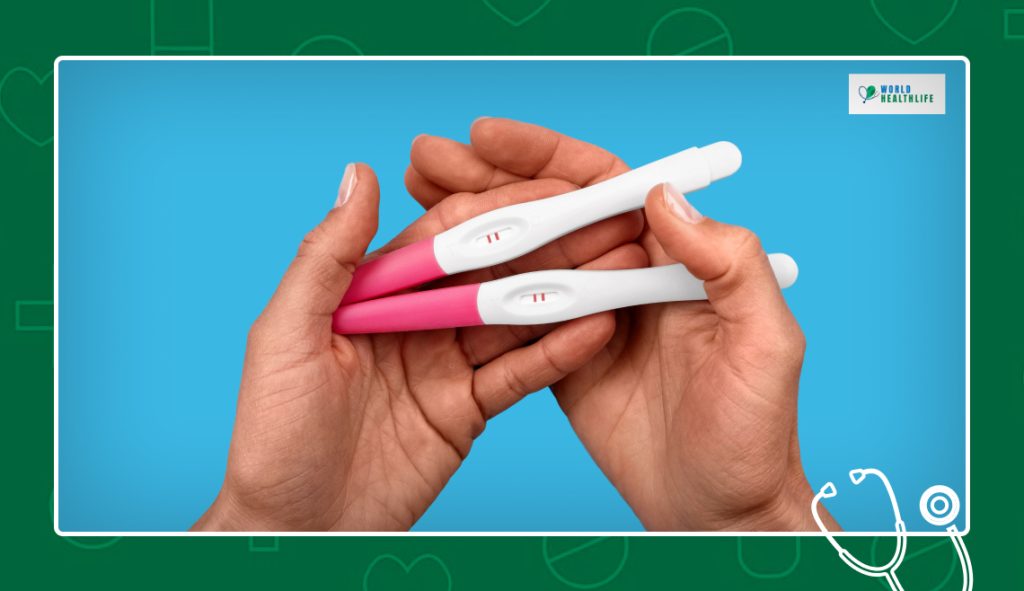
Testing early is tempting, but it often leads to confusing results. Home tests detect hCG in urine, and it takes time to build up.
Testing too soon gives a false negative, which can be discouraging and unnecessary.
The table below shows what to expect.
| Test timing | Reliability | Notes |
| Within 3 days of sex or ovulation | Not reliable | No hCG exists yet |
| 8 to 10 days after ovulation | Low | Only very sensitive tests, positive in a minority |
| First day of missed period | About 99% if used correctly | The standard recommendation |
| 1 week after a missed period | Highest | Very reliable if still negative |
| Blood test (quantitative hCG) | Detects earlier, around 8 to 11 days after ovulation | Ordered by a doctor |
Tips For An Accurate Result
Use first-morning urine, when hCG is most concentrated, and follow the instructions on timing.
If you get a negative result but your period still doesn’t arrive, test again after two to three days.
A faint line is usually a real positive, though it is worth repeating or confirming with a blood test.
What You Can Do During The Wait
The two-week wait is hard, but a few steps help you stay comfortable while protecting a possible pregnancy. None of them requires drastic changes.
Think of it as starting good habits a little early.
Habits Worth Starting Now
Begin a daily folic acid supplement of 400 micrograms if you haven’t already, since it lowers the risk of neural tube defects in the first weeks.
Avoid alcohol and smoking, and check with a pharmacist before taking new medicines.
Keep eating regular, balanced meals, and limit caffeine to around 200 mg a day, roughly one 12-ounce cup of coffee.
What Can Wait
You don’t need to rest in bed, stop exercising, or avoid sex. Normal activity doesn’t affect an embryo that is implanting.
Also resist the urge to test daily, since repeated negative results can raise stress without telling you anything new.
When To Call A Doctor
Most early symptoms are harmless, but a few need prompt attention, especially if you have a positive test.
Contact your doctor if you have spotting or cramping that grows heavy or severe, or if you have a history of ectopic pregnancy or fertility treatment.
Persistent vomiting that stops you from keeping fluids down also warrants a call.
Seek urgent care for sharp pain on one side of the lower abdomen, shoulder-tip pain, dizziness or fainting, or heavy bleeding soaking a pad within an hour.
These can be signs of an ectopic pregnancy, which needs treatment quickly.
If you have a positive test, book a first prenatal visit within the first eight weeks, and sooner if you have any medical conditions.
The first 72 hours after conception are among the most important of a pregnancy and the quietest.
Your body is doing its work without announcing it, so any sign you feel now says more about progesterone than about the outcome.
Be patient with the wait, test when the timing makes sense, and trust the result more than the symptoms.
Disclaimer: The information provided in this article is for general informational purposes only. It does not, and is not intended to, constitute medical or health advice. Please consult a qualified healthcare professional for medical guidance or expert health assistance.
References
- Anderson, J., & Ghaffarian, K. R. (2023, January 2). Early pregnancy diagnosis. StatPearls – NCBI Bookshelf.
- Ertmann, R. K., Nicolaisdottir, D. R., Kragstrup, J., Overbeck, G., Kriegbaum, M., & Siersma, V. (2022). The predictive value of common symptoms in early pregnancy for complications later in pregnancy and at birth. Acta Obstetricia et Gynecologica Scandinavica, 102(1), 33. PubMed Central.
- Johns Hopkins Medicine. (2026). 10 Early signs of pregnancy. Johns Hopkins Medicine.
- Mayo Clinic. (2026). 1st trimester pregnancy: What to expect. Mayo Clinic.