When you receive a positive pregnancy test, the whole ordeal is meant to be the start of good news.
However, in the case of ectopic pregnancy, it can turn into a medical emergency within weeks. Oftentimes, that is before the person has even told anyone that they were expecting.
So, what are ectopic pregnancy symptoms?
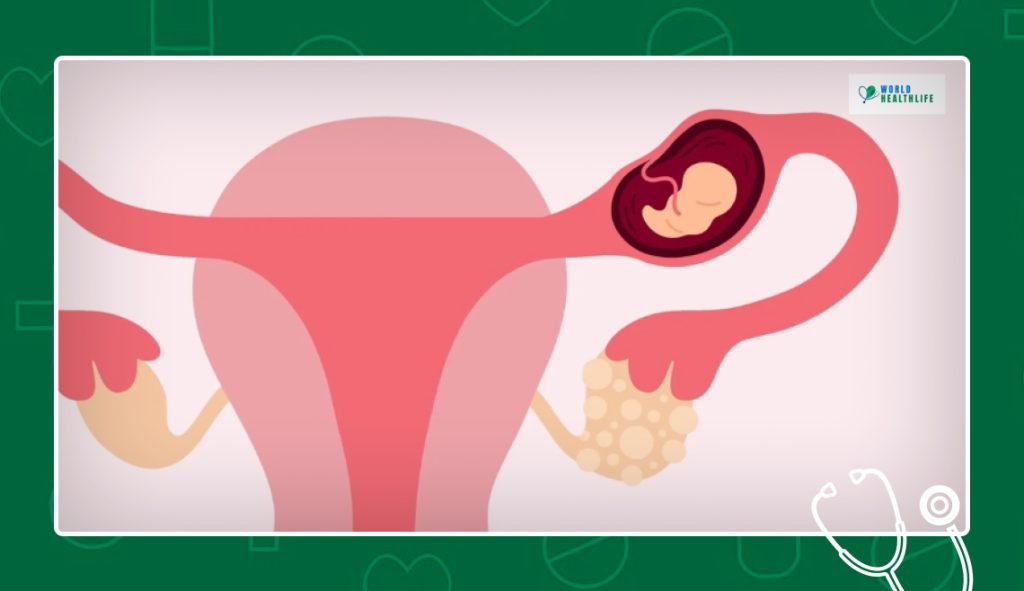
An ectopic pregnancy happens when a fertilized egg implants outside the uterus. This is most often inside a fallopian tube.
Generally, this form of pregnancy affects about 1 to 2 in every 100 pregnancies, where, of course, it cannot be continued safely. As you can see, the statistics are very rare.
However, the good news is that when it is found early, treatment is effective and often simple.
Thus, this guide explains ectopic pregnancy symptoms, causes, and how doctors diagnose it, treatment options, and what recovery and future pregnancies look like.
First, What Is An Ectopic Pregnancy
Let us first understand what happens in a normal pregnancy. In a typical pregnancy, the fertilized egg travels down the fallopian tube and settles in the lining of the uterus.
In an ectopic pregnancy, the journey is interrupted. The egg attaches somewhere else. Tissue outside the uterus cannot stretch to hold a growing embryo or even supply it with enough blood.
As it grows, it can damage nearby organs, causing serious internal bleeding.
Where It Can Implant
In more than 90% of cases, most ectopic pregnancies occur in the fallopian tube. This is exactly why the condition is usually called a tubal pregnancy.
The rest are found in less common sites, where they tend to be even harder to treat.
| Location | How common | Notes |
| Fallopian tube | More than 90% | Most often occurs in the widest part of the tube (the ampulla). |
| Cervix | Rare | High risk of causing severe, heavy bleeding. |
| Ovary | Rare | Can be highly difficult to distinguish from an ovarian cyst on ultrasound scans. |
| Cesarean scar | Rare | Implants directly into the uterine scar tissue from a previous C-section. |
| Abdominal cavity | Very rare | Highly dangerous conditions that can be life-threatening. |
Why It Cannot Be Saved
Currently, there is no way to move an ectopic pregnancy into the uterus. Also, it cannot grow into a healthy baby.
Unfortunately, that is the case. Of course, it is hard to hear, especially for people who wanted the pregnancy.
Treatment is aimed at protection of your health, and it is not a reflection of anything you did.
What Does An Ectopic Pregnancy Feel Like

Early on, an ectopic pregnancy can feel like a normal one. Moreover, you may have a missed period, sore breasts, and nausea. Generally, a home test will read positive.
However, warning signs usually appear between weeks 4 and 12, most often around weeks 6 to 8.
Knowing that itself matters because symptoms start mildly and escalate fast.
Early Warning Signs
The classic early signs are one-sided pain in the lower abdomen or pelvis and light vaginal bleeding or brown spotting.
The pain might be sharp, dull, or cramping, and it can come and go at first.
Certain people also feel pressure in the rectum or pain when passing stool. So, bleeding is usually darker and more watery than a period.
Signs That The Tube May Have Ruptured
A ruptured tube causes internal bleeding, and this is an emergency.
The blood can irritate the diaphragm, sending pain to the tip of the shoulder.
Other signs include:
- Sudden severe pain
- Dizziness
- Fainting
- A racing pulse
- Pale or clammy skin
It is therefore advised to not wait to see if it passes.
| Symptom | What it may mean | Action |
| Mild one-sided pelvic pain with spotting | Possible early ectopic pregnancy | Call your doctor the same day |
| Pain that is getting worse or constant | Growing mass or internal leak | Go to the emergency room |
| Shoulder-tip pain | Blood leaking into the abdomen and irritating the diaphragm | Seek emergency care immediately |
| Dizziness, fainting, or pale skin | Severe, heavy internal bleeding | Call emergency services |
| Heavy bleeding with severe abdominal pain | Tubal rupture | Call emergency services |
What Causes An Ectopic Pregnancy And Who Is At Risk?
The usual cause is a fallopian tube that is damaged or not working well. Thus, the egg is slowed or caught on its way.
However, about half of those diagnosed have no known risk factor at all.
That is the reason why every person who can get pregnant should know the warning signs. Also, it is not just for those in higher-risk groups.
Known Risk Factors
There are certain factors that tend to raise the odds noticeably. This is mostly due to scarring or narrowing of the tubes.
| Risk factor | Why it raises risk |
| Previous ectopic pregnancy | This is the strongest risk factor; the chance of recurrence is approximately 10% |
| Pelvic inflammatory disease (PID) | The underlying infection can scar and permanently damage the fallopian tubes |
| Chlamydia or gonorrhea | These sexually transmitted infections often cause silent, asymptomatic tubal damage |
| Previous tubal or pelvic surgery | Resulting scar tissue can block, narrow, or distort the structure of the tube |
| Pregnancy with an IUD in place | While conceiving with an intrauterine device is rare, any pregnancy that does occur is more likely to be ectopic |
| Fertility treatment (IVF) | Carries a slightly higher risk, which is often partly due to the patient’s underlying tubal problems |
| Smoking | Nicotine and other chemicals slow down the microscopic hair-like structures (cilia) that move the egg through the tube |
| Age over 35 | The statistical risk of experiencing an ectopic pregnancy rises gradually with increasing maternal age |
| Endometriosis | Tissue growth can physically affect the tubes and alter normal pelvic anatomy |
Common Myths
There are a myriad of myths surrounding ectopic pregnancy.
Know this, however. Exercise, lifting, stress, and sex do not cause an ectopic pregnancy.
Neither does an IUD itself, as it prevents pregnancy very effectively.
In fact, the higher share of ectopic cases among the few pregnancies that do occur reflects how well it blocks normal ones.
Many people blame themselves, but the tube problem is almost always out of your control.
How Doctors Diagnose An Ectopic Pregnancy
Diagnosis combines an exam, blood tests, and an ultrasound. Doctors cannot rule out an ectopic pregnancy from a single test. That is why they often need to follow your results over two or more days.
Early on, the answer may not be clear. That can be quite a frustrating thing to experience.
Blood Tests For hCG
Human chorionic gonadotropin (hCG) is the pregnancy hormone. In a healthy early pregnancy, the level roughly doubles every two to three days.
In an ectopic pregnancy, it often rises more slowly, plateaus, or falls.
Your doctor will compare two blood tests taken 48 hours apart. That is because one number on its own cannot tell the difference.
Transvaginal Ultrasound
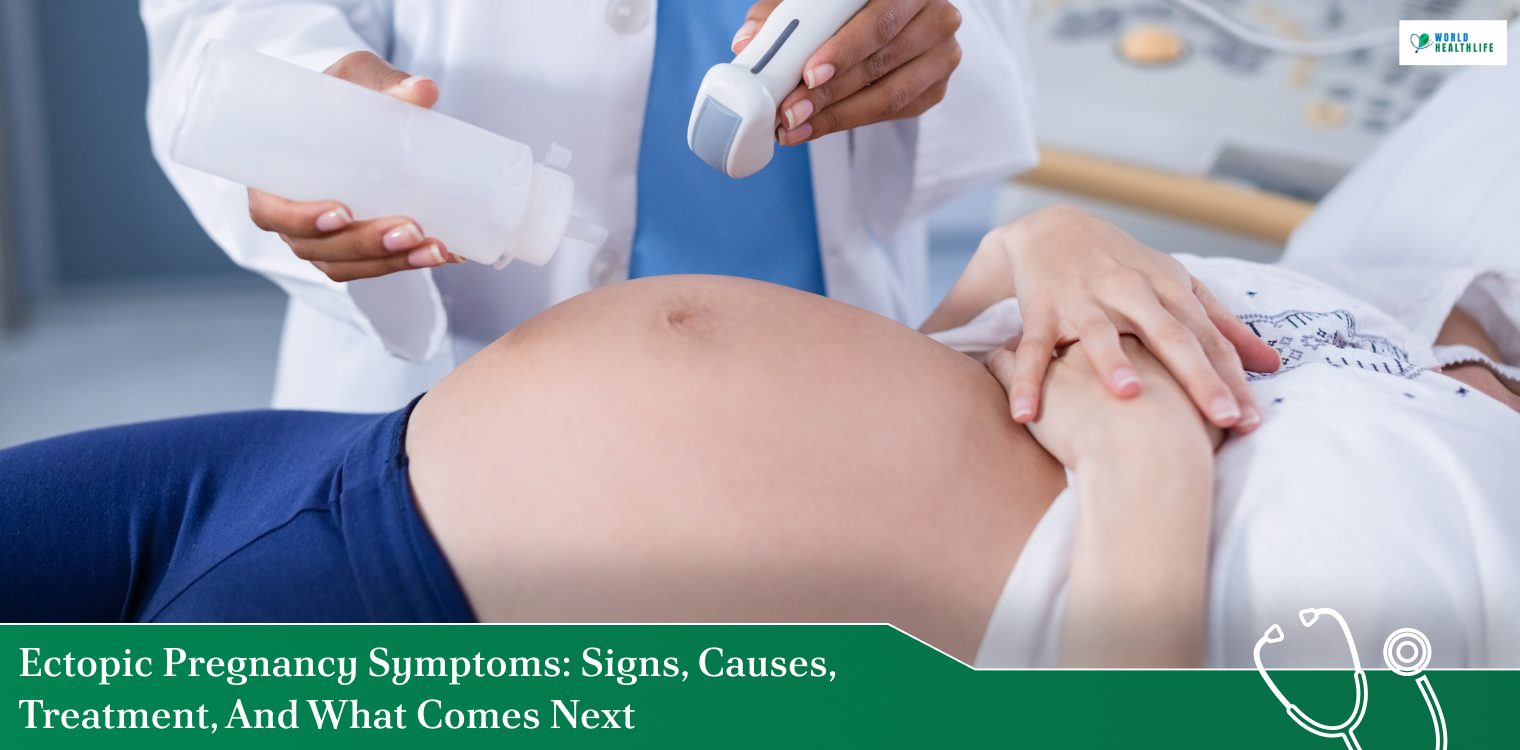
An ultrasound probe placed in the vagina gives the clearest view of the uterus and tubes.
When hCG reaches a certain level, usually between 1,500 and 3,500 mIU/mL, a normal pregnancy should be visible inside the uterus.
If the uterus looks empty above that level, or a mass is seen in the tube, an ectopic pregnancy becomes likely. Free fluid in the pelvis can suggest bleeding.
When The Location Is Unclear
Sometimes the scan shows no pregnancy anywhere, and the hCG is positive. This is called a pregnancy of unknown location.
Moreover, it may turn out to be a very early healthy pregnancy, a miscarriage, or an ectopic pregnancy.
Doctors monitor you closely with repeat blood tests and clear instructions on when to return, since this situation needs follow-up and not guesswork.
Treatment Options for an Ectopic Pregnancy
The right treatment is dependent on a few things:
- how stable you are
- Your hCG level
- The size of the mass
- Whether the tube has ruptured
The aim is to end the pregnancy safely. Moreover, it is also to ensure full protection of your health and, wherever possible, your fertility.
The table compares the main choices.
| Option | Best suited for | How it works | Key points |
| Expectant management | Very low and falling hCG, no symptoms | Close monitoring with blood tests | Works for a minority; needs strict follow-up |
| Methotrexate | Stable patients, small mass, no heartbeat, hCG usually below 5,000 | Injection that stops the cells from growing | Avoids surgery; success is about 70 to 90% |
| Laparoscopic surgery | Larger mass, pain, or suspected rupture | Keyhole surgery to remove the pregnancy | Tube is saved or removed depending on damage |
| Emergency surgery | Ruptured tube, heavy bleeding | Open or laparoscopic surgery | Life-saving; may require blood transfusion |
Methotrexate
Methotrexate is a medicine that stops the pregnancy tissue from growing, and the body absorbs it over several weeks.
Moreover, healthcare providers administer it as one or sometimes two injections.
You may have cramping or some spotting as it works. So, about one in five people need a second dose or surgery.
While you undergo treatment, avoid folic acid supplements, alcohol, anti-inflammatory painkillers like ibuprofen, and prolonged sun exposure.
That is because these can interfere with the drug or add to its side effects.
Surgery
Keyhole or laparoscopic surgery is the usual approach.
In a salpingostomy, the surgeon opens the tube, removes the pregnancy, and leaves the tube in place. Moreover, someone removes the damaged tube.
The choice depends on the amount of damage to the tube and the state of the other tube.
Recovery from keyhole surgery is typically one to two weeks, and many people go home the same day or next morning.
Emergency Care
If the tube has ruptured, you will have urgent surgery to stop the bleeding, and sometimes a blood transfusion.
Ectopic pregnancy remains a leading cause of maternal death in the first trimester, which is why speed matters.
With prompt treatment, though, most people recover fully.
Recovery After An Ectopic Pregnancy
Physical recovery is usually quicker than emotional recovery.
You may have shoulder pain from the gas used in keyhole surgery, mild bleeding for a week or two, and tiredness for longer.
Some people feel stronger in days, but others need a month.
Follow-Up Blood Tests
After treatment, your hCG needs to fall back to zero, which can take two to eight weeks and sometimes longer after methotrexate. Do not skip these tests.
If the level plateaus rises, you may still have some pregnancy tissue, and you will need more treatment.
A home pregnancy test may stay positive for a while, so rely on the blood results.
When You Can Try Again
After methotrexate, doctors usually advise waiting about three months, as the drug can harm a developing baby and takes time to clear.
After surgery, many doctors suggest waiting until after one normal period, though some are comfortable with a shorter wait.
Ask your own doctor, because the answer depends on your treatment and health. Use reliable contraception until your doctor gives you the go-ahead.
If your blood type is Rh-negative, your healthcare provider will offer you an anti-D injection to protect future pregnancies.
The Emotional Side Of An Ectopic Pregnancy
Losing a wanted pregnancy is a real loss, even when the medical story is about safety.
Many people feel grief, guilt, anger, or numbness, and some feel relief followed by guilt about feeling relieved.
All of these reactions are normal. The experience can also bring fear, because you may have gone from excitement to emergency surgery in a day.
Give yourself time and don’t compare your recovery with anyone else’s. Talk to your partner, a friend, or a counselor, and ask your doctor about support groups for pregnancy loss.
If sadness, anxiety, or flashbacks last more than a few weeks or get in the way of daily life, tell your doctor, since help is available.
Can You Have A Healthy Pregnancy After An Ectopic Pregnancy?
Yes, most people can.
About two-thirds of those who try again conceive naturally within two years, and the majority of later pregnancies are normal.
The chance of another ectopic pregnancy is higher than average, at about 10%. Thus, early monitoring is important.
Removing one tube doesn’t stop you from conceiving, since the other tube can pick up the egg.
If you do get pregnant again, tell your doctor right away, so you can have an early ultrasound at about 6 weeks, and sometimes sooner, to confirm that the pregnancy is in the uterus.
Conversely, IVF can bypass the tubes if both tubes are damaged or you struggle to conceive, though it carries a small ectopic risk of its own.
Can You Prevent It?
Not entirely, but you can lower your risk. Get tested and treated for sexually transmitted infections, use condoms with new partners, and stop smoking.
If you have had a pelvic infection, tubal surgery, or a previous ectopic pregnancy, speak to your doctor before trying to conceive.
Moreover, plan an early scan once you are pregnant.
When To Seek Medical Help
Call your doctor the same day if you have a positive pregnancy test and one-sided pelvic pain, unusual spotting, or pain when you pass stool.
Do this even if the pain is mild, since early diagnosis opens the door to gentler treatment.
Go to the emergency room or call emergency services for severe or worsening abdominal pain, shoulder-tip pain, fainting, a racing heart, or heavy bleeding.
These can mean internal bleeding. Never wait for symptoms to get “bad enough.”
An ectopic pregnancy is frightening.
Doctors also understand and treat it well.
Thus, knowing the signs and acting quickly protects your health. Also, in most cases, your chance of a healthy pregnancy later.
Disclaimer: The information provided in this article is for general informational purposes only. It does not, and is not intended to, constitute medical or health advice. Please consult a qualified healthcare professional for medical guidance or expert health assistance.
References
- NHS.UK. (2026). Ectopic pregnancy. nhs.uk.
- Hendriks, E., Rosenberg, R., Prine, L., Hendriks, E., Rosenberg, R., & Prine, L. (2020, May 15). Ectopic pregnancy: Diagnosis and management. AFP.
- Mullany, K., Minneci, M., Monjazeb, R., & Coiado, O. C. (2023). Overview of ectopic pregnancy diagnosis, management, and innovation. Women’s Health, 19, 17455057231160349. PubMed Central.
- Vadakekut, E. S., & Gnugnoli, D. M. (2025, March 27). Ectopic pregnancy. StatPearls – NCBI Bookshelf.