The news of pregnancy can bring forward a variety of emotions. These tend to include excitement, stress or even both.
The sheer knowledge that you would be a parent is one of the most joyous yet scary moments.
So, of course, it is natural for any woman to ask themself one thing: How soon will a pregnancy test read positive?
In actuality, the answer is fully dependent on the following things:
- Your body’s timeline
- Hormone levels
- The sensitivity of the test you are taking
Thus, understanding this will help you in a great way. You can not only avoid the extreme confusion but also the unnecessary anxiety or false expectations that arise.
Therefore, considering all this, you deserve to know the correct thing while being stress-free.
So, the following guide will explore how pregnancy tests work, how soon you can get positive results, types of tests, and more.
Understand What A Pregnancy Test Is
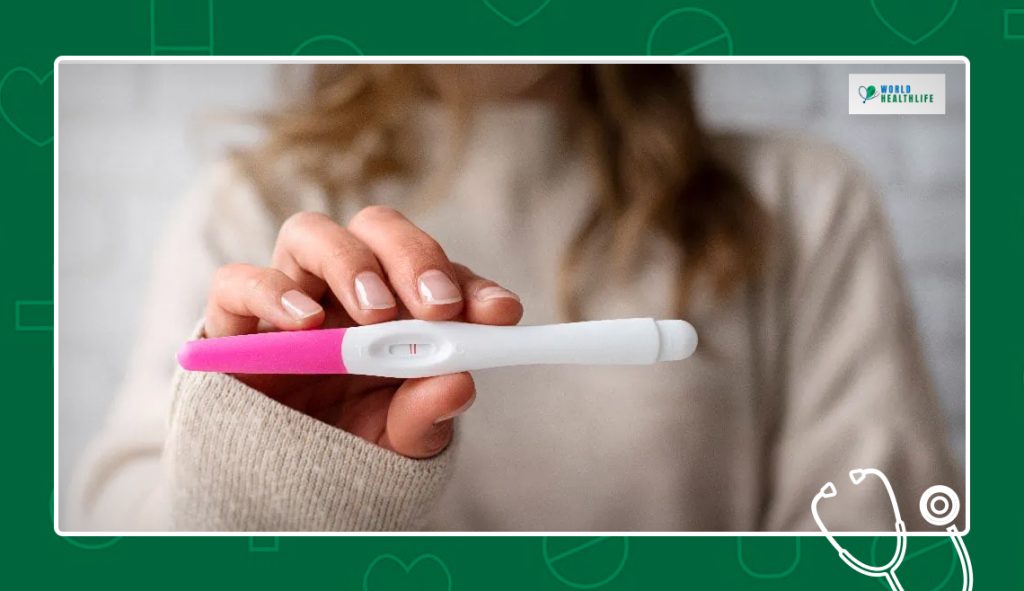
To understand on a deeper level, let us first know what a pregnancy test is.
In clinical terms, a pregnancy test can be defined as a diagnostic check that determines whether a person is pregnant.
By detecting the hormone human chorionic gonadotropin (hCG) in urine or blood, the test works.
The developing placenta produces this glycoprotein hormone shortly after an embryo attaches to the uterine lining.
How Pregnancy Tests Work: The Biological Timeline
A pregnancy test usually looks for the presence of hCG hormone in a woman’s body. This is considered a direct indication that a woman is pregnant.
Usually, these are tests that are done using the woman’s urine or blood.
You need to remember one thing. A pregnancy test does not help you in the detection of the exact moment of intercourse or even fertilization.
Instead, it measures the biochemical changes that follow a successful implantation.
To truly understand when a test will read positive, you must trace three sequential biological phases.
Phase 1: Fertilization And Your Hormones
After your ovulation, an egg remains visible in the fallopian tube for roughly 12 to 24 hours.
If sperm fertilizes the egg, it becomes a single-celled zygote.
Over the next several days, this zygote divides rapidly into a cluster of cells known as a blastocyst. This is because it travels down the fallopian tube toward the uterus.
During this transit phase, your body does not yet produce hCG. Moreover, no pregnancy test can detect a positive result.
Phase 2: Implantation Timing
Implantation is known as the actual bridge to a positive pregnancy test. The blastocyst has to successfully burrow into the nutrient-rich endometrial lining of the uterus.
For most women, implantation occurs
Build-Up Of hCG
Let us first understand the hCG levels and the indication.
| Pregnancy Status / Timeline | Timeline | Expected hCG Range (mIU/mL) |
| Not pregnant | N/A | <5 |
| 3 weeks pregnant | Approx. 7–10 days post-ovulation | 5-50 |
| 4 weeks pregnant | Approx. 14 days post-ovulation / missed period | 5-426 |
| 5 weeks pregnant | Approx. 21 days post-ovulation | 18-7340 |
Whether one uses a home test or a clinical one, the principle is the same. This is detecting hCG in the urine or blood.
Usually, either urine tests or blood tests are used. Until the hCG rises high enough to be detected, your test will show negative.
This is regardless of whether conception has occurred.
Types Of Pregnancy Tests
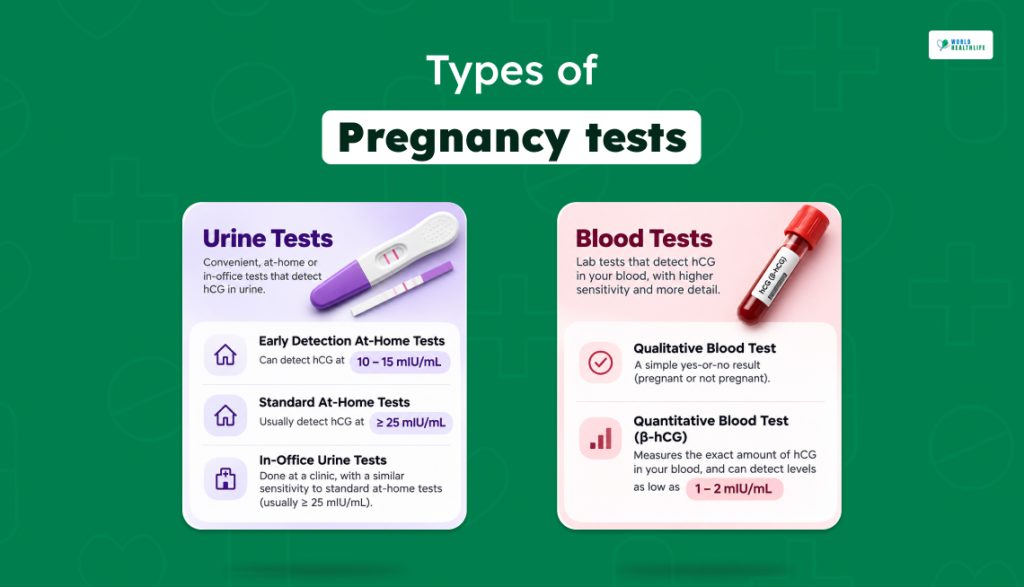
Usually, there are two primary methods used for the detection of hCG, where each operates on different sensitivity scales and timelines.
Urine Tests: At-Home Or In-Office
When it comes to urine-based tests, they are known to be the most common, accessible, and affordable options.
Moreover, they use antibodies embedded on a chemical strip to bind with any hCG present in the urine sample. As a result, this triggers a visual change.
For example, this includes:
- A line
- A plus sign
- A digital reading
| Test Type | Sensitivity (hCG Level) | Core Purpose / Feature |
| Early Detection At-Home Tests | 10 mIU/mL to 15 mIU/mL | Designed with ultra-high sensitivity to detect pregnancy early. |
| Standard At-Home Tests | 25 mIU/mL or higher | Requires a higher concentration to display a clear positive line. |
| In-Office Urine Tests | Similar to standard tests | Administered clinically to officially verify your home results. |
Blood Tests: Lab-Based
Blood tests are required to be ordered by a healthcare provider and processed in a clinical laboratory.
Since hCG enters the maternal bloodstream prior to filtering into the urine, blood tests can confirm a pregnancy much earlier in the timeline.
Qualitative hCG Blood Tests
This basic test offers a simple “yes” or “no” answer by checking if hCG meets a baseline threshold.
This mimics the function of a urine test but with greater accuracy.
Quantitative hCG Blood Tests (Beta hCG)
This highly precise test measures the exact concentration of hCG in your blood down to 1–2 mIU/mL.
Doctors use consecutive quantitative tests to track whether your hormone levels are rising appropriately during early pregnancy.
Is Timing Really An Important Factor For Pregnancy Tests?
Timing is the single most critical element governing the validity of your result.
Testing too soon after intercourse is the most frequent cause of a false negative. Moreover, this occurs when you are pregnant. However, the test reads negative because hCG levels have not yet reached detectable concentrations.
So, in order to visualize how test accuracy shifts across your cycle, consider this timeline tracking the percentage of pregnancies detected relative to an expected menstrual cycle.
| Days Relative to Missed Period | Average Home Test Reliability | Biological Rationale |
| 5 Days Before | ~25% to 50% | Implantation has just finished; hCG is only detectable by ultra-sensitive tests. |
| 3 Days Before | ~75% to 85% | Hormone levels are compounding; a faint line may appear on early detection kits. |
| 1 Day Before | ~90% to 95% | hCG has undergone multiple doubling cycles for most individuals. |
| Day of Missed Period | >99% | Hormone levels have surged past the 25 mIU/mL threshold for standard tests. |
Does A Missed Period Affect Your Result?
A missed period is the ultimate physiological landmark for testing.
Most home kits achieve their advertised 99% accuracy rate when used from the first day of your missed period.
If your menstrual cycle is highly irregular, estimating the day of your missed period becomes difficult.
Therefore, in these instances, relying on the date of intercourse is more practical.
Instead, a pregnancy test will generally read positive 14 to 21 days after the sexual encounter if conception occurred.
How Soon Will a Pregnancy Test Read Positive: When to Test for the Best Results
If you want to know how soon you can test with confidence, your choice of diagnostic tool dictates the timeline.
Using Blood Tests
A quantitative blood test can read positive as early as 6 to 8 days after ovulation.
This makes it the earliest reliable detection method available, though it requires a clinical appointment.
Using Early Detection Tests
Premium early detection home tests can display a positive result 4 to 5 days before your expected period (approximately 9 to 10 days post-ovulation).
However, because implantation timing varies by individual, testing this early carries an inherent risk of a false negative.
Testing From a Missed Period
For the absolute highest accuracy without the risk of ambiguous, faint lines, wait until the day after your missed period.
At this juncture, any standard, budget-friendly over-the-counter test will provide a definitive, reliable answer.
Tips For An Accurate Home Test
To maximize the reliability of your home test and avoid user-error discrepancies, implement these clinical best practices.
Use First-Morning Urine
Always test using your very first urination after waking up.
Your urine concentrates overnight while you sleep, creating the highest density of hCG.
Testing later in the day when your urine is diluted can cause early positive lines to vanish.
Do Not Dilute
Avoid drinking excessive amounts of water, tea, or other fluids in the hours leading up to your test.
Flooding your system dilutes the concentration of hCG in your bladder, which can trick a sensitive test strip into reading negative.
Read Within The Exact Window
Follow the instruction manual’s precise timeline. This is usually between 3 and 5 minutes.
Allowing a test to sit for too long can cause an “evaporation line” to form as the urine dries. This faint line is often mistaken for a positive result.
Retest If Negative
If you receive a negative result but your period still has not arrived, wait 48 to 72 hours and test again.
If you are pregnant, your hCG levels will have doubled in that timeframe, making it much easier for the test strip to identify the hormone.
When To See A Doctor
Navigating the results of a pregnancy test can bring up a wide array of choices and next steps.
Knowing when to transition from home testing to clinical care is vital for your health.
After A Confirmed Positive Test
If your home test reads positive, contact an obstetrician, gynecologist, or healthcare clinic to schedule your initial prenatal intake appointment.
This visit is typically scheduled when you are between 6 and 8 weeks pregnant (counting from the first day of your last menstrual period).
If You Experience Severe Symptoms
Seek immediate medical attention if you get a positive test (or a fluctuating positive/negative result) alongside sharp abdominal pain, heavy cramping, shoulder tip pain, or vaginal bleeding. These can be warning signs of an ectopic pregnancy, a serious medical condition where the embryo implants outside the uterus.
If Your Period Is Delayed But Tests Stay Negative
If your period is more than a week late and consecutive home tests continue to read negative, consult your physician.
A doctor can run comprehensive blood panels to check for alternative underlying causes of a missed cycle.
This includes:
- Thyroid imbalances
- Polycystic Ovary Syndrome (PCOS)
- Extreme stress
- Nutritional shifts
Disclaimer: The information provided in this article is for general informational purposes only. It does not, and is not intended to, constitute medical or health advice. Please consult a qualified healthcare professional for medical guidance or expert health assistance.
References
- Cleveland Clinic. (2026). Pregnancy tests. Cleveland Clinic.
- Anderson, J., & Ghaffarian, K. R. (2023, January 2). Early pregnancy diagnosis. StatPearls – NCBI Bookshelf.
- nhs.uk. (2026, May 8). Doing a pregnancy test. nhs.uk.
- Sundermann, A. C., Jasper, E. A., Z Jukic, A. M., Rothman, K. J., & Wise, L. A. (2026). Pregnancy Test Use and Timing of Pregnancy Detection in a Prospective Cohort of Pregnancy Planners. Obstetrics and Gynecology, 147(3), 394. NCBI Bookshelf.
- UT Southwestern Medical Center. (2022). How early can home pregnancy tests show positive results? | Your Pregnancy Matters | UT Southwestern Medical Center.