There are multiple medical terms out there.
And few of these terms are as unkind as this one.
Being called “geriatric” at the age of 36, often in the middle of a prenatal appointment, can be enough to make anyone wince.
A geriatric pregnancy is simply a pregnancy at age 35 or older. Actually, the term originates from older medical language that a majority of doctors have now replaced with “advanced maternal age.”
The label sounds alarming. However, the reality is actually more balanced.
Though risks do tend to rise with age and so do the tools for catching the issues early, the majority of people over 35 have healthy pregnancies and healthy babies.
This guide explains why 35 became the cutoff, what the real risks look like, which tests are offered, and how to prepare.
Why Age 35 Became The Line
Here is the thing you need to understand. There is nothing magical about a 35th birthday.
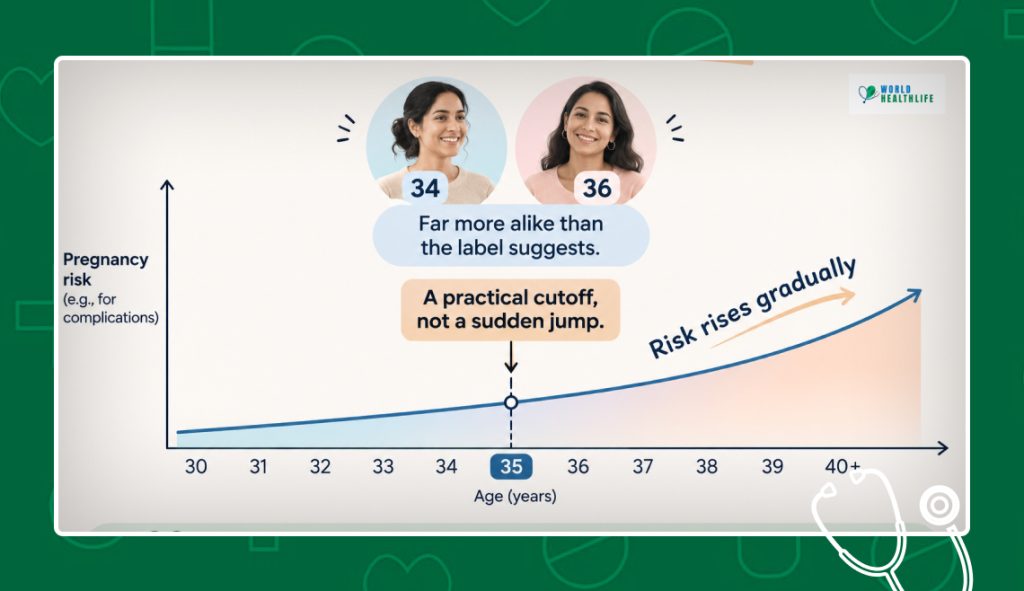
The number was chosen decades ago as a practical point where several risks, such as chromosomal conditions and pregnancy complications, start to climb more noticeably.
There is a gradual rise in risk. It is not sudden.
So, a 34-year-old and a 36-year-old are far more alike than the label suggests. In addition, your overall health matters at least as much as your age.
Age Is A Risk: Not A Diagnosis
Being 35 or older places you in a group that receives extra monitoring.
Also, it does not mean something is wrong. In fact, there are plenty of 38-year-olds who are healthier than 28-year-olds with high blood pressure or diabetes.
Doctors use age as a prompt to look more carefully. Additionally, they combine it with your medical history, weight, and lifestyle.
How Common It Is
Pregnancy after 35 is no longer something that is unusual. In fact, in many countries, births to women over the age of 35 have now made up around one in five or more of all births.
In addition, the average age of first-time mothers keeps rising.
The following tend to play a pivotal part:
- Better contraception
- Career
- Education choices
- Later partnerships
- Fertility treatment
Geriatric Pregnancy And Fertility: Getting Pregnant After 35
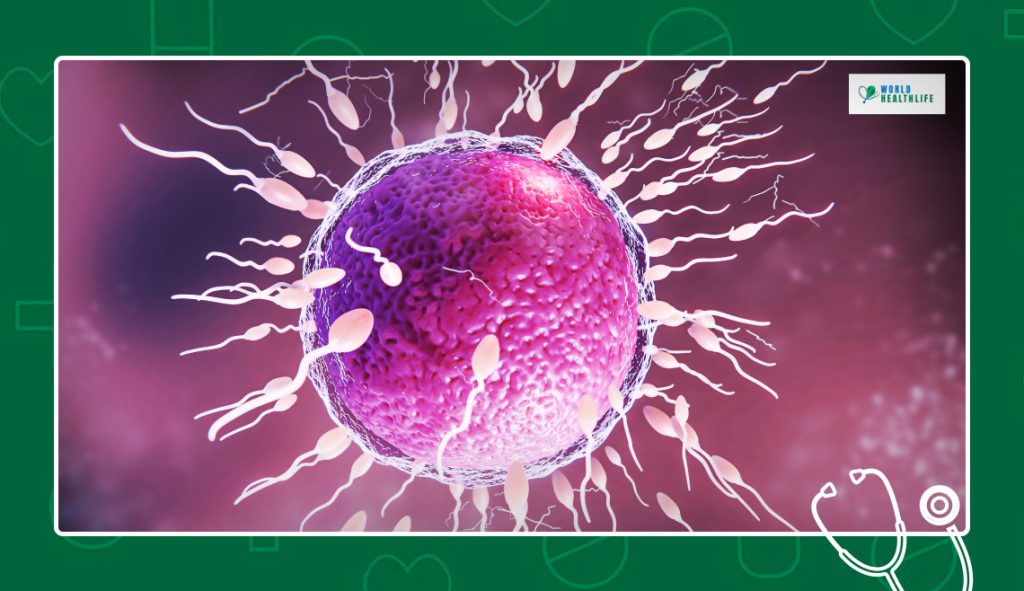
Usually, the first challenge is always to conceive. The quantity as well as quality of eggs tend to decline with age, and this speeds up in the late 30s.
The result is that it can take longer to conceive, and the chance of miscarriage is higher.
Below, the table shows the general trend. However, individual results tend to vary widely.
| Age | Approximate Chance Of Conceiving Per Cycle | Approximate Miscarriage Risk |
| Under 30 | About 20 to 25% | About 10 to 15% |
| 30 to 34 | About 15 to 20% | About 15% |
| 35 to 39 | About 10 to 15% | About 20 to 25% |
| 40 to 44 | About 5% or lower | About 35 to 50% |
| 45 and over | Very low with own eggs | Over 50% |
When To Ask For Help
Generally, doctors advise seeking a fertility assessment after six months of trying if you are 35 or older, rather than the usual twelve months.
In case you are over 40, it is reasonable to start the conversation right away.
Early testing can check ovarian reserve, tubes, and your partner’s sperm. That helps to save time when it really matters.
Fertility Treatment And Options
Options range from timed intercourse and ovulation medicine to intrauterine insemination (IUI) and IVF.
Success rates with your own eggs fall steadily after 40, whereas donor eggs raise the chance considerably.
Fertility treatment itself raises the likelihood of twins. This brings added risks of its own. Thus, it is worth discussing how many embryos to transfer.
Main Risks Of Geriatric Pregnancy
It helps to look at risks honestly, without exaggeration. Most of them are increases from a low baseline, and many can be monitored or managed.
The table summarizes the most important ones.
| Risk | What it means | How it is managed |
| Chromosomal conditions | Higher chance of conditions such as Down syndrome | Screening and diagnostic tests |
| Miscarriage | Higher chance, mostly due to chromosomal changes in the egg | Early scan and support; usually not preventable |
| Gestational diabetes | High blood sugar during pregnancy | Glucose test at 24 to 28 weeks; diet, exercise, or medicine |
| High blood pressure and preeclampsia | Raised blood pressure with risk to mother and baby | Regular checks; low-dose aspirin may be advised |
| Preterm birth and low birth weight | Baby arrives before 37 weeks or is smaller | Growth scans; steroid injections if early birth is likely |
| Placenta problems | Such as placenta previa | Ultrasound monitoring; planned delivery if needed |
| Cesarean delivery | Higher rate of C-section | Discussed with your care team in advance |
| Stillbirth | Small but real rise in risk, especially after 40 | Careful monitoring; planned timing of delivery |
Chromosomal Conditions
The chance of having a baby with a chromosomal condition rises with age. That is because older eggs are more likely to divide unevenly.
For Down syndrome, the risk is roughly 1 in 350 at age 35, which is about 1 in 100 at 40.
These numbers mean that most babies born to older mothers do not have a chromosomal condition.
Moreover, screening can give a much more personal estimate than age alone.
Pregnancy Complications
Complications during pregnancy may also happen.
For instance, gestational diabetes and preeclampsia are both more common after 35, and so is preterm birth.
These conditions are not caused by anything you did.
They tend to be picked up through routine checks, such as blood pressure readings, urine tests, and a glucose test.
Moreover, this is exactly why attending every appointment matters more at this stage.
Labor And Delivery
Older mothers have a higher chance of a cesarean section, and labor may be longer, particularly for first-time mothers.
Many still have a vaginal birth.
If your pregnancy is otherwise uncomplicated, your team may suggest delivering at around 39 weeks, since the risk of stillbirth rises slightly as the due date passes.
This is a recommendation to discuss, not a fixed rule.
Prenatal Testing In A Geriatric Pregnancy
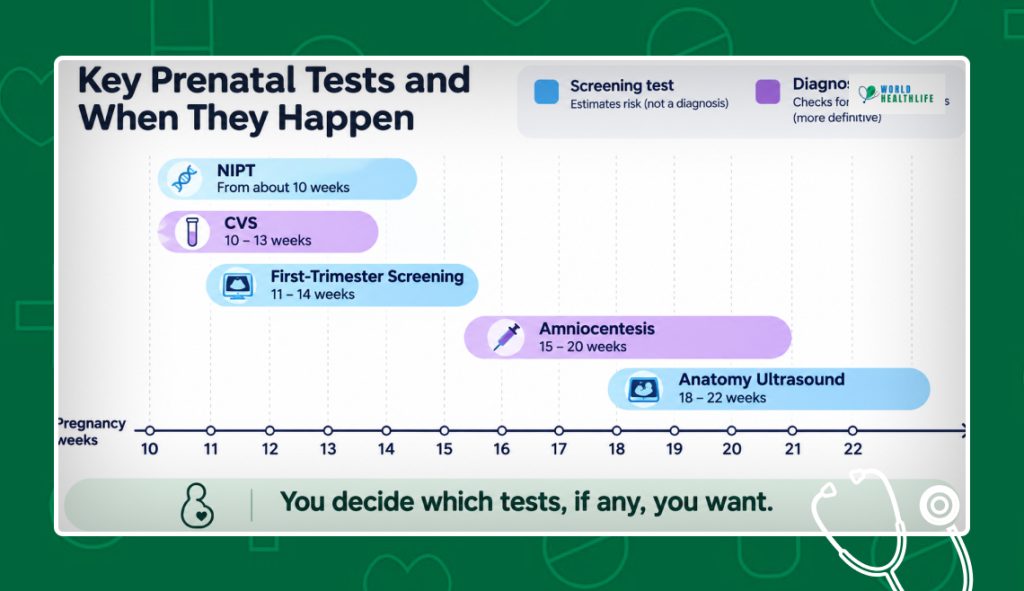
Because of the higher chance of chromosomal conditions, you will be offered more testing.
Some tests estimate risk, and others give a definite answer. You decide which ones, if any, you want.
Knowing the difference helps you feel in control of the process.
| Test | Type | When | What it tells you | Miscarriage risk from the test |
| First-trimester screening (blood test and nuchal scan) | Screening | 11 to 14 weeks | Estimates chance of Down, Edwards, and Patau syndromes | None |
| Cell-free DNA test (NIPT) | Screening | From about 10 weeks | Very accurate screen for common conditions; not diagnostic | None |
| Anatomy ultrasound | Screening | 18 to 22 weeks | Checks the baby’s structure and growth | None |
| Chorionic villus sampling (CVS) | Diagnostic | 10 to 13 weeks | Definite chromosomal answer | Small, roughly 1 in 500 to 1 in 100 |
| Amniocentesis | Diagnostic | 15 to 20 weeks | Definite chromosomal answer | Small, roughly 1 in 500 to 1 in 1,000 |
Screening Vs. Diagnostic Tests
A screening test gives you a probability. On the other hand, a high-risk result does not mean the baby is bound to have a condition.
Moreover, a low-risk result does not promise that nothing is wrong.
Diagnostic tests such as CVS and amniocentesis analyze the baby’s cells directly and give a clear answer.
However, they carry a small risk of miscarriage.
Many people choose a non-invasive screen first and move to a diagnostic test only if the result is high.
Deciding What Is Right For You
First of all, ask yourself what you would do with the information.
Some people want to prepare. On the other hand, others may want to continue the pregnancy regardless. Moreover, some would consider ending it.
All of these are legitimate. A genetic counselor can walk through your options without pressure, and you can decline any test.
Preparing For A Geriatric Pregnancy
Preparation makes a visible difference. Steps taken before and during early pregnancy can lower several of the risks above.
In addition to this, none of them is complicated, and most are worth doing at any age.
Before Conception
Book a preconception visit to review your health, medicines, and vaccinations.
Begin folic acid at 400 micrograms daily at least a month before trying, and ask whether you need a higher dose.
Review blood pressure, blood sugar, thyroid function, and weight, and bring any long-term condition under good control first.
If you smoke or drink, stopping beforehand gives your baby the best start.
During Pregnancy
Do the following during pregnancy:
- Eat a balanced diet
- Stay active with doctor-approved exercise such as walking or swimming
- Aim for steady weight gain within the recommended range for your starting weight
- Prioritize sleep, as poor sleep is linked with higher blood pressure and blood sugar
- For additional risk factors for preeclampsia, your doctor may recommend low-dose aspirin from about 12 weeks, but do not start it on your own
Choosing Your Care Team
Ask whether your provider has experience with pregnancies over 35, and whether you can see a maternal-fetal medicine specialist if you have other health conditions.
A hospital with a neonatal unit is worth considering, particularly if you are over 40 or expecting twins. Make sure you know whom to call between appointments.
Warning Signs To Take Seriously
Most symptoms in pregnancy are harmless, but a few need quick attention, and they apply at any age.
Because older mothers have a higher baseline risk of preeclampsia and stillbirth, it pays to act early rather than wait.
Contact your doctor the same day for a severe headache that doesn’t ease, vision changes, sudden swelling of the face or hands, pain under the ribs on the right side, or fluid leaking from the vagina.
Call urgently if your baby’s movements slow or change after about 28 weeks, as this is one of the most important signs to report.
Seek emergency care for heavy bleeding, severe abdominal pain, chest pain, trouble breathing, or fainting.
The Benefits Of Having A Baby Later
The conversation shouldn’t be only about risk.
Research suggests that older parents often have more stable finances, more established relationships, and greater emotional maturity.
All of these are the ones that support child development.
Some studies also link older motherhood with better educational outcomes for children and longer breastfeeding.
These are group trends and not guarantees.
However, they are a reminder that the “geriatric” label hides as much as it reveals.
When To See A Doctor
Ultimately, always begin by seeing your doctor before you start conceiving.
On the other hand, you may also do it as soon as you have a positive test in case your pregnancy occurred as a total surprise.
In order to confirm the pregnancy and discuss screening, book an early appointment, ideally by 8 weeks.
Also, if you are 35 or older and have been trying for six months without success, ask for a fertility assessment.
A geriatric pregnancy deserves attention, not alarm.
With early care, the right tests, and healthy habits, the large majority of people over 35 go on to have a safe pregnancy and a healthy baby.
Treat the label as a signal to look after yourself properly, and nothing more.
Disclaimer: The information provided in this article is for general informational purposes only. It does not, and is not intended to, constitute medical or health advice. Please consult a qualified healthcare professional for medical guidance or expert health assistance.
References
- Schummers, L., Hutcheon, J. A., Hacker, M. R., VanderWeele, T. J., Williams, P. L., McElrath, T. A., & Hernandez-Diaz, S. (2018). Absolute risks of obstetric outcomes risks by maternal age at first birth: A population-based cohort. Epidemiology (Cambridge, Mass.), 29(3), 379. PubMed Central.
- Johns Hopkins Medicine. (2026). Advanced maternal age. Johns Hopkins Medicine.
- Hochler, H., Lipschuetz, M., Suissa-Cohen, Y., Weiss, A., Sela, H. Y., Yagel, S., Rosenbloom, J. I., Grisaru-Granovsky, S., & Rottenstreich, M. (2023). The Impact of Advanced Maternal Age on Pregnancy Outcomes: A Retrospective Multicenter Study. Journal of Clinical Medicine, 12(17), 5696. PubMed Central.
- Sparić, R., Stojković, M., Plešinac, J., Pecorella, G., Malvasi, A., & Tinelli, A. (2024). Advanced maternal age (AMA) and pregnancy: a feasible but problematic event. Archives of Gynecology and Obstetrics, 310(3), 1365–1376. PubMed Central.
- Frick, A. P. (2020). Advanced maternal age and adverse pregnancy outcomes. Best Practice & Research Clinical Obstetrics & Gynaecology, 70, 92–100. PubMed Central.
- Mohn, E. (2024). Advanced maternal age. EBSCO Information Services, Inc.